

From Hype to Rational Growth: NGS Industry Enters a New Era of Sustainable Development
From 2014 to 2019, the NGS Innovation Developer Conference was held for six consecutive years. Witnessing the industry’s rapid development—from the nascent stage of the consumer genomics market, to the formal removal of pilot restrictions on non-invasive prenatal testing (NIPT), to the successive public listings of two leading enterprises, and further to the approval of NGS-based oncology diagnostic products and the emerging boom in the gene therapy market—the conference has served as a testament to this progress. Transitioning from “reading” to “writing,” NGS developers have moved beyond initial, uncertain commercial explorations onto a more established path. Since 2014, each reduction in sequencing costs has been characterized as a new historical milestone marking an explosion in the sequencing market. However, following the conclusion of this year’s NGS Innovation Developer Conference, we believe that 2019 truly marks the inaugural year of substantial growth for the NGS industry, emerging from the preceding period of bubble and uncertainty.
“NIPT, liquid biopsy for cancer, genetic diseases, and consumer-grade genetic testing—many commercial applications of gene sequencing have reached maturity,” said Hao Xiangwen, Chairman of the NGS Innovation Developers Conference and Founder of Ji Yun Hui Kang, in his opening remarks.
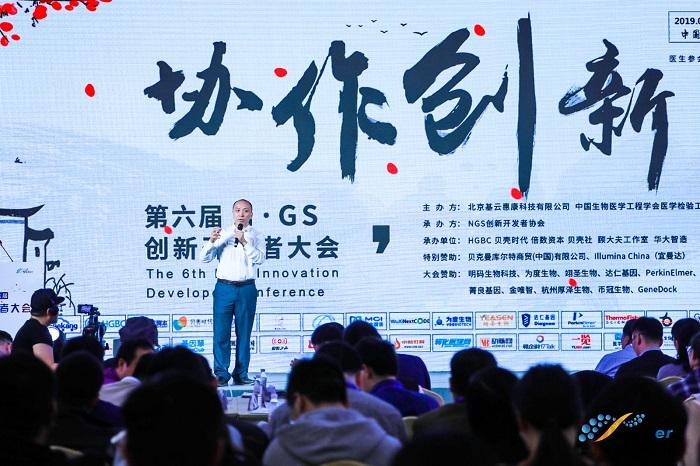
Hao Xiangwen, Chairman of the NGS Innovation Developers Conference and Founder of Jiyun Huikang
In the past, our narrow understanding of NGS was limited to second-generation high-throughput sequencing. However, with the commercialization of single-molecule sequencing and nanopore sequencing technologies, we have gradually come to realize that NGS encompasses far more than just second-generation high-throughput sequencing. The term NGS now includes all future possibilities in gene technology applications, spanning third- and fourth-generation sequencing, single-cell sequencing, and even gene editing and gene synthesis. Developers in the NGS field are the pioneers who pave the way before each new era of NGS arrives.
As with most conferences in 2018–2019, the “capital winter” was an unavoidable topic at this developer extravaganza. As an industry observer, VBInsight has also keenly felt the shift: the investment and financing atmosphere in the gene sector is no longer as hot as it was in the previous two years, with both primary and secondary markets undergoing a rapid cooling process.
From feverish hype to a cold shoulder, this transition inevitably brings disappointment and pain for entrepreneurs. However, as time passes, we can see that the tide reveals the true gold. Most notably, industry leaders have emerged: Burning Rock Biotech secured the first registration certificate for tumor testing, with its financing amounts hitting record highs; ConliMed obtained the first approval for a fecal DNA colorectal cancer detection kit, gaining a first-mover advantage in the market; and through user-centric marketing strategies, two giants, 23Mofang and WeGene, have risen in the consumer market... Undoubtedly, the capital winter has impacted all enterprises, but for some, this screening process is essentially one of survival of the fittest. There are no bad eras, only companies that are not strong enough. Those who endure what others cannot will ultimately stand out.
Amid the chill in capital markets, a palpable shift is evident as entrepreneurs grow more measured. “While our valuations have been impacted compared to before, we are not overly pursuing higher valuations; instead, we focus on executing our business well.” This has been the common response from many founders who have recently secured financing.
“This cooling trend has prompted entrepreneurs to calm down and reflect on the essence of their ventures,” explained Hao Xiangwen.
Compared to the rush of entrepreneurs in the previous two years who flocked into research, oncology, and non-invasive prenatal testing (NIPT), the new wave of founders has a broader range of tracks to choose from. At previous NGS Developer Conferences, most presentations focused on liquid biopsy and data analysis; however, in 2019, we saw a wider array of topics, including pathogen diagnostics, reference materials for genetic testing, and clinical applications of gene editing and synthetic biology.
Gene Editing Enters the Arena
“For the past few years, our overall content has revolved around gene sequencing, including sequencers, sequencing technologies, and data analysis,” Hao Xiangwen continued. “But what comes after sequencing? In the past, I was often asked, ‘If a genetic disease locus is identified through sequencing, what can we do?’” It is evident that mere detection is insufficient when it comes to the role of genes in disease.
If one were to ask which genetic technology is currently the most popular, gene therapy would undoubtedly top the list. With the market launch of Spark Therapeutics’ Luxturna, gene therapy has officially taken center stage. Many monogenic hereditary disorders, such as Leber congenital amaurosis and severe combined immunodeficiency (SCID), are difficult to treat with conventional drugs; however, advances in gene therapy have brought hope for a cure to patients with these conditions. After nearly 40 years of development, gene therapy has finally achieved breakthroughs in the past two years. The approval of three gene therapies has further spurred entrepreneurial interest. According to the “2018 Global Gene Therapy Research Report” by the leading international think tank Jain PharmaBiotech, more than 183 companies worldwide are engaged in gene therapy research—more than four times the number in 1995—with over 2,000 clinical trials underway.
Although gene therapy in China is not as hot as it is abroad, after Spark Therapeutics’ Luxturna was launched, we have gradually seen many start-ups in the field of gene therapy emerge in the industry. Two leading companies in the NGS field have successively laid out their strategies for the gene therapy industry through investment.
Certainly, in addition to gene therapy, there are numerous applications based on gene editing, such as xenotransplantation, disease modeling, and virology research. Moreover, the SHERLOCK (Specific High Sensitivity Enzymatic Reporter UnLOCKing) technology, developed by Feng Zhang at the Broad Institute, has enabled CRISPR-based viral diagnostic solutions. This tool allows for simultaneous multiplex nucleic acid detection, targeting four different molecules in a single assay. The technology has achieved considerable success in detecting RNA viruses, such as dengue virus and Zika virus, as well as in testing human fluid samples. In China, Jieyi Biotechnology is also pursuing the commercialization of similar technologies.
The Development of the Times Is Inseparable from Underlying Technologies
The expansion of these applications is inextricably linked to the development of gene editing as an underlying technology.
After decades of exploration, gene editing technologies have continued to evolve. Early nuclease-based approaches were relatively limited; although they could cleave DNA, they recognized only a small fraction of possible sites and had no therapeutic impact on the vast majority of diseases. In 2005, zinc finger nuclease (ZFN) technology emerged, marking the advent of the first true generation of gene editing tools. These first-generation techniques were complex to implement, whereas the emergence of CRISPR technology has enabled the widespread adoption of gene editing in laboratories worldwide.
“CRISPR technology is highly efficient, with its recognition and cleavage functions capable of being separated,” said Yang Hui, a researcher at the Institute of Neuroscience, Chinese Academy of Sciences. CRISPR technology can perform gene editing in a simple and efficient manner and act on multiple sites simultaneously. This technology has also greatly advanced application-oriented research based on gene editing, including gene therapy and xenotransplantation. However, the cleavage process of CRISPR still requires double-strand breaks in DNA, which may lead to large deletions and chromosomal translocations. “This poses significant risks,” Yang stated.
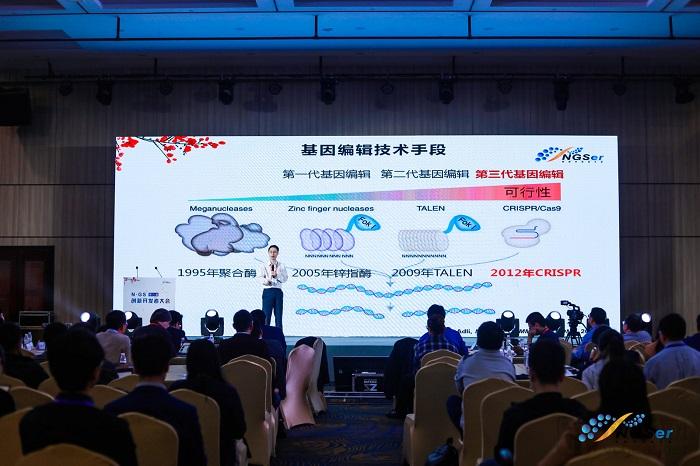
Yang Hui, Researcher at the Institute of Neuroscience, Chinese Academy of Sciences
At this conference, Yang Hui introduced the fourth-generation gene-editing technology. Invented in 2016 by Professor David Liu at the Broad Institute of Harvard University, this technology is known as base editing. In contrast, base editing enables highly efficient and precise modifications without requiring double-strand DNA breaks or a repair template.
Ethical Discussion
However, the development of gene-editing technology has long been accompanied by ethical controversies. The 2018 “gene-edited babies” incident once again thrust ethical debates surrounding gene editing into the spotlight. At this conference, discussions on ethics are equally inevitable.
Since the discovery of the double-helix structure of DNA, scientists have been searching for tools capable of repairing individual bases. Unfortunately, such a tool has yet to be found. A major scientific challenge remains: whether repairing one base might inadvertently affect other bases. “Editing a single gene is relatively straightforward; however, detecting potential off-target effects elsewhere in the genome after editing is extremely difficult,” said Yang Hui. The human genome contains approximately 3 billion base pairs, and even minor genetic differences can have profound consequences. Consequently, gene editing in human germ cells has faced widespread opposition from nearly all scientists and governments around the world.
One month ago, 62 scientists once again wrote to the U.S. Department of Health and Human Services, calling for a global moratorium on the clinical application of germline gene editing. Not long before that, 18 prominent scientists and ethicists in the field of gene editing jointly published an article in Nature, also urging a global pause on germline gene editing.
On the other hand, we must also acknowledge the future potential of somatic cell editing-based gene therapy in disease treatment. Gene editing targeting somatic cells has already shown initial promise in the treatment of many genetic disorders, such as sickle cell anemia, β-thalassemia, Leber congenital amaurosis, hemophilia, and cancer.
Furthermore, since the 1970s, organ transplantation has become a viable option for patients with renal failure and other organ diseases. However, the shortage of donor organs has persisted. Over the past few decades, this situation has only worsened as the demand for organs has grown exponentially. The potential of xenotransplantation has undoubtedly offered hope of survival to many patients awaiting organ transplants.
Although these studies still require further clinical validation, scientists believe that existing scientific methods can be implemented safely and effectively.
Biosynthesis: The Next Market Explosion?
Another emerging application of genetics is synthetic biology. The team led by maverick scientist Craig Venter has successfully synthesized novel life forms on two separate occasions—organisms that had never previously existed on Earth. In contrast, the industrial sector is more focused on leveraging gene synthesis to engineer new microbial strains, which are then utilized to produce novel compounds, materials, proteins, and other products through their metabolic processes.
Synthetic biology falls under the umbrella of genetic engineering and represents a downstream technology of gene sequencing. The traditional concept of genetic engineering has been in existence since the 1980s. Many products we encounter in daily life, ranging from insulin to flavorings, are outcomes of genetic engineering. “Many flavorings and fragrances are actually produced by microorganisms modified through genetic engineering,” explained Zhang Haoqian, founder of Bluepha. “Although products derived from genetic engineering are already ubiquitous in everyday life, our exploration of this field remains relatively shallow.” He believes that a vast amount of biological resources within natural biological systems still await discovery.
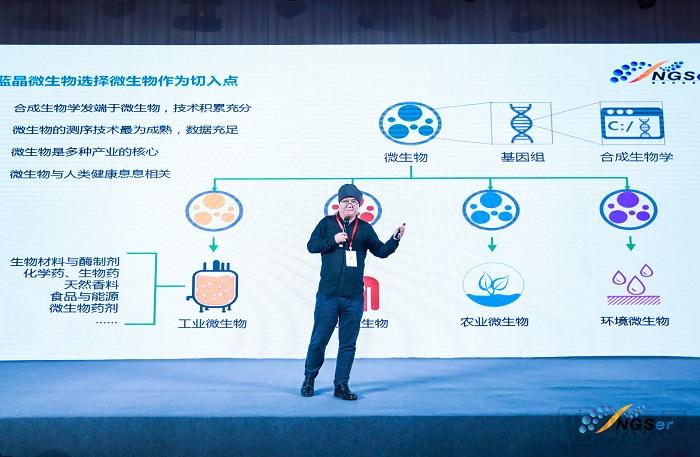
Zhang Haoqian, Founder of Bluepha
Ninety-nine percent of microorganisms in nature are unculturable. Although sequencing can roughly predict the chemical compounds they are capable of synthesizing, these microorganisms typically possess relatively large genomes, ranging from tens to hundreds of kilobases, and involve dozens of genes. “In addition to the challenges of synthesis, the complex regulatory networks among these dozens of genes have become a formidable bottleneck at the frontier of biotechnology,” said Zhang Haoqian.
What is the solution? For addressing complex problems, human civilization has a highly effective approach: engineering. If we apply the concept of engineering, biological systems can be viewed as engineered systems assembled with genes as components. The vast amount of biological data obtained through sequencing has brought tremendous opportunities to genetic engineering.
“Through sequencing and omics analysis, we can obtain massive amounts of biological data and diverse design principles. Based on this information, we can acquire gene fragments from various organisms to synthesize an entirely new microorganism,” said Zhang Haoqian. From bacteria to mice, a wide variety of natural organisms can serve as open-source biology.
Of course, such cellular engineering must also be rational and predictable. In the field of synthetic biology, there are three levels of division of labor: the tool layer involves the industrial production of various materials, DNA or RNA synthesis, as well as the development and service provision of functional element libraries and gene-editing tools; the middle layer provides software and hardware support, as synthetic biology operations involve extremely high throughput, requiring robust algorithms and software support; the top layer is the application layer, which covers a wide range of vertical sectors due to the diverse application scenarios enabled by genetically engineered organisms. “In general, the closer one gets to the application layer, the larger the market,” he added.
In various vertical sectors, companies empowered by synthetic biology differ from traditional players; they are formidable entrants. In addition to the already publicly listed Calyxt and Codexis, Synthorx also initiated its IPO process in November 2018, while Impossible Foods’ valuation has approached unicorn status. Whether in healthcare, food, or materials, synthetic biology is garnering increasing attention and may well become the next market breakout point.
We have described above the development of genetic technologies driven by advances in gene sequencing. So, what transformations are occurring in gene sequencing itself after the first wave of entrepreneurship? The most obvious change is perhaps the decline in sequencing costs.
In 2014, a major breakthrough in sequencing costs triggered a wave of NGS startups both in China and abroad. Since then, in addition to Illumina’s NovaSeq, major sequencing instrument manufacturers have successively launched flagship products over the past few years. Among these new instruments, those that have attracted the most attention from Chinese entrepreneurs are several models from MGI Tech. Building on Complete Genomics technology, MGI Tech has further refined and upgraded its sequencers, with the MGISEQ-2000 and MGISEQ-200 having already received approval from the National Medical Products Administration (NMPA) and entered formal production.
As sequencing costs decline at a pace surpassing Moore’s Law, new market opportunities are emerging, making the commercialization of whole-genome and whole-exome sequencing feasible.
It began with non-invasive prenatal testing, gained momentum with tumor detection, and reached its peak with whole-genome sequencing. In the foreseeable future, the widespread adoption of whole-genome or whole-exome sequencing is an inevitable trend. However, data interpretation for whole-genome and whole-exome sequencing has long faced bottlenecks. If relying solely on manual efforts, a bioinformatics engineer may only generate one to two reports per day—a pace that makes product scalability nearly impossible. Therefore, artificial intelligence is essential for the large-scale commercialization of whole-genome and whole-exome sequencing.
For individual enterprises, artificial intelligence may serve as a tool that reinforces the dominance of industry leaders. AI support will further enhance the efficiency and precision of genomic data interpretation, while indirectly reducing the costs associated with genetic applications. These advantages directly reflect a company’s competitive edge in the market. For the industry as a whole, AI acts as both a compass and an accelerator, enabling gene technologies to enter the market and achieve widespread adoption with greater precision and speed.
From Sanger sequencing to Illumina’s sequencing-by-synthesis, and further to the commercialization of third-generation single-molecule nanopore sequencing technologies, NGS has long transcended its identity as merely “next-generation sequencing” itself; instead, it represents the next wave of advancements in genetic technology. As observers, we await the dawn of the next era, during which NGS developers will undoubtedly remain at the forefront of innovation in each successive age.