

GPS Targets China's Primary Healthcare Market with Remote Digital Solutions at CMEF 2019

Philips Healthcare
Integrated service provider in healthcare, quality living, and lighting fields

Siemens Healthineers
Integrated Healthcare Service Provider
In the domestic medical imaging equipment market, although companies such as United Imaging and Anke have frequently disrupted the landscape in the past two years, the position of the overseas “Big Three” GPS (GE Healthcare, Philips, and Siemens Healthineers) remains solid. Data shows that these three companies account for approximately 70% of the market share.
To sustain business growth, GPS has gradually turned its attention to the vast and underdeveloped primary care market. Data from VCBeat’s 2019 Report on Innovative Practices in Primary Healthcare shows that among diagnostic procedures at primary care institutions that could not reach a definitive diagnosis due to a lack of medical imaging diagnostics (ECG, radiology, and ultrasound), referrals attributable to insufficient imaging capabilities accounted for 12.25%.
At the 2019 CMEF exhibition, the debut of remote digital products such as cloud-based ECG, cloud imaging, and smart catheterization laboratories revealed the strategies and ambitions of the three major players to capture the primary healthcare market.
GE Healthcare’s Cloud ECG Enhances Cardiovascular Care Capabilities at the Primary Care Level
Zhuanghe Hospital, established in 1949, is the only tertiary general hospital in the region that integrates medical care, emergency services, disease prevention, health maintenance, rehabilitation, teaching, scientific research, and health examinations. It bears the significant responsibility of providing healthcare services to a surrounding population of over 850,000 people. The region where Zhuanghe Hospital is located faces a pronounced aging demographic. Between 2013 and 2016 alone, the population aged 60 and above accounted for 5% of the total regional population, while the mortality rate within this group rose from 6.09% to 6.93%. Cardiovascular diseases are among the primary factors threatening the lives and safety of both urban and rural residents.
Prevention and control of cardiovascular diseases, along with their management, constitute a systematic project that integrates prevention, emergency care, and rehabilitation, requiring coordinated efforts from medical institutions at all levels. Faced with practical challenges, how to coordinate and enhance the service capabilities of primary healthcare institutions to better carry out the prevention, control, and management of cardiovascular diseases has become a pressing issue for Zhuanghe Hospital.
A director of a township health center in the region once candidly stated, “In primary healthcare institutions, general practitioners have limited capabilities and rarely encounter complex electrocardiogram (ECG) cases; some have never even seen them. This is particularly challenging in rural areas, where diagnostic difficulties are substantial, significantly increasing the risk of missed or misdiagnoses. There is an urgent need for the allocation and support of relevant expert resources.”
It is precisely for this reason that the leadership of Zhuanghe Hospital resolved to establish an integrated healthcare service system within the region, fully mobilizing primary care hospitals’ initiative in disease management, prevention, and monitoring, while enhancing their service capabilities. The hospital has initially established a remote electrocardiogram (ECG) consultation platform based on internet technology, aiming to collaborate with more than 30 medical institutions in the region to achieve integrated management with township health centers as hubs and village clinics as the foundation.
However, in actual practice, Zhuanghe Hospital quickly discovered that establishing network connectivity was merely the first step in a long and arduous journey. Inadequate provisioning of professional electrocardiogram (ECG) equipment, insufficient sharing of diagnostic information, and lack of analytical support, coupled with the limited technical expertise of grassroots healthcare personnel, meant that the clinical rate of missed diagnoses remained uncontrolled. Even when patients with ST-segment elevation myocardial infarction (STEMI) were identified, they had to be transferred to hospitals in the Dalian region, a two-hour drive away, which severely compromised timely treatment and patient outcomes.
Meanwhile, issues such as untraceable data, lack of quality monitoring, and unstable image transmission are commonplace. These problems not only result in the waste of nearly 50% of ECG-related data but also cause connectivity gaps between tertiary general hospitals and international medical institutions, severely hindering hospital operational development.
The issues facing Zhuanghe Hospital are not an isolated case. How to break the “silo effect” caused by the imbalance of medical resources within prevention and control systems for high-incidence, high-mortality diseases such as cardiovascular conditions, and to enhance regional integrated diagnostic and therapeutic capabilities as well as treatment standards, is a widespread industry-wide challenge globally.
In response to industry demands, GE Healthcare has launched its “Cloud ECG” solution in China. This solution integrates standardized data acquisition, AI-driven predictive analysis, and cloud-based remote diagnosis, enabling precise, intelligent, and traceable electrocardiogram (ECG) data management. By facilitating the establishment of regional ECG networks connecting tertiary hospitals with primary care facilities, the solution allows patients to access expert cardiac diagnostic services from top-tier Grade A tertiary hospitals locally, while simultaneously enhancing the diagnostic capabilities of grassroots medical institutions and supporting the implementation of a tiered diagnosis and treatment system.
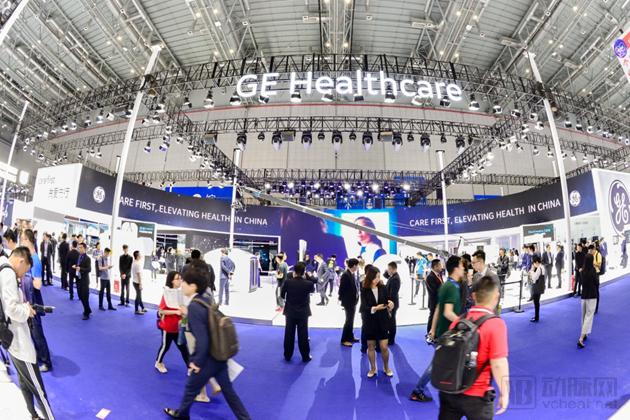
GE’s Booth at CMEF 2019
Zhuanghe Hospital officially introduced GE Healthcare’s “Cloud ECG” solution (the MUSE integrated ECG system) in June 2017, comprehensively deploying professional ECG examination, monitoring, and data analysis systems, and implementing a remote ECG consultation platform. Leveraging GE Healthcare’s Cloud ECG solution, routine ECG data can be transmitted with a single click: after simple operations by primary-care physicians, specialists at higher-level hospitals can access patients’ ECG data within five minutes and provide routine diagnoses.
Meanwhile, physicians at tertiary hospitals can continuously monitor changes in patients’ electrocardiograms (ECGs) and guide primary-care physicians in delivering appropriate rehabilitation therapies. Concurrent implementation of grassroots training and patient follow-up has significantly enhanced diagnostic and treatment efficiency as well as service capacity.
For STEMI patients, for whom timely treatment is critical, the Cloud ECG Platform immediately activates a green life channel to coordinate emergency resources, striving to keep the door-to-balloon (D2B) time within 90 minutes and securing the golden window for rescue. The majority of patients processed through this green channel stabilize successfully, and after discharge, they can undergo regular follow-up examinations at community health centers near their residences.
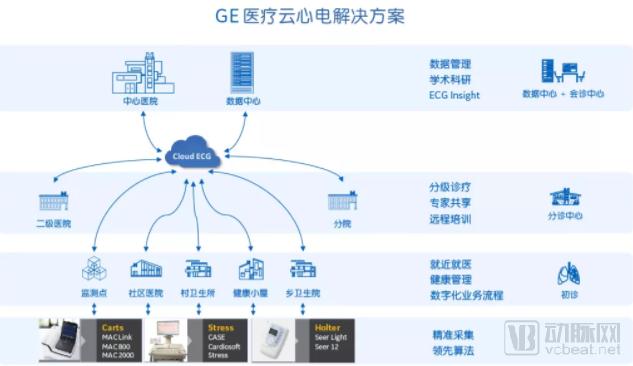
By the end of 2018, the remote ECG consultation platform had performed nearly 30,000 remote electrocardiographic diagnoses for over 24,000 patients. On average, it assisted primary care hospitals in treating 3–4 STEMI cases per month. The hospital’s PCI procedure volume tripled within two years, while the proportion of cardiovascular patients referred to external facilities decreased from 17% in 2016 to 7%. In 2018 alone, nearly RMB 5 million was saved in medical insurance and rural cooperative medical scheme funds.
Leveraging the Cloud ECG Platform, Zhuanghe Hospital has successfully taken the lead in establishing a three-tier coordinated prevention and treatment system. On one hand, it has efficiently integrated township health institutions to build a tiered diagnosis and treatment system that covers primary care services for patients within the region, features two-way referrals, separates the management of acute and chronic conditions, and ensures coordination between upper- and lower-level medical facilities.
On the other hand, a communication platform has been established with medical teaching hospitals such as the First and Second Affiliated Hospitals of Dalian Medical University. Medical institutions within the three-tier linkage prevention and treatment system maintain close communication in clinical practice, education, and research, accelerating the homogenization of regional healthcare through standardized medical services, enhancing the academic standards of primary care hospitals, and thereby improving the overall capacity for cardiovascular disease management in the region.
Hospital leadership at Zhuanghe Hospital stated that, within the next year, the hospital will proceed with Phase II construction of its remote ECG consultation platform. This initiative will first extend routine electrocardiogram (ECG) services to all primary healthcare institutions across the district, and subsequently establish 5–10 pilot sites for 24-hour ambulatory ECG monitoring, thereby enhancing the diagnostic and treatment system to better serve the health needs of the population in the Zhuanghe region.
Siemens Healthineers’ Smart Cath Lab Enables Primary Care Hospitals to Deliver High-Quality Interventional Therapy Services
On May 7, 2019, Baicheng Hospital in Jilin Province officially established a digital subtraction angiography (DSA) catheterization laboratory, marking a historic milestone in the hospital’s interventional diagnosis and treatment capabilities.
Wang Dun, President of Baicheng City Hospital, stated, “As a primary care hospital, we have overcome various challenges in funding, technology, and staffing, consistently prioritizing the assurance and improvement of medical services across all our operations. Thanks to Siemens Healthineers’ Smart Cath Lab Incubator Project, we built a DSA catheterization laboratory from the ground up that represents an advanced level within China, and our grassroots healthcare professionals have had the opportunity to undertake advanced training at high-level hospitals in Beijing. Cardiovascular patients in Baicheng City can now access high-quality interventional treatment services locally, without needing to travel to Beijing.”
Siemens Healthineers has launched the “Zero-Start One-Stop Smart Catheterization Lab Incubator” program for primary care hospitals in China, addressing their current conditions and needs. By leveraging a model that integrates Siemens Healthineers’ products with comprehensive services, the program provides holistic solutions for the construction, operation, and development of catheterization labs, thereby supporting primary care hospitals in establishing “comprehensive interventional” catheterization labs. The establishment of the DSA catheterization lab at Baicheng City Hospital also marks the successful implementation of Siemens Healthineers’ regional demonstration base for smart catheterization labs at Baicheng City Hospital in Jilin Province.
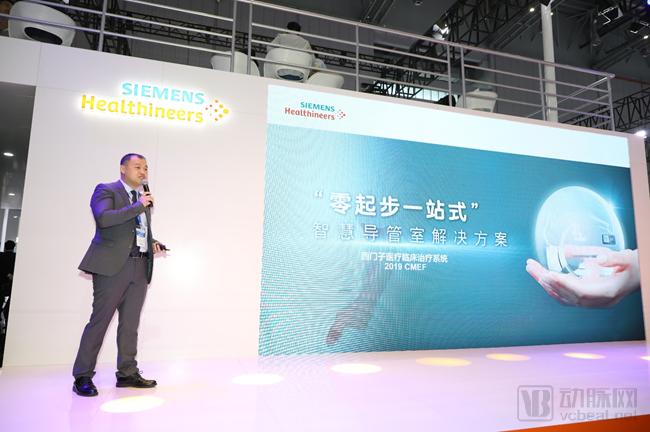
Siemens Healthineers' Exhibition at CMEF 2019
Leveraging the Siemens Group’s business network, Siemens Healthineers provides supply chain finance solutions and financial support to primary-care hospitals through Siemens Financial Leasing Co., Ltd., aiming to alleviate their funding constraints. For instance, Baicheng City Hospital adopted a three-year installment payment plan to complete the purchase of the Siemens Healthineers Smart Catheterization Laboratory project, with interest borne by Siemens Healthineers’ distributors, significantly easing the hospital’s financial burden.
In addition to support in equipment, technology, and funding, the Siemens Healthineers Smart Cath Lab Solution empowers the operations of comprehensive interventional treatment centers at primary-care hospitals through technological enablement. It includes the Siemens Healthineers RPMS Lean Management System for operational efficiency, interventional department patient surgical scheduling management, the SAMS Asset Management Cloud Assistant, and teamplay, a cloud-based digital healthcare ecosystem. This solution comprehensively meets hospital needs for medical data management, including imaging operational performance monitoring, surgical schedule management, dynamic equipment information management, and online remote education.
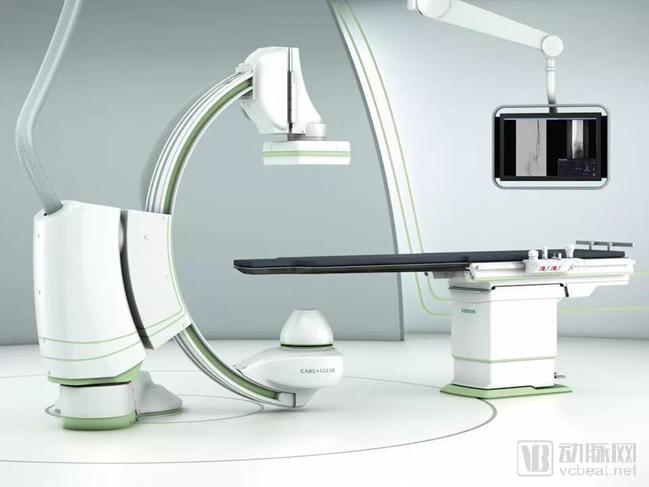
The catheterization laboratory at Baicheng City Hospital has adopted the Artis one angiography system, a medical X-ray device custom-built by Siemens Healthineers for its “Zero-Start One-Stop Smart Cath Lab Incubator.” Mr. Pu Zhengrong, Vice President of Clinical Therapy Systems at Siemens Healthineers Greater China, stated, “Artis one features strong compatibility, comprehensive performance, and superior cost-effectiveness. Having received the German Red Dot Award for Industrial Design, it is a flagship integrated interventional product specifically developed by Siemens Healthineers for the primary healthcare market.”
Artis one embodies three core elements: heritage, innovation, and agility. Its agility is demonstrated by its entire gantry motion system, which adopts the latest mechanical technology from Siemens Healthineers, offering fast, flexible, and noise-free operation. Its coverage range is fully comparable to that of ceiling-mounted systems, while imposing minimal requirements on the catheterization lab size, needing only 25 square meters of space, making it particularly suitable for primary care hospitals. Based on Artis one, hospitals can later upgrade their smart catheterization labs into comprehensive interventional diagnosis and treatment centers.
Furthermore, the biggest challenge for primary-care hospitals in establishing integrated catheterization laboratories is the shortage of specialized medical and technical personnel. To address this, Siemens Healthineers’ Clinical Therapy Systems has entered into a strategic partnership with the Dandelion Medical Alliance. The Dandelion Medical Alliance was jointly initiated by five top experts in the field of interventional medicine: Professor Lü Shuzheng from the Department of Cardiology at Beijing Anzhen Hospital; Professor Li Xuan from the Department of Interventional Vascular Surgery at Peking University Third Hospital; Professor Qiao Shubin from the Department of Cardiology at Beijing Fuwai Cardiovascular Disease Hospital; Professor Miao Zhongrong from the Department of Neurology at Beijing Tiantan Hospital; and Professor Zheng Yuehong from the Department of Vascular Surgery at Peking Union Medical College Hospital. The alliance aims to cultivate talent pipelines for primary-care hospitals and enhance the quality and efficiency of diagnosis and treatment provided by primary-care physicians.
Taking Baicheng City Hospital as an example, after the Smart Catheterization Laboratory project was launched in November 2017, Siemens Healthineers arranged for relevant personnel from Baicheng City Hospital to visit its R&D and production base for interventional radiology clinical therapy systems in Shenzhen, as well as the Chinese People's Liberation Army General Hospital (301 Hospital) in Beijing. This enabled grassroots medical staff to gain a clear, intuitive understanding and first-hand experience of Siemens Healthineers’ Smart Catheterization Laboratory and Comprehensive Interventional Diagnosis and Treatment Center.
Subsequently, Siemens Healthineers arranged for medical staff from Baicheng City Hospital to undertake advanced training in interventional diagnostic and therapeutic techniques at Beijing Fuwai Hospital, Beijing Tiantan Hospital, and Peking University Third Hospital. In accordance with the Siemens Healthineers Smart Catheterization Laboratory Project plan, physicians and technicians from primary-care hospitals will undergo six to twelve months of on-site training at intervention training bases designated by the National Health Commission, and must pass examinations to obtain completion certificates. Siemens Healthineers has also partnered with the Dandelion Medical Alliance and Yuanda Kangcheng to provide online and offline advanced training and continuing education for primary-care physicians, as well as remote consultation services covering online consultations, imaging second opinions, and long-term follow-up.
Wang Hao, President of Siemens Healthineers Greater China, stated: “We are committed to providing comprehensive solutions for interventional procedures at primary-care hospitals. In collaboration with leading domestic experts in the field of interventional medicine, Siemens Healthineers has jointly launched the Dandelion Medical Alliance. This initiative offers professional talent development and departmental construction programs to primary-care hospitals, genuinely enhancing their diagnostic and treatment capabilities. By supporting the implementation of the national tiered diagnosis and treatment system and breaking down geographical barriers, we ensure that patients receive high-quality medical services promptly.”
Philips “Shenfei Cloud”: Providing Imaging Collaboration and Sharing Services for Primary Care Hospitals
The “Shenfei Cloud” China Smart Healthcare Cloud Platform, which made its debut at the previous CMEF exhibition, was jointly created by Philips and Neusoft Medical through in-depth collaboration. As a secure and reliable big data application platform for healthcare, “Shenfei Cloud” aims to provide customized and scalable cloud solutions for medical institutions; intelligent, efficient, and precise cloud-based workflows for physicians; and cloud-enabled health services supporting full lifecycle management for patients.
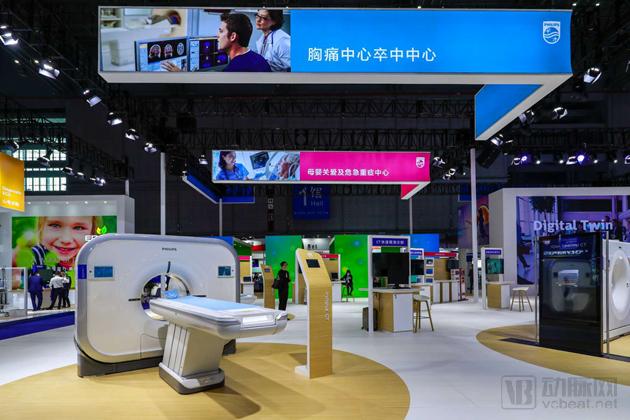
Philips' Booth at CMEF 2019
“Shenfei Cloud” is the first to deploy the “Philips Nebula Image Post-Processing System,” an intelligent medical imaging computer-aided diagnosis system with dual FDA and CFDA certifications, on the cloud. It provides customers with a “cloud platform” solution featuring greater flexibility and convenience, personalized package customization, and flexible payment mechanisms. This enables healthcare institutions at all levels to leverage authoritative and advanced medical informatics tools in a cost-effective manner, helping physicians efficiently achieve precise diagnoses and personalized surgical planning, predict surgical outcomes in advance, and conduct timely postoperative assessments, ultimately improving surgical quality and patients’ quality of life.
“The Philips Nebula System” is an integrated, intelligent clinical imaging diagnosis platform that enables image fusion across imaging devices of different brands and types. It provides advanced visualization and post-processing for multi-modal imaging, helping radiologists better identify lesions and monitor, diagnose, and follow up on disease treatment. Version 9.0 also features new machine learning capabilities, offering intelligent diagnostic support to clinicians.
The system covers multiple clinical areas in radiology, including cardiology, oncology (liver, lung, breast, prostate, etc.), and neurology. It features over 80 applications that leverage advanced 3D rendering to provide clearer visualization of anatomical structures, enabling clinicians to make rapid and precise diagnostic decisions based on imaging data and to plan personalized treatment regimens.
“Shenfei Cloud,” jointly launched by Philips and Shenzhou Medical, is designed to meet the urgent needs of building medical consortiums under the tiered diagnosis and treatment system. The establishment of medical consortiums represents a critical step and institutional innovation in implementing tiered diagnosis and treatment, facilitating the adjustment and optimization of healthcare resource allocation, enhancing primary care service capabilities, and constituting a top priority in China’s healthcare reform. Approximately 70% of clinical diagnoses rely on medical imaging; however, imaging diagnosis remains one of the weakest links in primary hospitals.
Therefore, implementing remote imaging diagnosis within medical consortia holds significant practical importance for “strengthening primary care.” The development of a “Telemedicine Imaging Solution” relies on three tiers of core technologies, which are, from top to bottom: imaging diagnostic equipment, computer-aided diagnosis (CAD) systems and services; health information exchange (HIE) technologies and services; and medical image data storage and management platforms.
The strategic partnership between the two parties is dedicated to integrating technologies and services across the aforementioned three tiers, delivering medical tele-radiology solutions with the deepest clinical expertise in the industry. Leveraging cloud-based connectivity, “Shenfei Cloud” provides various image collaboration and sharing services. By relying on the “Philips Nebula System,” it enables remote diagnosis, bidirectional patient referral, remote consultation, remote training, and remote workflow management among hospitals at different levels. Its clients include medical consortia, medical imaging centers, physician groups, third-party independent imaging centers, and health examination centers.
Under the strategic cooperation agreement between Philips and Neusoft Medical, both parties will leverage “Shenfei Cloud” to sequentially launch a series of products and services, including a full-lifecycle health cloud platform and an oncology cloud platform.
Based on the grassroots solutions offered by GE, Philips, and Siemens Healthineers, it is evident that remote digital products have become a key market entry strategy for these three imaging equipment giants. In terms of implementation models, beyond providing support to primary care hospitals in areas such as products, expert resources, and funding, it is also essential to leverage corporate resources from tertiary Grade A hospitals to help primary medical institutions enhance their capabilities in clinical practice, teaching, and research. This approach aims to break geographical barriers, enabling patients to access high-quality medical services at the primary care level.