

Sinovision and Partners Establish China Lung Cancer Intelligent Diagnosis and Treatment Strategic Alliance to Streamline Full-Care Pathway; Files IPO Prospectus

SinoVision
Developer and Manufacturer of High-End Medical Imaging Equipment
Lung cancer has long been a source of deep concern for the public.
Statistically, China ranks first globally in both the annual number of new lung cancer cases and the annual number of lung cancer-related deaths. While tertiary hospitals can provide effective treatment, not all hospitals in China are tertiary institutions, leaving a large number of patients unable to receive timely and effective care.
Jia Jiande, President of the Shanghai Health Life Promotion Association, lamented: “There are two major obstacles in lung cancer treatment: first, the lack of primary healthcare facilities; second, the shortage of physicians at the primary care level. Cancer is controllable, but the number of patients is difficult to manage.”
To address the various challenges in primary healthcare and curb the severe trend of lung cancer incidence in China, Sinovision, in collaboration with Tuma Shenwei, Dr. Li Zhong Medical Group, and Sion International Medical, jointly established the China Intelligent Diagnosis and Treatment Strategic Alliance for Lung Cancer at the 2019 CMEF.
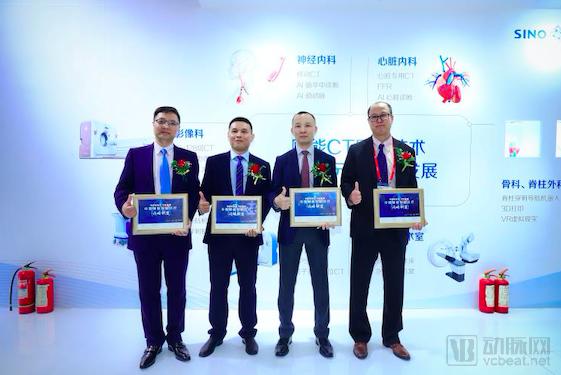
This alliance will take it as its mission to empower primary care in lung cancer diagnosis and treatment, streamline the entire process of lung cancer screening, treatment, and follow-up, and transform the current state of lung cancer care in China’s primary healthcare settings through a novel alliance model.
By integrating the advanced technologies and resources of its member enterprises, the Alliance has leveraged Dr. Li Zhong Physician Group’s proprietary argon-helium cryoablation tunneling lung biopsy technique to provide a novel solution for cancer biopsy and treatment.
Li Zhong told VCBeat, “Currently, there are many patients with pulmonary nodules. Diagnosis relies primarily on imaging techniques. When imaging suggests a likelihood of tumor, the standard approach is video-assisted thoracoscopic surgery (VATS) for local resection and biopsy of the pulmonary nodule under general anesthesia. Intraoperative frozen section pathology is then used to determine whether the lesion is malignant, guiding subsequent treatment decisions.”
“However, since the lungs are constantly in motion, with a vertical displacement of 2–3 cm during respiration, it is difficult for physicians to hit the target accurately with a single needle insertion during biopsy, inevitably resulting in a low success rate. Furthermore, lung collapse following puncture can obscure the pulmonary nodule, making it undetectable, and is accompanied by pneumothorax.”
In contrast, the Alliance’s pulmonary biopsy technology can fully resolve the aforementioned issues under local anesthesia by leveraging an intelligent navigation robot and ultra-low-temperature cryogenic tunneling lung biopsy.
According to reporters, Li Zhong has applied the ultra-low temperature cryoablation principle of the American argon-helium cryoknife to lung puncture biopsy. The rapid local ultra-low temperature lung freezing achieved by the argon-helium cryoknife allows for short-term cryofixation of the lung tissue. As a result, the images from CT and navigation robots align with the actual condition of the lungs, enabling doctors to promptly adjust the puncture angle based on the imaging guidance provided by the intelligent navigation robot, thereby accurately reaching the pulmonary nodule.
In the management of pulmonary nodules, Li Zhong invented a sealed negative-pressure plastic sheath. Unlike conventional open metal sheaths, this device allows the argon-helium cryoablation probe to gradually establish an ice ball tunnel to the vicinity of the nodule. After withdrawing the cryoprobe, a biopsy gun can be inserted through the same tunnel to perform multi-directional, multi-stage biopsies of the nodule.
Following the biopsy, the argon-helium cryoablation probe was reinserted through the tract to perform cryoablation at the biopsy site, inducing apoptosis of the tissue. Consequently, by the time the cryoprobe and the introducer sheath were withdrawn, the tumor cells at the biopsy site had already undergone apoptosis. In essence, this technique enables simultaneous biopsy and therapeutic treatment of lung cancer.
Throughout the entire treatment process, CT imaging and intelligent navigation robots are integrated from start to finish. To facilitate the adoption of argon-helium cryoablation technology at the primary care level, the intelligent navigation CT system manufactured by Sinovision plays a key role in this process by providing real-time imaging and surgical navigation for physicians.
Furthermore, TomoDeep, the AI enterprise within the alliance, will employ artificial intelligence technology to perform real-time delineation and rendering of lesions during navigation, thereby enhancing the decision-making capabilities of primary care physicians; meanwhile, Cryonics International Medical Technology (China) Co., Ltd. will provide the entire alliance with high-quality argon-helium cryoablation devices.
Fu Shinong, CEO of Sinovision Technology (Beijing) Co., Ltd., stated: “By leveraging Sinovision’s image navigation technology and Tuma Shenwei’s artificial intelligence technology, we can transform screening and diagnosis into a standardized process; through intelligent robotic technology, we can standardize biopsy procedures. Furthermore, the Li Zhong Doctor Group can impart these standardized workflows to primary-care physicians, thereby reducing their learning curve. This is one of the primary motivations behind our establishment of the alliance.”
Regarding the current state of primary healthcare, Fu Shinong, founder of Sinovision Technology, remarked with considerable emotion: “China’s medical resources are unevenly distributed, with tertiary Grade A hospitals enjoying the best talent and equipment. However, the key to enhancing overall medical capability lies in advancing the diagnostic and treatment standards at the primary care level. Currently, there are two challenges in popularizing diagnostic and treatment methods in primary care: one is how to identify and appropriately utilize equipment and technologies; the other is how to improve physicians’ diagnostic and treatment proficiency.”
Due to the inability to accurately analyze hospital needs, many primary-level hospitals have purchased expensive foreign-made medical equipment. However, high costs often lead to high expenses, resulting in much of this medical equipment lying idle in hospitals.
In contrast, Sinovision was founded in China and possesses a deep understanding of the needs and practices of primary healthcare institutions across the country. This enables the company to tailor its CT products specifically for these facilities, providing higher-quality equipment at comparable price points that align closely with hospital requirements.
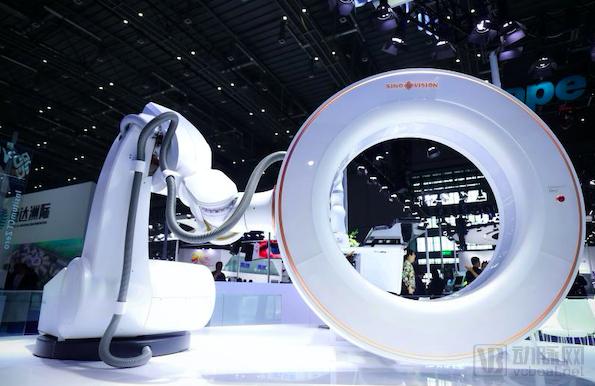
As the core of the alliance, Sinovision’s intelligent navigation CT system precisely meets the requirements of argon-helium cryoablation tunnel puncture technology, providing image-guided navigation to facilitate surgical procedures. Furthermore, this CT system is deeply integrated with Tuma Shenwei’s AI product for pulmonary nodule detection, significantly reducing missed diagnosis and misdiagnosis rates caused by factors such as parameters and interfaces.
Riding the wave of “import substitution,” Sinovision will continue to optimize the performance of its CT equipment, deepen cooperation with strategic partners, and promote the development of the China Intelligent Diagnosis and Treatment Alliance for Lung Cancer.
In the future, Sinovision’s CT systems will integrate cutting-edge technologies such as AI and argon-helium cryoablation to assist primary-care physicians in diagnosis while guiding them through standardized percutaneous needle procedures, thereby achieving “clear visualization, precise puncture, and complete ablation.” This will comprehensively enhance the interventional capabilities of primary healthcare institutions and carve out a differentiated development path for medical device manufacturers.