

Shanzhen Secures Tens of Millions in Series B Funding to Advance Its 'Service + Payment' Model for Adults Aged 60+

BlueRun Ventures China
Venture Capital Institution

Shanzhen
Operator of Internet Physical Examination Service Platform
VCBeat (WeChat ID: vcbeat) has learned that on May 21, Shanzhen, a health services and risk management platform focused on middle-aged and elderly individuals, announced the successful completion of its Series B financing round, amounting to tens of millions of U.S. dollars. The round was led by SIG (Susquehanna International Group), with existing investors GGV Capital and BlueRun Ventures China fully participating in the follow-on investment.
It is reported that the funds from this round of financing will be primarily used to deploy innovative risk control technologies for health insurance targeting middle-aged and elderly individuals, as well as to further expand the coverage and service capacity of its health services. This also marks the first time Shanzhen has publicly disclosed its financing details.
Guo Lu, Partner at SIG, the lead investor in this round, stated: “Amid the global wave of population aging, the senior health sector targeted by Shanzhen is at an inflection point poised for explosive growth, with strong growth trends likely to persist for decades. Shanzhen has established a complete closed loop spanning health services, health interventions, and insurance payments, while leveraging big data capabilities across data collection, processing, and application. This enables an internal ecological cycle of business operations, creating substantial long-term value both in unlocking the senior health market and in building a society that supports healthy aging.”
GGV Capital, the Series A investor, participated in this follow-on round. Wu Chenyao, Executive Director at GGV, stated, “The broader healthcare sector is undoubtedly one of the most promising fields over the next decade. Amidst the myriad of innovations and capital allocations, media attention has largely focused on the moves of traditional players in healthcare, pharmaceuticals, insurance, and even real estate giants. However, the industry’s true flourishing requires emerging companies like Shanzhen, which possess both service delivery capabilities and data analytics expertise. Shanzhen’s nationwide health service network and its deep research capabilities in elderly health data endow it with significant innovation potential. Over the years, Wu Hongxing and the Shanzhen team have demonstrated a patience and resilience rare among internet startups, maintaining a steadfast focus on long-term value and strategy. We believe Shanzhen is poised to play a pivotal role in China’s broader healthcare landscape.”
BlueRun Ventures China, the angel-round investor, also participated in this round of follow-on investment. Chen Weiguang, Managing Partner at BlueRun, stated: “As Chinese society gradually ages, the corresponding demand for healthcare and insurance continues to rise. BlueRun invested in Shanzhen after observing that the elderly market segment was largely underserved. Leveraging its health services network and family doctor programs, Shanzhen has accumulated extensive nationwide health data on middle-aged and elderly individuals and conducted in-depth research, thereby developing capabilities in insurance product design and pricing that effectively meet the growing demand.”

(Image source: Provided by the company)
Data from the National Bureau of Statistics shows that in 2018, China's population aged 60 and above reached 249 million, accounting for 17.8% of the total population (internationally, a country or region is defined as an aging society when the proportion of its population aged 60 and above exceeds 10%). On average, nearly 25,000 people enter the ranks of the elderly (aged 60 and above) every day.
By 2020, the number of middle-aged and elderly people aged 50 and above in China will reach approximately 400 million. According to the "National Assessment Report on Aging and Health in China," by 2040, the proportion of the population aged 60 and above will account for 28% (402 million) of the total population.
Starting in 2030, the output value of China’s health industry will also exceed 10% of its GDP. As China enters the peak period of population aging, the elderly care and health industry will usher in a sustained boom lasting half a century. According to estimates by Zhiyan Consulting, by 2050, China’s worker-to-retiree dependency ratio will shift from the current three workers supporting one retiree to 1.5 workers supporting one retiree. After the age of 60, human physiological functions continuously decline, and the risk of disease rises sharply, which will become a heavy burden on hundreds of millions of Chinese families.
“If you examine human history, you will recognize that this is the first time in the entire course of human society that population aging has emerged. Therefore, I believe the general health industry targeting middle-aged and elderly populations is ushering in a historic opportunity. In China, with the implementation of the family planning policy in the 1980s, the eldercare model in which multiple children supported one pair of parents has gradually been replaced by a model in which one couple supports four elderly parents. Meanwhile, influenced by the expansion of university enrollment, the first generation of only children has completed an irreversible demographic migration from third- and fourth-tier cities (and below) to first- and second-tier cities. This has added the challenge of managing their parents’ health remotely to the already high-pressure ‘4-2-1’ eldercare model (where two spouses face the burden of caring for four elderly parents and one child). These factors have made the 228 million people born in the 1980s, the 174 million people born in the 1990s, and their parents the groups most acutely affected by this wave of population aging.”
“Based on this assessment, Shanzhen was positioned at its inception in 2015 to address the health and elderly care needs of the parents of the post-80s and post-90s generations. By leveraging the internet to empower the medical, healthcare, and elderly care sectors, we have established a platform dedicated to comprehensive health management for the elderly, thereby enabling their children to better serve them,” said Wu Hongxing, Founder and CEO of Shanzhen.

Shanzhen Founder and CEO Wu Hongxing (Image source: Provided by the company)
“Currently, a common phenomenon exists where young professionals striving in first- and second-tier cities can only learn about the living conditions and physical health of their parents, who reside in third- and fourth-tier cities or lower, through weekly phone calls. To alleviate their children’s worries, parents often conceal their actual health issues. Many people have experienced urging their parents to undergo regular medical check-ups, avoid indiscriminately purchasing health supplements, and not endure illnesses without treatment; however, parents often respond passively. This is a real challenge faced by many only children from the post-80s and post-90s generations. If an ecological network covering China could be established to help children manage their parents’ health, enabling real-time monitoring of family members’ true health status and providing professional and reasonable health intervention plans, it would not only meet the urgent need for remote health management but also generate significant long-term value for society as a whole,” said Wu Hongxing.
Currently, Shanzhen has established a nationwide health service system. This system comprises a network of health terminal services spanning nearly 2,000 public hospitals and medical service institutions across 31 provinces and over 200 cities in China, as well as an expert service platform with more than 1,000 professionals. As of the first quarter of 2019, it had cumulatively provided medical and health services to over 3 million consumers and more than 5,000 enterprises.
Meanwhile, through its health service network, family doctor programs, and extensive user communities, Shanzhen has accumulated a massive nationwide database of health data on middle-aged and elderly individuals, including user-authorized medical and behavioral data. Leveraging this data, Shanzhen has conducted in-depth research on elderly health. Building upon these big data insights, Shanzhen’s actuarial and medical teams have developed “Alpha,” a precision risk control engine for insurance tailored to the silver-haired demographic. Integrated with its nationwide health service system, this engine enables the vertical application of health big data in the insurance sector.
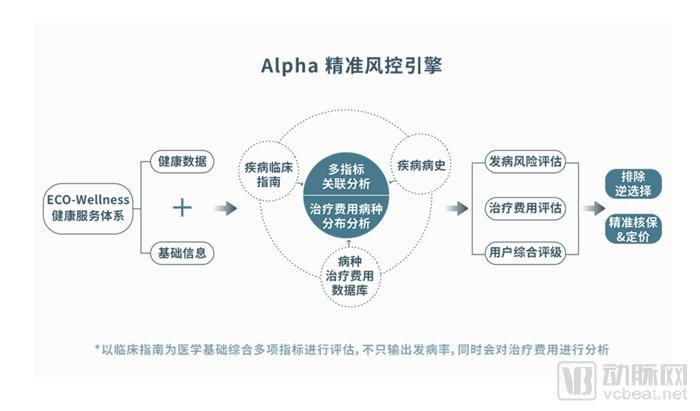
(Image source: Provided by the company)
“The medical and broader health industries feature long industrial chains with numerous links, making the development of ‘infrastructure’ particularly critical. Over the past few years, Shanzhen has undertaken substantial foundational work, establishing a nationwide health service network, accumulating extensive research insights into the health status of middle-aged and elderly populations, and building core capabilities in the collection, processing, and application of health big data. Leveraging this ‘infrastructure,’ we have engaged parents through their children and extended our reach from first- and second-tier cities to third- and fourth-tier cities, serving a large number of users previously considered to have low service value or even unserviceable. Currently, we are arguably the health industry expert that ‘best understands’ the middle-aged and elderly population in China,” introduced Wu Hongxing.
According to the white paper "The Right to Development: China's Philosophy, Practice and Contributions" published by the State Council, personal out-of-pocket expenses account for 40% of total medical costs in China. Compared with other developed countries, this imposes a heavier burden on individuals and indicates insufficient social protection. Furthermore, population aging and changes in the social elderly care structure are expected to widen the funding gap in healthcare payments. As people age, the risk of disease among middle-aged and elderly individuals continues to rise, and the potential high medical costs associated with these conditions are increasingly straining the caregiving responsibilities of "4-2-1" families (four grandparents, two parents, and one child). Therefore, identifying a reasonable "payer" for the medical and health expenses of the middle-aged and elderly is essential to providing sustainable solutions for health services tailored to an aging society.
Beyond the social security system, commercial insurance is the most rational “payer” for healthcare among middle-aged and elderly individuals. In recent years, rapid economic development and rising per capita income have spurred greater insurance awareness, with younger generations gradually becoming the primary purchasers of insurance products. According to the “Report on Insurance Attitudes of the Post-90s Generation” released by Taikang Online, health consciousness has generally awakened among those born in the 1990s; in addition to caring for their own health, they are increasingly concerned about their parents’ health risks. As the generation bearing the responsibility of elder care, young people exhibit a strong willingness to purchase insurance for their parents, aiming to provide an additional layer of security for their parents’ lives while alleviating their own financial burden associated with aging care.
However, due to a lack of understanding and research into elderly health data, insurance companies in the current market find it difficult to establish scientific health data models for the elderly, thereby failing to provide comprehensive health protection products tailored to this demographic. Apart from single-disease coverage with extremely limited scope, such as cancer insurance, comprehensive medical insurance for the elderly has remained an intractable challenge for the industry.
In March 2019, leveraging the “Alpha” precision risk control engine, Shanzhen partnered with the insurance industry to launch China’s first senior medical insurance product covering individuals up to age 80. This breakthrough not only removed age restrictions for seniors purchasing medical insurance but also provided basic coverage for 100 common critical illnesses, along with an upgraded benefit package without disease-specific exclusions, and a maximum sum insured of up to RMB 4 million—unimaginable in the insurance sector previously. This development highlighted the potential to unlock the trillion-yuan blue-ocean market for senior medical insurance.
Shanzhen’s health risk management capabilities for middle-aged and elderly individuals can facilitate product innovation and market exploration across the insurance industry. Shortly after the launch of its first medical insurance product for seniors, Shanzhen rapidly established strategic partnerships with RGA (Reinsurance Group of America), Fosun United Health Insurance, and others, to conduct in-depth exploration in areas such as product development, risk control research, and user behavior analysis within the realm of elderly health protection. This also marks Shanzhen’s formal initiation of a structured layout for elderly health protection products.
Wu Hongxing stated, “We aim to help improve the overall health of hundreds of millions of middle-aged and elderly people in China, and to provide multi-dimensional health protection for this demographic. Our goal is to alleviate the burden on their children, enable seniors to enjoy a healthy and happy later life, and help society further release resources, thereby offering a novel solution for ‘healthy aging.’”