

DARMA Files IPO Prospectus: Pioneering 'Image-Free Cardiac Ultrasound' with NMPA-Approved Smart Monitoring Mattress Backed by Google Order
Hu Junhao has now emerged from the depression he experienced during his doctoral studies and calmly recounts his story to reporters.
Hu Junhao was admitted to the Department of Electronics at Huazhong University of Science and Technology at the age of 16, and earned his Ph.D. in Optoelectronics from the National University of Singapore at 24. He subsequently joined the Agency for Science, Technology and Research (A*STAR) in Singapore as a research fellow. His research on fiber-optic sensor products enables the detection of submarine engine locations, monitoring of oil pipeline leaks, and assessment of aircraft wing structural safety, among other applications.
“At first, on several occasions, we demonstrated our fiber-optic sensor products to potential clients, allowing them to experience non-contact monitoring of heart rate and respiration. Although we had agreed to conduct the measurements under quiet conditions, the clients would begin asking, ‘When will the data appear?’ and ‘Why isn’t it showing up yet?’ as soon as they sat down. This speaking interfered with the measurement, resulting in inaccurate readings. They then provided feedback, requesting that we develop a product capable of delivering accurate measurements even while the user is talking...” Hu Junhao’s tone on the other end of the phone conveyed a sense of helplessness. “It sounded reasonable, so we conducted extensive research to meet their needs, but does this truly make sense?”
Repeatedly engaging in “research for the sake of research” led Hu Junhao to develop depression, leaving him confused, helpless, and suffering in silence.
Until one day, he inadvertently overheard Steve Jobs’ speech at Stanford: “‘If today were the last day of my life, would I want to do what I am about to do today? And whenever the answer has been "No" for too many days in a row, I know I need to change something.’ Life is short; I cannot predict what will happen tomorrow. I could step out the door and be struck dead by a car.” Encouraged by his psychologist, Hu Junhao decided to make some changes.
Hu Junhao, equipped with his self-developed sensors capable of monitoring human physiological metrics, began exploring a path toward commercialization and consumer accessibility. Between 2011 and 2013, when Bluetooth 4.0 was integrated into the iPhone, Hu sensed that the shift from mobile internet to the Internet of Things (IoT) would present significant era-defining opportunities. At that time, IoT-based wearable devices had not yet fully emerged, partly because they required users to alter their behavioral habits. Consequently, Hu identified sensors—the first core component of the IoT ecosystem—as his key strategic breakthrough. He initially launched smart cushions as his debut product in the U.S. market.
In 2014, Hu Junhao established DARMA INC. in Silicon Valley. In 2015, he founded Shenzhen Darma Technology Co., Ltd. (hereinafter referred to as “DARMA”) to further explore the commercialization of fiber-optic sensors for consumer applications.
In 2016, during the shipment of the first batch of cushions to the United States, Hu Junhao received orders from Google and Aetna International Health Insurance Company. Google and Aetna purchased dozens of DARMA cushions for hundreds of thousands of dollars, seeking to establish a partnership with DARMA.
Of course, these two industry giants were not simply interested in DARMA’s smart cushion; what they valued was the core data that could be collected through its embedded fiber-optic sensor technology. During in-depth discussions on collaboration, Google and Aetna presented DARMA with two recommendations and requirements:
First, is the collected data medical-grade? Can it obtain FDA clearance?
Second, can the product deliver greater clinical value?
After heeding this advice, Hu Junhao recognized the importance of “medical-grade” standards. Consequently, DARMA initiated certification processes with China’s CFDA and the U.S. FDA. Meanwhile, targeting EarlySense, a U.S.-based company that sells high-priced medical-grade monitoring devices, DARMA redesigned its product into a mattress form factor.
In October 2018, DARMA’s smart monitoring mattress received certification from China’s CFDA. Clinical trials in the United States were completed at three hospitals, all meeting the standards previously agreed upon with the FDA. Hu Junhao expects that DARMA will officially obtain U.S. FDA clearance within a few months.
Darma has designed a comprehensive IoT + Cloud + AI solution for its partners in the field of intelligent monitoring.
Technologically, DARMA’s fiber-optic sensor technology leverages optical detection principles to achieve high-precision acquisition and reconstruction of minute vibrations caused by respiration and heartbeat, while employing its proprietary algorithms to extract relevant vital sign information. Reportedly, DARMA’s fiber-optic sensors offer high sensitivity, enabling measurements through mattresses up to 50 cm thick. Furthermore, the size and sensitivity of its monitoring devices can be flexibly designed to suit various application scenarios.
Through clinical comparative trials, the DARMA smart monitoring device demonstrated a heart rate measurement deviation of within ±3 bpm and a mean respiratory rate deviation of within ±2 rpm compared to multi-parameter patient monitors widely used in hospitals. It is reported that DARMA supports weight measurements ranging from 10 kg to 150 kg, enabling simultaneous monitoring of multiple individuals without mutual interference.
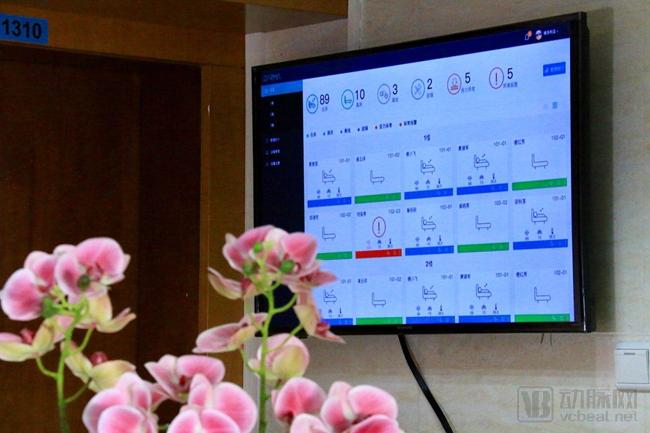
Application of DARMA in Elderly Care Institutions (Image source: Provided by the company)
DARMA monitoring devices automatically upload users’ vital signs and behavioral data in real time to servers via wireless networks for algorithmic processing. The server synchronizes the data in real time to the App or web interface. Through the web-based platform, institutional staff can monitor the nighttime sleep conditions and vital signs of all patients across the facility in real time on large screens at the monitoring center. The system automatically triggers alerts when a patient remains out of bed for an extended period or when abnormal vital signs are detected. On the App, family members can also monitor the user’s health status in real time.
It is reported that DARMA’s entire cloud-based system and front-end management platform also support private deployment, while providing API interfaces to push data in real time to third-party platforms.
In addition, the DARMA algorithm deployed in the cloud automatically generates daily sleep reports for users. On a weekly basis, the DARMA data algorithm conducts a comprehensive assessment based on the user’s vital signs, heart rate variability (HRV), and sleep data to analyze monitoring trends. These health reports also provide a data foundation for physicians in diagnosing diseases.
It is understood that DARMA monitoring devices are currently widely used in various settings, including hospitals, elderly care institutions, rehabilitation centers, and community care centers.
Health monitoring should not be limited to measuring respiration, heart rate, and sleep; the applications of corresponding fiber-optic sensors extend far beyond these parameters.
“In military and industrial applications, fiber-optic sensors (fiber-optic hydrophones) are used to monitor underwater submarines. These sensors convert acoustic vibrations caused by submarines into optical signals through highly sensitive optical coherence detection, and transmit the signals via optical fibers to a signal processing system for extraction of acoustic information.” Hu Junhao cited the example of submarines to illustrate how subtle vibrations induced by cardiac activity affect optical signals within optical fibers.
Each heartbeat is not merely a simple cycle of cardiac contraction and relaxation that ejects blood; it also encompasses the entire process whereby venous blood from all levels of the systemic circulation returns to the right heart, undergoes oxygenation via the pulmonary circulation, returns to the left heart, and is then pumped through the aorta into arteries at all levels throughout the body, accompanied by the opening and closing of cardiac valves. Furthermore, the subtle vibrations generated by each heartbeat can induce changes in light transmission within optical fibers.
The DARMA fiber-optic sensor array continuously detects waveforms generated by cardiac pulsations from the back, thereby assessing hemodynamic parameters. These include systolic function, diastolic function, ventricular filling pressure, left atrial pressure, aortic pressure, pulmonary artery pressure, valvular function, cardiac rhythm (atrial fibrillation, atrial flutter, premature beats, bradycardia), and myocardial function, providing results equivalent to those of an echocardiogram.
Taking heart failure patients as an example, these individuals may experience cardiac deterioration at any time while at home. There is typically a 20–30 day lag between the onset of physiological deterioration and the emergence of overt symptoms (such as dyspnea and weight gain). By the time patients perceive noticeable symptoms, the deterioration has persisted for too long, resulting in irreversible damage to the heart. However, during the initial stages of deterioration, patients remain asymptomatic. Hu Junhao told reporters, “By the time you feel the symptoms of cardiac deterioration, you may be close to needing intensive care unit (ICU) admission.” After heart failure patients are discharged, physicians lose continuous oversight of their condition. Just as diabetes management requires glucometers, cardiovascular disease management necessitates home-based cardiovascular monitoring devices.
DARMA embeds arrays of fiber-optic sensors into smart mattresses to facilitate heart failure management, stroke risk assessment, early detection of myocardial infarction, and hypertension risk management for patients.
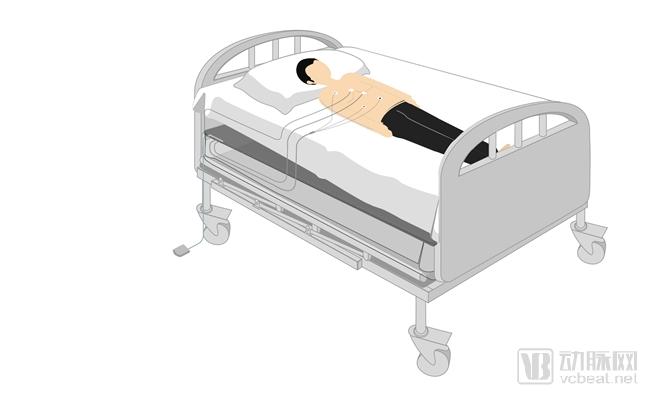
DARMA Smart Mattress Upgraded Version, i.e., "Image-Free Cardiac Ultrasound" (Image source: Provided by the company)
“During the initial product testing phase, our colleagues served as volunteers. One of them happened to be feeling unwell at the time. Our product detected mild mitral regurgitation. We immediately arranged for him to undergo an echocardiogram at a hospital, which confirmed cardiac enlargement and a diagnosis of mitral regurgitation,” said Hu Junhao.
It is reported that DARMA’s “imageless cardiac ultrasound” product has been used in over 200 clinical cases in China, with each signal accompanied by detailed echocardiographic records for assessing cardiac filling pressure in heart failure patients. Assessing cardiac filling pressure is a core component of heart failure management and treatment. Cardiac filling pressure refers to the pressure exerted on the ventricles at the end of diastole. Excessively high filling pressure can cause myocardial injury and cardiac dilation, leading to a rapid vicious cycle of deteriorating cardiac function. Through systematic research, DARMA has identified several parameters closely associated with elevated filling pressure from the measured fiber-optic vibration signals. Clinical trial statistics demonstrate that DARMA’s product achieves an accuracy rate exceeding 85% in assessing cardiac filling pressure.
The aforementioned clinical studies demonstrate that the DARMA sensor can non-invasively measure and jointly evaluate multiple parameters of cardiac filling pressure, with accuracy exceeding industry standards. Regarding the goal of long-term non-invasive management for heart failure patients, a cross-comparison with other non-invasive technologies indicates that DARMA technology has achieved a high level of maturity.
Next, Darma will continue to collaborate with large-scale hospitals and elderly care institutions, expanding the clinical application scope of its non-invasive hemodynamic products.