

China's Health Management Landscape Poised for Transformation Led by Canadian Hospital Executive
After completing a flight of over 10,000 kilometers from Canada to China, Ms. Carrie, President of Seven Oaks General Hospital in Canada and CEO of the Canadian Wellness Institute (hereinafter referred to as “CWI”), traveled to Guangzhou at invitation. At the 2019 Primary Care Innovation Practice Summit hosted by VCBeat, she delivered a keynote speech titled “A Health Management Model Dedicated to Prevention and Chronic Disease Management.”
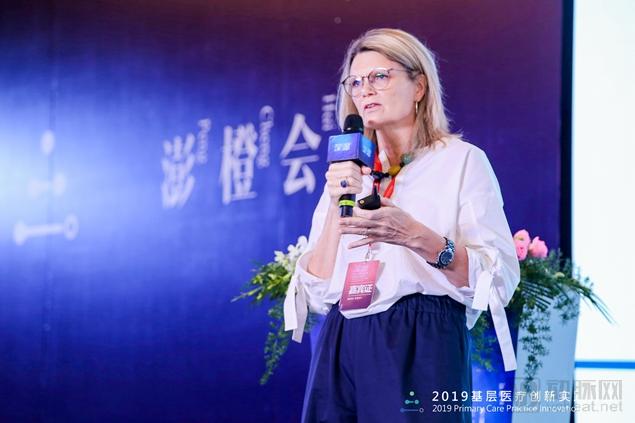
Ms. Carrie, President of Seven Oaks General Hospital in Canada and CEO of the Canadian Health Management Center
Shared at the VCBeat 2019 Summit on Innovation and Practice in Primary Healthcare
Shared with the experts and scholars present a cutting-edge discipline—Lifestyle Medicine—that provides comprehensive health intervention and management for healthy individuals, those in a sub-health state, and patients with chronic diseases, addressing multiple dimensions including exercise, nutrition, stress, and sleep.
Twenty-three years ago, Canada also faced a predicament similar to that currently confronting China’s healthcare system: the inability to identify innovative and effective strategies for controlling chronic diseases, which incur substantial healthcare expenditures.
Howard Waldner, a Visiting Professor at the University of British Columbia’s School of Population and Public Health, described the current situation while introducing the Canadian healthcare system: The proportion of individuals aged 65 and older in Canada is two to three times that in China, inevitably leading to substantial demand for acute care hospital beds. Meanwhile, the payment structure of the Canadian healthcare system has also driven up the cost of medical technologies, placing a significant burden on public healthcare expenditures. Therefore, reducing healthcare costs through effective disease prevention and chronic disease management is of particular importance.
During her presentation at the conference, Carrie presented a set of data showing that, according to Canadian statistics, seven out of every ten deaths are attributable to chronic diseases. Consequently, two-thirds of healthcare expenditures in Canada are spent on the treatment of chronic conditions. “It is projected that by 2049, the healthcare burden imposed by chronic diseases on the Canadian health system will increase by 300%. Although these figures pertain specifically to Canada, they reflect a clear global trend.”
Carrie told VCBeat that Canada implements a universal healthcare policy, which is very similar to China’s healthcare system. However, in China, health insurance primarily covers diagnostic and treatment services as well as pharmaceuticals focused on disease management. In her view, the Chinese government has recognized the importance of disease prevention, particularly for chronic diseases, and has taken a series of measures to guide the gradual transition of China’s healthcare system from a treatment-centered model to a prevention-centered one.
Since the issuance of the “Healthy China 2030” Planning Outline in 2016, there has been a clear trend toward shifting diagnostic and treatment processes upstream, with a greater emphasis on prevention. In addition, primary healthcare institutions in communities have assumed numerous public health functions, including establishing health records, managing the health of children, pregnant and postpartum women, and adults aged 65 and older, as well as conducting assessment and intervention for chronic diseases.
Given the limited resources in primary healthcare settings, health management serves merely as one component of performance evaluations for primary care institutions and has not been effectively implemented. This issue is closely tied to staffing constraints in China: primary care physicians are expected to balance clinical duties with public health services, imposing a heavy workload. Moreover, professionals specializing in health management are scarce. From a certain perspective, this presents an opportunity for us.
Just as she stepped into the health management industry 23 years ago, Carrie’s years in China have marked another “new journey.”
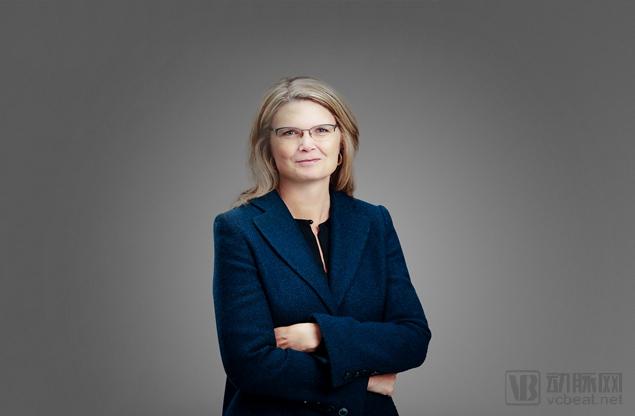
Ms. Carrie, President of Seven Oaks General Hospital in Canada and CEO of the Canadian Health Management Center
In 1996, in Winnipeg, Canada, Carrie witnessed the realization of CWI—a non-profit health management center spanning over 8,000 square meters—from its initial blueprint to its completion.
In March 2018, driven by the vision of implementing the CWI model—with lifestyle medicine at its core—in China, CWI and Miao Health jointly established a Sino-Canadian joint venture (hereinafter referred to as “CWI China”). Carrie was appointed as CEO of CWI China. CWI China plans to operate 400 offline lifestyle medicine centers across the country in the future, with its first self-operated offline center scheduled to open in Beijing in May.
In the CWI introductory video played on-site, we observed that within CWI’s state-of-the-art facility spanning over 8,000 square meters, members and patients were receiving various exercise interventions in different functional zones. This exemplifies exercise intervention, a key component of lifestyle medicine. The majority of individuals undergoing such interventions at CWI are older adults.

On-site View of the Canadian Health Management Center (Source: CWI Official Website)
While watching the video, a small portion of the audience at the venue was heard commenting, “Why does this venue look somewhat like a gym?” In a post-event interview, Carrie explained that exercise is a crucial component of lifestyle medicine.
Commercial gyms in China are currently at a stage that merely satisfies the majority’s aesthetic desires, failing to meet genuine health needs. Some gyms in major cities like Beijing and Shanghai resemble “nightclubs,” with fitness instructors as their primary staff, catering mainly to the market’s demand for entertainment. “Such venues are unsuitable for elderly individuals with chronic diseases, nor for those seeking to achieve health through lifestyle medicine, as they cannot guarantee effectiveness, safety, or scientific rigor,” said Carrie.
Carrie believes, “Lifestyle medicine is actually more similar to Traditional Chinese Medicine (TCM), as both focus on early-stage prevention. We aim to provide innovative, low-cost, and comprehensive health management solutions for people of all age groups.” Innovative, low-cost, and comprehensive—these are the three keywords Carrie emphasizes for the health management solutions offered by CWI.
Lifestyle medicine, as we refer to it, primarily revolves around five key pillars: regular physical activity, weight management, balanced nutrition, smoking cessation, and stress management. CWI emphasizes a novel approach to chronic disease prevention, rehabilitation, and health management that integrates interventions in exercise, nutrition, mental well-being, and sleep.
Carrie stated, “Since coming to China, we have aimed to provide more services affordable to the general public.” Previously, in a media interview, Carrie also remarked, “CWI is not merely a commercial entity; it is a specialized institution dedicated to pre-disease prevention and post-hospital rehabilitation. As such, CWI constitutes the most critical link in the future healthcare service supply chain and is an indispensable component in achieving the objectives outlined in the Healthy China 2030 Planning Outline.”
When it comes to health management, in addition to innovative solutions, people's willingness to pay and adherence are pain points frequently mentioned in business models.
In 1996, Carrie encountered the same issue when she opened a health management center in Winnipeg, Canada. Most people believed that seniors would not pay for these health services, but the reality proved otherwise.
Operating practices have revealed that CWI reached break-even within just one year, with its most loyal customer base being the elderly population—precisely the group that had previously been viewed with the greatest skepticism.
In Canada, some senior members at CWI stay at the facility from 10 a.m. to 3 p.m., enjoying nutritious meals and attending health education sessions after exercising. Beyond socializing with peers who have similar health conditions, they can also meet many new friends at CWI. In Canada, CWI has evolved beyond a simple venue for health management and chronic disease intervention into a multifaceted health community center that serves multiple roles, including urban health intervention, education, social networking, recreation, and social support.
All imported products inevitably face the dilemma of “oranges grown south of the Huai River become trifoliate oranges,” and the CWI model is no exception.
Carrie candidly acknowledged that, given the differing national contexts, CWI’s implementation in China cannot simply replicate the Canadian model. Taking staff training and venue issues as examples, China’s health management sector started later than Canada’s and lacks specialized disciplines and certifications comparable to Canada’s medical exercise specialists. This means that more time must be invested in training our professional service personnel.
Regarding site selection, due to high population density, most hospitals are located in crowded urban areas with no spare land available for constructing sufficiently large and fully equipped health management centers. Furthermore, considering construction costs, a health management center that would originally span nearly 10,000 square meters may only be allocated 2,000–3,000 square meters in China. These disparities represent challenges we currently need to address and overcome.
In addition, unlike the “Canadian model,” which relies entirely on offline services, the introduction of the CWI model into China must be integrated with online platforms to reach a broader population through remote monitoring and guidance. “We have strong offline capabilities but weak online capabilities, and Miao Health has compensated for this shortcoming.”
In 2018, CWI (China), jointly established by CWI and Miao Health, was officially launched. Building upon CWI’s existing model, it developed a digital health management platform centered on lifestyle medicine intervention programs. By integrating CWI’s extensive offline clinical expertise with Miao Health’s internet-based health management solutions, the venture explores a new hybrid online-to-offline (O2O) health management model.
In the CWI (China) model, users can receive health prescriptions and professional guidance from certified health managers at offline health management centers, completing on-site courses and chronic disease intervention programs. After leaving the facility, they can continue to use CWI’s on-demand smart hardware for physical status monitoring, exercise tracking, and sleep surveillance, thereby receiving continuous online health interventions. This enables an all-weather, sustained, and comprehensive health management approach that integrates “online + offline” and “on-site + off-site” services.
This new model not only effectively expands the service radius, enhancing the accessibility and effectiveness of consumer-facing (C-end) health management services. It also empowers communities, medical institutions, and wellness projects, facilitating the upgrading and optimization of tiered healthcare services for business clients (B-end), thereby significantly improving the operational efficiency of commercial wellness initiatives.
Over the past two to three years, CWI has established close collaborative relationships with relevant government agencies, research institutes, industry associations, and leading medical institutions in China. CWI’s partners include not only top-tier industry associations and medical institutions such as the Chinese Hospital Association, the Chinese Medical Association, the Chinese Medical Doctor Association, the China-Canada Health Management Association, Xuanwu Hospital, PLA General Hospital (301 Hospital), and the National Institute of Sports Science, but also cross-industry leading enterprises such as Jinmao Hotel Group, Oriental Cultural Tourism Group, and Pacific Insurance. This has not only laid a solid academic foundation for CWI’s establishment in China, but also provided crucial localized industrial support for CWI’s business model in the country.
As the aging population continues to grow, it will bring with it a substantial burden of chronic diseases. Within China’s current healthcare system, there is yet no effective model to address the critical challenges in chronic disease management. Although the five major categories of healthy lifestyle interventions under CWI are still merely in the practice stage in China, we remain hopeful that they will prove effective in the future.
Note1: Data sourced from the literature: Nurses' Health Study 2018