

Deepwise Medical Builds an AI-Powered Closed-Loop System for Lung Cancer Diagnosis and Treatment, Files IPO Prospectus
After four years of exploration in artificial intelligence, TomoDeep has developed AI-assisted diagnostic products serving a variety of medical scenarios, achieving leading advantages in multiple metrics such as sensitivity, specificity, and the range of covered diseases. However, it is undeniable that the promotion model for AI technology has remained relatively singular, making its deployment in hospitals through traditional methods somewhat ineffective.
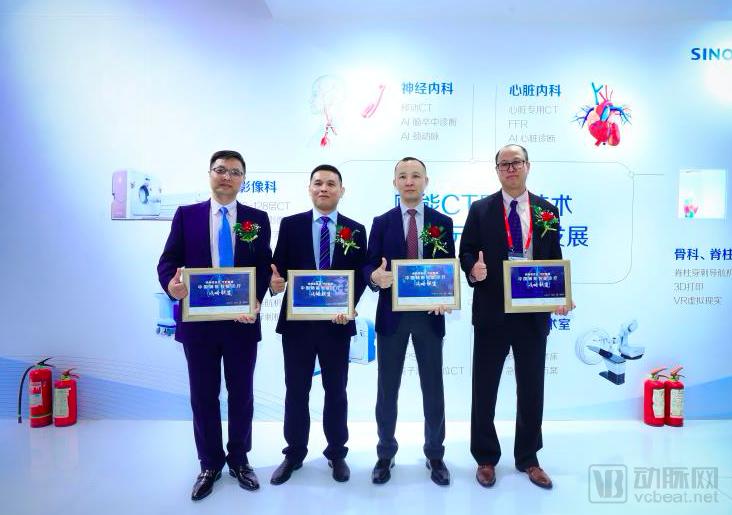
To break through the bottlenecks in artificial intelligence development and reduce the high global mortality rate of lung cancer, Tuma Shenwei, in collaboration with Sinovision, Dr. Li Zhong Medical Group, and Saiang International Medical Technology Co., Ltd., jointly established the “China Intelligent Diagnosis and Treatment Strategic Alliance for Lung Cancer” at the Spring 2019 CMEF. The alliance aims to integrate the entire process of lung cancer screening, treatment, and follow-up, transforming the current state of lung cancer diagnosis and treatment in primary healthcare institutions across China through a novel collaborative model.
Specifically, the alliance will integrate the advanced technologies and resources of its member enterprises, leveraging their respective strengths to promote the development and clinical implementation of high-tech solutions such as robotics, artificial intelligence, and argon-helium cryoablation. This initiative aims to lower the barriers to lung cancer diagnosis and treatment, ultimately empowering primary care hospitals and enhancing the capacity for lung cancer management at the grassroots level.
Within the alliance, argon-helium cryoablation, as a relatively novel tumor treatment modality, can effectively treat solid tumors such as lung cancer, liver cancer, brain tumors, and breast cancer, sparking a revolution in ultra-low-temperature surgery and cancer therapy. However, this procedure imposes stringent requirements on physician qualifications and medical equipment, resulting in high costs for patients. The key challenges to its widespread adoption lie in cultivating specialized physicians and extending the technology’s accessibility to lower-tier healthcare settings.
The emergence of the China Intelligent Diagnosis and Treatment Strategic Alliance for Lung Cancer aims to address this issue. The argon-helium cryoablation tunnel-style lung biopsy technique, pioneered by Dr. Li Zhong, founder of the Li Zhong Doctor Group, induces apoptosis of cancer cells during biopsy. This approach has a high probability of resolving the problem in a single treatment session, significantly reducing the substantial costs incurred by patients due to repeated treatments.
The application of this technology requires the integration of precise cryoablation devices, CT equipment, and an AI-based lung segmentation system. Consequently, the collaboration among the four companies has ingeniously established a closed-loop ecosystem encompassing the entire process of lung cancer diagnosis, treatment, and follow-up. This closed loop will be standardized through their joint efforts, laying a solid foundation for the decentralization and broader adoption of this technology.
Once the closed-loop system is established, the next step is to introduce the technology into hospitals. The associated training responsibilities naturally fall to Dr. Li Zhong’s Physician Group.
Traditionally, physicians have often relied on clinical experience to determine the location of pulmonary nodules, assess the extent of lesions, and differentiate them from surrounding tissues. Consequently, conventional training for argon-helium cryoablation tumor resection is time-consuming and heavily dependent on surgeons’ operative experience.
The emergence of AI has offered a robust solution to this challenge. By integrating TumorCloud’s AI-powered pulmonary nodule detection product with Sinovision’s CT surgical navigation system, the platform enables real-time delineation and rendering of pulmonary nodule CT images, providing clinicians with timely decision-support references.
Under this model, guided by standardized surgical protocols, the demand for extensive surgical experience on the part of physicians is significantly reduced, resulting in a smoother learning curve. According to Li Zhong, the alliance can typically train junior doctors within just two to three months, enabling them to perform argon-helium cryoablation tunnel biopsy procedures. This will effectively address supply-side challenges in China’s healthcare system, allowing more primary care institutions to deliver higher-value lung cancer treatment services with the alliance’s support.
Zhong Xin, CEO of Tuma Shenwei, told VCBeat: “On one hand, artificial intelligence can rapidly elevate the capabilities of junior physicians to the level of mid-career doctors with 10 to 15 years of experience, thereby ensuring the baseline quality of medical resources. On the other hand, while Tuma Shenwei previously served only as an aid in diagnostic imaging, within this alliance it has leveraged Sinovision’s precise CT scanning and localization technology, CryoCare’s argon-helium cryoablation technology, and Lee Zhong Medical Group’s tunnel biopsy technique to move AI from the radiology department into thoracic surgery, significantly reducing the misdiagnosis rate of CT imaging.”
Another function of the alliance is to optimize the allocation of existing medical resources. Due to difficulties in accurately assessing their own needs, many primary-care hospitals have purchased expensive imported medical equipment. However, high costs often lead to high fees, while the actual demand at these primary-care facilities does not justify such investments, resulting in significant underutilization of medical equipment.
In contrast, Sinovision was born in China and has a deep understanding of the needs and practices of primary healthcare institutions in the country. It is able to tailor CT products for these institutions, providing higher-quality equipment at the same price point, thereby aligning with hospital requirements.
Thus, the partnership with Sinovision has opened up distribution channels for Tuma Shenwei, while the establishment of the Lung Cancer Alliance further facilitates Tuma Shenwei’s entry into clinical treatment.
Currently, the Tumour Deepwise intelligent diagnostic solution for pulmonary nodules covers diagnostic processes including disease monitoring, quantitative analysis, disease classification, benign-malignant differentiation, follow-up tracking, and report generation. It saves at least 50% of the time for radiologists and clinicians, achieves a detection sensitivity of over 97%, and ensures a false positive rate below 1.6.
Today, Tuma Shenwei’s AI-assisted screening products for pulmonary nodules, chest imaging, mammography, stroke, and liver conditions have rapidly captured the market. By December 2018, they had been deployed in more than 200 hospitals both domestically and internationally.
However, the value of AI in healthcare is by no means limited to preclinical imaging analysis; this technology can also deliver greater efficacy in orthopedics, thoracic surgery, cardiology, pulmonology, and even multidisciplinary consultations.
This alliance marks the beginning of TumorDeep’s expansion from radiology to clinical practice. Zhong Xin stated, “First, prior to treatment, TumorDeep’s AI technology enables precise diagnosis based on patients’ CT images, ensuring that lesions are detected by AI-powered computer systems.”
“Subsequently, when thoracic surgeons perform nodule resection, AI can rapidly assist in formulating treatment plans, provide real-time precise localization of tumors, and delineate and render the nodule regions. This has a significant impact on both the operative time and the success rate of pulmonary nodule surgery.”
Overall, Tuma Shenwei is achieving a value leap from radiology to numerous clinical departments, step by step exploring the greater potential of artificial intelligence.
As the advantages of leading AI companies become further entrenched, the overall landscape of AI in radiology is nearing maturity; however, the capabilities of artificial intelligence extend far beyond this domain.
Whether it involves technological innovation, innovative implementation models, or commercialization strategies, companies must still conduct their own explorations in the period leading up to NMPA approval. In this regard, Deepwise is highly active.
From the perspective of the Alliance, lung cancer treatment is merely a small branch within a vast field. Once the framework for lung cancer management is established, the Alliance will turn its attention to other types of interventional therapies, striving to comprehensively enhance diagnostic and therapeutic capabilities at the primary healthcare level. TumorDeep will join forces with the Alliance to explore additional clinical scenarios, continuously expanding its AI footprint in this new landscape.