

Philips Showcases Five-Year Digital Transformation Milestone at CMEF with €1.8 Billion Annual R&D Investment
Many people might not have expected that Philips, a century-old company, unveiled all its new products in the form of solutions at the "2019 China International Medical Equipment (Spring) Expo," with "smart," "AI," and "big data" becoming the key product keywords rather than being limited to product specifications.
Since establishing its digital transformation strategy five years ago, Philips has invested €1.8 billion annually in research and development (R&D). Sixty percent of its global R&D personnel are AI-related professionals, and the company has deployed more than 400 data scientists worldwide to focus on research topics related to big data and AI.
Currently, Philips has successfully transformed from a century-old medical device manufacturer into a health technology company. In the rapidly evolving field of AI, Philips is one of the top three companies globally with the most patents in AI-driven healthcare and ranks among the world’s top five healthcare IT companies.
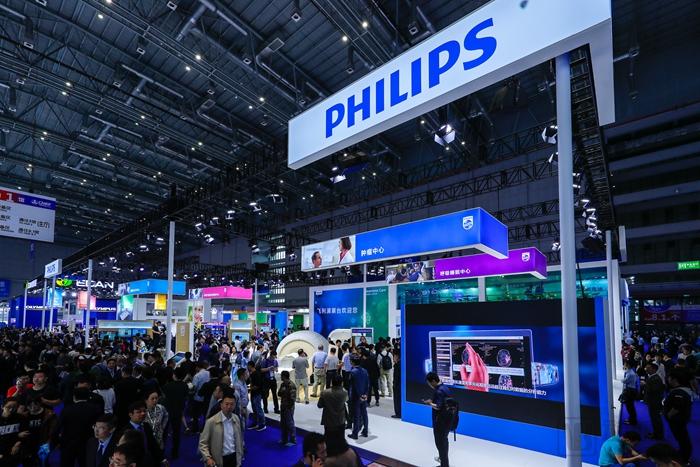
The newly released IT and AI-driven innovative solutions cover the business segments of “Precision Diagnostics,” “Interventional Therapy,” and “Connected Care.” This can also be regarded as a report card on digital transformation.
At CMEF, Philips also announced that it will further strengthen its innovative strategy in healthcare informatics and AI-driven medical solutions.
Judging from the several new solutions launched by Philips at CMEF, Philips’ offerings now encompass intelligent devices and informatization software services, connecting various scenarios including pre-hospital, in-hospital, post-hospital, and home care. These solutions enable the aggregation, management, and analysis of comprehensive patient data, providing decision support and process improvement. Over the past five years, how has Philips carved out a new path for digital transformation? And how will Philips’ products evolve in the future?
In understanding the digital transformation of healthcare giants, digital strategy appears as a marginalized strategy, with neither significant investment nor notable returns.
An analysis of Philips’ successful “digital transformation” path reveals that digital transformation essentially involves evolving from a manufacturer focused on equipment and hardware into an enterprise that builds solutions around the entire patient care journey and disease lifecycle, leveraging its existing base of advanced medical devices.
To better deliver full-lifecycle care, Philips implemented a structural reorganization at the beginning of this year, centering on health technology and establishing four core business segments: Healthy Living, Precision Diagnosis, Image-Guided Therapy, and Connected Care.
Chen Shengyu, Vice President of Philips Greater China and General Manager of the Integrated Solutions Center, explained, “We have integrated all relevant hardware and software across our four business segments. By addressing the challenges encountered at each stage of the disease journey—from consumers to patients to healthcare professionals—we provide comprehensive solutions that optimize the entire care process and pathway.”
Specifically, Philips’ integrated approach horizontally covers care across the entire lifecycle, encompassing the full continuum of healthy living, disease prevention, diagnosis, treatment, and home care. Vertically, it targets critical and severe conditions by developing ten major solutions, each initiated from a specialized single-disease perspective. Among these are the lung cancer screening solution, the comprehensive cardiovascular solution, and the oncology solution, all unveiled at this CMEF.
According to statistics from the National Cancer Center, lung cancer has ranked first in both incidence and mortality among malignant tumors in China for ten consecutive years, making it the “number one cancer” in the country. The key to improving early screening for lung cancer lies in “strengthening primary healthcare.”
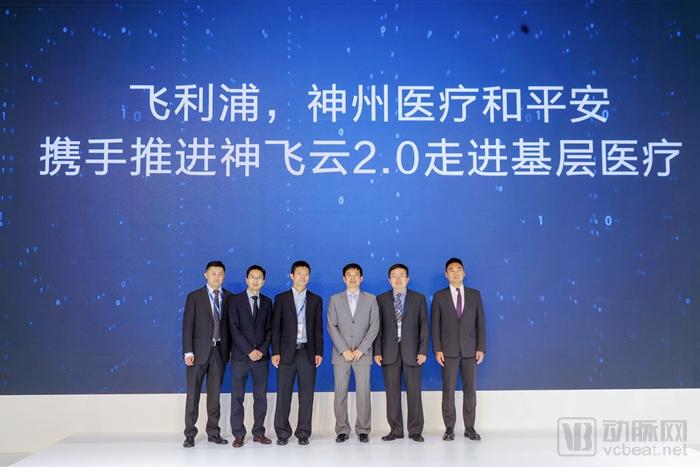
“Shenfei Cloud 2.0,” jointly launched by Philips, Shenzhou Medical, and Ping An Good Doctor, features 16-slice CT scanners tailored for primary care facilities, medical consortium services, and lightweight imaging centers. It provides end-to-end services covering data acquisition, image reconstruction, post-processing, result analysis, and assisted diagnosis and treatment, thereby helping physicians enhance diagnostic confidence, enable early detection and precise follow-up of small nodules, and ultimately improve the accuracy and efficiency of clinical diagnosis.
Lung cancer is the “leading cancer,” while cardiovascular disease is the leading cause of mortality in China. Philips believes that addressing the complex challenge of cardiovascular care requires more than just focusing on diagnosis and treatment; it demands a holistic approach that covers the entire patient journey—from healthy living and prevention to diagnosis, treatment, and home care. By placing patients at the center and leveraging technology as support, seamless integration across all stages of care can be achieved.
To this end, Philips prominently featured its cardiovascular solutions at CMEF, including the “Philips IntelliSpace Portal,” the EPIQ 7C Intelligent Cardiovascular Ultrasound System, and echocardiography-guided interventional therapy solutions.
“Philips StarShadow Intelligent System” integrates all multimodal imaging data across the entire disease treatment timeline on a single interface, features the powerful QLab ultrasound post-processing software, and supports the export of various measurement data. It enables remote consultations and tiered diagnosis and treatment, allowing physicians to access, analyze, and share cardiovascular imaging and other diagnostic information anytime and anywhere, thereby supporting intelligent clinical decision-making.
The EPIQ 7C Intelligent Cardiovascular Ultrasound System leverages innovative ultrasound technology to visualize cardiac diagnosis and treatment, enabling physicians to precisely observe the spatial relationship between interventional devices and surrounding soft tissues, thereby better guiding device placement and efficacy assessment.
In delivering solutions, Philips has not only refined its products but also collaborated with partners to establish a commercialization pathway for solution implementation. The current partnership with Ping An Good Doctor enables primary care facilities to access equipment through leasing arrangements.
Primary healthcare institutions can directly select remote diagnostic management via equipment workstations, addressing the real-world shortage of diagnostic physicians at the grassroots level. Through a strategic partnership with Ping An Good Doctor, these institutions can receive integrated quality control and clinical management services. Furthermore, Shenfeiyun 2.0 focuses on lung cancer as a single-disease specialty, aligning with the needs of hospitals and large-scale health examination centers to establish specialized medical consortia and enhance regional competitiveness.
Within the “Philips Integrated Cardiovascular Solutions,” there are also two informatics solutions specifically tailored to the unique needs of China’s healthcare system.
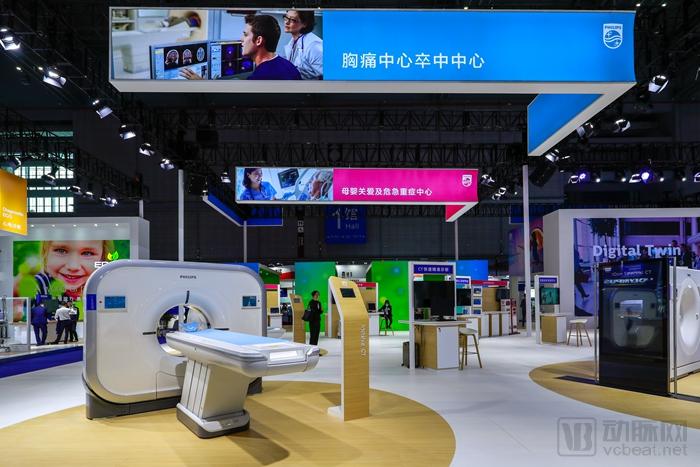
In its oncology solutions portfolio, Philips has launched the Pinnacle³ multimodal intelligent treatment planning system, providing a suite of smart tools for radiation therapy. With just a few mouse clicks, the system can automatically identify organs and tissues, complete target volume delineation, and precisely calculate radiation doses based on the tumor’s location, morphology, and staging, thereby automatically generating a clinically executable plan. This liberates medical physicists from extensive repetitive tasks.
At CMEF, Philips also unveiled the world’s first fully digital PET/CT scanner, a core component of its comprehensive solutions for oncology, cardiovascular diseases, and other conditions. This PET/CT system requires only one-tenth of the scan time and one-third of the radiopharmaceutical dosage of conventional systems, enabling 8–10 patient scans per hour with ultra-low radiation exposure.
Philips’ digital transformation has achieved such remarkable results primarily because, from a strategic perspective, it was not treated merely as a software upgrade to existing products, nor did it involve shifting the business focus toward medical IT.
In an interview, Chen Shengyu stated, “It is easy for people to categorize us as a hardware and machinery manufacturer. However, 60% of our global R&D personnel are focused on software and AI. This does not mean we are transforming into a software company. Why do we pursue connectivity and integration? First, many software upgrades are indispensable; Philips’ medical devices are highly digitalized and generate vast amounts of data. Second, certain informatized products enable data interoperability. Finally, all these products are designed to serve people. Therefore, the core challenge lies in establishing seamless connections among devices, data, and people within clinical scenarios.”

Mr. Chen Shengyu, Vice President of Philips Greater China and General Manager of the Integrated Solutions Center
Liang Jianqiu, Vice President of Philips Greater China and General Manager of the Connected Care Business Group, also stated, “We are not abandoning our devices to transform ourselves into an AI company; rather, we are adding greater value on the foundation of our continuous business development to address specific challenges in China. You will find that Philips’ AI solutions are designed to support and assist physicians based on current clinical needs, rather than to disrupt existing practices.”
The newly released Philips IntelliSpace Discovery 3.0 (ISD) is a platform designed to foster innovation among physicians. As a comprehensive and open platform, ISD provides radiologists with various applications and tools to help them collect, standardize, and anonymize datasets for visualization, as well as to “train” and validate deep learning algorithms. Based on the ISD platform, radiologists can easily deploy these algorithms as plug-in applications into their research workflows to analyze new datasets, thereby accelerating the translation of scientific achievements in radiology, oncology, neurology, and cardiology into clinical practice.
Digital transformation is also a matter of being easier said than done; it requires not only insights but also hard work, with the ultimate goal in actual implementation being self-reinvention.
Liang Jianqiu stated, “What sets our transformation apart is, first, our intense focus. Philips has divested numerous business units while reacquiring others, a move that clearly demonstrates our commitment to transformation. Second, I believe execution, rather than strategy alone, is the key to achieving successful transformation. In implementing our transformation—particularly in Greater China—we have pioneered many initiatives and meticulously attended to numerous details.”

Mr. Liang Jianqiu, Vice President of Philips Greater China and General Manager of the Connected Care Business Group
In terms of medical data, China has a massive volume, accounting for approximately 20% of the global total by 2020; however, 80% of this data is unstructured. In the highly specialized field of healthcare, it is challenging to apply these data to artificial intelligence (AI) applications.
Chen Shengyu stated in the interview: “Philips has not only leveraged technology to perform data cleaning and structuring, but also designed holistic solutions tailored to clinical scenarios. We have thoroughly mapped out the challenges associated with each disease across clinical pathways and throughout the human life cycle. This approach enables us to integrate relevant data and information, thereby generating meaningful insights for general consumers, patients, and healthcare professionals alike.”
The “Philips Integrated Cardiovascular Solution” released by Philips demonstrates the company’s efforts to break down data barriers and generate value.
Philips’ comprehensive cardiovascular solution has developed a one-stop system—the IntelliSpace Care Management (ISCM) system—in response to the National Health Commission’s encouragement of “Dual Center” development. ISCM also provides customized solutions in different versions for “Dual Centers” at various levels, such as Demonstration Centers, Standard Centers, and Primary Care Centers.
The development of ISCM is built upon two disease-specific databases (Chest Pain Center and Stroke Center), six data dictionaries, twelve functional modules, forty-six AI validation rules, and thirty-three quality control reports for chest pain and stroke. By integrating with various hospital systems, it assists physicians in efficiently completing data collection, management, visualization, and analysis, extracting meaningful clinical insights from data to promote the standardization of diagnosis and treatment for cardiovascular and cerebrovascular diseases in China, while providing robust, high-quality data support for scientific research.
At the CMEF, Philips unveiled a “Digital Twin” vision during its product presentations, aiming to capture and derive insights from patients’ comprehensive health information, including demographic data, family history, genomic profiles, clinical records, imaging reports, medication usage, and even personal health data. This approach is akin to creating a “digital twin” for each individual. By comparing complete longitudinal patient data with cross-sectional data derived from big data analytics, this strategy will have a profound impact on the entire healthcare system.
From the perspective of this future vision, Philips still has a long way to go. Liang Jianqiu stated, “We aim to build a health technology ecosystem across different global markets. This is not something Philips can achieve alone; we will therefore engage in numerous collaborations. We have several criteria for evaluating partners. First, we seek strategic alliances with strong partners. To ensure compliance with Chinese regulations and data security, we must identify suitable local partners. Second, we leverage the unique strengths of our partners, such as distinctive technological capabilities. Additionally, we consider whether they offer market coverage that we cannot achieve on our own and whether they demonstrate greater flexibility in exploring new fields. These are all factors we take into account.”
Liang Jianqiu added, “Overall, we believe that we have insights into the inheritance of certain diseases. We now have the capability to bring together different partners to ultimately form a very reasonable solution that will benefit the entire industry.”