

Health Management Enterprises Seize Strategic Opportunities as Health Indicators Are Integrated into Party Committee Performance Evaluations
The healthcare industry is largely driven by factors such as policy and technology. As a result, we have seen some sectors survive the “winter” and enter a “spring.” In addition to internet hospitals, which embraced a “survive-or-die” mindset in 2018, health management also witnessed a turnaround in 2019, reaping a wave of policy dividends.
On July 15, the State Council issued the “Opinions of the State Council on Implementing the Healthy China Initiative,” the General Office of the State Council issued the “Implementation and Assessment Plan for the Healthy China Initiative,” and the national level released the “Healthy China Initiative (2019–2030).” These three documents are collectively referred to as the documents related to the Healthy China Initiative.
At the industry level, the release of the “Healthy China 2030” Planning Outline (hereinafter referred to as the “Outline”) in 2016 directly spurred a boom in the health management sector. Three years on, the Healthy China Action Plan (2019–2030) (hereinafter referred to as the “Action Plan”), serving as the hallmark of transitioning from planning to implementation under the Outline, is akin to moving from architectural blueprints to actual construction.
National emphasis on health management has been elevated to an unprecedented level. So, for health management enterprises, what development opportunities should be seized in this wave?
Trend: Shifting from a disease-centered to a health-centered approach
Currently, although the main health indicators of residents in China are generally better than the average level of upper-middle-income countries, surveys show that the overall health literacy level of Chinese residents remains relatively low. There is a notable lack of knowledge and skills related to disease prevention, early detection, emergency rescue, timely medical consultation, rational medication use, and emergency risk avoidance. Meanwhile, unhealthy lifestyle behaviors such as smoking, excessive alcohol consumption, physical inactivity, and unreasonable dietary habits are quite prevalent.
Based on the content of the Action Plan, this medium- to long-term initiative currently focuses primarily on health issues and their determinants. It centers on two core areas—disease prevention and health promotion—through 15 major special campaigns, establishing a total of 124 key indicators. These include outcome-based indicators, individual and social advocacy indicators, and government performance indicators. Furthermore, it proposes that key health indicators be incorporated into the performance evaluation frameworks for Party committees and governments at all levels. This move sufficiently demonstrates the nation’s determination to implement the National Health Action.
When Individuals Become the Primary Stakeholders in Their Health, Enhancing Health Literacy Comes First
The prevalence of health literacy among Chinese residents remains low, and unhealthy lifestyles are widespread, leading to increasingly prominent disease-related issues. Prevention is the most effective approach to reducing disease burden. National health strategies no longer focus solely on the responsibilities of healthcare professionals and institutions; instead, they designate individuals as the primary stakeholders for their own health, emphasizing the importance of healthy lifestyles.
In implementing the health knowledge popularization campaign, in January 2019, DXY jointly released the "2019 National Health Insight Report" with Health News. Based on survey data from DXY Doctor and the Mobile Health Research Institute of Health News, the report analyzed the current state of national health and characteristics of health consumption, revealing that post-90s generations focus on physical appearance, post-80s generations prioritize family health, and post-70s generations show greater concern about chronic diseases.
As early as 2017, Beijing More Health Technology Group Co., Ltd. (Miao Yijia), a company dedicated to national health management, released the *White Paper on Health Literacy of Netizens in 2017*, based on a survey of users of its “Miao Jiankang APP.” The data showed that Miao Jiankang APP improved users’ health behaviors through gamified operations. The health literacy level of its users was significantly higher than the national average reported in 2016 and had already reached the level projected by the state for 2020. By providing excellent health management services, Miao Yijia has redefined the digital health management industry.
In the gamified operations segment, every health task serves as an influencing factor in enhancing users’ health literacy. Under specific incentive mechanisms, users are motivated to complete health tasks and earn health rewards. Subtly, the Miao Health APP not only promotes higher health literacy among users but also disseminates health knowledge, encouraging the development of healthy lifestyle habits through a “task-based” approach.
It was revealed that, in further response to the national call, Beijing More Health Technology Group Co., Ltd. (Miao Yijia) will introduce gamified, level-based quiz challenges within the Miao Health app in early August this year. This initiative aims to reassess the health literacy of Miao Health users and, based on the resulting data, launch an expanded edition of the “2019 White Paper on Internet Users’ Health Literacy” with a significantly larger baseline dataset.
Empowering “Preventive Treatment of Disease”: Health Big Data Delivers Personalized Solutions
In the realm of preventive healthcare, special initiatives are being carried out for four key populations—women and infants/young children, primary and secondary school students, workers, and the elderly—to proactively address the unique challenges they face through comprehensive interventions:
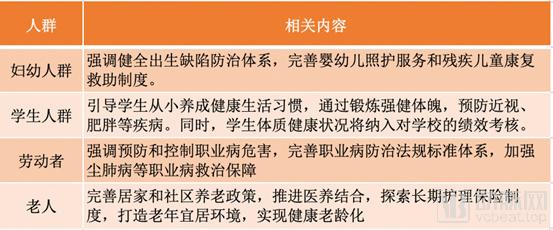
However, big health data is crucial in the process of "preventive treatment of disease."
Kong Fei, CEO of More Health, stated, “Data collection has always been a cornerstone of the health management industry and is also the primary issue that must be addressed when entering this sector.”
The data he referred to encompasses two categories: one is medical data, which has received greater attention in the past; the other is health data, including physical examination data, genetic testing data, dynamic lifestyle data, in-hospital data, and out-of-hospital wearable device data. “Now we need to integrate linear medical data with point-in-time health data to truly generate value.”
Such data primarily originate from early screening activities related to genetic testing. Technologies such as non-invasive prenatal testing (NIPT) for screening birth defects, and next-generation sequencing (NGS) for assessing cancer susceptibility, are gradually maturing. Genetic data on major diseases, including cancer, have become a critical component of health big data, with insurance companies showing particular interest in these screening datasets.
It is reported that ZhongAn Life has currently launched gene data analysis products targeting various scenarios, including nutrition, medication, disease prevention, and exercise. Among these, the cancer susceptibility genetic testing utilizes next-generation sequencing (NGS) technology to assess the risk of more than ten high-incidence cancers in both men and women, and provides personalized health plans based on users’ genetic profiles.
Second, data generated by various health checkup institutions, such as Ji Jiankang, which is backed by Ciming Health Checkup, has accumulated 18 million structured health checkup records from Ciming through the interpretation of checkup data. Leveraging this data as a foundation, Ji Jiankang has built a precision health management model.
Third, the generation of data and various smart hardware. Data based on human vital signs monitoring relies on measurements from various smart devices, while continuously accumulating health-related big data within the human body—the largest database. Platforms such as Apple’s HealthKit and Huawei Health serve as data entry points, having amassed hundreds of millions of health records. Technology companies are gradually transforming into health institutions, continuously acquiring consumer-generated information and other health-related data.
Furthermore, Miao Yijia combines its AI health management algorithms with behavioral indices. Leveraging user data from over 70 million individuals, it generates personalized health management plans to support the preventive healthcare concept of “treating disease before it arises.” This technology is primarily built upon its independently developed “Miao+” platform, which currently integrates more than 300 types of smart hardware devices. As of the end of June this year, the number of devices linked to the Miao Health APP reached 12.04 million, with over 100 million data uploads. Capitalizing on its AI capabilities, Miao Yijia has established offline health management centers while creating a closed-loop ecosystem encompassing “wellness, medical care, pharmaceuticals, and insurance,” thereby delivering one-stop, scenario-based closed-loop health management services. Empowered by both AI and Internet of Things (IoT) technologies, the company has comprehensively demonstrated the practical implementation capabilities of its AIoT health management services.
Awakening Health Consciousness Drives the Upgrading of the Big Health Industry Through Policy Support
Unlike medical care, health management has long faced skepticism over its perceived lack of necessity. In China, people tend to seek medical attention only after falling ill, leading to overcrowded hospitals. Meanwhile, health management and chronic disease management remain relatively weak components within the healthcare system.
However, in reality, with the rapid aging of China’s population, severe environmental pollution, a sharp rise in chronic non-communicable diseases, and the excessively rapid growth of medical expenses, it is an inevitable trend to shift health management upstream, prioritizing prevention over treatment.
At the end of 2018, when interviewed by a reporter, Kong Fei, CEO of Beijing More Health Technology Group Co., Ltd., was asked about changes in the health management industry. He remarked with no small amount of satisfaction, “The biggest change now is that no one asks me anymore whether health management is truly an essential need.”
The introduction of national policies has, on one hand, raised public health awareness and, on the other, effectively facilitated market education across the entire industry. Kong Fei stated that in recent years, because health management was not considered a rigid demand, market education posed a significant challenge that companies had to strive hard to overcome. With the implementation of the relevant requirements outlined in the Action Plan, public acceptance of services such as health management is expected to increase substantially.
Regarding various special initiatives, enterprises that have long been exploring this space have already “laid a solid foundation.” As health indicators become part of the performance evaluation metrics for Party committees at all levels, measures embodying the principle of “prevention over treatment” will be further rolled out through detailed implementation guidelines.