

KangYiHong Launches High-Throughput Protein Microarray Platform for Allergen Detection and Immune Management
In daily life, many people experience allergic reactions. Some allergens are common and easy to identify, such as pollen and willow catkins; others are rather unusual, for instance, some individuals develop allergies upon smelling eggplants. In such cases, it is necessary to identify the specific allergens.
The first step in avoiding allergies is to identify the allergens. Currently, allergen testing methods in China remain relatively traditional and are limited in the number of targets that can be analyzed per test. Therefore, only high-throughput, multi-analyte assays can achieve clinical significance for screening purposes.
Beijing KYH Scientific Development Co., Ltd. focuses on biochips as its core technology, striving to build a high-throughput testing platform to assist patients with immune management. Since the project was initiated in 2017, it has developed tests for chronic allergies, including IgG (Immunoglobulin G) panels of 50 and 104 items, and for acute allergies, including IgE (Immunoglobulin E) panels of 30 and 60 items, all measurable in a single assay within the fields of allergens and food intolerances.
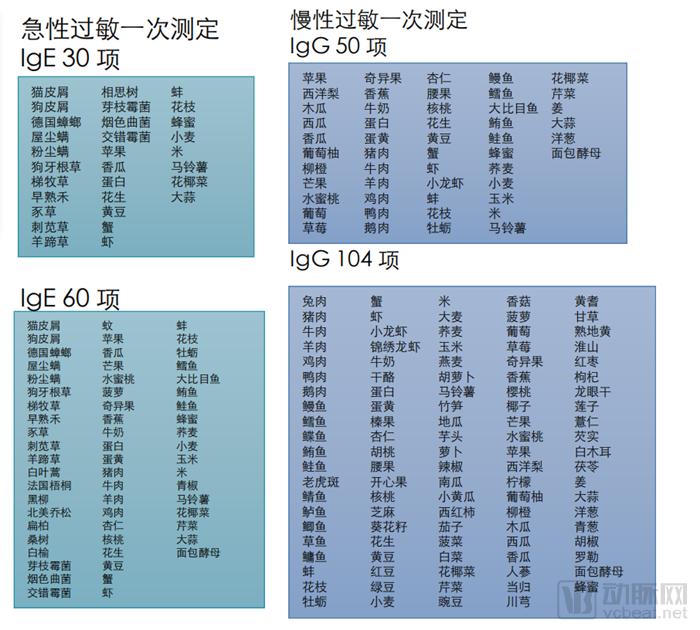
KYH Products (Image source: Provided by the company)
Chapter 1 of the WAO (World Allergy Organization) White Book on Allergy shows that more than 20% of the population in most developed countries is affected by allergic diseases. The prospectus of Suzhou Hybribio Biotechnology Co., Ltd. indicates that the overall prevalence of allergic diseases in China is approximately 10%–20%.
As the number of people suffering from allergies continues to rise, Xu Ke, a veteran of the in vitro diagnostics (IVD) industry, recognized this as a promising blue ocean market. By chance, Xu reconnected with his old friend Chen Bo in Taipei, who was then engaged in research related to immunodiagnostics and management. It was through Chen Bo’s introduction that Xu gradually came to understand that allergies are merely one manifestation of immune disorders. Moreover, immune disorders are not a single, well-defined disease and cannot be cured; they can only be managed through health management strategies.
For patients requiring immune management, traditional diagnostic methods involve in vivo testing, such as skin prick tests, patch tests, and food challenge tests. However, these methods are associated with significant drawbacks, including substantial invasiveness and risk of infection, susceptibility to drug interference, limited scope of testable items, and risk of anaphylactic shock. Furthermore, given that there are approximately 500–600 known environmental allergens, traditional methods merely screen for 10–30 specific items, resulting in incomplete diagnostic coverage.
Accordingly, after discussion, Xu Ke and Chen Bo decided to establish a high-throughput testing platform to assist patients with immune management. Given the broad patient population affected by allergic diseases and the relatively straightforward nature of their clinical evaluation, the two decided to start with allergen detection.
Common allergens in daily life number around 200–300. These include inhalant allergens such as pollen, dust mites, mold, and insects; ingested allergens such as meat, eggs and dairy products, seafood, nuts, legumes, vegetables, fruits, and condiments; and less common allergens associated with bites or infections, such as those from bees and mosquitoes, as well as allergies triggered by skin or mucosal infections.
Based on life experience, some patients can guess the main allergens causing their allergies. However, for patients with more severe conditions, it is only through proper screening and identification of the allergens that their effects can be avoided and eliminated. Xu Ke told reporters, “For many patients with allergies, there is not just a single cause.”
Rational screening requires selecting dozens to hundreds of targets for testing from among hundreds of options, based on factors such as prevalence and the likelihood of allergen exposure in daily life. However, in hospital settings, screening a large number of targets using traditional methods necessitates substantial blood draws, which is inconsistent with the physiological conditions of populations prone to allergies, such as young children, pregnant women, and the elderly.
In light of these considerations, Beijing KYH Scientific Development Co., Ltd. opted for the protein microarray approach. This technology enables the simultaneous detection of at least 30–50 targets and requires only a small volume of patient blood sample (less than 0.5 mL).
To ensure the accuracy of its measurements, Beijing KYH Scientific Development Co., Ltd. (KYH) employs a triplicate testing method. For the same test item, such as the allergen "peanut," KYH performs three separate spot tests, obtains individual values, and then calculates the weighted average of these three values to guarantee result accuracy. It is understood that KYH’s products are currently classified under "semi-quantitative" testing methods. Dr. Chen stated, "From a technical perspective, KYH’s products have actually achieved 'quantitative' detection capabilities. However, in consideration of regulatory requirements and actual market demands, we have ultimately positioned our products as 'semi-quantitative' tests."
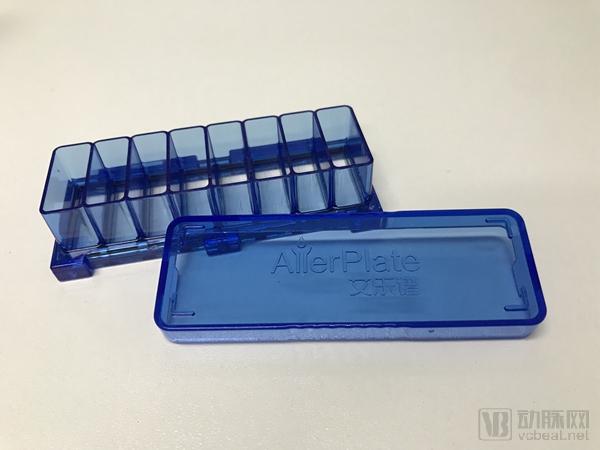
Product Images of KYH (Image Source: Provided by the Company)
In terms of practical operation, the protein chip developed by Beijing KYH Scientific Development Co., Ltd. features a simple workflow. Clinical laboratory physicians do not need to prepare additional reagents or materials prior to testing. The assay procedure involves only the addition of diluent, serum, and fluorescent antibodies, with a washing step performed after each stage. Upon completion of the experiment, results can be generated and reported directly following analysis with a laser scanner.
It is worth mentioning that the protein chips developed by Beijing KYH Scientific Development Co., Ltd. are designed with eight wells to align with physicians’ usage habits. This configuration allows for the simultaneous testing of seven patients per kit (with one well reserved for a barcode) and facilitates operation by laboratory technicians accustomed to using eight-channel pipettes.
Dr. Chen stated, “Compared with traditional enzyme immunoassay (EIA) kits, a medical laboratory technologist can process six kits (equivalent to six patient samples) per day. Using our food-specific IgG detection kit (100 items), processing four kits (equivalent to 12 patient samples) entails the same workload as processing one traditional kit (one patient sample), while reducing the turnaround time by half. This enables a single medical laboratory technologist to test up to 144 patient samples per day, representing a 24-fold reduction in workload.”
VCBeat has learned that in early 2018, Beijing KYH Scientific Development Co., Ltd. completed its angel round of financing, raising RMB 20 million from Sinopharm Capital Management Limited Company.
Sinopharm Capital was established in 2012 as a professional private equity fund focused on the healthcare sector, initiated by Sinopharm Group. Its management team comprises internal and external investment professionals from Sinopharm Capital, organized under market-oriented mechanisms. As of the end of 2018, Sinopharm Capital managed assets exceeding RMB 6.4 billion across six funds.
Chen Qiang, Post-Investment Manager at Sinopharm Capital, stated that Sinopharm Capital values the team and products of Beijing KYH Scientific Development Co., Ltd.:
In terms of the team, co-founder Chen Bo’s team has extensive accumulation in the field of biochips, while co-founder Xu Ke has rich experience in the registration and sales of IVD products in China.
In terms of products, compared to current fluorescent enzyme immunoassays and blotting methods, Beijing KYH Scientific Development Co., Ltd.’s biochip platform offers advantages including high sensitivity, high throughput, quantitative analysis, low sample volume requirements, and controllable costs. Furthermore, the biochip platform demonstrates strong scalability; it initially entered the market with allergen testing and has gradually expanded into autoimmune disease and tumor detection.
It is understood that Beijing KYH Scientific Development Co., Ltd. is currently undergoing its Series A financing round.