

How to Build a Hospital Brand? Insights from Billion-Dollar Institutions and County-Level Leaders at the 2019 China Hospital Development Conference
From May 24 to 25, the “2019 China Hospital Development Conference,” hosted by DXY, was held in Hangzhou. Continuing with the theme of “Supporting Development, Leading the Future,” the conference invited top experts and scholars from the medical field both domestically and internationally to jointly discuss topics related to healthcare talent and branding, and to share the latest and most prominent advancements at the forefront of the industry.
More than 1,000 attendees, including relevant officials from the National Health Commission and the Chinese Hospital Association; Mark Britnell, Global Chairman and Senior Partner of KPMG’s Healthcare Industry Practice; Paul Matsen, Chief Marketing Executive of Cleveland Clinic; and Wei Tiemin, President of Lishui Central Hospital, as well as guests from government agencies, the medical community, and the media, participated in the event.
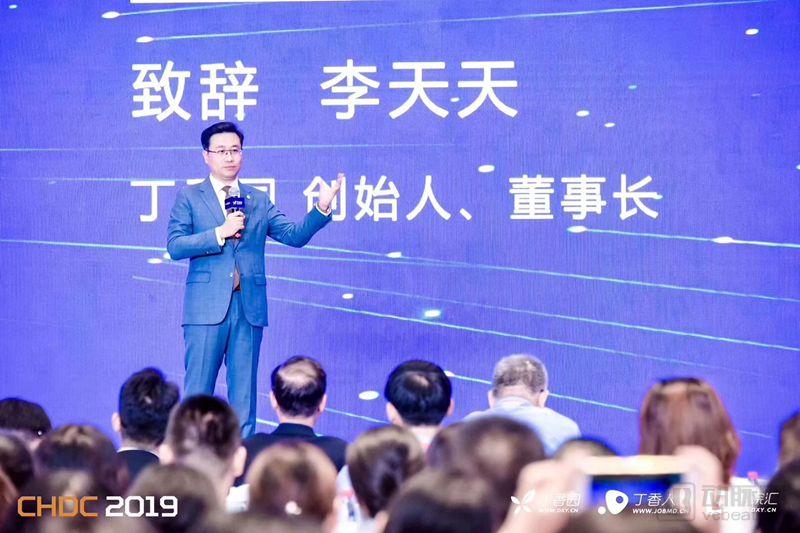
At the opening of the conference, Fang Laiying, Vice President of the Chinese Hospital Association, and Li Tiantian, Founder and Chairman of DXY, delivered remarks respectively.Li Tiantian shared his insights on industry development: “Amid the continuous emergence of healthcare reform policies and the rapid transformation of public medical institutions, talent development and brand building must be highly synergistic and focused to achieve a synergistic effect greater than the sum of their parts (1+1>2), thereby better meeting the public’s demand for health products.”
Li Tiantian also mentioned that this is the fourth China Hospital Development Conference we have hosted, but the theme remains unchanged each year, consistently focusing on the two major pillars of talent development and brand building.
For hospital administrators, there are many conferences to choose from. However, the China Hospital Development Conference organized by DXY has effectively addressed the two most critical challenges in hospital development: first, how to recruit top-tier talent; and second, how to facilitate the transition from competing on scale to competing on quality, thereby enabling hospitals to build their own brands.
“We are pleased to see that many hospital presidents and operational leaders, including department heads, are paying increasing attention to brand building. It was previously assumed that Grade 3A hospitals might not place much emphasis on branding, but this notion is no longer valid. As I mentioned in my opening remarks earlier today, the industry has moved past the ‘first half’ stage, where success could be achieved with minimal effort, into a phase that demands focused strategies and strong organizational capabilities. In this context, talent and brand have become two critical competitive assets,” said Li Tiantian.
We invited Wei Tiemin, President of Lishui Central Hospital, with the aim of sharing his management philosophy for broader learning and replication by county-level hospitals. Generally speaking, the experience of top-tier hospital presidents in China in areas such as talent acquisition or brand building is difficult to replicate, as these institutions possess an inherent ability to attract talent. However, can hospitals in cities like Lishui and Wenzhou, which have also succeeded in building their brands and attracting talent, offer some valuable insights?Li Tiantian hopes to draw attention to this county-level demographic, helping them identify development strategies for branding and talent acquisition, so that these insights and experiences can be preserved and passed down through generations.
The conference features a main forum and two parallel forums focused on talent and branding. The main forum takes a global perspective, showcasing advanced case studies in medical talent development and brand communication from both domestic and international sources. The parallel forums on talent and branding delve deeper into the front lines of China’s healthcare industry, presenting advanced experiences with greater reference value.
““We hope to transform DXY into a university without walls, where doctors, the general public, individuals, and healthcare institutions can all benefit from the platform and enhance their professionalism,” Li Tiantian candidly stated, adding that this has remained his original aspiration.
How Does the Globally Renowned Cleveland Clinic View Branding? At the Main Forum, Paul Matsen, Chief Marketing Officer, Shared Their Brand-Building Journey and Achievements.
According to Paul Matsen, the Cleveland Clinic’s healthcare system is currently valued at approximately $10 billion, with a total of 66,000 employees, 18 hospitals, more than 210 outpatient locations, and nearly 6,000 beds. Its branch campuses span Abu Dhabi, Canada, and London, serving patients from over 150 countries worldwide.
The challenge he faces is how to present a large-scale institution with numerous branches to the outside world. His answer lies in building a unified brand and persistently innovating in digital marketing and content marketing.
Cleveland Clinic has built a comprehensive media communication matrix encompassing owned, paid, and earned media, strategically leveraging these channels to maximize brand visibility.
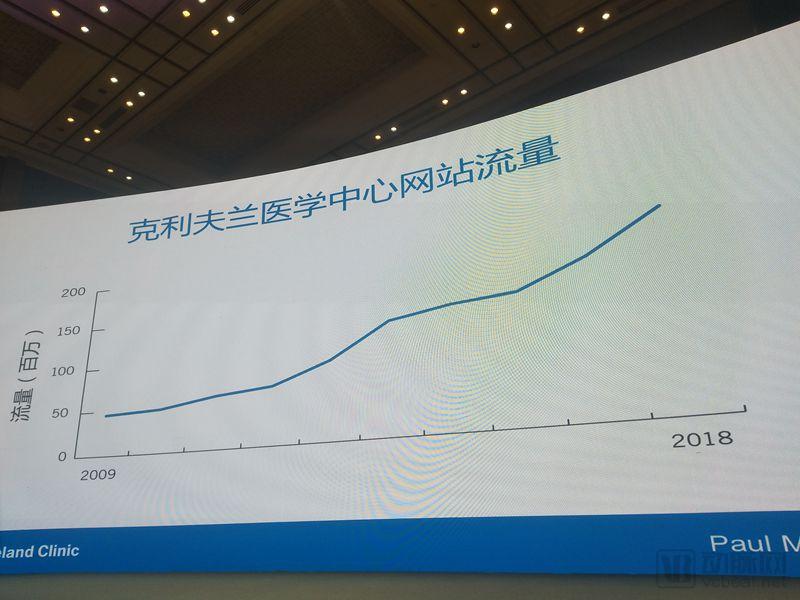
Paul Matsen introduced their owned media channels, including the official website and podcasts (short videos). Among these, the “Health Essentials” section on the official website (owned site) recorded 63 million visits in 2018; the Health Library garnered 44 million visits; and since January 2019, short videos (podcasts) have accumulated 61,189 views, in addition to their presence on social media platforms.
Paul Matsen also offered recommendations for brand building in Chinese healthcare institutions, emphasizing the importance of fully listening to patients’ voices and cultivating forward-thinking mindsets among hospital brand-building teams, as well as enhancing employees’ team awareness and collaborative capabilities.
At the conference, Mark Britnell, Global Chair of KPMG’s Healthcare Industry Practice and Senior Partner, pointed out that the healthcare workforce crisis is a common challenge facing the world. “China’s latest data reveals a shortfall of 500,000 general practitioners and an overall deficit of 18 million healthcare professionals. Against this backdrop, how can we attract talent? How can innovative personnel management enhance physicians’ sense of affiliation with their hospitals? These are urgent issues that major hospitals need to address.”
In response, he proposed ten countermeasures, including innovation in healthcare models, community-based medical services, and the cultivation of new-type talent.
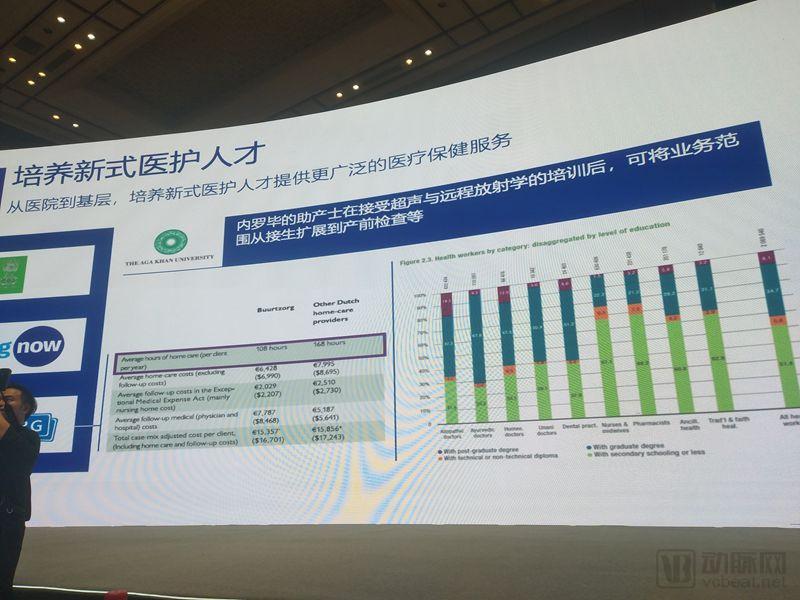
Taking the cultivation of new-type talent as an example, he introduced that midwives in Nairobi, after receiving training in ultrasound and remote radiology, could expand their scope of practice from delivery care to include prenatal examinations.He also specifically highlighted the sweeping reforms underway in China’s healthcare system.
“Two years ago, I attended a global healthcare conference in Hong Kong, where many entrepreneurs offering diverse services in the medical field were present. At that time, it was discussed that 36% of jobs in the healthcare sector would be replaced by robots, achieving true automation. So, what is the current level of automation in hospitals? From my perspective, the level of automation remains relatively low; for instance, some hospitals use robots for medication delivery. In fact, this is technology from 15–20 years ago—it is outdated. We hope to see more advanced and superior technologies applied to the healthcare field in the future,” said Mark Britnell. He noted that the primary reasons why automation has not been implemented more rapidly in healthcare are largely related to how medical institutions are organized and managed, as well as the various hierarchical structures within hospitals.
He believes that China’s primary healthcare system remains quite weak, yet the country is at the international forefront in the fields of “Internet+” digital health and artificial intelligence. He argues that China has alreadyAutomation has been upgraded to medical artificial intelligence, with particularly significant advantages. On one hand, China’s large population provides an abundant supply of medical data, laying the foundation for the development of medical AI. By the end of 2018, China’s population had reached 1.395 billion. On the other hand, China’s vast healthcare market has also provided strong impetus for innovation among AI enterprises. These factors have fueled the rapid growth of China’s medical AI market in recent years.
Furthermore, China’s aging population is exacerbating the challenges of elderly care. In this regard, India has made significant progress; patients have been integrated as an essential part of the overall care process for many years.
However, it is worth exploring how further engaging patients in the entire care process empowers them. For instance, insights from South African clients—specifically an insurance company—demonstrate that by rediscovering innovative approaches such as shared care, they can help patients with chronic conditions like diabetes extend their life expectancy, reduce hospital stays, and lower out-of-pocket costs. This novel model of collaborative healthcare not only reduces expenses but also enhances patient satisfaction.
Wei Tiemin, President of Lishui Central Hospital and a frontline practitioner in China’s healthcare sector, shares his insights on innovating hospital management systems. He emphasizes that medical management must be refined and meticulously executed, offering accessible yet profound accounts of his valuable experience over the years from three perspectives: administrative management, institutional management, and performance management.
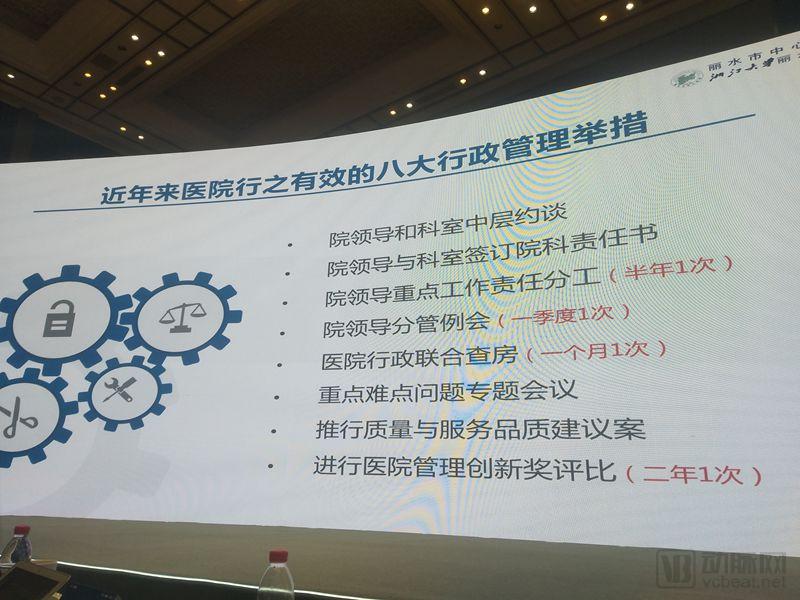
According to Wei Tiemin, in recent years the hospital has implemented eight effective administrative management measures, such as interviews between hospital leadership and middle-level department heads, division of responsibilities for key tasks, and joint administrative ward rounds.
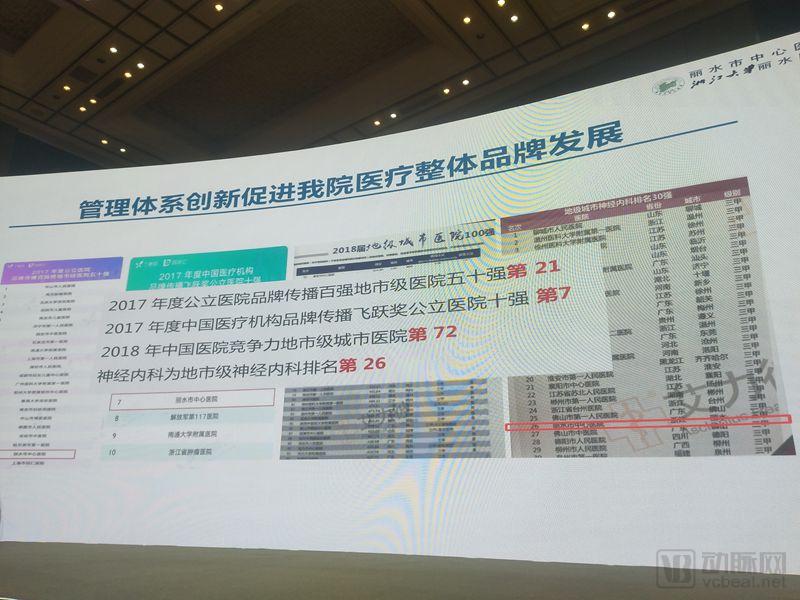
Under his leadership, Lishui Central Hospital has grown from an unremarkable hospital in a mountainous city of southwestern Zhejiang into a regional benchmark institution with annual outpatient visits exceeding 1.75 million and annual discharges reaching 72,600.
In addition, during the roundtable forum session, Zhou Quan, Chief Director and Executive Producer of "The World of Humans"; Wang Jin, Global Director Partner at McKinsey & Company; Liao Xiyao, Visiting Professor at the HKU SPACE Community College; and Dong Fating, Co-founder of the Donglei Brain Doctor Group, engaged in a peak dialogue to discuss the essence of healthcare branding.
As another highlight of the conference, the 2018 List of Best Employers among Chinese Medical Institutions and the Top 100 Brand Communication Rankings were successively unveiled at the “Making Better Happen: Honors Ceremony of the China Hospital Development Conference.”
In the Annual Best Employers list, Zhongshan Hospital of Fudan University claimed the title of Best Employer among Public Hospitals, while Henan Hongli Hospital was ranked first as the Best Employer among Private Hospitals.
Since 2012, DXY and McKinsey have jointly organized the “China’s Best Employer for Healthcare Institutions” award for six consecutive years, helping hospital administrators better understand the voices of healthcare employees and focus on the current state of talent in medical institutions. The 2018 edition eliminated corporate registration channels; instead, it relied on direct ratings from healthcare professionals. This approach ensured a more authoritative evaluation system, higher data fidelity, a fairer selection model, and a more comprehensive awards structure.
The 2018 Top 100 Chinese Healthcare Institution Brands list was jointly compiled by DXY and Qingbo Big Data. Leveraging DXY’s 19 years of experience in the healthcare industry and Qingbo Big Data’s expertise in new media data and algorithms, the evaluation assessed brand communication leaders in the omni-media era across more than ten data dimensions. Peking Union Medical College Hospital ranked first in brand communication among national and provincial public hospitals, while Nanjing Children’s Hospital topped the list for prefectural- and county-level public hospitals.