

After Bans, Unlocks, and Market Surges: Does Medical Cannabis Have a Next Season?
GW Pharmaceuticals
Cannabinoid Product Developer
Canopy Growth
A licensed producer of medical cannabis
Insys Therapeutics
Drug Developer
As the first medical scholar in the world to document the therapeutic properties of cannabis, Shennong could hardly have imagined that the plant he regarded as a medicinal herb would, 4,700 years later, become the number one drug of abuse in the United States and the most widely used illicit substance globally.
It is estimated that one in three Americans has tried marijuana. Even Bill Clinton and Barack Obama have had to admit to using it in their youth. They did so not out of honesty, but for political expediency; had they denied past marijuana use, they would have been perceived as out-of-touch hypocrites. This illustrates that, despite its poor reputation, marijuana exerts a widespread influence on people across the United States and around the world.
Whether driven by broad public support or fueled by strong capital momentum, “industrial hemp” has become one of the hottest market concepts, with the cannabis industry emerging as one of the most sought-after investment sectors in North America and globally.
According to data released by Viridian Capital Advisors, a cannabis industry consulting firm, global cannabis companies raised nearly $13.8 billion in financing in 2018. Industrial hemp stocks across major global stock markets surged broadly, with limit-up rallies in cannabis indices becoming a frequent occurrence. The share price of Tilray, a cannabis company listed in the United States, once skyrocketed to $300, representing a more than 16-fold increase within two months.
Cannabis can be classified into industrial hemp, drug-type cannabis, and intermediate types, with the primary distinction lying in the concentration of the psychoactive component tetrahydrocannabinol (THC). Legally approved industrial hemp contains THC levels below 0.3%. Medical cannabis falls under the category of industrial hemp.
VCBeat (WeChat Official Account: vcbeat) starts from North America, the birthplace of industrial hemp, and focuses on scanning its leading market, the United States, attempting to clarify how the medical cannabis industry has created a hundred-billion-dollar market trend, and what future challenges and opportunities lie ahead.
We will examine the medical cannabis industry from the following dimensions:
Clinical Applications and Progress in Medicine
Industry Investment and Financing Trends
Key Policies and Impacts
Industrial Chain and Case Studies of Leading Enterprises
Cannabidiol (CBD) contained in medical cannabis exhibits pharmacological effects such as antispasmodic, anxiolytic, and anti-inflammatory properties. In most countries, the legalization of cannabis has begun with the legalization of medical cannabis.
Researchers and biotechnology companies have been conducting ongoing studies on the medical value of cannabis. Last year, the National Academies of Sciences, Engineering, and Medicine (NASEM) released a 395-page report based on a review of approximately 10,000 samples, summarizing the efficacy of cannabis in treating various conditions, including Alzheimer’s disease, Parkinson’s disease, debilitating epilepsy, multiple sclerosis (MS), cancer, AIDS, and anorexia.
In terms of clinical progress, GW Pharmaceuticals successfully developed Sativex, the world’s first prescription drug derived from the cannabis plant, for the relief of neuropathic pain, spasticity, overactive bladder, and other symptoms of multiple sclerosis.
For epilepsy, the FDA has approved two CBD drugs, one from Insys Therapeutics and the other from GW Pharmaceuticals.
In the treatment of anorexia, the CBD oral solution developed by Insys Therapeutics received FDA Fast Track designation in December 2017. The FDA has also approved the company’s Marinol and Syndros for the treatment of anorexia associated with weight loss in patients with AIDS.
Furthermore, biopharmaceutical companies such as Zynerba Pharmaceuticals, Corbus Pharmaceuticals, and Nemus Bioscience are developing cannabis-based drugs targeting various diseases by isolating specific cannabinoids from the cannabis plant, with many of these cannabis-derived medications currently in clinical trials.
Furthermore, medical cannabis products can be used to alleviate pain and may potentially replace opioids in the future.
Globally, the cannabis industry is expanding on a large scale. According to a report released in May by market research firm Edison Research, the global medical cannabis market has a potential value of $140 billion.
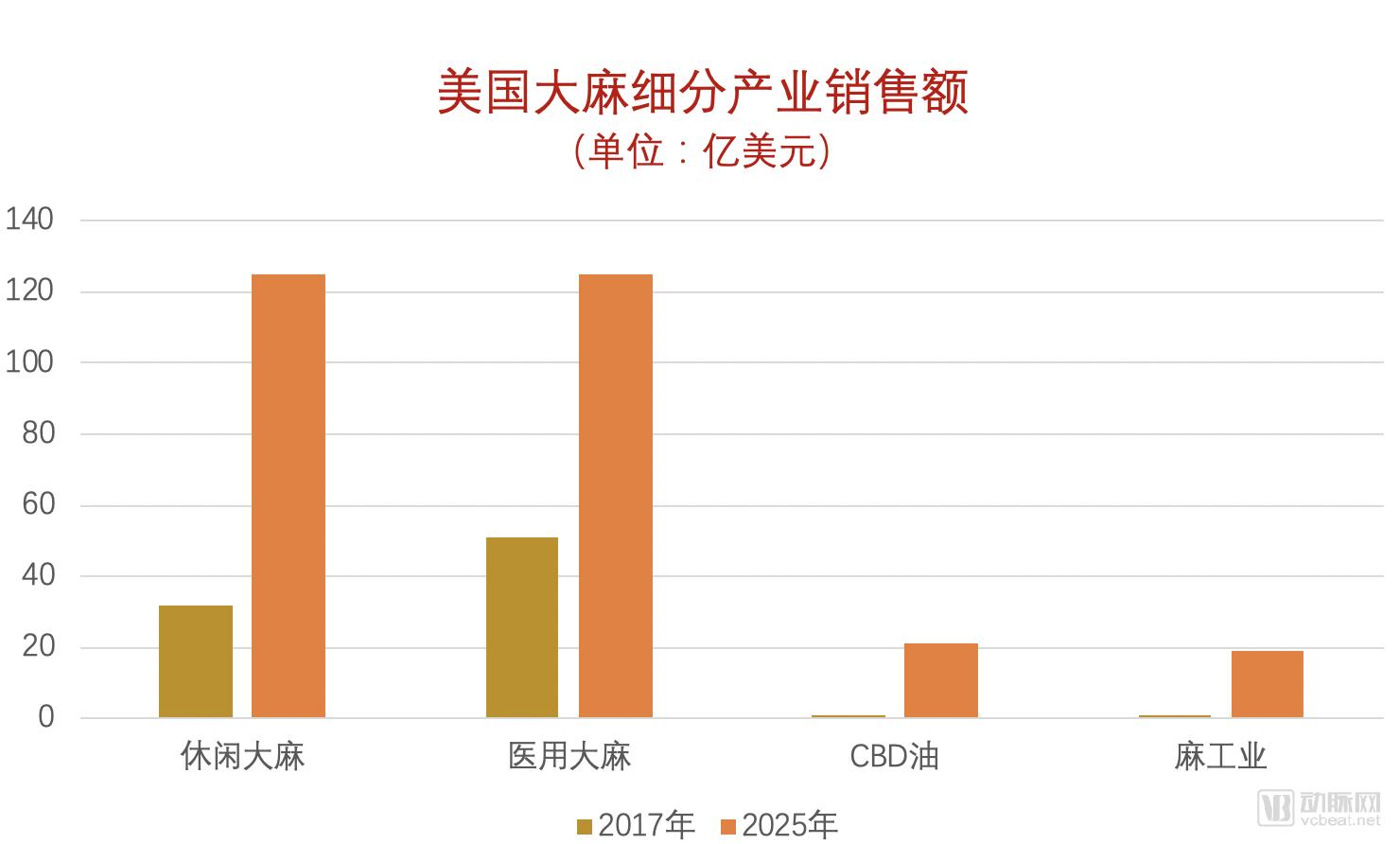
Source: Official Website of MEDICAL MARIJUANA, INC.
According to forecasts by Medical Marijuana Inc., U.S. medical marijuana sales are projected to exceed $12 billion in 2025. As a non-intoxicating dietary supplement, CBD is also expected to achieve over $2 billion in sales within the U.S. health and wellness market.
From the perspective of investment and financing, according to statistics from Huizhong Medical, there have been 552 equity financing events in the global industrial hemp industry over the past decade, with 390 companies receiving funding, including 293 companies in the United States. More than 270 investment institutions have participated, with an average single transaction size of nearly $10 million. Data shows that early-stage projects (Seed round, Angel round, Series A) dominate, but mid-stage projects (Series B, Series C) have been increasing in the past two years.
According to incomplete statistics from VCBeat, the medical cannabis industry has seen four financing events and five mergers and acquisitions from 2019 to present. Key events include:
Verdemed Holdings Completes $12.7 Million Financing to Establish Cannabis Cultivation Base;
Cannabis Company NorCal Cannabis Completes $27 Million Series A Financing;
Green Peak Innovations Completes $30 Million Mezzanine Financing to Expand Medical Cannabis Production Capacity;
Curaleaf Acquires Cura Partners for C$1.27 Billion, Consolidating Its Dominance in the Cannabis Sector;
A broad review of these events reveals that recent financing and investment transactions in the medical cannabis industry remain dominated by early-stage projects, with funding amounts all exceeding $10 million. Meanwhile, as mergers and acquisitions become more frequent, signs of corporate restructuring and resource integration are emerging within the industry.
AboutDrivers of Strong Growth in the Medical Cannabis Market, which can be considered from the following four aspects:
1. Compared with certain treatment regimens, cannabis may be safer and have fewer side effects;
II. The aging population is steadily increasing, and the prevalence of chronic diseases is rising, leading to growing demand for cannabis as a therapeutic agent;
3. Clinical trials, R&D, and the commercialization of cannabis indications will drive market growth;
4. Cannabis extract CBD may bring some changes to the saturated health supplement market.
As is well known, healthcare is a heavily regulated industry. As a controlled substance, cannabis is subject to legal restrictions in every aspect. Therefore, the ultimate development prospects of the medical cannabis industry will largely depend on policy implications.
As Max Jacobs, Head of Healthcare at Edison Research, pointed out: “The explosive growth of the medical cannabis industry is not a question of if it will happen, but when; this depends on when governments fully encourage the legalization of the sector.”
To date, countries that have legalized the medical use of cannabis include Australia, Canada, New Zealand, Chile, Colombia, Germany, Greece, Israel, Italy, the Netherlands, Peru, Poland, and the United Kingdom. While some countries and regions have decriminalized medical cannabis, many nations, including China, still do not permit the legalization of cannabis for any purpose.
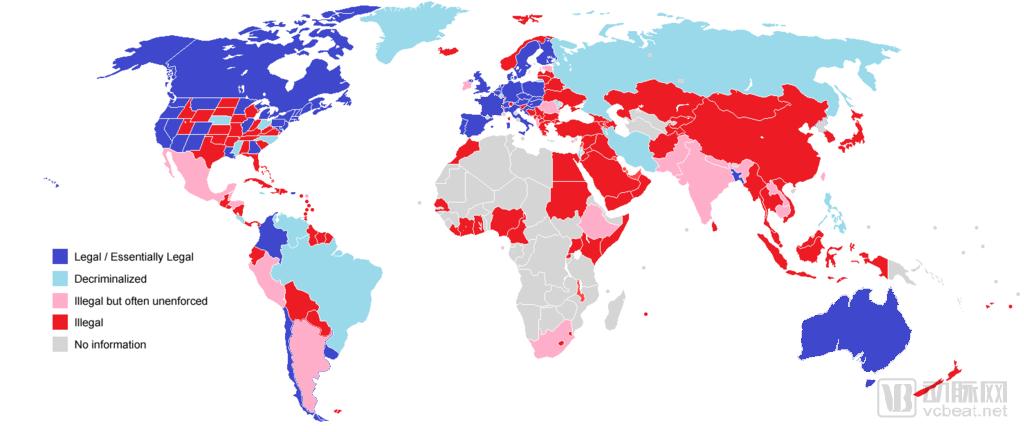
Regulatory Restrictions on Medical Cannabis by Country
Over the past century, medical cannabis in the United States has undergone a transition from a complete ban to gradual legalization. VCBeat has outlined the landmark events in this process:
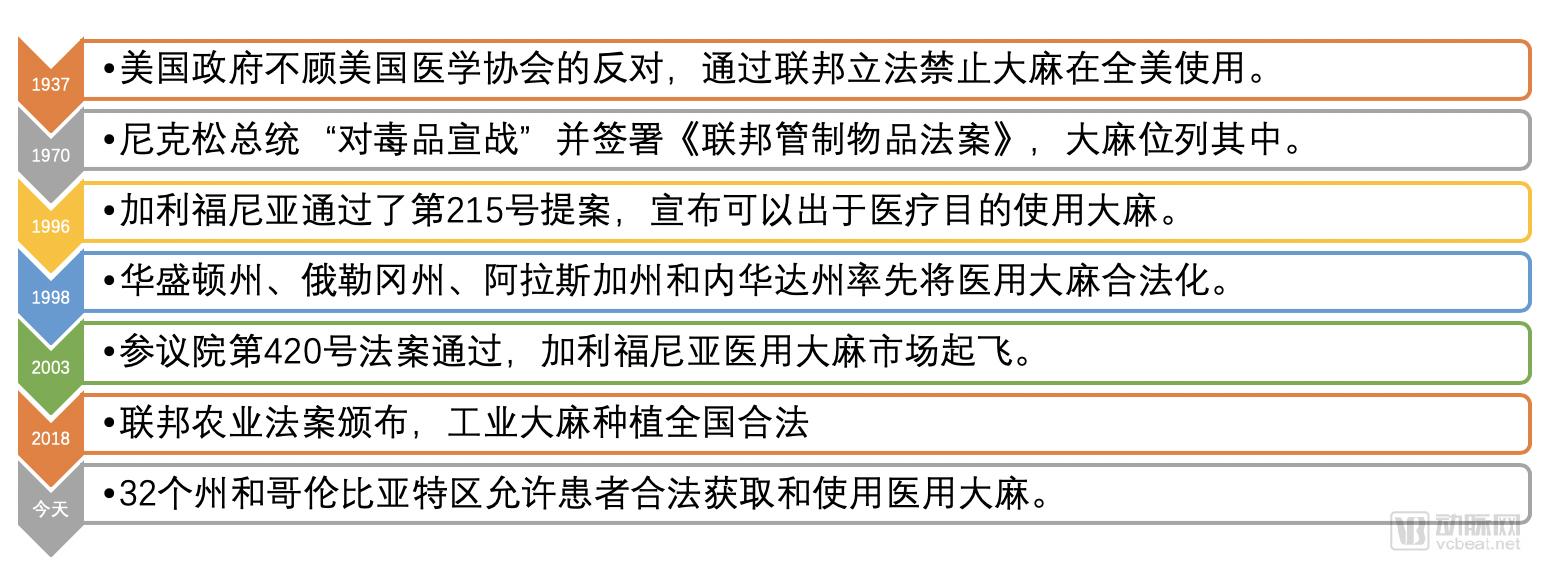
The legalization process reveals a certain divergence in attitudes toward medical cannabis between U.S. state governments and the federal government. At the state level, an increasing number of policies reflect growing social acceptance of cannabis and recognition of its medical applications. Currently, 32 U.S. states and the District of Columbia have legalized the medical use of cannabis. However, at the federal level, laws have not yet kept pace with evolving public opinion and medical research findings, and cannabis remains prohibited for any medical purpose.
Two key federal bills have played a crucial role in the legalization of medical cannabis:
Rohrabacher-Blumenauer AmendmentPassed in 2014, it aims to prohibit the U.S. Department of Justice from using federal funds to prevent states from implementing their own medical marijuana laws. This means that states with medical marijuana laws can operate normally without fear of federal intervention.
Agricultural ActAlso passed in 2014,The bill legalizes the cultivation and growing of industrial hemp for research and pilot projects.The 2018 Farm Bill further stipulated that the U.S. federal government formally distinguishes industrial hemp from marijuana: industrial hemp is an agricultural commodity, while marijuana remains a controlled substance. This farm bill removes industrial hemp from the federal list of controlled substances, allowing farmers to apply for cultivation licenses and enabling states to regulate their own industrial hemp industries.
Both bills were passed during Obama’s presidency, reflecting his lenient stance on marijuana. In an interview with The New Yorker, he stated, “I smoked marijuana when I was young; looking back, it was a bad habit, a vice similar to smoking cigarettes, but I do not believe marijuana is more dangerous than alcohol.”
By observing the policy trends from state governments to the federal government, it is not difficult to see that the medical cannabis industry is in its ascendant stage, and the trend toward legalization has gradually become clear.According to a research report by investment bank Ackrell Capital, legal marijuana is projected to expand to all 50 U.S. states by 2020.
According to an analysis by VCBeat, there are at least four reasons why policies on medical cannabis are increasingly leaning toward legalization:
First, the government aims to better regulate cannabis through legislation and crack down on the rampant black market trade;
Second, as medical research on cannabis and its therapeutic benefits continues to achieve new breakthroughs, biotechnology companies are developing more cannabinoid-based products, increasingly highlighting the medical value of cannabis;
Third, the softening of public attitudes toward cannabis-based medicines has led to more lenient policies, thereby driving the legalization of medical cannabis;
Fourth, from an economic perspective, the legalization of cannabis could bring exponential economic benefits to the cannabis industry. On one hand, the deregulation of cannabis cultivation will provide a new growth point for American agriculture; on the other hand, the U.S. medical cannabis industry is expected to create up to 340,000 full-time jobs and generate tens of billions of dollars in economic impact.
Edison’s research report indicates that although Canada was the first country to bring medical cannabis to market, the United States is likely the most important medical cannabis market.
Following several years of development, the U.S. medical cannabis industry has become further segmented, currently forming three major vertical sectors: medical cannabis cultivation, cannabis-based drug development, and service providers. VCBeat has selected one to two leading companies primarily focused on the U.S. market from each of these three sectors for brief analysis, supplemented by an overview of other companies, to provide insight into the current state of the U.S. medical cannabis industry.
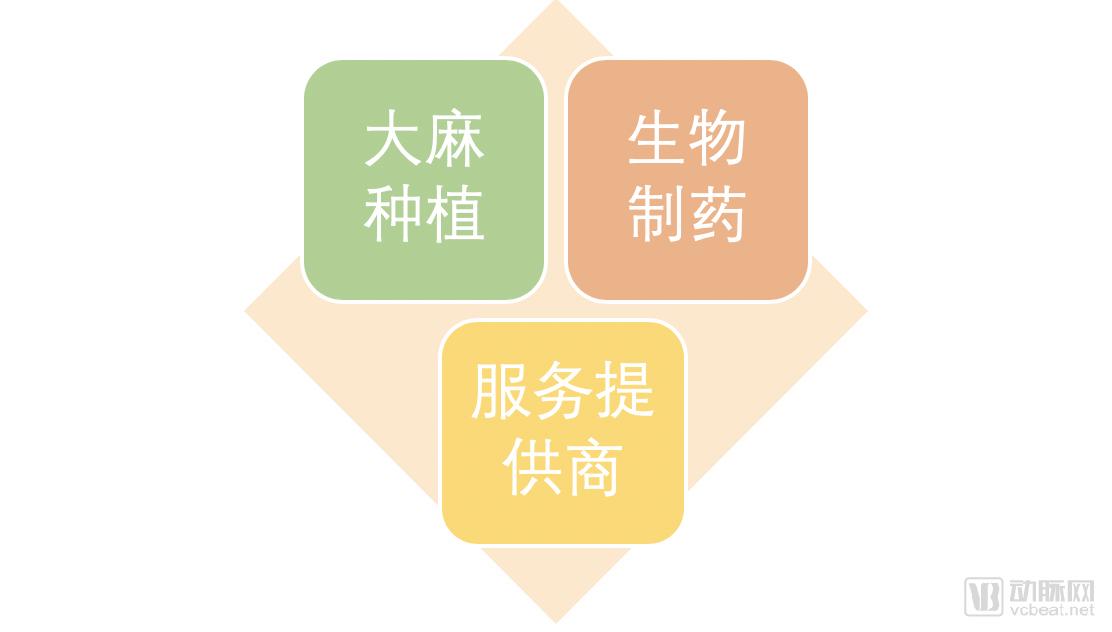
Classification of the Medical Cannabis Industry Chain
Canopy Growth
In April 2014, Canopy Growth became the first publicly listed cannabis company in North America, holding 39 U.S. provisional patents related to the medical applications of cannabis and cannabinoids. The company’s extensive business operations encompass cannabis cultivation, the production of cannabis extracts using supercritical CO₂ extraction technology, and the manufacturing of cannabis oil products and softgels with varying ratios of THC and CBD.
Canopy Growth’s subsidiary, Apollo, has been conducting clinical research on chronic pain; another subsidiary, Entourage Phytolab, is dedicated to developing cannabis-based pharmaceuticals for the Brazilian and international markets. Canopy Growth also holds a 9.8% equity stake in Scientus Pharma, a vertically integrated biopharmaceutical licensing distributor focused on the development and commercialization of medical-grade cannabinoid derivative products.
According to Zacks Investment Research, Wall Street analysts predict that Canopy Growth’s sales for the current quarter will reach $71.98 million. Sales in the same period last year were $18.05 million, representing a year-over-year growth rate of 298.8%.
In addition to Canopy Growth, companies such as Cronos Group, Tilray, and Aurora also play significant roles in the medical cannabis cultivation industry.
Cronos GroupThe company operates two 126-acre cultivation bases in Canada, specializing in the cultivation, production, and sale of medical cannabis, with products exported to 35 countries across Europe and Asia.
Tilrayis a GMP-certified medical cannabis producer that has cultivated various strains to meet patient needs, including Indica, Sativa, hybrids, and CBD-rich varieties, with products available in 12 countries and regions.
AuroraWith eight production facilities worldwide, the company covers the entire cannabis industry chain, has an annual production capacity of over 50 tons, and operates and sells in 23 countries across five continents.
GW Pharmaceutical
GW Pharmaceuticals, founded in 1998, specializes in the application of cannabinoid products in various disease areas. The company has secured patents for the use of cannabinoids in treating epilepsy, psychosis, cancer, inflammation, diabetes, and multiple sclerosis, as well as patents for processes involving supercritical fluid extraction of cannabis extracts.
GW successfully developed the world’s first prescription drug derived from the cannabis plant, Sativex, which has currently been approved in 25 countries outside the United States for the treatment of spasticity caused by multiple sclerosis.
On June 26, 2018, Epidiolex, an oral cannabidiol (CBD) formulation developed by GW Pharmaceuticals, was successfully launched for the treatment of Dravet syndrome and Lennox-Gastaut syndrome, two rare forms of epilepsy. It is also the first CBD medication approved by the U.S. Food and Drug Administration (FDA).
In the United States, approximately 35,000 people suffer from these two types of epilepsy, but traditional antiepileptic drugs have limited efficacy for most patients. In clinical trials, Epidiolex reduced seizure frequency by 40% to 50% from baseline for these indications. Currently, patients can access this medication in all 50 states, regardless of federal or state cannabis laws.
GW is continuing its research and development of Sativex. Phase 3 trials for tuberous sclerosis complex and Phase 2 trials for glioblastoma are currently underway, while the intravenous CBD program for neonatal hypoxic-ischemic encephalopathy (NHIE) has completed Phase 1 trials. GW is also evaluating cannabis and cannabinoids for other indications, including schizophrenia and autism. If cannabis can safely address these conditions, it could potentially generate billions of dollars in revenue for the company.
Some institutions predict that GW Pharmaceuticals’ expected sales will reach $1.7 billion in 2024.
Insys Therapeutics
Insys Therapeutics is a biopharmaceutical company based in Arizona, USA, that has developed three blockbuster drugs: Subsys, cannabidiol (CBD) oral solution, and Syndros (fentanyl sublingual spray).
In 2012, the company’s Subsys was approved for marketing, containing an analgesic component 80 times more potent than morphine. The drug is indicated for the management of breakthrough cancer pain in adult patients aged 18 years and older who have already received and tolerated opioid therapy for persistent pain, as well as in cancer patients using cannabinoid medications.
In 2014, the FDA granted orphan drug designation to cannabidiol (CBD) oral solution for the treatment of Prader-Willi syndrome. Lennox-Gastaut syndrome is a rare pediatric epileptic encephalopathy that often leads to childhood obesity and type 2 diabetes. In late 2017, this innovative drug received FDA Fast Track designation.
In 2016, the company’s drug Syndros (dronabinol) received FDA approval for the treatment of AIDS patients experiencing weight loss, nausea, and vomiting, as well as cancer patients undergoing chemotherapy whose symptoms were not adequately controlled by conventional medications.
Other biopharmaceutical companies, including Zynerba, Corbus, Memus, and InMed, are also actively conducting clinical trials, signaling that more cannabis-based therapeutic solutions will enter the commercialization phase in the future.
ZynerbaThe candidate drug ZYN002 is a synthetic CBD transdermal gel formulation, currently undergoing clinical trial evaluation for five indications.
CorbusThe candidate drug Anabasum is the first synthetic oral endocannabinoid analog, capable of treating chronic inflammation and halting the fibrotic process. Currently, the drug is undergoing four Phase II clinical trials for indications including systemic sclerosis, cystic fibrosis, dermatomyositis, and systemic lupus erythematosus.
MemusPossesses a unique cannabinoid (CBD) ophthalmic drug development platform for researching new therapeutics for ocular diseases such as dry eye syndrome, glaucoma, and macular degeneration.
InMed Pharmaceuticals Inc.Engaged in the preclinical development of cannabinoid-based therapeutics. The company is currently developing two drug candidates: INM-750 for the treatment of epidermolysis bullosa and INM-085 for the treatment of glaucoma.
MedMen
MedMen is the most prominent vertically integrated cannabis retailer in the United States, with operations in Arizona, California, Nevada, New York, and Florida. The company holds 19 valuable licenses spanning cultivation, manufacturing, and retail. Upon its listing on the Canadian Securities Exchange last year, MedMen achieved a $1 billion valuation, becoming a “unicorn” in the industry.
MedMen’s nine stores in California, the largest medical cannabis market in the United States, account for more than 90% of its performance. The company has confirmed that sales per square foot at its California locations are comparable to those of Apple Stores. By the end of this quarter, MedMen will hold 82 retail licenses and operate 32 open stores (including pending acquisitions).
This quarter, MedMen’s system-wide revenue totaled $36.6 million, encompassing all retail operations, representing a 22% increase from the second quarter. Projected sales for the third quarter rose by 11% to $54.9 million.
KushCo Holdings
Founded in 2010, the company is a leading provider of packaging solutions for the U.S. cannabis industry and has sold more than one billion products to growers, processors, and manufacturers across North America, South America, and Europe. Its product portfolio includes packaging solutions specifically designed for cannabis products, such as popular bottles, vaporizers, and other containers. KushCo also produces hydrocarbon gases and solvents used to extract cannabinoids from cannabis plants for the manufacture of CBD oil and other products.
Recently, KushCo reported its financial results for the second quarter of fiscal year 2019, with revenue increasing by 39% to $35 million. This indicates that KushCo has successfully expanded its customer base and broadened its product portfolio. However, the company’s gross margin remained flat at 18% compared to the previous quarter, suggesting that KushCo still needs to explore a more scientifically robust profitability model.
In addition,Pharmaceutical-Grade Cannabis Distributor WeedMDLaunched the first blockchain-based cannabis verification and tracking service.
Eaze, a Cannabis Delivery and Logistics Company, committed to providing an efficient platform for clinics, patients, and pharmacies, enabling eligible patients to obtain cannabis-based medications in the simplest and fastest way possible. The company’s EazeMD was the first app in the medical cannabis industry to be listed on both the Apple App Store and Google Play Store.
Credit Union Partner Colorado, specializing in providing checking accounts for the cannabis industry. In just three years, it has become the largest service bank for the cannabis industry.

Based on the above analysis, VCBeat believes that the medical cannabis industry in the United States is currently in its golden age of development, having already achieved certain scientific research progress, established a broad market foundation, secured substantial financial backing, and benefited from initial policy support. However, this does not mean that the industry is risk-free.
From an industry development perspective, although the medical cannabis market is more mature than the recreational cannabis market, most medical cannabis companies have only a short operating history, and their growth prospects still depend on policy stability.
From the perspective of scientific research progress, future clinical trials on medical cannabis cannot guarantee that its safety and efficacy will meet expectations. To date, the FDA has not approved any marketing applications for cannabis to treat any disease or condition, nor has it confirmed that cannabis is safe and effective for any specific disease or condition. Furthermore, the FDA has received adverse event reports from patients using cannabis or cannabis-derived products for disease treatment, indicating that the medical properties of cannabis and cannabis-derived products remain to be further substantiated.