

Beijing Tiantan Hospital Launches 'One Center, One Alliance' Initiative to Advance Neuroimaging Quality Control Standards and Accelerate Medical AI Development
From May 23 to 26, the national-level continuing medical education program “New Advances in Imaging of Major Brain Diseases” and the First National Neuroimaging Workshop, hosted by Beijing Tiantan Hospital, Capital Medical University, were held in Beijing.and announced the preparatory establishment of the Neuroimaging Discipline Alliance, while simultaneously launching multicenter research recruitment for artificial intelligence applications in neurological diseases。
Liu Yaou, Deputy Director of the Department of Radiology at Tiantan Hospital (presiding over operations) and Executive Director of the Imaging Research Center at the National Clinical Research Center for Neurological Diseases, introduced that,Multicenter recruitment will target neurology-specialized hospitals or departments across China that have a strong interest in the "clinical + imaging + AI" approach to neurological diseases and possess ample case volumes, with the aim of conducting multicenter scientific research in the field of neurological disorders.
Key focus areas include: multi-center clinical validation of AI-based imaging diagnostics, clinical studies on the impact of AI products and structured reporting on workflow improvement, and structured reporting combined with AI for neurological disorders.。
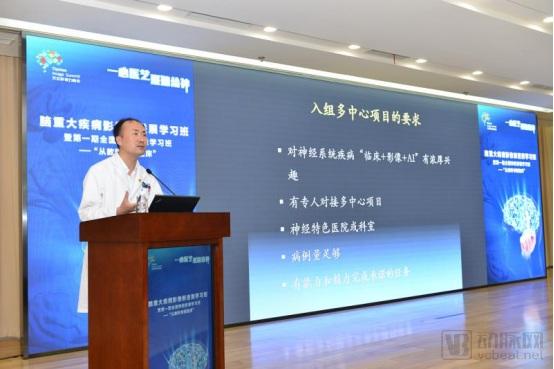
Tiantan Hospital hosts the world’s only Artificial Intelligence Research Center for Neurological Diseases and maintains an exclusive partnership with BioMind, a top-tier global medical AI team. By closely integrating with the Imaging Department’s Big Data Center, the hospital engages in multidisciplinary collaboration across imaging, clinical practice, pathology, and rehabilitation, encompassing research and development, application, validation, and scientific research. To date, it has successfully developed several AI-driven systems, including an AI-based diagnostic and reporting system for brain tumors, an AI-based diagnostic and quantitative reporting system for cerebrovascular diseases, and an AI system for predicting hematoma expansion.
It is reported that the neurological field, which relies on CT and MRI, involves multimodal imaging information that is challenging to interpret. Currently, there are few AI solutions available for assisted diagnosis and research in MRI.
Structured reporting facilitates the standardization and normalization of imaging findings, thereby enhancing the retrieval of key information, while artificial intelligence enables precise localization and analysis of lesions.
“Tiantan Hospital has been exploring and implementing these initiatives for over two years, hoping to play a leading role and work with everyone to promote and accelerate the clinical adoption of medical AI,” said Liu Yaou.Next, we will closely integrate clinical research with practical implementation to jointly establish a standardized and regulated workflow for neuroimaging reports, while exploring the development trends of combining structured reporting with neuro-AI.。
Meanwhile, the Neuroimaging Specialty Alliance aims to promote quality control standards for neuroimaging, achieve homogenization of neuroimaging examinations and reports, avoid redundant tests and diagnoses, and reduce healthcare expenditures, thereby effectively alleviating the challenges of difficult and costly access to medical care.
Ren Tianhua, Director of the International Department of Beijing Tiantan Hospital and Head of the Management Office for the Specialist Alliance on Neurological Diseases at Beijing Tiantan Hospital, introduced that,The Neuroimaging Specialty Alliance will promote the standardization of quality control in areas such as neuroimaging equipment, scanning protocols, diagnosis, data application, and process management. By fostering consensus on specialty management, technology, and conceptual frameworks, the Alliance aims to drive innovations in medical safety and quality control methodologies, healthcare service models, collaborative specialty development strategies, and information-sharing platforms.。
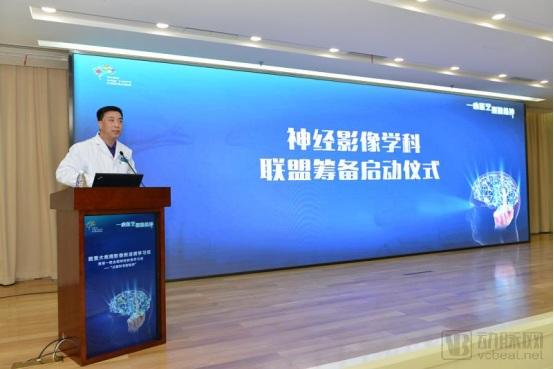
Furthermore, the four-day workshop systematically reviewed and summarized classic textbooks and monographs in the field of neuroimaging. Grounded in the “three fundamentals” of imaging knowledge and focusing on sign recognition and diagnostic reasoning, the course achieved a transition from theoretical understanding to the resolution of practical clinical problems through the interpretation and analysis of extensive clinical cases.
The training course covers five major areas: cerebrovascular diseases, central nervous system tumors, central nervous system infections and immune-mediated diseases, traumatic brain injury, and other disorders.
The training course invited multiple nationally renowned radiology experts to deliver on-site lectures to radiologists from tertiary Grade A hospitals and district- and county-level hospitals, aiming to enhance their professional competence and capabilities, promote the tiered diagnosis and treatment system, and contribute to the Healthy China initiative.