

Cardiologist-Founded Allpaca Regenerative Medicine Files IPO Prospectus, Advancing iPSC-Derived Therapy HiCM-188 for Heart Failure
Founded in 2016, iPro Stem Cell & Regenerative Medicine is a leading domestic company leveraging stem cell and regenerative medicine technologies to address refractory and degenerative diseases. The company’s founder, Dr. Wang Jiaxian, was formerly a cardiologist who conducted research on embryonic stem cells, induced pluripotent stem cells (iPSCs), and cardiac regeneration at the Cardiovascular Research Center of the University of Hong Kong and the Icahn School of Medicine at Mount Sinai in the United States. Committed to localizing these technologies in China to achieve genuine clinical translation and benefit patients, Dr. Wang co-founded iPro Stem Cell & Regenerative Medicine with Professor Chen Minglong from Jiangsu Province Hospital, following his visiting scholarship and with Professor Chen’s strong encouragement and support.
Professor Chen Minglong currently serves as Vice Chairman of the Heart Rhythm Committee under the Chinese Medical Doctor Association, Vice Chairman of the Heart Rhythm Branch of the Chinese Society of Biomedical Engineering, and Vice Chairman of the Cardiac Electrophysiology and Pacing Branch of the Chinese Medical Association. Recalling how he supported Wang Jiaxian’s entrepreneurial venture at the time, Professor Chen stated, “Current comprehensive treatment strategies for heart failure remain confined to symptomatic relief, with heart transplantation being the only truly curative option. However, its application is severely limited by a critical shortage of donor hearts. In light of this substantial unmet patient need, I believe researchers should concentrate their efforts on two key areas: the widespread adoption of mechanical circulatory support devices, and cardiac regenerative therapies capable of reversing heart failure. Our goal is to expedite the development of products that can meet patient needs and effectively address this disease.”
From the very inception of the venture, Wang Jiaxian recognized the critical importance of building a strong team. During his tenure as a visiting scholar and throughout his medical career, Wang connected with many like-minded professionals who subsequently became key members of the company’s leadership team. Yu Chunhua, Senior Vice President, holds an MBA from Columbia Business School in the United States and previously served at the Chinese Ministry of Foreign Affairs; he is also a friend Wang made during his medical practice. Xu Yibing (Alex Tsui), the R&D Director, is Wang’s alumnus from the University of Hong Kong. Driven by a shared vision of translating technology into clinical applications, he relocated from Hong Kong to mainland China in the early stages of the company’s formation to join the Allphar team. Dr. Xu Xiao, Senior Vice President, graduated from the French National Centre for Scientific Research (CNRS) and brings extensive experience in drug development, overseeing the company’s external collaborations.
Bringing Hope for the Treatment of Degenerative Diseases, iPSC Technology Garners Significant Attention
Wang Jiaxian told VCBeat New Medicine that the core technology of Alpha Regenerative Medicine involves using induced pluripotent stem cell (iPSC) technology to regenerate human cells or tissue organs in vitro, replacing aging tissues with “artificial” functional tissues and thereby reversing or even curing organ failure. This technology was discovered in 2006 by Shinya Yamanaka of Kyoto University in Japan, who was awarded the Nobel Prize in Physiology or Medicine in 2012.
So, what are the applications of iPSC technology in medicine? Theoretically, iPSCs can differentiate into any cell type in the human body. This technology has attracted significant attention from numerous biotechnology companies and multinational pharmaceutical firms worldwide. For instance, stem cell drug developers such as BlueRock and ViaCyte in the United States, and ReNeuron in the United Kingdom, have focused their indications on heart failure, diabetes, and neurodegenerative diseases, respectively. Moreover, multinational pharmaceutical companies including Novartis, Amgen, GSK, Merck, Bayer, and Novo Nordisk have all established R&D pipelines in stem cells and regenerative medicine in recent years through internal development and external collaborations. These efforts aim to explore effective solutions for malignant and refractory diseases that currently lack adequate treatments, such as cardiovascular and cerebrovascular diseases, neurodegenerative disorders, diabetes, and rare diseases.
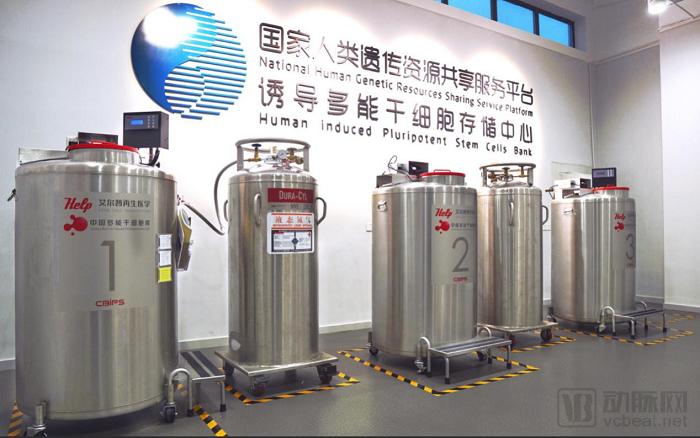
To achieve the goal of developing large-scale “off-the-shelf” cell therapies, research and development institutions in the United States and Japan have invested heavily in establishing iPSC cell banks. To this end, the Japanese government has allocated $250 million to the Center for iPS Cell Research and Application (CiRA) at Kyoto University, led by Shinya Yamanaka. China also established the “China iPSC Cell Bank for Refractory Diseases” in 2017, which operates under the Shared Service Platform of the National Human Genetic Resources Center and is spearheaded and operated by Alpha Regenerative Medicine.
Targeting Research on Cardiomyocyte and Neuronal Cell Regeneration
Alp Regenerative Medicine is currently focusing its research efforts on the regeneration of cardiomyocytes and neurons. Regarding its heart failure project, Wang Jiaxian explained, “There is a large population of heart failure patients in China and worldwide. Existing medications can only slow the progression of heart failure but cannot fundamentally treat or reverse the disease course. Relying solely on current drugs or therapies falls far short of meeting clinical needs. The most promising medical approach to treating or even curing heart failure lies in using stem cell technology to regenerate healthy human-derived cardiomyocytes in vitro and transplanting them into patients.” Recalling his experience as a clinical cardiologist, he said, “During my time in cardiology, I encountered numerous heart failure patients every day. Faced with late-stage heart failure patients and their families, doctors often felt powerless. I sincerely hoped to find new methods for treating heart failure.”
As is well known, the development of therapeutic agents for heart failure has long been a technological pinnacle in pharmaceutical R&D. Both large multinational pharmaceutical companies and biotechnology firms face substantial challenges in this field. Even Novartis’s blockbuster drug, Entresto, can only mitigate the progression of heart failure by promoting vasodilation and enhancing the cardioprotective neuroendocrine system (the NP system, or natriuretic peptide system). However, Entresto cannot halt cardiomyocyte deterioration, nor can it regenerate necrotic cells; consequently, it fails to achieve effective control of heart failure.
The emergence of iPSC technology and regenerative medicine holds promise for breaking this deadlock. In May 2018, Osaka University in Japan approved three clinical trials using iPSC-derived regenerative cardiac tissue to treat heart failure, a study led by Professor Yoshiki Sawa at the Osaka University Medical Center.
Wang Jiaxian told VCBeat New Medicine, “Through extensive research, I believe this technology can address patients’ needs. Only by accelerating clinical translation to benefit patients and create social value can a technology be considered truly worthwhile. I believe this endeavor is meaningful and should be pursued.”
Future Planning: A Bidirectional Exploration of Treatment Protocols and Industry Standards
The company has established multiple core R&D product lines focused on the cardiovascular and nervous systems, with ongoing projects including product lines for the treatment of heart failure, pediatric cerebral palsy, and Parkinson’s syndrome.
Because the cell products used in treatment are derived from healthy donors, patients need to take a certain level of immunosuppressants during the initial stage of allogeneic cell transplantation. Moreover, autologous cell transplantation has always faced difficulties in industrialization due to limitations in development cycles, industrialization pathways, and product production costs. To address this challenge, AlphaCell initiated a low-immunogenicity iPSC project in early 2019 in collaboration with The University of Hong Kong, and preliminary results have been achieved. YS Chan, Senior Scientific Advisor to the company and Associate Dean of the Li Ka Shing Faculty of Medicine at The University of Hong Kong, stated, “The development of universal cell therapies can bring new hope for the treatment of degenerative diseases. We are actively exploring universal therapies based on pluripotent stem cells.”
In addition to R&D at the technical level, Wang Jiaxian believes that the regenerative medicine industry should establish corresponding industry standards at an early stage. He notes that regenerative medicine is an emerging market both domestically and internationally, with room for improvement in both clinical evaluation and standardization. Therefore, Alpha Regenerative Medicine initiated the development of its quality standard system during the product R&D phase.
“The core of regenerative medicine lies not only in the research and development of iPSC technology, but also in considering how to transform it into a product format that is quality-controllable, mass-producible, transportable, and even convenient for clinicians to administer,” explained Wang Jiaxian. The company’s core mission is to establish an integrated closed-loop system encompassing large-scale cell production, quality standard formulation, clinical transplantation procedures, and assessment of clinical outcomes.
In May 2019, Alpu Regenerative announced the completion of its tens-of-millions-of-RMB Series A financing round, led by Yongchuang Capital and participated by Nanjing Gaoke, Ziniu Fund, and other investors. Previously, the company had secured angel and Pre-A round investments from Legend Star. Following this financing round, Wang Jiaxian plans to continue advancing the clinical research of its first R&D project, HELP001, as well as the preclinical development of the company’s other product pipelines. He will focus on clinical studies and Investigational New Drug (IND) applications. Positive feedback received during communications with regulatory authorities has bolstered his confidence in the future of regenerative medicine. He hopes that Chinese enterprises can take a global lead in the field of regenerative medicine, thereby bringing benefits to patients.