

GEN's 2019 Top 10 Under 40 in Life Sciences: Industry Talent Outnumbers Academia for the First Time, One Chinese Scientist Among Honorees Files IPO
Recently, the well-known U.S. biotechnology magazine GEN announced its 2019 “Top 10 Under 40” list in the life sciences field. Among the honorees, five hold key positions at biotechnology companies, four are engaged in academic research, and one works for a nonprofit healthcare system.
At the end of the 20th century, in the field of life sciences, half of all PhD holders chose to remain in academia, while fewer than one-quarter of PhDs and postdoctoral researchers entered industry. Since 2012, the gap in the proportion of PhDs employed in industry versus academia has narrowed year by year. According to the 2017 Science & Engineering Doctorates report released by the National Science Foundation (NSF), 37.6% of life sciences PhDs had entered industry, while approximately 40.6% remained in academia.
Why Is the Gap Between Industry and Academia Narrowing? GEN Provided an Analysis as Early as 2012. Limited tenure-track faculty positions stand in contrast to the growing number of PhD graduates. New PhD recipients either remain in academia by securing postdoctoral positions through university recruitment, or they translate their research achievements into commercial applications by launching independent biotech startups or joining large biotechnology companies to develop new therapies.
Artery New Medicine (WeChat Official Account: biobeat1) has categorized and compiled the background information of the “Top 40 Under 40” shortlisted for GEN, based on the different industries in which the ten individuals operate.
Core Backbone of the Industry

Sana Alajmovic (32): Co-founder and CEO of the biotechnology company Sigrid Therapeutics
Sana Alajmovic is the co-founder and CEO of Sigrid Therapeutics, a Swedish biotechnology company dedicated to developing novel therapies that treat diseases by modulating how the human body digests food.
Sigrid Therapeutics was founded in 2014, but the company’s origins in life sciences research date back to 2008, when Professor Tore Bengtsson, one of its co-founders, and a research team at Stockholm University improved methods for measuring metabolic disorders following oral intake of engineered silica particles. Currently, Sigrid Therapeutics has developed SiPore15, a candidate drug that improves blood glucose levels in patients with diabetes. It is the first diabetes therapeutic designed to act within the gastrointestinal tract.
Sana Alajmovic was named one of Sweden’s 101 Super Talents in 2012 by the Swedish business magazine Veckans Affärer. She holds degrees in economics and business from the Stockholm School of Economics and has served as Head of Business Development for Nanologica’s drug delivery division, Business Manager at the venture capital firm Serendipity Innovations Group, and Project Manager for the Sweden–US Life Science Summit.

Francesco Gatto (31): Co-founder and CSO of the molecular diagnostics company Elypta
Francesco Gatto’s research project resulted in a total of three patent applications, all of which paved the way for the establishment of Elypta in 2017. Elypta is a Swedish molecular diagnostics company dedicated to developing a first-generation liquid biopsy platform based on metabolic biomarkers.
In February this year, molecular diagnostics company Elypta secured €2.35 million ($2.6 million) in funding under the second phase of the European Union’s Horizon 2020 Research and Innovation Programme. The funding will support the company in conducting a prospective, multicenter clinical study on metabolism. This study builds upon a liquid biopsy platform for biomarkers, enabling the detection of recurrent renal cell carcinoma at an early stage.
Francesco Gatto was named to MIT Technology Review’s “35 Under 35” list in 2018. This year, he not only received the Karin Markides Award but was also recognized by Labiotech.eu as one of the Top 10 Young Biotech Entrepreneurs. Francesco Gatto earned his Bachelor’s and Master’s degrees in Chemical Engineering from the University of Padua in Italy in 2011, and completed his Ph.D. in Systems Biology and Bioinformatics in 2015 at Chalmers University of Technology in Sweden, under the supervision of Professor Jens Nielsen. In 2016, he joined the laboratory of Dr. Bernhard O. Palsson at the University of California, San Diego, as a visiting scholar.

Nicole Gaudelli (34): Head of DNA Editing Platform at Beam Therapeutics
Nicole Gaudelli’s research has opened up a new frontier in gene editing: the broad expansion of the potential therapeutic utility of a novel class of genetic medicines—base editors. First published in Nature in 2017, this study also became one of the foundational core scientific principles underlying the establishment of Beam Therapeutics. In March 2018, Beam Therapeutics completed a $135 million Series B financing round, bringing its total funding to $222 million.
Nicole Gaudelli completed her postdoctoral research in the laboratory of Dr. David R. Liu at Harvard University. Dr. David R. Liu co-founded Beam Therapeutics together with Feng Zhang and Dr. J. Keith Joung. Dr. Liu’s laboratory published a study in Nature on “C base editors,” which enable programmable C-to-T or G-to-A DNA edits, addressing 15% of the 30,000 diseases caused by point mutations.
The novel base editor developed by Nicole Gaudelli, which converts A-T base pairs to G-C base pairs, expands the proportion of potentially treatable diseases. After seven rounds of evolution and engineering, a transfer RNA adenosine deaminase was successfully evolved. Fusing this enzyme to a catalytically impaired CRISPR-Cas9 mutant enables precise base editing of DNA. This 18-month “evolution” process yielded a highly efficient base editor.

Ankit Mahadevia (38): Co-founder and CEO of Spero Therapeutics
Spero Therapeutics, founded in 2013, is a clinical-stage biopharmaceutical company based in Cambridge, Massachusetts, with a mission to become a leader in Gram-negative antibiotics. The company’s drug candidate, SPR994, has the potential to become the first oral carbapenem antibiotic for treating multidrug-resistant (MDR) Gram-negative infections. Additionally, Spero Therapeutics is developing an oral antibiotic, SPR720, for the treatment of pulmonary nontuberculous mycobacterial infections.
Prior to founding Spero, Mahadevia was a Venture Partner at Atlas Venture’s life sciences group, where he supported the formation of eight companies focused on novel drug discovery platforms and therapeutic products, including Nimbus Therapeutics, Arteaus Therapeutics, and Translate Bio. Before joining Atlas, Mahadevia worked with the founding team of Arcion Therapeutics on product and business development, and held business development roles at Genentech and Vanda Pharmaceuticals.
Previously, Mahadevia worked in the healthcare practices at McKinsey & Company and Monitor Group. He began his career in health policy, holding positions at the U.S. Senate Committee on Health, Education, Labor, and Pensions, the U.S. Government Accountability Office, and the Mexican Social Security Institute (IMSS).
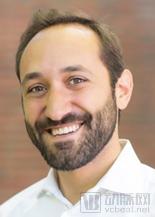
Emmanuel J. (Manny) Simons (36): Co-founder and CEO of Akouos, a hearing therapy company
Emmanuel J. (Manny) Simons is a scientist and entrepreneur with over 15 years of experience in auditory science research and new venture capital investments. While conducting research at the Massachusetts Institute of Technology (MIT), Simons sought to integrate his background in biology with auditory science research. After receiving the Blavatnik Fellowship from Harvard University, he founded Akouos, a hearing therapeutics company. Co-founded by Simons and six other pioneers in the field of gene therapy for hearing loss, the company successfully completed a $50 million Series A financing round in 2018.
Prior to receiving a scholarship from Harvard University, Simons held leadership roles in business and corporate development at Voyager Therapeutics and WarpDrive Bio, where he spearheaded strategic partnerships with a total value exceeding $1 billion. In the early stages of his career, Simons served as an Entrepreneur-in-Residence at Flagship Pioneering (formerly Flagship Ventures) and was a founding team member of Seres Therapeutics. He earned a bachelor’s degree in Neuroscience and Music from Harvard University, an MBA from Harvard Business School, and a Ph.D. in Biomedical Engineering from the Massachusetts Institute of Technology.
Academic Leaders
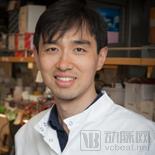
Cong Le (31): Zhang Feng’s founding student; Assistant Professor, Department of Pathology and Genetics, Stanford University School of Medicine
Dr. Le Cong earned his bachelor’s degree in Biology from Tsinghua University and subsequently completed his Ph.D. in Biomedical Sciences at Harvard University. Currently a postdoctoral fellow at the Broad Institute, he leads a research group within the Department of Pathology and Genetics at Stanford School of Medicine. His team focuses on cancer immunology and neuroimmunological diseases, with a commitment to developing scalable new technologies for genome editing and cellular engineering.
At Harvard, Dr. George Church and the renowned Chinese-American biologist Dr. Feng Zhang jointly served as Le Cong’s doctoral advisors. Le Cong completed his Ph.D. in Dr. Zhang’s laboratory, where he published several pioneering studies on gene editing using CRISPR/Cas9.
Currently, Dr. Le Cong is a co-inventor on more than 20 patents. He has leveraged the CRISPR system to improve gene and cell therapies, contributing to one of the first FDA-approved clinical trials that use viral vectors to deliver CRISPR/Cas9 in vivo for gene therapy. Furthermore, Dr. Cong is an International Research Scholar of the Howard Hughes Medical Institute and an Irvington Fellow of the Cancer Research Institute.

Amber Alhadeff (30): Postdoctoral Researcher, Department of Biology, University of Pennsylvania
During her research in Dr. J. Nicholas Betley’s laboratory, Amber Alhadeff primarily investigated the mechanisms by which distinct neural populations drive behavior. She placed particular emphasis on how hunger neurons influence the perception of external stimuli and how the gut communicates with the brain to regulate food intake. Such research can help scientists develop more rational and effective treatments for metabolic disorders, including obesity, eating disorders, and type 2 diabetes.
Amber Alhadeff holds a Bachelor of Science in Biology, a Master of Arts in Psychology, and a Ph.D. in Psychology/Behavioral Neuroscience from the University of Pennsylvania. Her doctoral research primarily focused on hindbrain neuroendocrine control of food intake.
In 2008, Amber Alhadeff received the L’Oréal USA For Women in Science Fellowship, a program that awards $60,000 annually to each of five female postdoctoral scientists to advance their research. This funding will support Alhadeff’s further scientific investigations.

César de la Fuente (33): Presidential Assistant Professor at the University of Pennsylvania
César de la Fuente is pioneering the computerization of biological systems to develop revolutionary biotechnologies capable of addressing major societal challenges, such as antibiotic resistance. His laboratory is dedicated to creating the world’s first computer-based tools and therapies, with research spanning the design of artificial antibiotics, the discovery of novel antibiotic properties through bioinformatics, the development of engineering technologies for the microbiome, the creation of tools for synthetic neuromicrobiology, and the engineering of live biotherapeutic products.
Among the multiple technologies he helped develop, one has already been licensed. He has received independent funding from several fellowships, including a fellowship from the “la Caixa” Foundation and a postdoctoral fellowship from the Ramon Areces Foundation, and was appointed to the Presidential Professorship at the University of Pennsylvania.
Prior to joining the University of Pennsylvania, César de la Fuente served as a Junior Fellow of the Areces Foundation and a Postdoctoral Associate at the Massachusetts Institute of Technology, and he earned his Ph.D. in Microbiology and Immunology from the University of British Columbia.
Recently, César de la Fuente was again named an “Innovator Under 35” by MIT Technology Review, and was recognized by STAT News as one of the “30 Under 30 Latinos in Boston” and as a 2018 “Wonder Kid.”

Humsa Venkatesh (32): Postdoctoral Fellow in Neurology and Neuroscience at Stanford University
While working in Dr. Michelle Monje’s laboratory, Humsa Venkatesh primarily used in vitro glioma model systems to investigate various cellular interactions within the tumor microenvironment. By integrating systems neuroscience with cancer biology, she studied the microenvironmental determinants of cancer growth, seeking to elucidate the mechanisms underlying these interactions to identify new therapeutic targets for glioma.
In 2015, Humsa Venkatesh published a study in *Cell* that demonstrated for the first time that brain activity, particularly neuronal activity in the cerebral cortex, can stimulate tumor growth. In 2017, she published a report in *Nature* on the treatment of high-grade gliomas based on these findings. Both studies were conducted in mice implanted with invasive human brain cancer cells. Venkatesh’s research has opened up a new field, and she aims to develop therapies targeting a broad range of tumor cells.
Humsa Venkatesh’s interest in cancer research stemmed from his uncle, who passed away less than two years after being diagnosed with renal cell carcinoma. At that time, the only available treatments for cancer were standard radiation therapy and chemotherapy. Venkatesh earned a Bachelor of Science degree in Chemical Biology from the University of California, Berkeley, and later obtained his Ph.D. from Stanford University.

Latrice Landry (38): Clinical Molecular Genetics Researcher, Center for Advanced Molecular Diagnostics, Brigham and Women’s Hospital
Latrice Landry is dedicated to understanding the relationship between nature and nurture in health disparities and translating health disparities research into clinical practice. She has conducted extensive research on how diet and nutrition interact with genetics to contribute to complex human phenotypes.
Latrice Landry holds a Master’s degree in Policy and a Ph.D. in Nutrition from Tufts University. Her doctoral research focused on the interplay between diet and genetics, identifying determinants of dyslipidemia among African Americans, with the aim of uncovering the reasons behind the high prevalence of cardiovascular disease in this population and discovering novel approaches to reduce these disparities.
During her doctoral studies, Latrice Landry received the Albert Schweitzer Fellowship and was named a finalist for the American Society for Nutrition’s Clinical Emerging Leader Award. Additionally, she was awarded the President’s Award for Citizenship and Public Service at Tufts University.
Latrice Landry graduated from Harvard Medical School with a degree in biomedical sciences. She later collaborated with the National Human Genome Research Institute (NHGRI) at the U.S. National Institutes of Health and was selected as the FDA’s first Fellow in Genomic Medicine and Health Disparities. At the FDA, her primary research focuses on the potential consequences of biases in genomic databases within the context of precision medicine.