

How Much Do Rehabilitation Therapists Earn? Insights from a Survey of Over 80 Rehabilitation Institutions in Jiangsu, Zhejiang, and Shanghai
This article is reposted from Haiman Health, originally titled “How Much Do Rehabilitation Therapists Earn? Plus: ‘A Plan to Become a Rehabilitation Therapist with an Annual Salary of One Million’.” VCBeat has been authorized to repost it, with editorial revisions.
Introduction:
The concept of rehabilitation medicine was introduced to China in the 1980s. After more than three decades of exploration and practice, rehabilitation institutions in China have grown from nonexistence to presence, from small to large, and from weak to strong, with increasing social attention. In the past decade, investment firms, insurance companies, and private enterprises have increasingly focused their investments on the rehabilitation industry, driving the improvement of industry standards and the expansion of business models. Driven by both traditional and emerging institutions, various forms of rehabilitation medical institutions now exist across China, offering a diverse range of rehabilitation medical services.
However, amid the rapid surge and widespread expansion of rehabilitation institutions, some investors, due to a lack of fundamental understanding of the rehabilitation sector, have seen their self-operated facilities gradually expose a series of interconnected issues. This has prompted the industry to pause and reflect. Drawing on the current landscape and objective definitions of the rehabilitation field, and combining the author’s own experience and insights, this series of articles aims to offer preliminary perspectives for reference by practitioners and enthusiasts alike.
In China, "rehabilitation therapist" is a generic occupational title that refers exclusively to professionals who have obtained the corresponding practicing qualification issued by the National Health and Family Planning Commission. In foreign countries, distinct practicing licenses are granted for physical therapists, occupational therapists, and speech-language pathologists, whereas China has not yet implemented such specialization. However, with the improvement of the domestic education system and the subdivision of clinical roles, it is expected that professional directions will become more specialized in the future, similar to those of clinical physicians. Currently, recent graduates from rehabilitation programs (associate or bachelor’s degree) should be referred to as "rehabilitation therapy assistants" before obtaining their practicing qualifications.
Meanwhile, many fitness coaches and members of the public undergo training provided by social institutions and obtain certificates such as “Physiotherapist,” “Health Manager,” and “Rehabilitation Therapist.” However, they are not authorized to refer to themselves as “Rehabilitation Therapists.” Rehabilitation Therapists are licensed medical practitioners. Therefore, the “rehabilitation therapy services” provided by these individuals not only pose safety risks but should also be classified as “illegal practice of medicine.” It is hoped that the relevant authorities will attach great importance to this issue and carry out thorough rectification.
During the preliminary phase, when soliciting input from industry stakeholders regarding the focal points of this article, the most prominent concern raised was “the current state of rehabilitation therapists’ income.” This topic is not only what rehabilitation therapists urgently wish to understand in their job searches and professional development, but it also became evident that many operators and investors in rehabilitation institutions lack an in-depth understanding of this issue. Therefore, this article primarily centers on this “sensitive yet direct” topic.
Adhering to the principle of objective representation, this article originally planned to provide separate analyses of the Jiangsu-Zhejiang-Shanghai region, the Greater Bay Area, the Beijing-Tianjin-Hebei region, and Central China. However, due to time constraints and an insufficient sample size, we present findings solely from the Jiangsu-Zhejiang-Shanghai region, with which we are most familiar. The following details are based on data collection and synthesis from over 80 rehabilitation institutions in this region:
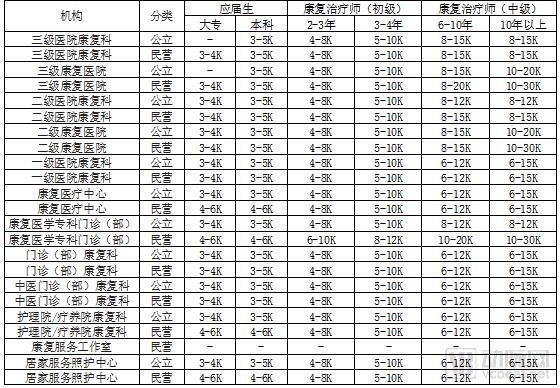
Given that most rehabilitation therapists with titles of Deputy Chief Therapist or higher are employed in public institutions, their salary information is not readily disclosed. In the private sector, most organizations adopt a strategy of “hiring at a lower title than qualified,” employing mid-level titled professionals to fill roles intended for more senior personnel. Some private entities do offer high salaries to attract highly titled professionals. As this constitutes confidential business information, readers may contact the author for more in-depth insights.
Meanwhile, due to the lack of uniformity in salary settlement methods and performance assessment management across institutions, there may be information discrepancies during the process of screening and summarizing salary ranges. However, the salary ranges presented in the table above should cover 80% of the current population status.
According to the author’s compiled data, using salaries in the Jiangsu-Zhejiang-Shanghai region as a benchmark, income levels in Guangdong are 1.3–1.5 times higher, those in the Beijing-Tianjin-Hebei region are 0.7–1.2 times, and those in Central China are 0.8–1.1 times.
Geographic Factors
The strength of the regional economy influences the type and scale of rehabilitation institutions, their development needs, as well as the recruitment and attraction of rehabilitation professionals. It also affects patient sources and their ability to pay. Therefore, for comparable rehabilitation institutions, therapists in Shanghai typically earn higher incomes than those in Jiangsu Province, with salaries in Southern Jiangsu being higher than in Northern Jiangsu. In Zhejiang Province, due to the implementation of medical insurance cost-containment policies in recent years, the operational performance of rehabilitation institutions has fluctuated, impacting compensation policies for rehabilitation staff; this topic will not be discussed further here.
Institutional Factors
The author has previously elaborated on the definitions and outlines of different rehabilitation institutions (see details in“How Much Does It Cost to Invest in Rehabilitation Institutions at Different Levels? A Comprehensive Guide to Their Types, Business Scopes, and Investment Scales”). Therefore, objective differences exist among different types of institutions in terms of therapist recruitment criteria, hiring assessments, and compensation packages. To avoid causing undue pressure and misunderstanding for operational staff at these institutions, this article does not provide a detailed elaboration; however, certain insights can already be gleaned from the table above. Three key pieces of information warrant attention:
Public rehabilitation institutions at the secondary level and above (including rehabilitation departments of public secondary hospitals) offer relatively stable, albeit not particularly high, salaries to rehabilitation therapists, owing to their comprehensive organizational structures, well-equipped clinical facilities, and ample patient flow. Moreover, during their professional development—particularly before obtaining intermediate-level certification—therapists benefit from substantial intangible gains, such as access to extensive clinical teaching resources and learning platforms.
Private rehabilitation institutions at Level II and above typically offer salaries 1.2 to 1.6 times higher than those of comparable public institutions, driven by the needs for establishment and expansion, as well as challenges such as unstable internal team management and high staff turnover. This salary premium creates relative attractiveness, primarily among therapists holding intermediate professional titles or below. While compensation for senior professionals is often set even higher, few individuals accept positions solely based on salary considerations.
Unlike traditional institutional operating models, the emergence of self-operated rehabilitation outpatient clinics (rehabilitation physical therapy centers) and the influx of capital have enabled these institutions to offer more attractive salaries for rehabilitation therapists. This is particularly true for therapists with three to six years of work experience; if hired, their compensation is 1.5 times that of traditional institutions. However, compared to foreign therapists recruited by these same institutions, they are still considered low-cost labor.
Individual Factors
An individual’s income does not fully reflect their worth, but it serves as an objective indicator of how their organization values them (with the exception of founders who intentionally suppress their own salaries to boost profit margins). Similarly, an organization’s willingness to provide commensurate compensation and resources is largely determined by the individual’s capabilities and contributions.
Due to differences in performance evaluation systems, it is difficult to conduct an “analysis of personal factors based on salary income” for rehabilitation therapists of the same seniority within similar institutions. However, based on a broad sample of variables, compensation remains closely correlated with “educational background, professional title, years of experience, position, and revenue-generating capacity.” Meanwhile, personnel who concurrently hold managerial or research positions not only receive additional salary subsidies but also possess certain authority that influences the income of others.
Private rehabilitation institutions at Level II and above place significant emphasis on individual revenue-generation capabilities, typically tying performance-based income directly to a percentage of personal earnings, while paying insufficient attention to overall treatment quality and the holistic professional development of therapists.
New rehabilitation outpatient clinics (particularly international institutions) often complete task-related communications and cost assessments prior to recruitment. Consequently, they impose detailed requirements on therapists’ skills, professionalism, educational background, and relevant certifications. Final compensation structures are then determined based on task assignments and a six-month probationary observation period.
Positioning Factors
Position Determines the Value Foundation. Currently, there are three main perspectives on the positioning of therapists:
1. Labor Force. As the service interface of rehabilitation institutions, therapists are responsible for patient care and represent a significant productive force driving institutional revenue. Particularly in private rehabilitation facilities at the secondary level or above, the “labor” nature of rehabilitation therapists becomes increasingly pronounced due to pressures related to institutional survival and operational targets.
2. Adhesive. Due to the characteristics of "late start but rapid development" of rehabilitation medicine in China, its professional and knowledge levels are not very high among medical teams. However, due to the particularity of this department, in terms of integrating "doctor-patient relationships," promoting "clinical-rehabilitation integration," innovating research directions, and refining clinical applications, the role of rehabilitation therapists as "medical generalists" has been discovered and well utilized in some public institutions.
3. Cross-disciplinary practitioners. In contrast to the clear division of labor and standardized professional development of international rehabilitation therapists, some domestic institutions in China have recognized their shortcomings and are exploring paths for self-development. Particularly under the banner of “Chinese characteristics,” they are carving out cross-disciplinary niches, making significant inroads into areas such as “integration of sports and medicine,” “combination of medical care and elderly care,” and “chronic disease management.” Alternatively, by acknowledging the actual standards within the industry, these institutions are introducing or developing specialized courses—such as those focused on low back pain, pelvic floor rehabilitation, and treatment with XX equipment—to address clinical weaknesses. However, this does not conceal their potential evolution into a “coaching” role.
4. Other Sources of Income. In addition to professional compensation received from their employing institutions, rehabilitation therapists may also generate income through various other channels, such as providing training and lectures (rehabilitation courses or presentations), serving as institutional consultants (for operational setup or specialized technical guidance), participating in “expert ward rounds” or offering “technical endorsements,” engaging in product sales (rehabilitation and health-related products or other direct-selling ventures), and providing personalized in-home services.
Therefore, the income structure of a rehabilitation therapist is roughly as follows:
Rehabilitation Therapist Income = Geographic Factor × Institutional Factor × Individual Factor × Positioning Factor + Others
A notable finding from the research is that the root causes of various issues converge on two key areas: therapists’ professional competencies and institutions’ investment and operational capabilities. Therefore, we will further elaborate on these two focal points.
The author holds a bachelor’s degree in rehabilitation and is currently engaged in the entrepreneurship and management of a rehabilitation institution. During this year’s recruitment process, the majority of therapists who were rejected failed primarily in the following areas:
1. Inadequate foundational knowledge, whether in anatomy, physiology and pathology, or rehabilitation assessment and treatment;
2. Weak operational skills; during study, internships, and work, individuals often merely imitate procedures without ever formally mastering the foundational technical requirements and definitions;
3. Disordered clinical reasoning and pathways, with no clear understanding or concept of assessment objectives, content, conclusions, strategies, or pathways;
4. Weak professional identity and sense of belonging; lack of personal charisma and value proposition;
5. Professional Ethics and Risk Awareness: Therapists have inherent job definitions and scopes of practice, and must also maintain risk awareness.
So, what constitutes the competency of a rehabilitation therapist? Currently, industry associations and experts have gradually proposed certain consensuses regarding this profession. However, most of these are based on requirements related to medical technology or present relatively broad and vague concepts (such as humanities and management), lacking a clear and direct definition and significance.
It is noteworthy that Japan has established clear and pragmatic concepts and definitions regarding the rehabilitation industry ecosystem and the cultivation of skilled professionals, while steadily and consistently promoting its development. This experience can serve as a valuable reference for practitioners in China. For your reference, below are the recruitment requirements of the author’s own institution:
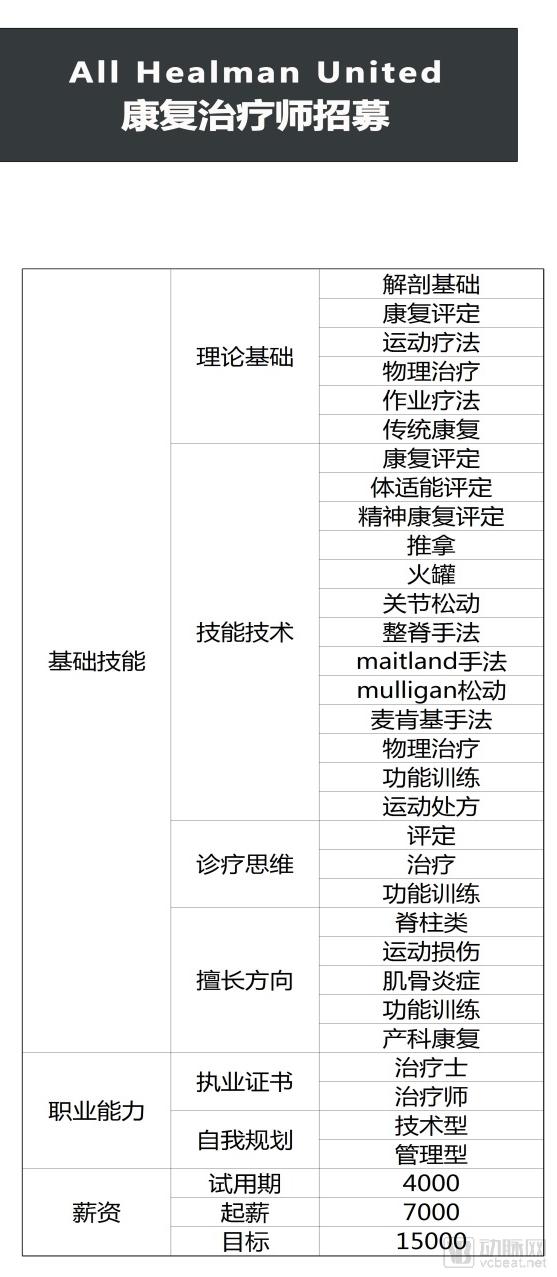
An institution’s operational capabilities are directly reflected in the income levels of rehabilitation therapists, influencing both the quality and duration of their work within the facility. This, in turn, impacts the operation and revenue of the rehabilitation institution. Therefore, I frequently advise investors and operators of private institutions to avoid treating rehabilitation therapists merely as “labor.” Instead, they should be regarded as both “productive forces” and “means of production,” serving as “strategic assets” for institutional development. This approach involves dynamically aligning the HR models and skill tree models of rehabilitation therapists with the institution’s operational models.
Rehabilitation therapists are expected not only to help their institutions generate revenue but also to enhance the institutions’ overall valuation. Therefore, accepting and implementing this paradigm shift may pose a significant challenge for investors with experience in traditional healthcare institutions.
This article begins with the rather mundane and direct topic of “income.” Yet, just as one’s income serves merely to lay the material foundation for life—without end or further implication—the growth of a therapist involves many additional challenges and obstacles. Therefore, I can offer only a few modest suggestions:
Suggestions for Basic Professional Competency Planning for Rehabilitation Therapists
The development of talent requires scientific planning and steady, grounded accumulation; this is particularly true in the medical field, where such a mindset and trajectory are essential. However, whether due to feedback from individual therapists, the institutional need for capacity building, or the proliferation of external “rapid-growth training” programs and related public discourse, this professional group appears to have lost its clear direction in self-development and career planning, often feeling confused and aimless.
As both a rehabilitation therapist and an investor in rehabilitation institutions, my advice to all rehabilitation therapists is: proceed steadily and improve gradually. Therefore, I have modularized the fundamental professional competencies of rehabilitation therapists into “basic anatomy, basic theory, basic techniques, clinical reasoning, specialized techniques, management skills, and operational capabilities.” Of course, personal attributes such as worldview, values, life philosophy, and humanistic knowledge are also essential foundations that rehabilitation therapists must build and strengthen on their own.
In light of my personal perspective and the institution’s training roadmap, I recommend that therapists refer to the energy allocation model shown in the figure below to adjust their pace and focus, shed the self-imposed “persona burden,” and devote greater effort to enhancing their professional competence.
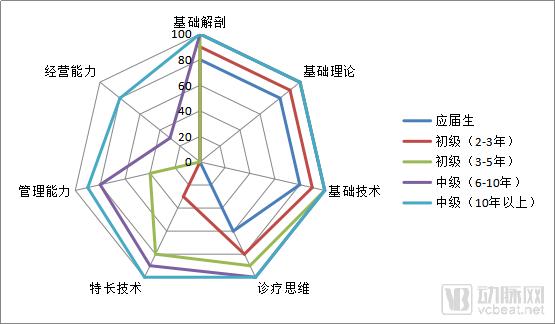
Planning Recommendations for Self-Awareness of Rehabilitation Therapists
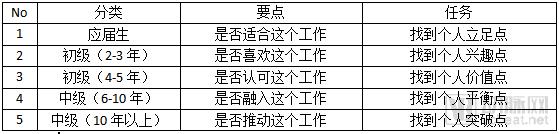
Whether during my student years or throughout my professional career, I have heard a great deal of advice and perspectives directed at rehabilitation therapists. However, I believe that this group must first achieve an accurate self-understanding at the appropriate stage of their development. Only when one’s self-perception aligns seamlessly with workplace feedback can the profession reveal its deeper rewards, allowing individuals to recognize both their personal worth and the value of their work, rather than viewing it merely as a means of making a living. Therefore, my personal recommendation is to use the following criteria as reference points for career planning at different stages.
*The views expressed in this article are those of the author alone and do not represent the position of VCBeat.
Author: Shi Yongjie, General Manager of Wuxi Haiman Health Medical Management Service Co., Ltd.
Author’s Profile: Graduated from Nanjing Medical University in 2008 with a major in Rehabilitation Therapy, and later obtained a Master’s degree in Supply Chain Management. Possesses extensive experience in investment planning, operational management, infrastructure and landscaping, product research and development, and information architecture within the rehabilitation sector. In 2018, founded Haiman Health, advancing a three-pronged strategy comprising “directly operated chain clinics specializing in premium rehabilitation services,” “consulting for the establishment and entrusted operation of rehabilitation and wellness institutions,” and “research and translation of rehabilitation theories and technologies.” Committed to establishing a Chinese model of Rehabilitation Health Maintenance Organization (HMO) in the fields of rehabilitative medicine and home-based care.
As a founding member of a health and wellness investment management company, he spearheaded the investment and operation of a chain of rehabilitation facilities, the construction and operation of health and wellness centers, and the renovation of 4A-level tourist attraction projects. He subsequently served as a Director of the company and General Manager of its Medical Management Company.