Heli-FX™ EndoAnchor™ Vascular Anchoring System Approved in Boao, Hainan for Complex Aortic Aneurysm Cases

Medtronic
Medical Device Manufacturer

Recently, the Hainan Provincial Drug Administration officially approved (Qiong Drug Supervision Equipment [2025] 281), agreeing to the import of urgently needed medical devices for clinical use by Hainan Hospital Affiliated to Shanghai Jiaotong University School of Medicine Ruijin Hospital.Medtronic Heli-FX™ EndoAnchor™ Endovascular Anchoring System. This system can be used for patients with aortic aneurysms who have complex anatomical structures and poor proximal anchoring conditions. It aims to prevent neck expansion and reduce the risk of Type Ia endoleaks by enhancing proximal anchoring. This approval marks another significant advancement in the field of vascular intervention at Boao Lecheng International Medical Tourism Pilot Zone in Hainan, China, offering safer and more efficient treatment options for patients with complex aortic aneurysm necks in China.
Heli-FX™ EndoAnchor™
Precise Anchoring, Innovative Surgical Technique
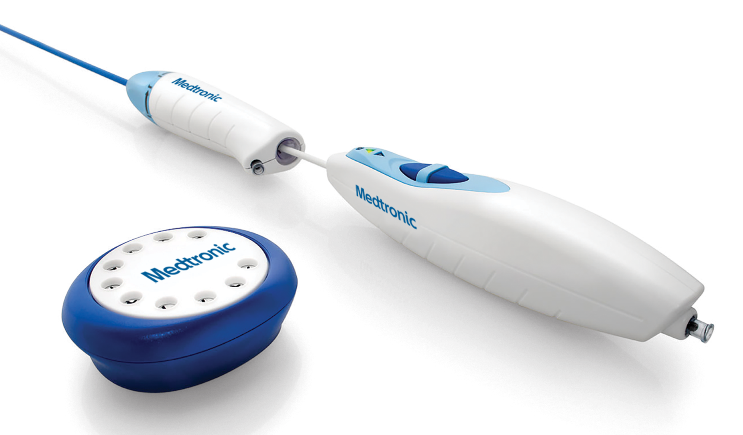
ApplicationHeli-FX™ EndoAnchor™ Endovascular Anchoring SystemThe Endostapler Aneurysm Repair (ESAR) mimics surgical suturing techniques by using anchoring staples to securely connect the stent graft to the native aorta, thereby enhancing proximal sealing effectiveness, effectively preventing neck expansion, and reducing the risk of Type Ia endoleaks.
1. Ingeniously designed, precise anchoring:The system is equipped with 10 anchoring pins, whose structure and release mechanism simulate surgical suture needle technology, firmly connecting the covered stent to the autologous aortic wall. This provides reliable mechanical fixation, significantly enhancing proximal sealing performance, thereby effectively preventing aneurysm neck expansion and reducing the risk of Type Ia endoleaks.
2. Flexible operation, innovative surgical techniques:Two-stage release of the anchor nail provides the operator with greater operational freedom. The operator can adjust the anchoring position in real time based on intraoperative imaging, ensuring optimal adhesion and sealing effects, especially suitable for cases with complex anatomical structures.
Cracking the Type I Endoleak Puzzle: Addressing Clinical Challenges
Currently, Type I endoleak is the most frequently encountered clinical issue after stent graft implantation in the aorta. Persistent endoleaks can lead to a re-increase in intrasac pressure of the aortic aneurysm, causing enlargement of the aneurysm sac, and potentially resulting in aortic rupture. Aortic rupture is an extremely critical emergency that can cause massive hemorrhage accompanied by shock, with a mortality rate as high as 80%.[1]According to foreign literature reports, the incidence of early endoleaks within 30 days after covered stent implantation is between 15% and 30%.[2-3]. The incidence of endoleak reported in the literature in China ranges from 10% to 20%.[4]The occurrence of endoleaks significantly increases the patient's burden and medical costs; therefore, rapid identification and timely intervention during surgery are crucial.
Currently, multiple international guidelines have proposed ESAR as an effective method for managing Type I endoleaks. The 5-year follow-up data from the ANCHOR registry study shows,AAA patients treated with the Heli-FX™ EndoAnchor™ vascular endoanchoring system demonstrated an extremely low type Ia endoleak rate (4.8%), sustained high sac regression, zero migration, a 96.0% freedom from secondary intervention for type Ia endoleaks, a 97.7% freedom from rupture, and a 98.4% freedom from aneurysm-related mortality, showcasing excellent long-term outcomes.[5]。An increasing number of studies have confirmed the safety and effectiveness of ESAR, which still performs well in extremely short aneurysm necks.
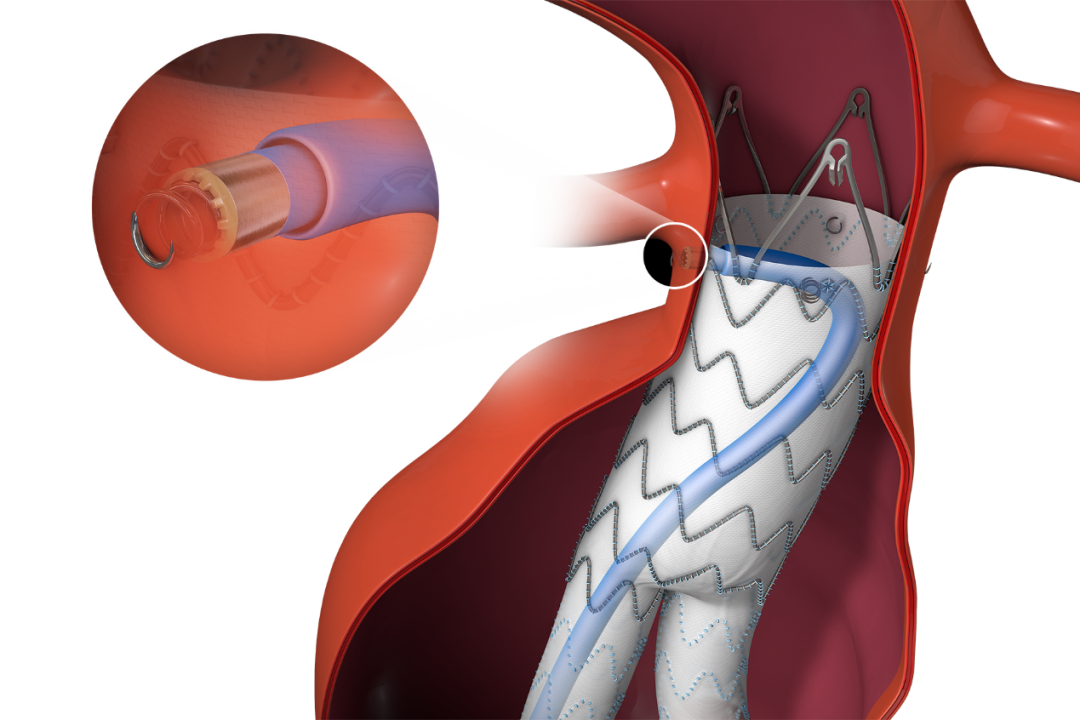
Against this background,Landing of the Heli-FX™ EndoAnchor™ System in Boao, Hainan Pilot Zone, will provide a powerful tool for the clinical active prevention and management of Type I proximal endoleaks, especially suitable for patients with challenging anatomical structures such as insufficient anchoring zones, large neck angles, or poor morphology, which is expected to improve the treatment outcomes and safety of Chinese patients with complex aortic aneurysms.
References
[1] Rutherford R B. Open versus endovascular stent graft repair for abdominal aortic aneurysms: an historical view[J]. Semin Vasc Surg, 2012,25(1):39-48.
[2] Laheij R J, Buth J, Harris P L, et al. Need for secondary interventions after endovascular repair of abdominal aortic aneurysms[J]. Br J Surg, 2000,87(12):1666-1673.
[3]CIRSE Standards of Practice on Management of Endoleaks Following Endovascular Aneurysm Repair Cardiovasc Intervent Radiol (2024) 47:161–176
[4] Liu Jie, Ge Yangyang, Jia Xin, et al. Comparison of perioperative outcomes of endovascular repair for symptomatic and asymptomatic abdominal aortic aneurysms [J]. Chinese Journal of Surgery, 2014, 52(5): 342-345.
[5] Arko FR 3rd, Pearce BJ, Henretta JP, et al. Five-year outcomes of endosuture aneurysm repair in patients with short neck abdominal aortic aneurysm from the ANCHOR registry. J Vasc Surg. 2023 Dec;78(6):1418-1425.e1. doi: 10.1016/j.jvs.2023.07.058.
Copyright Statement: This platform aims to help medical and health professionals better understand the latest developments in related disease areas. The information content published on this platform does not imply agreement with its descriptions or viewpoints, but is merely for providing more information. If there are any copyright issues, we kindly request the rights holders to contact us, and we will address them as soon as possible. The information provided is solely for medical and health professionals to stay informed, and such information cannot replace professional medical guidance in any way, nor should it be regarded as medical advice. If such information is used for purposes other than staying informed, this platform and the author shall not bear any related responsibility.Contact email for cooperation:vascular@edoctor.work。