

IASONE Files IPO Prospectus: Vision-Based Crisis Detection Elderly Care Robots Aim to Transform Aging-in-Place Solutions
Aging and chronic disease management have become buzzwords of the day. According to the Sixth National Population Census, by the end of 2018, the number of people aged 60 and above in China reached 249 million. With the acceleration of population mobility, the phenomenon of “empty-nest elderly” has become a social issue that cannot be ignored.
According to projections released at the inaugural National Symposium on Smart Elderly Care Strategy, by 2050, the number of elderly individuals in China nearing the end of life without children is expected to reach approximately 79 million, with those living alone or in “empty-nest” households accounting for over 54%. The eldercare needs of this demographic have thus become one of the most pressing social concerns.
Beijing IASONE Technology (IASONE), established in July 2015, is a medical technology company specializing in the research and development of intelligent service robots. The company is currently developing an intelligent service robot oriented toward crisis identification and health management. Its core competitive advantage lies in its integrated technological combination of “autonomous navigation + 6-axis robotic arm + machine vision,” which enables adaptation to a wide range of application scenarios.
In addition to emotional loneliness, sudden illnesses and the decline in physical function can adversely affect the daily lives of older adults. Among these challenges, disability represents one of the most significant threats faced by seniors living alone.
“Falls or sudden-onset illnesses can lead to the loss of mobility, speech, and hearing in older adults,” Mr. Lin Gufeng, founder of Ruyi Technology and a former physician, told VCBeat. “Throughout their lives, elderly individuals are highly likely to experience at least one fall. Although such incidents occur infrequently, if an older adult is not discovered promptly after a crisis occurs, the consequences can be unpredictable and severe.”
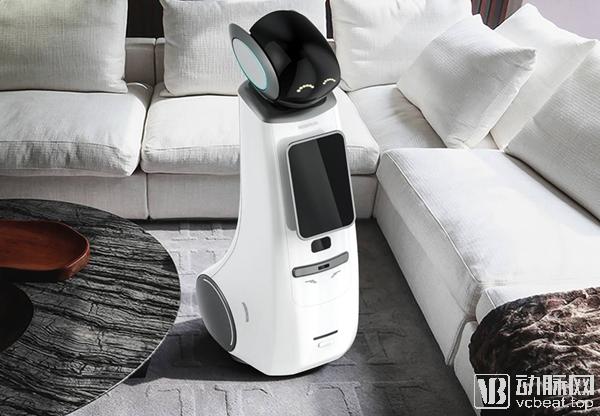
Yijia Robot (Image provided by the interviewee)
Ruyi Technology is planning to launch its “Yijia” series of intelligent service robots, primarily targeting the home-based elderly care market, with features such as intelligent crisis detection and disease management.
Powered by technologies such as multi-sensor SLAM information fusion, 6-DOF collaborative robotic arms, and machine vision, Yijia Robotics enables functionalities including indoor autonomous mapping, autonomous navigation or follow-me walking, crisis event recognition, and environmental monitoring alerts (e.g., for hazardous gas leaks and fire alarms).
Mr. Lin Gufeng stated that the ability to achieve autonomous walking is one of the key indicators for evaluating service robots. When Yijia Robot’s computer vision system and corresponding sensors identify that a care recipient is in a critical condition, the robot will first autonomously approach and attempt to communicate with them. Upon confirming the emergency situation, it will immediately notify their family members or seek external assistance on its own initiative.
Under Lin Gufeng’s vision, Yijia Robot will also integrate common home medical devices, such as instruments for measuring blood pressure, heart rate, and blood glucose. It will further incorporate features focused on personal health information recording and patient-physician collaboration, along with a “acquaintance-based” light consultation system.
Another feature of Yijia Robot is its mobile information terminal. “Compared to smartphones, older adults prefer large-screen electronic devices such as iPads and televisions. We believe that a mobile information terminal is relatively user-friendly for the elderly, as it can serve not only as an entertainment hub but also in other forms,” Lin Gufeng revealed. Currently, the overall design and modular design of Yijia Robot’s products are nearing completion.
Unlike most teams originating from the fields of electronic technology or finance, Ruyi Technology’s founding team was imbued with a medical DNA from the outset. Mr. Lin Gufeng earned his bachelor’s degree from Qilu Medical College of Shandong University, served as a clinical physician in the Surgical Intensive Care Unit (ICU) at Beijing Chaoyang Hospital, Capital Medical University, for over eight years, and held senior marketing executive positions in pharmaceutical companies for more than two decades. The other shareholders of Ruyi are also seasoned professionals with over 30 years of experience in the pharmaceutical industry.
In the B2B sector, Yi Technology has independently developed and launched the “Yi Yi” series of autonomous transport robots, designed around specific application scenarios and primarily targeted at medical institutions and centralized elderly care facilities.
In traditional healthcare settings, delivery tasks are typically performed by nurses and related staff, which not only increases labor costs but may also lead to issues such as delayed or incorrect deliveries.
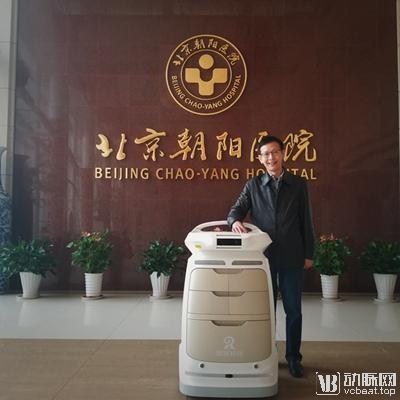
Lin Gufeng, founder of Ruyi Technology, poses with Yiyi Robot (Photo provided by the interviewee)
Yi Medical Robot is primarily designed for scenario-based applications, positioned for autonomous material transport in medical institutions (and centralized elderly care facilities). By leveraging the advantages of informatization and automation, it reduces work intensity and error rates, thereby enhancing service efficiency and quality.
Lin Gufeng stated that Ruyi Technology’s 6-degree-of-freedom collaborative robotic arm adopts a “stepper motor + timing belt” solution, which can significantly reduce costs while meeting precision requirements, compared with existing solutions. This technology enables the robotic arm to reach any specified position in three-dimensional space and execute commanded actions.
Last year, Ruyi Technology’s Yiyi Robot was deployed at the main campus of Beijing Chaoyang Hospital, Capital Medical University. Furthermore, the “Medical AI Robot R&D Center,” jointly established by Ruyi Technology and Beijing Tiantan Hospital, Capital Medical University (also known as the National Clinical Research Center for Neurological Diseases), is nearing finalization through in-depth discussions with the hospital administration.
It has been learned that Ruyi Technology is currently seeking its first round of financing, with the goal of improving the optimization and production launch of its consumer-facing (C-end) products.