

Insider Report: Global and Domestic Consumer Healthcare Giants Gather in Hangzhou — What’s Alibaba Health’s Grand Strategy?

AliHealth
Medical and Health Services Network Service Provider
AliHealth’s strategic layout and progress in the consumer healthcare sector have long drawn significant industry attention. Recently, VCBeat accidentally came across a group photo on WeChat Moments featuring senior AliHealth executives alongside leading figures from upstream manufacturers in the consumer healthcare industry, particularly in the medical aesthetics and dental sectors. Given the substantial amount of information conveyed by this photo posted by an AliHealth executive, VCBeat promptly sought verification from industry insiders and derived a key insight:AliHealth Is “Plotting” to Ramp Up Its Layout in the Consumer Healthcare Industry。
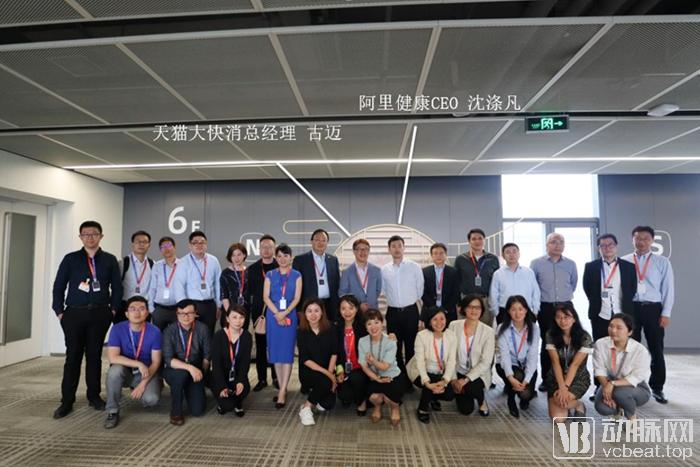
Group Photo Leaked from WeChat Moments
Why is this group photo so information-rich? Judging solely by the attendees, the “private meeting” with AliHealth included manufacturer representatives from pillar sectors of consumer healthcare, such as medical aesthetics and dentistry. The lineup featured representatives from well-known multinational corporations like Allergan, as well as prominent domestic enterprises, effectively gathering a significant portion of the consumer healthcare industry. This inevitably leads to speculation:What Grand Strategy Is AliHealth Pursuing in Collaboration with Industry Giants?
“Consumption Upgrade” in Aesthetic Medicine Allegedly Triggers Tmall’s “Dual-Aesthetics Synergy”
What is AliHealth planning to do by bringing together these industry leaders? Judging from the group photo, the answer is clear: it intends to double down on the increasingly booming consumer healthcare market.
The consumer healthcare market centered on the “beauty economy” is currently experiencing astonishing growth! According to data from Frost & Sullivan, the scale of China’s medical aesthetics services market exceeded RMB 200 billion in 2018 and is projected to grow at a rate of over 20% in the next five years. The industry’s total revenue is expected to reach RMB 360.1 billion by 2023, with non-surgical procedures demonstrating the most rapid growth.
From the initial “surgery + bandages” to today’s “lunchtime beauty boost with a single injection,” medical aesthetics has evolved from a niche option that only a few dared to try into a commonplace consumer service.
Pictured in the center is Shen Difan, CEO of AliHealth, who recently stated in a public forum: “Over the next five years, Chinese women’s pursuit of ‘beauty’ will drive further consumption upgrades. When traditional ‘cosmetics and skincare’ fail to meet the needs of some consumers, they will turn to more advanced ‘beauty-enhancing’ solutions. This presents both significant challenges and opportunities for industry professionals.”Therefore, we will also carefully consider what we can do for our users and the industry by centering on “beauty” and “health.””
This statement may appear simple, but the strategic thinking behind it is quite evident. Tmall has already become a leading entry point for female consumers in China. In recent years, it has been widely acknowledged that Alibaba’s growth has been driven by hundreds of millions of female consumers. As more women achieve financial independence and gain higher social status, their natural pursuit of “beauty” and “health” has become an inherent demand. This trend has generated strong demand for medical aesthetics, dental care, health check-ups, and maternity services, which will undoubtedly serve as a powerful stimulus for the future consumer healthcare market.
Returning to the group photo, Gu Mai, General Manager of Tmall’s Fast-Moving Consumer Goods (FMCG) Division, who has long overseen the beauty category, also occupied a central position alongside AliHealth CEO Shen Difan. The two executives stood together at the center of the photo, symbolically representing Tmall’s two future core business pillars: “Beauty” and “Health.”
As is well known, operating the beauty business has always been a strength of Tmall. The consumer bases for “beauty” and “medical aesthetics” exhibit significant overlap in terms of “marketing approaches,” “target audiences,” and “content of interest.”Thus, we cannot help but wonder: in the face of such consumption trends, is Tmall intentionally aligning “beauty cosmetics” with “medical aesthetics” to drive a synergistic “dual-beauty” strategy?
Another notable figure in the group photo is reportedly Wang Wei, President of Allergan China. As a multinational pharmaceutical giant, devising strategies for the Chinese market remains an ongoing imperative.Amid the changes in the Chinese market in recent years, it is only natural that Allergan has turned its attention to AliHealth.。
For upstream multinational pharmaceutical companies, the Tmall platform currently serves as a bridge, enabling the digitization of market education. This allows manufacturers to conduct user education online in advance, rather than waiting until users visit offline institutions to receive essential decision-making information. This approach reduces market security risks arising from information asymmetry. However, these measures remain at a preliminary stage.It can be inferred that, by leveraging collaborations with manufacturers and integrating payment processing and authentication tools, AliHealth is well-positioned to partner with domestic and international vendors to upgrade and transform the supply side of the entire medical aesthetics industry.。
Why AliHealth?
With such a grand strategic vision, what gives AliHealth the edge? While there are other internet unicorns in China’s medical aesthetics sector, how does AliHealth differentiate itself and what unique value does it bring to the industry?
Based on the information currently available, VCBeat believes that AliHealth’s greatest advantages lie in two areas:
First, Alibaba boasts hundreds of millions of high-net-worth female users, for whom “becoming beautiful” is an essential need. This alone constitutes a significant advantage, and all AliHealth needs to do is appropriately guide these high-net-worth women in meeting their demands.
More importantly, the second point, within Alibaba’s vast ecosystem, AliHealth can leverage a unique ecological strategy exclusive to the Alibaba group. As is well known, when facing market competition, Alibaba never relies on a single capability to compete with other players. For instance, in the consumer healthcare market, AliHealth not only boasts super apps such as Taobao, Tmall, and Alipay, which collectively reach hundreds of millions of users and provide comprehensive access to potential customers, but also enjoys credit support from Sesame Credit and Huabei. Furthermore, addressing users’ strong concerns about product authenticity and anti-counterfeiting verification, AliHealth has developed its own traceability and authentication tools, such as “Code for Assurance.”Therefore, any player competing with AliHealth is effectively taking on the entire Alibaba ecosystem behind it, a pool of ecological resources that other unicorn companies do not possess.。
Moreover, backed by the Alibaba ecosystem, AliHealth also holds the big data on user markets that upstream pharmaceutical companies care about most.
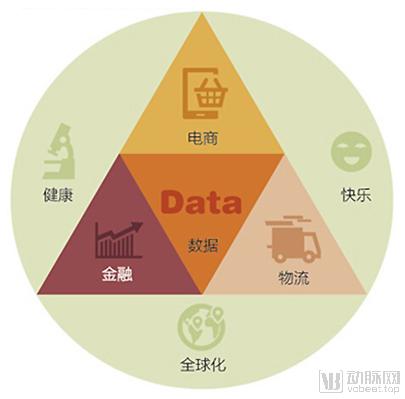
AliHealth has mastered full-dimensional scenarios in the medical aesthetics sector, including user content engagement, online promotional campaigns, financial payments, after-sales services, and reviews and sharing. These multi-dimensional scenarios have enabled AliHealth to accumulate more diverse data and content, such as consumers’ attention, purchasing, and sharing behaviors, resulting in more comprehensive and precise user profiling.If AliHealth gradually packages these scenarios and data into comprehensive tools to empower manufacturers, upstream manufacturers will be able to target the downstream market with greater precision and personalization. This would effectively resolve the most pressing challenge facing upstream enterprises in the domestic market: the lack of effective leverage points.。
What Will the Future of the Industry Look Like?
According to AliHealth’s annual report for fiscal year 2019, its consumer healthcare business experienced rapid growth, with a growth rate of 275.5%, reaching RMB 128 million in revenue for the fiscal year. AliHealth’s Consumer Healthcare Division, which primarily focuses on localized medical aesthetics services, is gradually expanding into health check-ups, dental care, and other areas aligned with consumption upgrades centered on “beauty” and “health.” Driven by this strategic initiative, the gross merchandise volume (GMV) of the consumer healthcare business achieved a year-on-year increase of over 140% compared to the previous year.
Looking again at the Double 11 data, hailed as a barometer of domestic consumption trends, during the most recent Tmall Double 11 shopping festival in 2018, consumer healthcare also emerged as one of the fastest-growing categories on Tmall.Although these figures are currently overshadowed by the immense spotlight of Tmall’s Double 11 shopping festival, it must be acknowledged that consumer healthcare has become a veritable cash cow for AliHealth.。
Behind this accelerated expansion through partnerships with manufacturers lies AliHealth’s clear recognition of the immense growth potential in the consumer healthcare market.
For industry professionals at large, 2019 will be a year of change and opportunity.
In May of this year, So-Young’s U.S. IPO suddenly drew external media attention to the previously obscure medical aesthetics industry, giving practitioners—who had long operated in isolation—a fleeting sense of pride and visibility under the spotlight. This is merely the tip of the iceberg of the transformation sparked by the collision between the industry and the internet; beneath the surface, the deep strategic investments by tech giants represent a powerful force capable of reshaping the industrial structure. With Alibaba now turning its attention to the sector, the long-standing obstacles plaguing the medical aesthetics market—such as a shortage of professional talent, information asymmetry, a fragmented landscape of institutions, and disordered services—may indeed be gradually and systematically addressed as these giants expand their market presence.
Based on this, one might speculate: if Alibaba were to fully integrate the industry chain and successfully convert hundreds of millions of female users in China into long-term consumers of consumer healthcare services, what would the resulting landscape look like for the entire industry?
All of this is likely the future that many industry leaders saw in the group photo.