

Shukun Technology Launches Multiple Cardiac and Cerebrovascular AI Products and Publishes First Global Multicenter Study Comparing AI to Gold-Standard Diagnostics

SHUKUN
Provider of Intelligent Products and Innovative Solutions
The heart is the only organ in the human body that remains in a state of constant beating, yet it is also the part of the body that most allows people to savor the lightness of life.
According to the "China Cardiovascular Disease Report 2018," cardiovascular disease accounted for 45.50% and 43.16% of all deaths in rural and urban areas, respectively, meaning that two out of every five deaths were due to cardiovascular disease.
In fact, timely prevention and detection can yield sufficiently favorable outcomes in the treatment of cardiovascular diseases. However, given the heart’s continuous beating motion, reconstructing three-dimensional images of coronary vessels and accurately identifying the locations and severity of stenosis is undoubtedly more challenging than imaging other static organs or tissues.
Artificial intelligence (AI) technology has the potential to address this pain point. Many startups are attempting to use AI to assist physicians with tasks such as FFRCT calculation and cardiac modeling, with SHUKUN taking a leading position in the industry. Recently, SHUKUN and Beijing Friendship Hospital jointly initiated a comparative study contrasting AI-based coronary CTA and physician-interpreted CTA against DSA, the gold standard. This marks the first global multicenter results comparing AI with the gold standard, setting a strong foundation for “AI+” multicenter trials.
The accuracy and reliability of medical AI must undergo scientific validation in accordance with medical standards; previously, no such multi-sample comparative studies had been conducted either internationally or domestically. The comparative study jointly initiated by SHUKUN and Beijing Friendship Hospital is the largest multicenter study to date in terms of sample size and geographic coverage, validated through standard medical pathways.
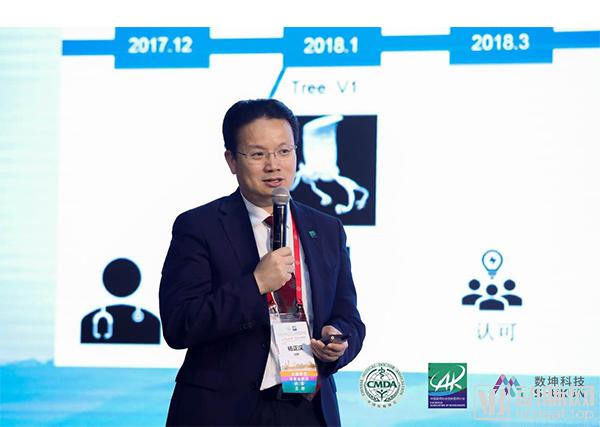
Director Yang Zhenghan of Beijing Friendship Hospital Releases Results of a Multicenter Study Comparing AI with the Gold Standard in CCTA
This multicenter study was conducted in strict accordance with international standards for multicenter research. A total of 1,063 samples were collected from 42 hospitals across China that routinely perform clinical coronary computed tomography angiography (CCTA). Patients were aged 30 years or older, and each case required both standardized CCTA and subsequent digital subtraction angiography (DSA). Cardiologists with more than five years of experience at tertiary hospitals performed stenosis diagnoses based on DSA images. Finally, the SHUKUN Coronary AI intelligent diagnostic results and the physicians’ diagnostic results were respectively compared against the gold standard.
The results showed that, using the DSA adjudicating physicians’ findings as the gold standard, coronary AI achieved a sensitivity of 95.1% in lesion detection, surpassing both CTA and DSA physicians. Its specificity of 70.4% (defined as the probability of correctly excluding disease among non-diseased individuals) was comparable to that of CTA adjudicating physicians. AI-assisted coronary CTA substantially reduced the miss rate for stenotic lesions. The accuracy and specificity of AI-based diagnosis were no inferior to those of senior specialists at top-tier tertiary hospitals in first-tier cities, and the interpretation efficiency of AI–physician collaboration was significantly superior to manual interpretation alone.
This multicenter study on coronary artery AI has established, for the first time, standardized protocols for validating the efficacy of medical AI, providing scientific support for the clinical application of medical AI and offering data-driven references for national regulatory agencies in formulating rules. Yang Zhenghan, Director of the Department of Radiology at Beijing Friendship Hospital and principal investigator of the study, stated, “The coronary artery AI multicenter study represents the first global scientific validation of AI accuracy, with a sample size far exceeding that of similar multicenter studies. The research also demonstrates that coronary artery AI can effectively improve operational standardization and data quality. We anticipate further outcomes from this study, and I hope that this multicenter validation approach will contribute to establishing industry standards for the efficacy verification of medical AI.”
Since the global launch of its AI-assisted diagnostic system for coronary CTA in early 2018, SHUKUN’s AI products for heart disease—including coronary CTA, coronary CT-FFR, plaque composition analysis, gated calcium scoring, and aortic morphology and function assessment—have covered the entire AI-driven diagnostic and therapeutic pathway for coronary artery disease, spanning from morphological to functional evaluation. These solutions have been deployed in leading cardiovascular hospitals such as Beijing Anzhen Hospital and Fuwai Hospital, as well as in more than 150 Grade A tertiary hospitals across China, becoming integrated into the routine clinical workflows of cardiology departments and capturing the largest share of the cardiovascular AI market.
The newly released Jiafei CareSphere Advisor AI Imaging Diagnostic Platform integrates five AI solutions for cardiac imaging. Among them, Coronary CT-FFR is currently the world’s most advanced non-invasive diagnostic method for coronary artery disease, combining hemodynamics with deep learning. Non-gated calcium scoring can rapidly calculate individual calcium scores for each vessel in a single pass, further accelerating the initial screening of coronary artery disease by radiology and clinical departments. Given the extremely high mortality rate associated with aortic diseases, SHUKUN’s AI products enable diagnostic departments to detect aortic dissections and intimal tears earlier than traditional methods and perform automated quantitative measurements, thereby improving disease detection rates and enhancing physicians’ workflow efficiency.
By integrating five AI models for cardiac imaging, SHUKUN has developed a comprehensive multi-task AI solution tailored to clinical scenarios and based on examination sites, fully covering clinical workflows. This has resulted in a holistic cardiac imaging AI system that enables multi-dimensional analysis for single diseases, multi-task processing across anatomical regions, and end-to-end coverage of the entire clinical process.
Beijing Anzhen Hospital, Capital Medical University, a world-leading institution in the diagnosis and treatment of cardiac diseases, was an early adopter of SHUKUN’s Cardiac AI. Professor Xu Lei, Director of the Department of Radiology at Beijing Anzhen Hospital, stated, “As a center for the diagnosis and treatment of complex and critical cardiovascular conditions, Anzhen Hospital performs over 1,000 coronary CTA cases per week, with a very high proportion of critically ill patients. Moreover, the diagnosis of cardiac diseases demands extremely high standards for AI algorithms and data annotation, imposing particularly stringent requirements on artificial intelligence products.” Currently, the majority of coronary CTA cases at Anzhen Hospital are processed using SHUKUN’s products, achieving a qualification rate exceeding 90%.
“Adopting SHUKUN’s coronary AI has significantly reduced physicians’ workload, while demonstrating strong diagnostic accuracy. Looking ahead, we anticipate that more cardiac-related products will be rapidly implemented in our department to facilitate research and better serve patients,” continued Director Xu Lei.
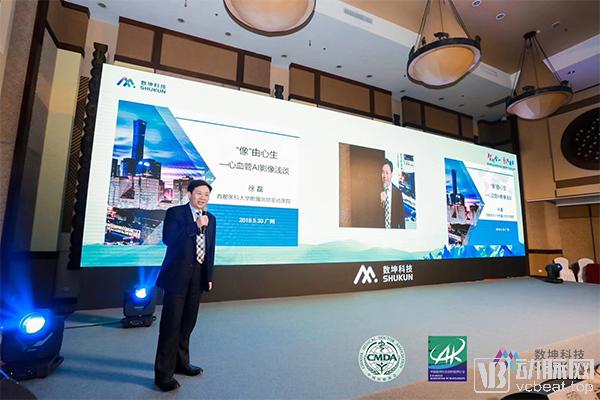
Director Xu Lei of Beijing Anzhen Hospital Shares Validation Results of Coronary AI at Anzhen Hospital
The newly released SHUKUN Jiafei CareSphere Advisor AI Imaging Diagnostic Platform covers three major disease categories—“cardiovascular, neurological, and oncological diseases”—and provides intelligent auxiliary diagnosis for common critical conditions.
SHUKUN’s world-first AI solution for head and neck CTA reduces the vascular diagnostic workflow, which previously took up to 60 minutes, to under five minutes. Its developed pulmonary disease evaluation system offers higher accuracy, specificity, and stability than comparable products, enabling simultaneous multi-disease diagnosis. Both product lines are deployable in hospitals at Level II and above across China; a single device supports pluggable, intelligent auxiliary diagnosis for multiple diseases and tasks, ensuring ease of use and achieving a tenfold increase in diagnostic efficiency.
At the conference, SHUKUN unveiled the CareSphere Explorer AI Clinical Research Platform, which provides physicians with “ready-to-use” intelligent guidance for research pathways, along with integrated services combining artificial intelligence, omics, and clinical research, thereby facilitating the translation of research concepts into tangible outcomes. The platform is characterized by high quality, high volume, and high speed. The CareSphere Cloud smart cloud platform can deploy digital physician services covering coronary heart disease, pulmonary nodules, stroke, and aortic conditions, supporting various deployment configurations including public cloud, hybrid cloud, and private cloud. Furthermore, SHUKUN’s AI gateway and blockchain algorithms ensure data security and reliability across all deployment models. Additionally, SHUKUN’s application for national-level Trusted Cloud certification is expected to be approved in the near future.
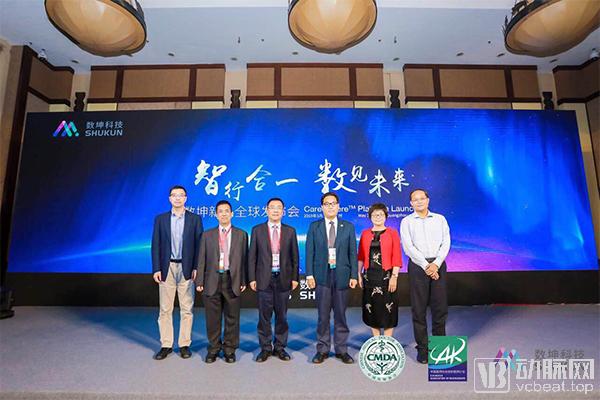
From left to right: Prof. Qian Dahong, Prof. Liang Changhong, Prof. Wang Zhenchang, Prof. Liu Shiyuan, Prof. Yan Fuhua
Professor Liu Shiyuan, President-Elect of the Chinese Society of Radiology, stated at the press conference: “Leveraging its proprietary algorithmic models and extensive clinical expertise, SHUKUN initially focused on cardiovascular disease, developing a multi-dimensional, end-to-end artificial intelligence solution that has garnered widespread acclaim from numerous hospitals. As clinicians, we need AI products that are ‘trustworthy and user-friendly.’ I am highly anticipating their subsequent comprehensive expansion into multi-task, multi-scenario, and multi-disease applications. With continuous breakthroughs in algorithms, SHUKUN’s AI products will integrate multi-source data and multidisciplinary insights, extending from disease diagnosis and treatment to health management, thereby delivering reliable, technology-driven AI services to physicians, patients, and society.”