

Dou Anquan Medical Files for IPO: Building China's First Chain of Six Specialty Clinics in Sexual Health with RMB 1 Billion Investment
In recent years, capital and entrepreneurs have flocked to the clinic sector, giving rise to a new generation of clinics, such as pediatric, dental, and general practice clinics. These modern clinics not only feature upscale interiors but also prioritize medical services, excelling in brand management, product design, service capabilities, and operational standards, thereby earning recognition from a cohort of young users.
So, are such clinics a good business? Is it difficult to operate a clinic? How can chain development of clinics be achieved? From a capital perspective, data from VCBeat’s investment and financing database shows that, as of now, there have been three publicly announced financing events in the clinic sector in 2019, with substantial amounts involved. However, compared to the same period last year, the number of clinic enterprises securing financing has decreased. This indicates that clinics are no longer attracting capital attention as they did in previous years.
Amid the peak surge in primary healthcare, in 2015, a novel clinic in Shenzhen—Du’anquan Medical—focused on sexual health, positioning itself as a private specialty clinic for men’s and women’s health to provide clients with confidential, convenient, and professional specialized medical services. Han’s Holding (the parent company of the listed firm Han’s Laser), as the investor, planned to invest RMB 1 billion to build the leading brand in the chain of sexual health specialty clinics.

Zou Kaichang, Co-founder and CEO of Du Anquan Medical
After four years of operation, the company has established six directly-operated chain clinics, with a daily outpatient volume of approximately 100. What insights have they gained during this process? To find out, we conducted an exclusive interview with Zou Kaichang, Co-founder and CEO of Du Anquan Medical, to hear his perspective on business management.
In the operation of Anquan Medical, Zou Kaichang believes that three factors are crucial: First, it is important to go with the flow and meet user needs. Currently, both men and women have increasingly high expectations for themselves and their partners. Some even raise their own standards to fulfill their partners’ expectations, thereby stimulating deep-seated, intrinsic demands. For instance, there is growing interest in altering the color or shape of female intimate areas. This segment not only exhibits substantial demand but also demonstrates a strong willingness to invest.
2. Identify the clinic’s differentiated positioning. He believes that, as China’s first chain of specialized clinics for sexual and reproductive health, Du’anquan Medical focuses on the niche segment of sexual and reproductive health. By addressing three dimensions—“sexual health,” “sexual safety,” and “sexual function”—it has developed a one-stop, specialized medical service platform covering basic andrology and gynecology consultations, intimate reconstructive procedures, HPV prevention and control, STD prevention and control, fertility assistance, and sexual therapy.
3. Sexual health has long been a key business focus for private medical institutions, accounting for a significant proportion of the Putian network’s operations. However, a notable phenomenon is that the Putian network has largely failed to establish chain operations in this sector. Industry analysts point out that the core issue lies in their non-compliant business practices; if a unified national brand were adopted, an incident at any single hospital could trigger a systemic collapse.
“We hope to reshape public perception of andrology clinics through our own efforts, striving to build China’s first branded chain of specialized andrology institutions, and earning public recognition by offering professionalism, privacy, and convenience,” said Zou Kaichang.
Du'an Medical has established directly operated clinics in six cities—Beijing, Guangzhou, Shenzhen, Qingdao, Xi’an, and Nanjing. By investing heavily in advanced equipment and top-tier medical professionals, it has built an integrated healthcare platform that combines screening services for reproductive infectious diseases, integrated diagnosis and treatment of cervical lesions, pelvic floor rehabilitation and intimate reconstructive services, preconception care for eugenics, and clinical psychological services.
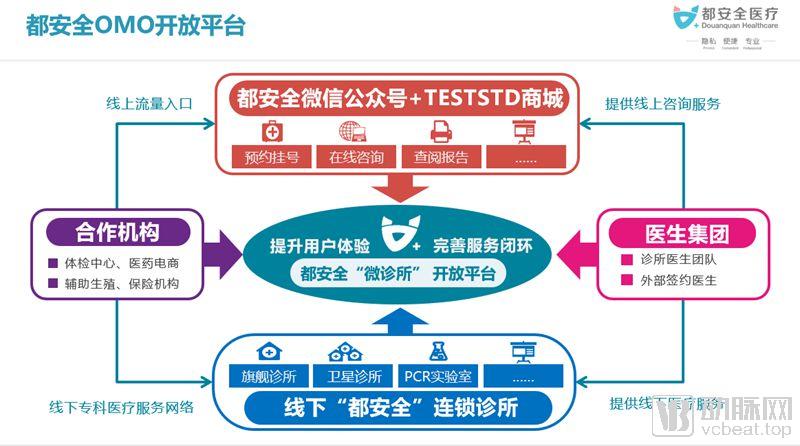
To realize the platform vision of Du Anquan Medical, Zou Kaichang has made painstaking efforts in talent acquisition, medical equipment, product development, and internal management, successfully integrating offline chain clinics with internet healthcare.
Let’s first examine the offline medical equipment deployed in Du’anquan Medical’s clinics. Du’anquan Medical has established technical collaborations with leading international medical device manufacturers, including Roche, Becton Dickinson (BD), and Rendu, introducing internationally mainstream precision diagnostic devices. Roche Diagnostics and Hologic have jointly established PCR laboratories with Du’anquan Medical’s clinics, providing initial HPV screening services for the early prevention and treatment of cervical cancer, and offering technical support for developing personalized, end-to-end treatment solutions for patients.
Medical talent has always been a weakness for clinics or private medical institutions, especially for chain clinics. In this regard, Zou Kaichang’s solution is to establish strategic partnerships with specialist physician groups led by top national and regional academic leaders, or with renowned doctors and their studios within the field. For patients with more complex diagnostic and treatment needs, Du Anquan Medical can integrate experts from former Grade III Class A hospitals and precisely connect them with specialized hospitals or Grade III Class A hospitals, thereby creating a “transfer hub” for tiered diagnosis and treatment.
In the online sector, taking STD testing as an example, the market for sexually transmitted infections (STIs) or sexually transmitted diseases (STDs) is substantial but currently fragmented. Globally, the volume of STD testing is significant. In China, annual HIV testing reaches 170 million person-visits, with some individuals undergoing testing more than ten or even dozens of times per year, indicating a huge potential market size in the future.
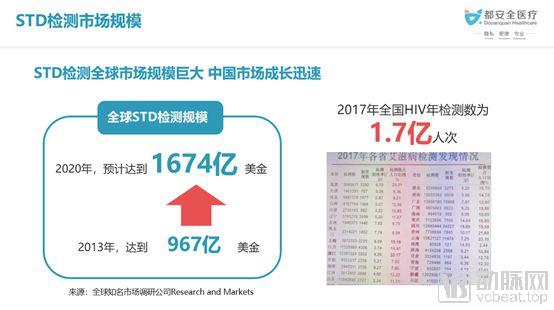
Tests of this nature are, in fact, better suited for online administration. Given that the general public often feels shy or embarrassed about discussing sexual and psychological health issues, online communication allows patients to feel more at ease and confront their conditions more openly, thereby facilitating accurate diagnosis by physicians. Patients can then be referred to offline facilities for treatment, while doctors continue to monitor disease progression through follow-up online consultations.
Its application scenario is as follows: Users can register anonymously on the Du Anquan Medical WeChat Official Account platform, where they can place orders for sexually transmitted disease (STD) testing. Test results are delivered via mobile phone, enabling users to learn their status early and alleviate anxiety. Additionally, users can access sexual health education resources and obtain information about offline lectures on the platform.
“I am very optimistic about online sexual health education and online consultations; this is an untapped market. People in China are in great need of sexual health knowledge, as well as professional and rigorous diagnostic and treatment plans,” said Zou Kaichang.
In fact, whether it is standardization or chain expansion, operating a chain of clinics poses significant challenges for managers. Zou Kaichang believes that for clinic chains, standardization must precede scaling.
Standardization involves five steps: first, productizing medical services; second, standardizing pricing; third, unifying processes and operational guidelines across all clinics to ensure medical quality control; fourth, integrating technology platforms and systems; and fifth, establishing a talent allocation model.
Taking productization as an example, in its practice of chain operations, Duanquan Medical Clinics has adopted a unified “Three-Tier Prevention and Control System for Cervical Lesions,” aiming to minimize the incidence of cervical cancer through prevention, screening, and treatment. To meet customers’ diverse needs, Duanquan Medical actively pursues product innovation and collaborates with renowned enterprises such as Ping An Insurance and Merck & Co. to jointly develop “HPV Vaccine + 5-Year/10-Year/Lifetime Cervical Cancer Health Coverage” products. Meanwhile, Duanquan Medical provides fertility-support services, including endocrine regulation, endometrial conditioning, ovulation monitoring, and semen analysis, offering one-stop ancillary services for overseas assisted reproductive technology (ART) institutions.
Chain expansion requires three key initiatives: first, internal operational standardization, such as establishing a centralized procurement and logistics platform; second, unifying the operational platform, standards, and brand identity; and third, developing flagship products and platforms tailored to local markets within the chain’s layout. Not every clinic needs to be identical; rather, this differentiated approach allows customers to perceive the true benefits of a chain organization, thereby achieving authentic chain-scale operations.
When discussing future plans, Du Anquan Medical aims to transition from its original self-operated model to a multi-party win-win ecosystem. The company currently collaborates with numerous partners: physician groups provide talent; health examination centers, insurance companies, and overseas assisted reproductive technology agencies directly refer clients to the clinics; and the clinics share diagnostic equipment with neighboring facilities.
Zou openly stated at the outset that there are plans to launch an internet hospital in the future, bringing together experts in the field of sexual health from across China. With a focus on popularizing sexual science, the platform will provide online medical services such as online sexual health assessments, consultations, and private virtual visits. It aims to offer users nationwide a high-end, confidential communication platform to address their concerns and questions related to sexual psychology and physiology.
In this way, Du Anquan Medical can fully integrate offline clinics with internet-based healthcare to create a one-stop, private space for users in the field of sexual and reproductive health, offering a comprehensive ecosystem that covers psychosexual well-being, sex education, and sexual health.