

Gansu Launches China's First Provincial-Level Electronic Prescription Sharing Platform
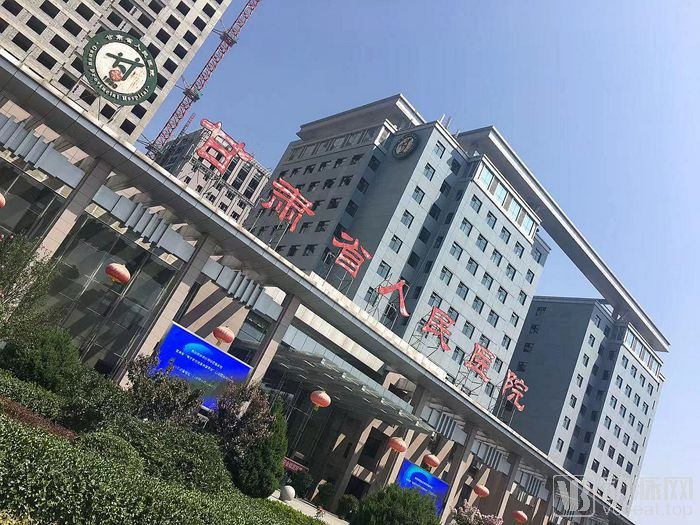
On September 6, the Health Commission of Gansu Province held the “Launch and Training Meeting for the Gansu Provincial Electronic Prescription Information Sharing Platform” at the Provincial People’s Hospital.
VCBeat attended the launch ceremony of China’s first provincial-level “Electronic Prescription Information Sharing Platform” and observed the entire process of electronic prescription circulation following patient follow-up visits.
Against the backdrop of China’s vigorous promotion of the “Internet + Healthcare” initiative and the improvement of “Internet +” drug supply assurance services, this platform launch carries significant value. It is a province-wide coordinated effort that will cover all medical institutions across every city and prefecture in the province, as well as the Lanzhou New Area and the Gansu Mining Area.
One cannot help but wonder: Why has Gansu Province, with its relatively underdeveloped healthcare system, emerged as a pioneer?
Challenges and Opportunities in Gansu Province's Healthcare Sector
Located in the upper reaches of the Yellow River, Gansu Province has been a place where various ethnic groups and cultures have intertwined and fused since ancient times. Stretching more than 1,600 kilometers from east to west, it covers an area of 425,800 square kilometers. In addition to its capital, Lanzhou, Gansu’s elongated terrain encompasses well-known cities such as Baiyin, Jinchang, and Jiuquan, as well as historic military strongholds like Jiayuguan, Wuwei, and Pingliang. In ancient times, pacifying the borderlands invariably involved campaigns through Gansu.
In terms of health capacity, Gansu Province faces prominent contradictions on the medical supply side, with unbalanced development across regions, a relatively low level of medical security, and comparatively weak health human resources and infrastructure capabilities of private healthcare institutions.
Official data as of the end of 2018 show that Gansu Province had a permanent resident population of 26.3726 million, with a total of 27,885 medical and health institutions and 132.752 million outpatient visits throughout the year. It is projected that by 2020, the province’s permanent resident population will exceed 27.56 million, and the urbanization rate will surpass 50%. At that time, the imbalance in the allocation of high-quality medical and health resources between urban and rural areas will stand in sharper contrast to the rapid pace of urbanization.
As the new healthcare reforms continue to deepen, Gansu Province is also seeking new breakthroughs.
The “Gansu Province Healthcare Service System Plan (2016–2020),” issued as early as 2016, explicitly proposed the implementation of the “Healthy Gansu” development strategy. In addition to enhancing primary healthcare service capabilities, the plan highlighted that the rapid advancement of information technologies—such as cloud computing, the Internet of Things, mobile internet, and big data—would present significant opportunities for the development of Gansu Province’s healthcare sector.
Following the introduction of this five-year strategic plan, Gansu Province has also accelerated its efforts to build a platform-based infrastructure for medical and health information.
In particular, in July last year, the Health Commission of Gansu Province submitted to the General Office of the Provincial People's Government for issuance the “Implementation Plan for Promoting and Standardizing the Application and Development of Health and Medical Big Data in Gansu Province” and the “Implementation Plan for Developing ‘Internet + Healthcare’ in Gansu Province,” and formulated the “Administrative Measures for the Construction of National Health Informatics in Gansu Province (Trial)” and the “Administrative Measures for National Health Information in Gansu Province,” thereby establishing a top-level design and working mechanism for the coordinated promotion of health informatics construction.
As of now, Gansu Province has basically established a relatively comprehensive health and wellness network system, with 267 public hospitals, 1,768 township health centers and community health service institutions, and 15,451 village clinics connected to the National Health Information Platform.
and, in accordance with the national “46312” framework for public health informatization, has basically established a provincial-level public health information platform with comprehensive functions.
Meanwhile, VCBeat reviewed the document "Key Tasks for Deepening Healthcare System Reform in Gansu Province in 2019," which also emphasized the active development of a new service model of "Internet + Healthcare." The province will accelerate the construction of a three-tier (provincial, municipal, and county) population health information platform, establish a telemedicine information platform covering medical institutions at four levels (province, city, county, and township), and launch a two-way referral system. Internet hospitals will be developed based on physical hospitals, and medical institutions are encouraged to provide integrated online and offline services. An electronic prescription circulation platform will be built to support the development of smart internet pharmacies. The application of electronic health cards will also be promoted.
In response, a relevant official from the Gansu Provincial Health Commission stated: “Under the implementation requirements of the ‘Healthy Gansu’ strategy and in alignment with the national informatization development strategic plan, ‘Internet + Healthcare,’ with informatization as its entry point, has become a new initiative to promote supply-side reform of health services, strengthen management of the pharmaceutical and healthcare industry, and comprehensively improve the quality of medical and health services. The implementation of electronic prescription sharing applications can effectively track prescription circulation information, monitor pharmaceutical care services, reduce the proportion of drug costs, facilitate public access to medications, further improve the internet-based diagnosis and treatment service system, promote the application of ‘Internet + Healthcare,’ innovate convenient and beneficial service models, and enhance residents’ sense of gain in health services.”
He also stated that the Gansu Provincial Health Commission has issued documents on the construction of an electronic prescription information sharing platform, urging health commissions at all levels and medical institutions to actively implement the requirements and carry out platform construction. Pilot programs were launched in 2019 at eight provincial-level public hospitals, tertiary public hospitals in various cities and prefectures, selected secondary public hospitals in counties (districts) participating in the provincial comprehensive healthcare reform pilot, and other designated facilities. By 2020, the platform was to be promoted and applied across all public hospitals at the secondary level and above throughout the province.
Prescription Outflow: An Inevitable Trend and a Regulatory Challenge
For a long time, constrained by the model of “subsidizing healthcare with drug profits,” China’s prescription drug market has been largely confined to hospital pharmacies, with in-hospital sales accounting for as high as 70% of the total. A core task of deepening the new round of healthcare reform is to abolish this practice. In numerous documents issued between 2016 and 2019, the State Council emphasized the need to explore interconnectivity and real-time information sharing between prescription data from medical institutions and relevant data from retail pharmacies.
Reforming the pharmaceutical sector is also a key component of healthcare reform, and the outflow of prescriptions from hospitals is imperative.
The “Implementation Opinions of the General Office of the People’s Government of Gansu Province on Promoting the Development of ‘Internet + Medical Health’” states that efforts should be made to explore the interconnectivity and real-time sharing of prescription information from medical and health institutions with drug retail consumption information, promote the standardized development of online drug sales and medical logistics distribution, enable physicians to issue online prescriptions for patients with common and chronic diseases, and allow patients to purchase medications offline through multiple channels based on these prescriptions, thereby addressing the issue of “seeking medical care solely for obtaining medications” and facilitating the implementation of healthcare reform measures such as the “three-medical linkage.”
However, information regulation remains a significant challenge in the development of “Internet + Healthcare,” and the outflow of prescriptions has consistently been at the center of public debate. Prescription outflow involves the redistribution of interests among multiple stakeholders, including pharmaceutical manufacturers, retail pharmacies, pharmaceutical distributors, hospitals, and physicians. Currently, most pilot programs for prescription outflow are limited in scope, typically operating through point-to-point models with end-to-end controllability. Once these processes extend to the “Internet +” domain, however, disorderly practices tend to emerge.
Previous media reports have indicated that patients could purchase prescription drugs simply by uploading photos of their pets, with some even able to buy large quantities of prescription medications without any prescription at all. Irregular practices, such as physicians issuing retrospective prescriptions to facilitate drug purchases, were also exposed. Meanwhile, the media raised significant concerns regarding regulatory oversight in the process of prescription outflow, particularly concerning pharmacists’ review and verification of prescriptions.
The newly revised Drug Administration Law not only legalizes the online sale of prescription drugs, but also imposes strict regulations on such sales. In accordance with the general principles, drug sales networks and medical institution information systems must be interconnected to ensure effective supervision, guarantee the authenticity of prescriptions, and safeguard patients’ medication safety.
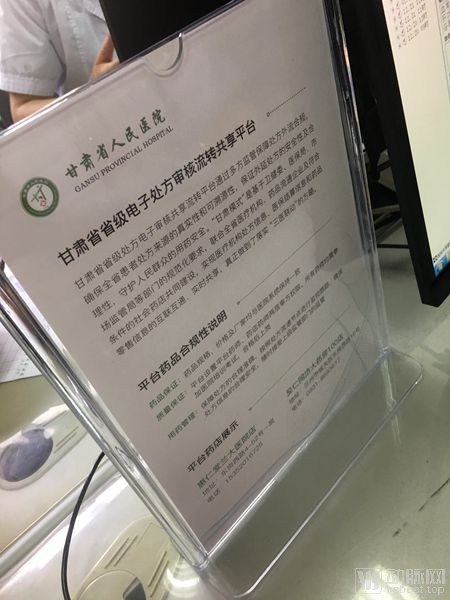
In addressing issues of legal compliance and regulatory challenges, the Health Commission of Gansu Province has also emphasized the importance of interoperability and data security in the development of its electronic prescription application information platform.
An official from the Gansu Provincial Health Commission stated that efforts should be made to ensure the integration of information platforms, including hospital HIS systems, social pharmacy systems, primary care cloud HIS, the National Health Information Platform, internet hospital supervision platforms, and chronic disease management information systems, so as to achieve data connectivity and sharing among medical institutions, health authorities, market regulation departments, and medical insurance agencies.
Meanwhile, strict enforcement of national and local regulations on Personal Information Security and Health and Medical Data Resource Sharing is required, with a focus on supervising patient privacy, drug prescriptions, and diagnosis and treatment activities on the Internet.
Actively promote the development of physician electronic signature systems to ensure that data generated by “Internet + Healthcare Services” is fully queryable and traceable throughout its lifecycle, while ensuring that access and processing activities are manageable and controllable, thereby meeting industry regulatory requirements.
China’s First Provincial “Electronic Prescription Information Sharing Platform” Launched
Gansu Province has launched the “Electronic Prescription Information Sharing Platform,” the first provincial-level prescription information sharing platform in China. The initiative is led by the Gansu Provincial Health Commission and jointly developed with Gansu Yifuzhen Network Technology Co., Ltd.
Yifuzhen, a subsidiary of Baiyang Intelligent Technology, is an experienced third-party technology provider for prescription-sharing platforms. As of May 2019, Yifuzhen had partnered with hundreds of hospitals across China, including Peking University People’s Hospital, Beijing Fuwai Hospital, Beijing Hospital, and Wuzhou Red Cross Hospital.
Its successful establishment of the “Wuzhou Model” was also a key reason why it was selected by the Gansu Provincial Health Commission to participate in the platform’s development.
Ma Guanglei, Deputy Secretary-General of the China Pharmaceutical Commerce Association and General Manager of Yi Fuzhen, told VCBeat that the “Electronic Prescription Information Sharing Platform” in Gansu Province had previously been piloted in Baiyin City. Building on the collaboration and adjustments during the pilot phase, both parties have reached a consensus to fully develop the “Gansu Model” for prescription outflow, establishing a benchmark platform with nationwide demonstrative significance.
This patient-centric platform leverages the Gansu Provincial Population Health Information Platform to standardize the sharing and circulation of electronic prescription data across medical institutions, thereby facilitating hospital prescription outflow, intelligent online prescription review, chronic disease prescription renewal, rational drug use monitoring, and primary care medication guidance.
Relying on the Gansu Provincial Population Health Information Platform, this platform features the following three major characteristics:
First, extensive geographic coverage and diverse circulation models. Upon completion, the platform will comprehensively cover all medical institutions across all cities and prefectures in Gansu Province, the Lanzhou New Area, and the Gansu Mining Area, establishing a unified provincial electronic prescription circulation management system. This system will encompass prescription circulation within medical institutions and medical consortia, as well as channels from medical institutions to specialized pharmacies, third-party delivery services, and new smart medication-dispensing terminals.
Second, facilitate convenient management of chronic diseases. Centered on patients, the platform offers diverse features such as extensible in-person consultations, prescription renewals for follow-up visits, home delivery of medications, and online follow-ups. Meanwhile, the platform will integrate with provincial and municipal population health information platforms, electronic health cards, internet hospital regulatory platforms, chronic disease management information systems, and urban and rural resident basic medical insurance information systems to achieve data interoperability, thereby providing residents with more convenient services.
Third, achieve unified regulation of prescription information, break down the silos of prescription data, and establish a unified, visualized regulatory system that covers hospital prescription management, pharmaceutical retail terminal information management, and settlement management for both basic medical insurance and commercial health insurance.
Ma Guanglei further stated, “In the sales process of prescription drugs, three authenticities must be ensured: authenticity of prescriptions, authenticity of products, and authenticity of patients. Among these, the authenticity of prescriptions is the most fundamental principle in pharmaceutical retail; if this principle is violated, patient medication safety cannot be guaranteed.”
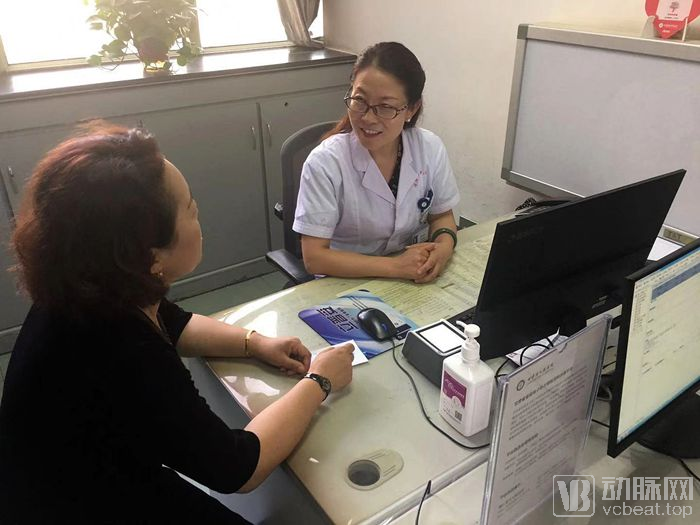
Subsequently, VCBeat followed a patient with diabetes to observe the implementation of prescription circulation at Gansu Provincial Hospital. From the initial in-person consultation at the hospital, the process encompassed internal physician prescription review, terminal scanning for medication confirmation, selection of a pharmacy for dispensing, pharmacist review and dispensing at the pharmacy, and medication pickup. The entire procedure constitutes a rigorous visualized regulatory system. The “Electronic Prescription Information Sharing Platform” ensures controllable, monitorable, and traceable workflows through unified prescription management standards both within and outside the hospital, thereby preventing disordered circulation of external prescriptions.
Ma Guanglei emphasized the platform's three core modules:
Standardized Prescription Acquisition: Prescriptions issued by internet hospitals or offline hospitals must be uploaded to the Electronic Prescription Information Sharing Platform; only those transmitted directly from hospital systems can guarantee prescription authenticity. Once transmitted to the platform, a pre-dispensing review system is provided. Hospitals offer a prescription review interface within this pre-dispensing review process for reference and effective validation.
Multi-Terminal Prescription Circulation: The platform will facilitate the circulation of prescriptions among medical institutions, particularly within medical consortiums led by tertiary hospitals to primary care facilities, as well as to specialized pharmacies and smart pharmacies. With the diversification of new smart terminals, such as automated medication dispensers and smart pickup lockers, these channels can also access standardized, authentic, and traceable prescription information through the electronic prescription information sharing platform.
Enhancing Patient Autonomy and Convenience in Medication Purchase and Follow-up Visits: The platform integrates with hospital information systems. Upon issuance of a prescription, patients receive notifications and can download the prescription via the mobile app or by scanning the QR code linked to their electronic health records, thereby ensuring that prescriptions originate from hospitals and guaranteeing the authenticity of both prescriptions and medications.
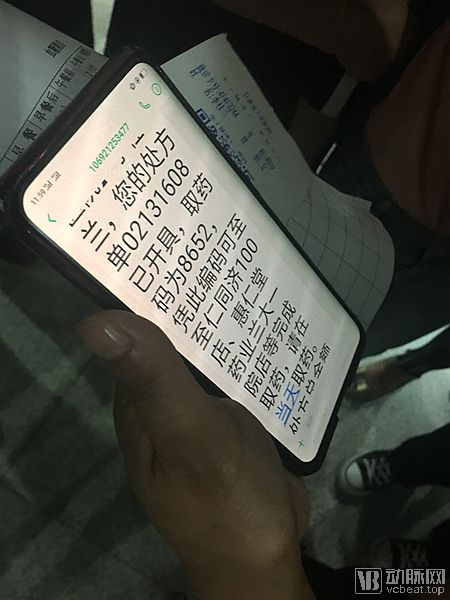
Patients can choose to pick up medications at hospitals or platform-affiliated pharmacies, or have them delivered to their homes by pharmacies via SMS, mobile apps, or official WeChat accounts, thereby fulfilling the requirements for "online ordering with in-store pickup" and "online ordering with home delivery." This initial medication pickup process establishes the foundation for the patient’s first-visit records. For follow-up visits, patients need only submit a prescription renewal request to the hospital through the app or official WeChat account using their initial prescription information. Upon hospital confirmation of the follow-up consultation, patients may then independently select their preferred method of medication purchase.
“Wuzhou Model” to “Gansu Model”: Further Upgrades Needed to Capture the Trillion-Yuan Outflow Prescription Market
2017 marked the inaugural year of the separation between medical services and pharmaceutical sales. Since then, cities such as Xi’an, Tianjin, Tangshan, Chongqing, Beijing, and Fuzhou have successively introduced policies to promote electronic prescriptions, facilitating information interoperability between public healthcare institutions and retail pharmacies. Pilot programs allowing the sale of prescription drugs in retail pharmacies based on electronic prescriptions have been launched with great momentum across various regions. Particularly following the “4+7” volume-based procurement policy, pharmaceutical companies, facing compressed profit margins, have actively explored new retail channels. As the primary recipient of outflowing prescriptions from hospitals, the pharmaceutical retail sector is eagerly anticipating its share of this hundred-billion-yuan market.
Also in 2017, Yifuzhen launched a prescription information sharing platform in Wuzhou City, Guangxi Zhuang Autonomous Region, in November. After nearly two years of practice, the “Wuzhou Model” has gradually become a national benchmark. When building the platform for the “Wuzhou Model,” Yifuzhen demonstrated its replicability through the following features: 1) a complete policy framework; 2) relatively comprehensive capabilities in information technology, service delivery, and regulatory systems; and 3) lawful handling of out-of-hospital prescriptions, which improved the marketing efficiency of prescription drugs and reduced transaction costs.
Therefore, from the “Wuzhou Model” to the “Gansu Model,” we have reason to believe in the scientific validity of the platform model.
However, it is undeniable that the “Gansu Model” is still in the early stages of upgrading. First, scaling up from the prefecture-level city to the provincial level involves significantly greater challenges in both information platform construction and multi-stakeholder resource coordination. Second, developing a platform tailored to Gansu Province’s unique characteristics, local needs, and residents’ healthcare-seeking habits remains a key issue for its future development.
In response, Ma Guanglei concluded by stating that Yi Fuzhen has already laid out a comprehensive development plan through December 2020, covering platform construction, data collection, interface upgrades, onboarding of contracted pharmacies, and interoperability. The full-scale promotion of the application is scheduled to launch this October. “Throughout this process, we will establish a standardized support framework and a secure information system in accordance with the actual requirements of the National Health Commission. We will ensure information security in compliance with both provincial and local regulations, allocate sufficient staff and service personnel to enhance patient education and optimize the user experience in hospital settings, and foster industry-wide collaboration to secure support from the pharmaceutical sector for both platform development and drug distribution.”