

Sanofi Launches China College Student Digital Health Innovation Competition to Catalyze Digital Healthcare Solutions and Foster Novel Service Models

Sanofi
Pharmaceutical Manufacturer
May 26, 2019, Shanghai, China – Sanofi China’s “Dare to Challenge: The First University Student Digital Health Innovation Competition” came to a close.
After nearly two months of fierce competition, ten teams selected from universities across China advanced to the finals for on-site presentations and evaluation. Ultimately, the “Kangnuo” project, presented by the team from Tsinghua University and the University of Electronic Science and Technology of China, won the First Prize for “Best Digital Solution.” The team from Shanghai Jiao Tong University received the “Best Original Design Award” for its “CAREs Electronic System.” The team from Beijing University of Chinese Medicine secured two major awards: the “Best Innovation Award” for its “Chronic Disease Management ‘Digital Nursing’ Search System” and the “Best Business Model Award” for its “Jiaxiaokang” Family Chronic Disease Management APP.
They emerged as strong winners of the “First College Student Digital Health Innovation Competition” by leveraging creative digital solutions to catalyze and nurture innovative digital healthcare service models centered on patients with chronic diseases.
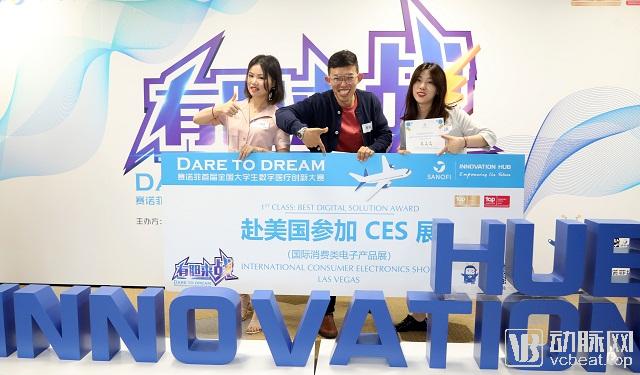
Tsinghua University and the University of Electronic Science and Technology of China’s competing teams won the first prize for “Best Digital Solution” and earned the opportunity to attend the 2020 Consumer Electronics Show (CES) in the United States.
“The 1st College Student Digital Health Innovation Competition,” co-hosted by Sanofi China’s Human Resources Department and the Sanofi Extreme Innovation Alliance, is open to universities across China and aims to identify, discover, and support patient-centered digital health innovation solutions for chronic diseases.
This competition helps participants develop ideal chronic disease management models by addressing unmet needs in disease education, patient medication management, and diagnostic and therapeutic services. It does so through multiple dimensions, including “how to use digital technologies to enhance public awareness of chronic diseases,” “how to leverage innovative solutions (including new devices) to help patients manage and administer medications more easily and conveniently,” and “how to more effectively utilize patient data to support disease diagnosis and treatment.”
“As one of the earliest multinational pharmaceutical companies to enter China, Sanofi remains committed to providing comprehensive innovative health services to the Chinese people. We look forward to working with our partners to drive the digital transformation of the healthcare industry and usher in a new era of medical health.”
“To this end, we are committed to building an outstanding corporate culture that serves as a talent magnet: we open our arms to the most talented and passionate individuals both within and outside the industry, inviting more like-minded professionals to join us in realizing our ambitious goals,” said Ms. Li Fei, Head of Human Resources at Sanofi China. “Hosting the ‘University Student Digital Health Innovation Competition’ is one of our initiatives to encourage innovative thinking and to identify and nurture innovative digital health platforms. We encourage more university students to participate in Sanofi’s digital health innovation projects, unleashing their creativity to bring fresh ideas and vitality. Through digital solutions, we aim to continuously optimize the management model for chronic disease diagnosis and treatment in China, thereby better meeting patient needs.”
Since its offline launch at the School of Management, Fudan University on March 26, the competition has attracted active registrations from college students at more than 30 universities across China. After a month of screening, 30 teams advanced to the preliminary round and, following expert coaching, progressed to the semi-final stage.
Thereafter, the teams advanced through successive rounds of competition, with the top 10 groups earning spots in the finals. During the on-site evaluation, the judges awarded the “Best Digital Solution,” “Best Innovation Award,” “Best Original Design Award,” and “Best Business Model Award” in accordance with the competition’s criteria. Notably, projects from participating teams at Fudan University, East China University of Science and Technology, and China Pharmaceutical University also ranked among the top ten.
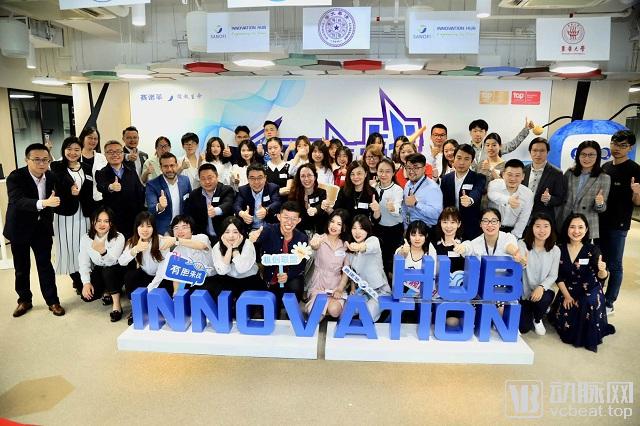
Group photo of the winners of “Best Digital Solution,” “Best Innovation Award,” “Best Original Design Award,” and “Best Business Model Award”
“Kangnuo,” a project by a team from Tsinghua University and the University of Electronic Science and Technology of China, which won the first prize for “Best Digital Solution,” focuses on cancer disease management, an issue receiving increasing attention in China.
The complexity of cancer treatment, coupled with patients’ insufficient understanding of the disease and low family involvement in the treatment process, leads to poor treatment adherence among many patients. Poor adherence often results in higher medical expenditures, further exacerbating the healthcare burden on both the nation as a whole and individual families.
“Kangnuo” Project: Leveraging novel creativity and clear process design, the project empowers patients to self-manage and optimize their treatment plans through deeply customized tools. Via a mini-program and facial recognition technology, cancer patients can easily access their care plans. With multi-dimensional reminders and supportive care provided by an intelligent assistant, patients are liberated from the complexities of medication regimens, alleviating the burdens associated with cancer treatment and making disease management and pharmacotherapy simpler and more convenient.
It is reported that the first-prize winner of the “Best Digital Solution” award will travel to the United States to attend the 2020 Consumer Electronics Show (CES). Winners of the “Best Innovation Award,” “Best Original Design Award,” and “Best Business Model Award” will receive incubation investment and opportunities for digital roles, participating in Sanofi’s digital transformation.