

Industry Leaders at the 2019 China Hair Medical Industry Summit Share Vision for a Trillion-Yuan Market
From May 26 to 27, 2019, the China Hair Medical Industry Leaders Forum and the 4th International Trichology Academic Conference were grandly held at the Shanghai International Convention Center. The conference was hosted by the Hair Branch of the Medical Aesthetics Professional Committee of the Chinese Association of Integrative Medicine, and the Beijing BinYue Medical Relief Foundation (528 Hair Love Fund), and organized by the Kefa Yuan Medical Group.
Anchored in an international perspective, this conference explored the 20-year development of China’s hair restoration medical industry from industrial, professional, and economic viewpoints. Leading global experts in hair medicine engaged in high-level dialogues with domestic industry leaders to discuss new technologies, achievements, and advancements in hair medicine both at home and abroad.
Professor Zhang Jianzhong, Chief Physician at Peking University People’s Hospital and Chairman of the Beijing Binyue Medical Aid Foundation, and Associate Professor Liu Qing from Shanghai Ninth People’s Hospital, Shanghai Jiao Tong University School of Medicine, jointly served as Conference Chairs. Li Xingdong, Secretary-General of the Beijing Binyue Medical Aid Foundation, and Zhou Cheng, Deputy Chief Physician at Peking University People’s Hospital, served as Secretaries-General of the conference. The summit was attended by Mr. Deng Delong, Global President of Trout & Partners; Mr. Jiang Nanchun, President of Focus Media; Mr. Han Wengao, President of Economic Daily Press; Carlos J. Puig (Carlos), recipient of the Golden Hair Follicle Award; more than 200 hair disorder specialists from across China; representatives from over thirty mainstream media outlets; and volunteers from the 528 Hair Care Foundation.
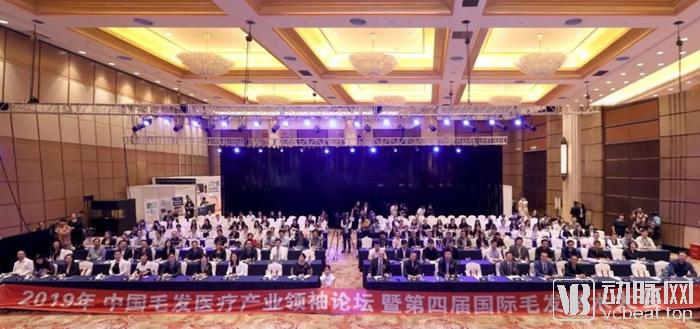
Leader Forum of China's Hair Medical Industry & the 4th International Academic Conference on Hair (Image source: Provided by the company)
At the conference, Li Xingdong, Secretary-General of the Beijing Binyue Medical Aid Foundation and President of Kefayuan Medical Group, called on more people to pay attention to those suffering from hair loss, support the 528 Hair Care Fund, actively participate in hair care public welfare activities, raise public awareness of hair care and protection, ensure that more patients with hair loss receive scientific treatment, and jointly promote the development of China’s public welfare aid for hair health.
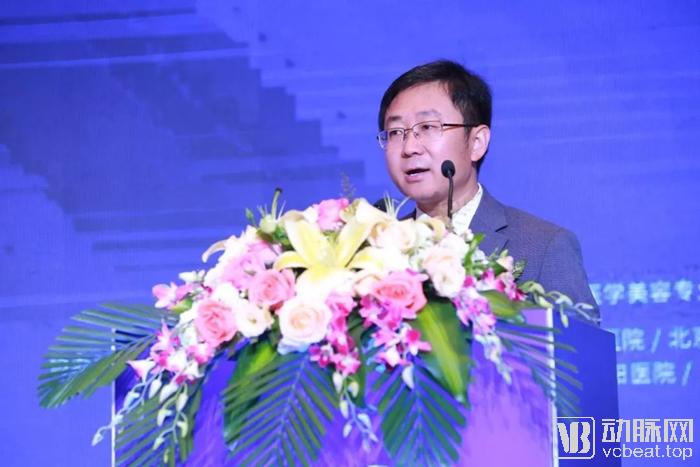
Li Xingdong, Secretary-General of the Beijing Binyue Medical Aid Foundation and President of Kefa Yuan Medical Group (Image source: Provided by the company)
Liu Qing, an associate professor at the Ninth People’s Hospital affiliated with Shanghai Jiao Tong University School of Medicine, stated, “In the future, the hair industry needs toCultivate More Primary Care Physicians, continue to research and develop new hair treatment technologies, provide professional training for primary medical institutions such as dermatology departments of general hospitals, specialized hair clinics, and hair loss outpatient clinics in second- and third-tier cities across China, build a robust technical learning platform, and comprehensively improve the overall diagnosis and treatment level in the field of hair care.”
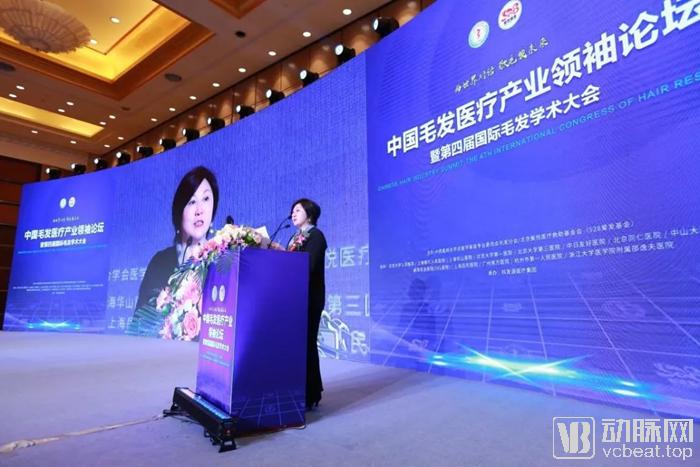
Associate Professor Liu Qing, Shanghai Ninth People’s Hospital Affiliated to Shanghai Jiao Tong University School of Medicine (Image source: Provided by the company)
Industry Leaders Discuss China’s Trillion-Yuan Hair Industry Market
Driven by consumer healthcare demand and economic growth, the global hair industry is experiencing explosive rapid expansion. Statistics show that one in every six people in China suffers from hair disorders, with the domestic patient population exceeding 180 million. Among these cases, hair loss accounts for 95%, transforming hair transplantation from a once-niche market into a significant and formidable industry.
Data projections indicate that the global hair transplant market size will reach $23.88 billion by 2023, with a compound annual growth rate (CAGR) of 24% over the next five years. The influx of capital has, to some extent, promoted the standardization and branding of hair transplant institutions, benefiting regulatory compliance, brand value enhancement, and strategic layout. Furthermore, the explosive growth of the hair transplantation sector is also driven by advancements in scientific and medical technologies, as well as strong support from venture capital firms, which have significantly propelled industry development.
From a global macroeconomic perspective, what progress and development has “China Speed” achieved, and where should China’s trillion-yuan hair care market head? What opportunities and challenges will the Chinese hair care market face in the next decade?
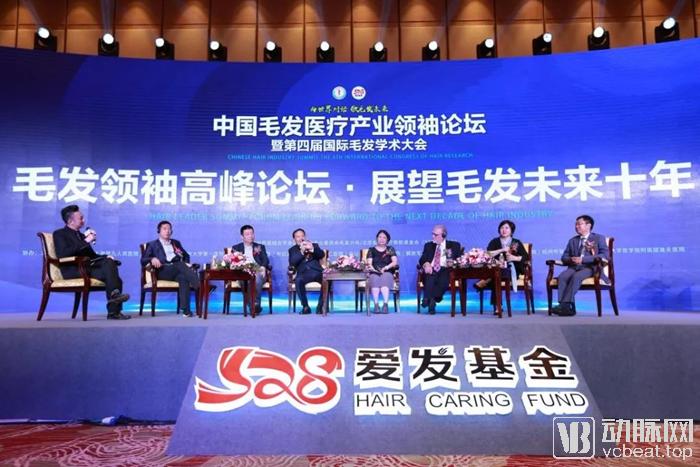
Scene from the China Hair Medical Industry Leaders Forum (Image source: Provided by the enterprise)
Han Wengao, President of the Economic Daily Press, analyzed the relationship between the development of the hair industry and China’s economy from a macroeconomic perspective. He stated that the period from 1979 to 2017 was a phase of wealth creation, whereas the current era is one of beauty creation, reflecting a fundamental shift in consumer demands. He noted that every industry enters its fifth decade in this new era, and from a macroeconomic standpoint, the hair industry is poised at an opportune moment.
The first decade was an era of windfall profits; the second will be an era of profit equalization; and the third decade will see extensive market consolidation, with only established brands surviving. From the perspectives of consumer healthcare demand and economic growth, the rise of the “beauty economy” has driven rapid expansion in medical aesthetics market demand. As a key segment within the medical aesthetics industry, the hair transplantation sector boasts significant market potential that cannot be overlooked. Particularly in the past two years, spurred by consumption upgrades and shifts in lifestyle habits, consumer demand for hair transplants has surged, propelling the industry into a phase of high-speed growth.
Dr. Zhang Xingqi, Chief Physician at the First Affiliated Hospital of Sun Yat-sen University in Guangdong, stated, “China has a population of approximately 1.4 billion, with around 180 million people suffering from hair loss. This means that more than one in ten individuals is affected by hair disorders. We conservatively estimate that among patients with androgenetic alopecia, 95% require surgical intervention during clinical consultations. Most patients in the early to middle stages of hair loss typically choose not to consult physicians but instead opt for self-administered pharmacological treatments. Therefore, there is a pressing need to broaden public education and awareness regarding hair disorders. Currently, over 95% of the patients in our outpatient clinic are seeking care for hair-related issues. In the past, only patients with severe conditions sought hospital treatment; nowadays, many patients become highly anxious even after losing dozens of hairs per day. Thus, an increasing number of people are beginning to prioritize hair health.”
Gold Follicle Award winner, expert Carlos J. Puig (Carlos), stated: "Over the past few decades, the global hair transplant market has undergone tremendous changes. In particular, over the last twenty years, China's hair transplant market has grown from nothing to its current state, nowChina’s healthcare quality has reached parity with U.S. technology., and it is gratifying to see an increasing number of Chinese doctors inviting foreign experts to China for lectures, as well as their willingness to engage globally by sharing courses on the international stage.
He stated that many hair loss patients in Europe and the United States also choose to undergo surgery in China. Currently, there are 180 million people in the Chinese market seeking assistance for hair loss. If we can standardize this market, patients would be willing to spend more money on hair transplantation technology. Therefore, from this perspective, I believe the hair restoration market in China has tremendous growth potential.
Jiang Nanchun, President and Founder of Focus Media, stated: “The media industry must uphold its own professional ethics. We will vigorously promote the development of leading enterprises, as they represent the highest industry standards and the sector’s conscience. Only in this way can we earn deeper trust from users across the industry. Whoever wins trust will become the next market leader.”
Focus Media has chosen to partner with Kefayuan, a technologically advanced company whose strategic vision and mindset align closely with its own, to achieve mutual success. “The competition in the hair transplant clinic market is now underway. Players should not limit themselves to merely educating the market; instead, they should pursue more rational urban expansion and strengthen brand building. With the introduction of industry regulatory standards, the sector is poised for healthier development. The next two years represent a critical window for hair transplant clinics to capture market share, essentially shaping the new landscape of the entire hair transplant industry over the coming three to five years. Ultimately, only major brands can sustain the prosperous development of China’s hair transplant industry.”
Deng Delong, Global President of Trout & Partners, stated, “The future direction of the hair restoration industry lies in pursuing high technology rather than low prices, and in prioritizing customer interests. In fact, whether a company can achieve a valuation of hundreds of billions or even trillions depends entirely on the leaders within the industry. A super brand in any industry is ultimately defined by whether its founders have a correct understanding of values. A company must be user-centric rather than solely business-driven; this approach represents a form of wisdom that earns consumer trust—the most valuable and rarest asset. This is also the criterion Trout & Partners applies when selecting partners. Therefore, we look forward to working with our partner, Kefa Yuan, to jointly scale the hair restoration industry to a hundred-billion or even trillion-dollar market.”
Li Xingdong, Secretary-General of the Beijing Binyue Medical Relief Foundation and President of Kefa Yuan Medical Group, stated, “The hair transplant industry in China has a relatively short history. Since its emergence in the country in the 1990s, it has been just over two decades. However, from a developmental perspective, this period seems relatively prolonged, as the industry only began to gain momentum in China around 2010.”
He called on major hair transplant institutions to adhere to healthy market competition in the face of such a fiercely competitive landscape. They should devote more energy and investment to technological upgrades and diversify the hair industry, rather than engaging in a race to increase marketing expenditures. Efforts should be made to address users’ needs for hair transplantation, image enhancement, and psychological changes from multiple perspectives; further improve clinical outcomes through technical advancements; meet patients’ psychological expectations; and enhance the international influence of China’s hair transplant technology. It is also essential to establish industry standards, prioritize medical quality and safety, deliver high-quality medical services, assume greater social responsibility, and vigorously train grassroots hair disorder specialists, thereby continuously improving the professional skills of China’s new generation of hair physicians.
Associate Professor Liu Qing from Shanghai Ninth People's Hospital, affiliated with Shanghai Jiao Tong University School of Medicine, stated: “The true value of the hair care industry is driven by the hair transplantation sector. Previously, the focus was solely on specialized techniques in hair transplantation; today, we aim to transform it into a broader industry encompassing medical aesthetics for hair. From this perspective, we must assume greater responsibility to ensure more standardized practices.”
She believes that to truly capture a market worth over one trillion yuan, meticulous planning and design are essential for ultimate realization. The core competitiveness within the industry has always beenMedical Technology and ExpertiseAs the education market within the hair restoration industry continues to mature, we must continuously meet consumer demands and further refine the evaluation criteria for hair transplant outcomes. Meanwhile, I hope that the 528 Hair Love Fund will align with both surgical transplantation standards and non-surgical treatment standards. Only by establishing comprehensive frameworks and standardized guidelines can we promote more regulated development in the trillion-yuan hair care industry.
Chief Physician Zhang Xingqi from the First Affiliated Hospital of Sun Yat-sen University in Guangdong shared insights from the 2019 World Hair Congress. She stated, “Approximately 20 to 30 individuals attended the World Hair Congress. It was a great honor for Professor Zhang Jianzhong, the Congress Chair, to join the International Academic Expert Group. The congress signaled the rise of hair transplantation in China, marking the beginning of a new journey for hair transplantation with Chinese characteristics. It also highlighted the substantial growth of the hair transplant market, demonstrating that Chinese hair transplantation teams have become an influential force on the international stage.”
Two Major Forums Empowering Primary Care Physicians
The forum was divided into two major sections: a surgical forum and a non-surgical forum. All lecturers were leading figures in the field. Renowned experts, including Chief Physician Zhang Xingqi from the First Affiliated Hospital of Sun Yat-sen University in Guangdong, Associate Professor Liu Qing from Shanghai Ninth People’s Hospital affiliated with Shanghai Jiao Tong University School of Medicine, Chief Physician Yang Shuxia from Peking University First Hospital, Professor Yang Qinping from Huashan Hospital affiliated with Fudan University, Deputy Chief Physician Zhou Cheng from Peking University People’s Hospital, Chief Physician Wei Aihua from Beijing Tongren Hospital affiliated with Capital Medical University, and Deputy Chief Physician Meng Xianfu from the Chinese PLA General Hospital (301 Hospital), provided academic training to all primary-care physicians in attendance. They conducted in-depth discussions on topics such as the differential diagnosis of hair disorders and the latest advances in hair transplantation.
At the Non-Surgical Treatment Forum, Associate Chief Physician Meng Xianfu from the Chinese PLA General Hospital (301 Hospital) presented “Discussion on Diagnostic and Therapeutic Approaches to Localized Alopecia.” She also shared challenging cases encountered in her clinical practice, such as a rare case of tinea capitis-induced trichotillomania, thereby achieving genuine sharing of knowledge and experience.
At the surgical forum, Dr. Xie Xiang from Peking University Third Hospital presented “Surgical Treatment of Androgenetic Alopecia,” providing a comparative analysis of several surgical approaches for androgenetic alopecia.
Carlos J. Puig, a Golden Follicle Award recipient, provided an in-depth explanation of the two mainstream hair transplantation techniques worldwide: micro-needle hair transplantation and traditional forceps-based hair transplantation. In the United States, micro-needle hair transplantation is widely popular. Dr. Puig also discussed future hair cloning technology, which offers an additional option for hair restoration surgery.
The physicians attending this forum are all from primary care hospitals across various cities and regions in China. They represent the core expertise in the field of hair disorders at their respective institutions. The experts’ lectures focus on challenging clinical issues and typical case studies, which hold significant importance for both physicians and patients.
“A hair restoration physician from Henan Province remarked, ‘In our clinical practice, we frequently encounter complex and challenging cases. The lectures delivered by experts at the High-Level Summit were highly practical, and the analyses of numerous clinical cases provided precisely the specialized knowledge we have been eager to master. This conference has been immensely beneficial, and I am confident that it will enable me to better serve patients in my future clinical diagnosis and treatment work.’”
“One World, One Standard” Live Surgical Broadcast was one of the academic highlights of this High-Level Summit. It broke through the limitations of time and geography, seamlessly integrating viewing with interactive engagement. Carlos J. Puig, recipient of the Golden Follicle Award, together with Dr. Li Xingdong, Dean of Kefa Yuan Medical Group, and Dr. Miao Yong from Nanfang Hospital of Southern Medical University, participated in the live surgical demonstration. Attending primary-care physicians engaged in interactive analysis with the experts. This innovative approach to live surgical broadcasting standardized operational procedures, opening new avenues and injecting fresh vitality into the academic development and exchange in hair transplantation.
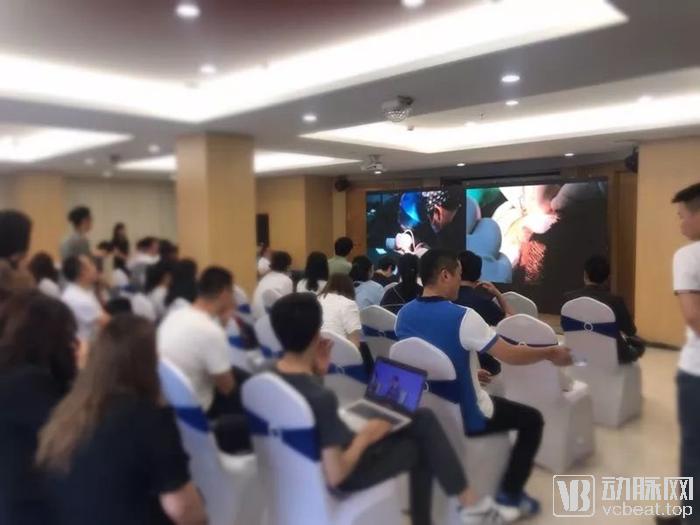
Live Surgery Broadcast (Image source: Provided by the company)
In the future, the 528 Hair Care Foundation will continue to deepen its theoretical framework. It is committed not only to cultivating talent in the field of hair diseases but also to providing a broad platform for exchange and development for experts and scholars in global hair transplantation. By strengthening international communication and cooperation, the foundation aims to advance the development of hair medicine technologies in China and worldwide, thereby offering more effective treatment options for patients suffering from hair disorders.