

Junshi Biosciences Presents Clinical Results of Toripalimab in Five Advanced Solid Tumors Including Nasopharyngeal Carcinoma at ASCO 2019
On June 4, 2019, Biobeat (biobeat1) learned that Junshi Biosciences (NEEQ: 833330, HKEX: 01877) presented research findings on the treatment of nasopharyngeal carcinoma and other advanced solid tumors with its self-developed anti-PD-1 monoclonal antibody, toripalimab, during the 2019 American Society of Clinical Oncology (ASCO) Annual Meeting.
As the largest, most academically prestigious, and most authoritative premier academic conference in the global field of oncology treatment, the ASCO Annual Meeting convenes world-class oncology experts and attendees each year to engage in academic exchange, share the latest research advancements in oncology, and discuss optimized strategies for cancer diagnosis and treatment.
Five studies on toripalimab for the treatment of advanced solid tumors, led by multiple top oncology teams in China, were presented at the ASCO Annual Meeting in the form of Poster Discussions and Posters, covering various cancer types including nasopharyngeal carcinoma, urothelial carcinoma, gastric cancer, esophageal cancer, and melanoma. Notably, the clinical data on toripalimab for nasopharyngeal carcinoma, gastric cancer, and esophageal cancer were presented at the ASCO Annual Meeting for the first time.
Notably, in addition to confirming the safety and efficacy of toripalimab in the treatment of various solid tumors through clinical studies, Junshi Biosciences and researchers have concurrently conducted translational medicine research to explore biomarkers and predictive indicators. These efforts provide critical data for identifying patient populations most likely to benefit from therapy in clinical practice, thereby facilitating the precise development of cancer immunotherapy.

Research Project:POLARIS-02 Registrational Clinical Study in Nasopharyngeal Carcinoma (NCT02915432) #6017, Phase II Clinical Study in Gastric Cancer (NCT02915432) #4021, Phase II Clinical Study in Esophageal Cancer (NCT02915432) #4036
Principal Investigator:Professor Xu Ruihua, Sun Yat-sen University Cancer Center
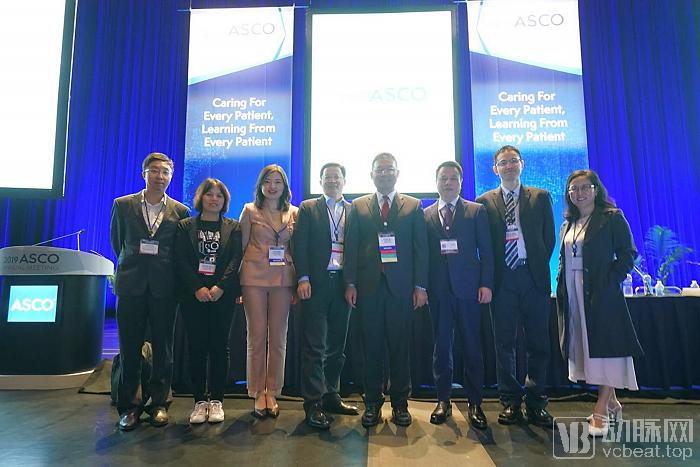
Research Team of Professor Xu Ruihua, Sun Yat-sen University Cancer Center
“This represents an excellent showcase of our China-originated innovative drug at the ASCO Annual Meeting. The POLARIS-02 study is currently the largest single-arm clinical trial worldwide investigating later-line therapy for nasopharyngeal carcinoma (NPC). The results demonstrate the efficacy of toripalimab, highlighting the value and significance of PD-1 antibodies in the last-line treatment of NPC. Meanwhile, a Phase III global multicenter clinical trial evaluating first-line treatment for advanced NPC is rapidly progressing. We look forward to delivering PD-1 inhibitors to NPC patients through robust clinical outcomes, thereby contributing a new standard-of-care regimen to the world,” stated Professor Xu Ruihua.
“Professor Xu Ruihua presented, for the first time globally, his exploratory findings on molecular biomarkers (including PD-L1 expression, plasma EBV DNA copy number, tumor mutational burden [TMB], and amplification of the 11q13 region) in clinical studies of nasopharyngeal carcinoma, gastric cancer, and esophageal cancer. ‘These studies are not mere replications of any single international clinical trial; rather, they represent innovations built upon the existing body of knowledge. We aim to advance medical science through translational research integrated with clinical trials, ensuring that patients who stand to benefit truly receive appropriate treatment,’ he added.”
Research Project:POLARIS-03 Registrational Clinical Study in Urothelial Carcinoma (NCT03113266) #4554, CT1 and POLARIS-01 (CT4) Studies (NCT02836795 and NCT03013101) #e21050)
Principal Investigator:Professor Guo Jun, Peking University Cancer Hospital
“Regarding urothelial carcinoma, the objective response rate of toripalimab in patients who failed second-line chemotherapy reached 27.6%. Among PD-L1-positive patients, immunotherapy demonstrated superior efficacy, with an objective response rate as high as 55.0%, which is the highest among publicly available data on PD-1/PD-L1 monotherapy both domestically and internationally. This fills us with pride in China’s innovative drugs and instills great confidence in their future research prospects,” pointed out Professor Guo Jun.
Meanwhile, toripalimab has also achieved very promising results in its registrational clinical trials for melanoma. According to recent data, the median overall survival of toripalimab as a second-line treatment for metastatic melanoma is fully comparable to that of similar foreign products. “This innovative drug from China has provided Chinese experts with greater opportunities for innovation, enabling us to conduct clinical studies focused on Asian-specific mucosal and acral melanomas. Currently, more than ten clinical trials investigating neoadjuvant and combination therapies with toripalimab are underway. We hope that our efforts will help fill the global gap in the treatment of acral and mucosal melanomas,” he continued.
Below are the clinical results announced by Junshi Biosciences for toripalimab in the treatment of nasopharyngeal carcinoma and five other advanced solid tumors:
Poster #6017
Principal Investigator: Professor Xu Ruihua, Sun Yat-sen University Cancer Center
POLARIS-02 was a multicenter, open-label, Phase II registrational clinical study designed to evaluate the safety and efficacy of toripalimab in Chinese patients with metastatic nasopharyngeal carcinoma who had failed prior systemic therapy. The study enrolled a total of 191 patients with nasopharyngeal carcinoma. Results showed that among the 165 patients evaluable for efficacy, the objective response rate (ORR) was 25.5% and the disease control rate (DCR) was 47.1% in patients with refractory metastatic nasopharyngeal carcinoma. Furthermore, most adverse reactions were tolerable.
In the largest clinical trial to date evaluating immune checkpoint inhibitors for the treatment of advanced nasopharyngeal carcinoma, toripalimab demonstrated encouraging clinical efficacy with a manageable safety profile. Furthermore, researchers found that changes in plasma EBV DNA copy number may serve as a robust predictive biomarker for treatment response to anti-PD-1 antibody therapy in patients with nasopharyngeal carcinoma.
Poster #4554
Principal Investigators: Professor Guo Jun of Peking University Cancer Hospital & Professor Huang Yiran of Shanghai Renji Hospital
POLARIS-03 was a Phase II, open-label, multicenter, registration-enabling clinical study designed to evaluate the efficacy and safety of toripalimab as second-line treatment for patients with advanced metastatic urothelial carcinoma. The study enrolled a total of 79 patients. Results showed an objective response rate (ORR) of 27.6%, with disease control achieved in more than half (51.3%) of the patients (disease control rate [DCR]). Toripalimab demonstrated encouraging antitumor activity and a manageable safety profile in patients with chemotherapy-refractory urothelial carcinoma.
Meanwhile, researchers also found that patients with positive PD-L1 expression achieved better outcomes with immunotherapy, with an objective response rate (ORR) of 55.0%, whereas the ORR in patients with negative PD-L1 expression was 14.6%, including one case of complete response.
Poster #4021
Principal Investigator: Professor Xu Ruihua, Sun Yat-sen University Cancer Center
This multicancer, multicenter, open-label, Phase II clinical study analyzed the advanced gastric cancer cohort to evaluate the safety and efficacy of toripalimab in patients with gastric cancer, as well as the predictive value of tumor PD-L1 expression and tumor mutational burden (TMB) as biomarkers for the efficacy of anti-PD-1 antibody monotherapy in patients with advanced gastric cancer. The study enrolled a total of 58 patients with advanced gastric cancer. The results demonstrated that patients with higher TMB (TMB ≥12 mutations/Mb) achieved significantly greater overall survival benefit compared to those with lower TMB.
Toripalimab demonstrates promising antitumor activity in patients with refractory advanced gastric cancer who have progressed after chemotherapy, serving as a salvage therapy following failure of systemic treatment.
Using PD-L1 positivity or high tumor mutational burden (TMB ≥12 mutations/Mb) as composite criteria can maximally identify patients with advanced gastric cancer who are likely to benefit from toripalimab treatment.
High TMB may be a molecular marker for predicting overall survival in gastric cancer patients treated with toripalimab monotherapy.
Poster #4036
Principal Investigator: Professor Xu Ruihua, Sun Yat-sen University Cancer Center
This multicancer, multicenter, open-label, Phase II clinical study analyzed patients with advanced chemotherapy-refractory esophageal squamous cell carcinoma (ESCC) treated with toripalimab. By performing whole-exome sequencing (WES), mRNA sequencing, and immunohistochemical assays on tumor samples, the study aimed to identify biomarkers capable of effectively predicting the efficacy of immunotherapy. A total of 60 patients were enrolled. The results showed an objective response rate (ORR) of 18.6% and a disease control rate (DCR) of 47.5% in patients with metastatic ESCC treated with toripalimab. Compared with patients exhibiting amplification of the 11q13 region, those without 11q13 amplification achieved a higher ORR and longer progression-free survival (PFS), suggesting that 11q13 amplification may be a prognostic indicator of poor outcomes in patients with metastatic ESCC receiving anti-PD-1 antibody therapy. Further investigations into potential genes within the 11q13 region associated with resistance to immunotherapy are ongoing.
In patients with chemotherapy-refractory metastatic esophageal squamous cell carcinoma (ESCC), toripalimab demonstrates a manageable safety profile and promising antitumor activity.
Predictive biomarkers that have shown efficacy in other cancer types, including tumor PD-L1 expression and tumor mutational burden, demonstrated no predictive value in this trial of esophageal squamous cell carcinoma (ESCC). In patients with metastatic ESCC receiving anti-PD-1 antibody therapy, amplification of the 11q13 region was associated with poor prognosis. Further studies are underway to investigate potential genes within the 11q13 region that may confer resistance to immunotherapy.
Abstract #e21050
Principal Investigator: Professor Guo Jun, Peking University Cancer Hospital
The research team analyzed 142 patients from two clinical trials of toripalimab in patients with advanced tumors (NCT02836795 and NCT03013101) to evaluate the predictive value of tumor growth rate (TGR) for the efficacy of anti-PD-1 immunotherapy in melanoma patients. The results showed that TGR could be assessed in relation to anti-PD-1 antibody efficacy in 90 patients, among whom 15 (16.7%) achieved partial response (PR), 41 (45.6%) had stable disease (SD), and 34 (37.8%) experienced progressive disease (PD). The researchers found a correlation between lower TGR (TGR ≤55) and objective response rate (P≤0.001), suggesting that melanoma patients with TGR ≤55 are more likely to benefit from immunotherapy prior to anti-PD-1 antibody treatment.
About Tuoyi (Toripalimab Injection)
Tuoyi (Toripalimab Injection), as the first domestically produced monoclonal antibody drug targeting PD-1 approved for marketing in China, has received support from the National Major Science and Technology Project. Since the initiation of its clinical development in early 2016, more than 30 clinical studies covering 14 tumor types have been conducted in multiple countries, including China and the United States. In March 2018, the National Medical Products Administration (NMPA) formally accepted the marketing application for this product and included it in the priority review and approval program to expedite the evaluation process. Clinical trial results demonstrated that among patients with unresectable or metastatic melanoma who had previously failed systemic therapy, the objective response rate was 17.3%, the disease control rate was 57.5%, and the one-year survival rate was 69.3%. The approval of Tuoyi holds positive significance for expanding clinical treatment options for cancer patients in China.
About Junshi Biosciences
Junshi Biosciences (NEEQ: 833330, HKEX: 01877) was founded in December 2012 by a team of graduates from prestigious universities in China and the United States, with extensive experience in cross-border technology transfer and industrialization.
Junshi Biosciences is primarily dedicated to the development of therapeutic antibodies, focusing on the research, development, and industrialization of innovative monoclonal antibody drugs and other therapeutic protein drugs. The company currently boasts a robust pipeline of products in development, comprising 16 innovative drugs and one biosimilar. Junshi Biosciences is the first Chinese company to receive marketing approval from the National Medical Products Administration (NMPA) for an anti-PD-1 monoclonal antibody. It is also the first domestic company to obtain NMPA approval for Investigational New Drug (IND) applications for anti-PCSK9 and anti-BLyS monoclonal antibodies. Currently, the company employs over 900 people worldwide, with operations in San Francisco and Maryland in the United States, as well as in Shanghai, Suzhou, Beijing, and Guangzhou in China.