

Tongxin Medical Link Files IPO Prospectus: A Clinically-Oriented, Profitable AI Healthcare Platform

Sophmind
Internet Medical Examination Platform
Liu Weiqi is extremely busy after just completing the product launch.
The telephone interview with him was conducted while he was on his way out of the airport, during which he spoke at a very rapid pace for 40 minutes.
On the 7th of last month, Tongxin Medical Alliance held a strategic launch event in Beijing, unveiling its upgraded strategy for the "Tech-Driven Healthcare Platform." Following the event, Tongxin Medical Alliance entered a new phase of development, with Liu Weiqi becoming even busier than before.
“Centered on medical imaging technology combined with AI, and integrating online internet hospitals with offline medical imaging centers, we provide platform services to four key stakeholders: clinicians, specialized patients, partner hospitals, and imaging + AI experts.” This was the core message of Sophmind’s press conference.
It has been learned that this marks the fourth business upgrade for Tongxin Medical Alliance, a strategic move that has garnered widespread recognition from clients. With each upgrade, Tongxin Medical Alliance has established an increasingly solid foothold in the healthcare industry.
As the helmsman, Liu Weiqi does not come from a medical background. An avid writer, he introduces himself on his WeChat official account, “Liu Weiqi,” as follows:"Rooted in science and engineering, yet passionate about literature, history, and philosophy; transitioned to finance, then pursued management studies, recently delved into law, ultimately focusing on healthcare."。
Extensive industry research and rich professional experience have shaped Liu Weiqi into who he is today. In turn, Liu has been the driving force behind the development of Tongxin Medical Alliance. How did this compelling figure grow into his current role, and how has he led Tongxin Medical Alliance through successive business upgrades to help address the shortage of high-quality medical resources in China? To find out, VCBeat conducted an exclusive interview with Liu Weiqi, founder of Tongxin Medical Alliance.。
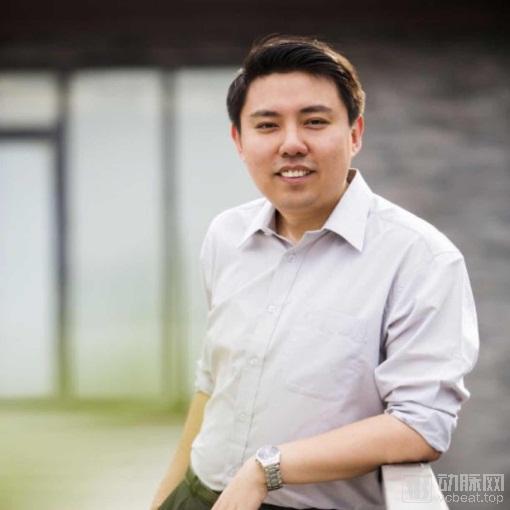
Liu Weiqi, Founder of Tongxin Medical Alliance


Liu Weiqi’s educational background is truly unique.
After graduating from Shanghai Jiao Tong University with a bachelor’s degree in civil engineering and finance, Liu Weiqi switched his field of study to Management Science and Engineering at Stanford University. Upon returning to China, he pursued graduate studies in law at the Party School of the Central Committee of the Communist Party of China. Despite being heavily occupied with his entrepreneurial ventures, Liu Weiqi is currently pursuing a Doctor of Medicine (M.D.) degree at Johns Hopkins University.
Liu Weiqi told VCBeat that, when choosing his major, he initially aimed only to prepare for the civil service examination and contribute to society. As he grew older, Liu found that a career in the civil service no longer suited his professional development, and the knowledge he acquired during his studies became the foundational building blocks of his accumulation at different stages of his career.
Liu Weiqi’s interdisciplinary academic background has shaped his complex knowledge system, which also provided the intellectual foundation for the formation of his subsequent management philosophy. In its previous coverage of Tongxin Yilian, VCBeat noted that Complex Coordination is its core management philosophy, a theory derived from Peter Thiel’s Zero to One.
By definition, if startups can engage with diverse stakeholders such as engineers and regulators, effectively integrate heterogeneous cross-boundary resources, and operate in the right manner, they can generate a new “product” known as “complexity collaboration.”
Sophmind currently designs its products based on complex collaboration. With imaging as the foundation, it integrates imaging technology and AI to cover radiology departments and clinical specialties such as surgery, neurology, and cardiology, achieving interdisciplinary integration.
Liu Weiqi candidly stated that his career path is not a typical example.
Liu Weiqi’s first job was in real estate marketing. In 2002, Liu Weiqi wanted to pursue further studies abroad, but due to the impact of the 9/11 attacks, he had to wait in China for the results of a security clearance before he could obtain a visa. During this period, Liu Weiqi worked for several months in real estate marketing planning.
This job lasted only a few months, yet the recent collaborative initiatives between Sophmind and real estate partners are closely tied to Liu Weiqi’s brief professional experience.
Similar to his first job, many of Liu Weiqi’s subsequent roles exerted varying influences on his later founding and management of Tongxin Medical Alliance.
After graduation, Liu Weiqi held management and investment roles at General Electric, Singapore Yaoheng Management Consulting Co., Ltd., UBS Group, Huaiyuan Capital, and Huakang Tongbang.
Liu Weiqi stated that each stage of his work represents a form of personal growth. He primarily divides his work into three stages:
Phase I: Management consulting work. This phase honed Liu Weiqi’s methodological approach to work. In any industry, as long as one clearly understands the essence of the business and gains insight into future trends, one can identify the means to run an enterprise successfully.
Phase II: Investment management. This phase enabled Liu Weiqi to learn how to engage with the capital markets, as well as how to conduct organizational management and enhancement within a large enterprise.
Phase III: He invested on his own. This phase taught Liu Weiqi how to conduct business within the Chinese context. Business is business; it is not a simplistic case study from a textbook, as every venture has its own challenges. There was once a private hospital that consistently defaulted on its payments to the company. Liu Weiqi quietly vowed that if he failed to recover the outstanding debts, he would no longer do business in China. Today, however, Tongxin Medical Union, which he founded, has successfully secured four rounds of financing.
The capabilities accumulated during these three stages are all influencing Liu Weiqi today.
Liu Weiqi stated that, as a non-medical professional engaging in healthcare entrepreneurship, he must clearly identify the core needs of the medical industry, namely to provide more high-quality, differentiated medical services. In this process, the company must find various ways to address this issue in order to continuously develop and strengthen itself.
Launching a healthcare startup is highly complex, requiring engagement with government officials, medical experts, and scientists, as well as interaction with market-oriented professionals. This demands that managers possess strong market-driven survival skills to effectively navigate these challenges.
Moreover, Liu Weiqi also recognizes that while healthcare entrepreneurship is driven by passion and purpose, a company cannot sustain long-term growth without market-oriented profitability.
The establishment of Tongxin Medical Alliance was a coincidence.
When Liu Weiqi made investments, he invested in a company specializing in medical devices and healthcare informatization. As an investor, he participated in certain post-investment management activities.
In 2013, with the rise of internet healthcare and shifts in national policies, Liu Weiqi sensed opportunities for medical reform. In particular, as population aging intensified, cost containment within the basic medical insurance system was placed on the agenda. Such pressure to control costs meant that public hospitals could no longer meet all patients’ demand for medical services, necessitating that social institutions take over this portion of the workload.
Liu Weiqi believes that the first opportunity to emerge from public hospitals should be chronic disease management.. Given the vast market for chronic disease management, which demands lower medical capabilities compared to acute and infectious diseases and involves extended service cycles, Liu Weiqi identified a strategic opportunity. He consequently decided to collaborate with hospitals to establish projects undertaking chronic disease management services.
Liu Weiqi had hoped that the medical company he invested in would launch corresponding services, but internal disagreements among shareholders prevented the company from doing so. By then, Liu had already reached an agreement with a hospital. Since providing healthcare services aligned with his original aspiration to contribute to society, he seized this opportunity to establish Tongxin Medical Alliance.
Most internet healthcare companies founded around 2014 have been eliminated, while Tongxin Yilian has completed four rounds of financing to date. This success is closely tied to its three business upgrades:
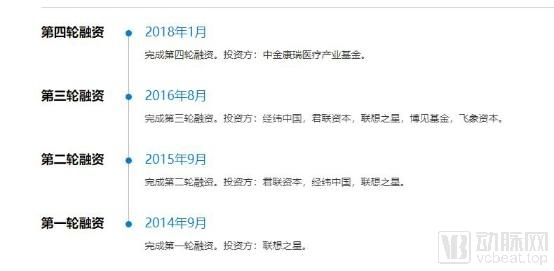
Liu Weiqi stated that every business upgrade at Tongxin Medical Alliance has been centered on his original entrepreneurial vision: how Tongxin Medical Alliance can help address the shortage of high-quality medical supply in China, given that public hospitals are unable to meet everyone’s healthcare needs.
Whether initially engaging in chronic disease management or gradually centering on medical imaging by deploying imaging centers, internet hospitals, and online AI systems, these are all measures adopted by Tongxin Yilian to address challenges amid technological and policy developments.。
In the early days of its founding in 2014,Sophmind’s initial business focused on chronic disease management, without drawing on others’ experience. After partner hospitals expressed their challenges in patient management, Sophmind leveraged internet-based solutions to connect patients with physicians, thereby addressing follow-up care issues.
However, as the business deepened, Liu Weiqi discovered that many medically sound practices do not necessarily translate into operational feasibility or commercial profitability.. For instance, chronic disease management requires changing patients’ lifestyle habits, which is actually difficult to implement; just as many people know that smoking is harmful, yet only a handful manage to quit.
After 2015, Sophmind shifted its focus from long-term chronic disease management to the development of an online trading platform for medical imaging, aiming to serve patients by leveraging underutilized examination resources.
After a period of time, Liu Weiqi once again came to the profound realization that the core issue in China’s healthcare system is the insufficient capacity to deliver high-quality medical services.
Due to a lack of sufficient qualified supply-side resources, it is impossible to leverage the internet to meet patient needs, nor are there adequate medical resources for digital health initiatives to revitalize.。
Therefore, Liu Weiqi believes that providing high-quality medical services is what healthcare entrepreneurs need to focus on.。
After 2016, Tongxin Medical Alliance began to adopt an asset-heavy model by establishing physical imaging centers offline, building standardized operational imaging teams, and launching a cloud-based imaging platform online to centralize diagnostic services for imaging results from across China.
The reason for choosing radiology is that, compared with other internal medicine and surgical specialties that require in-person consultations, radiological diagnosis boasts a high degree of digitization and can be integrated with internet technologies. With examinations conducted offline and diagnoses performed online, this model helps address the shortage of skilled radiologists.
Since launching its operations, Tongxin Medical Alliance has provided a substantial volume of diagnostic imaging services; however, as a corporate entity, it must also address the imperative of generating revenue and achieving profitability.
In the United States, there is a significant valuation gap between imaging centers and other third-party testing laboratories.This is because third-party imaging centers have a limited coverage area, require substantial asset investment, and face a relatively low growth ceiling.
Therefore, after 2017,Sophmind Begins to Enter the Internet Hospital Business, to re-establish long-term chronic disease management services for patients. By leveraging favorable national policies, we break the limitations of offline service coverage and provide patients with comprehensive, full-course care encompassing examinations, follow-up visits, and medication management.
Although Sophmind’s business continues to upgrade, its core mission is to address medical needs that the existing healthcare system fails to meet, with Sophmind providing the solutions.。
During this period, Liu Weiqi also recognized the potential of medical AI in enhancing healthcare delivery, prompting him to assemble a team to explore this field.
During his attempts, Liu Weiqi discovered that current AI technology cannot meet the needs of radiologists for comprehensive, all-disease diagnosis of a single anatomical region, and no one worldwide has yet been able to effectively solve this problem. Moreover,If AI technology merely addresses the challenges faced by radiologists, its commercial value will be difficult to monetize, given the limited market size for imaging diagnosis.. Imaging AI should return to the original mission of radiology departments, namely, to assist clinicians in providing more precise diagnostic and treatment recommendations.
A patient's clinical workflow proceeds from the attending clinician to imaging examinations, followed by interpretation by a radiologist, and concludes with the final diagnosis by the attending clinician.
Most AI products currently on the market are designed to address various challenges faced by radiologists. However, Liu Weiqi believes that AI holds greater value and practical feasibility in medical imaging examinations and clinical diagnosis. Accordingly, he has devised the following product strategy.。
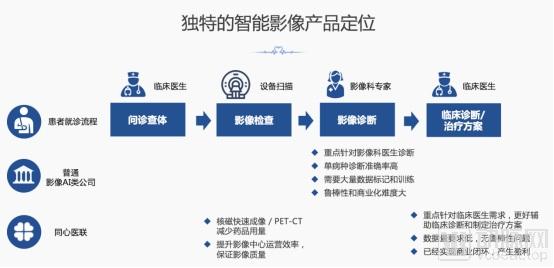
Such product design, on one hand, provides better diagnostic results and treatment plans for patients with chronic diseases. Based on this, Tongxin Yilian can better serve patients, achieve precision medicine, and gain recognition from both patients and doctors.
On the other hand, in the imaging examination process, reducing medication dosage minimizes patient harm from imaging procedures. Additionally, increasing imaging scan speed enhances efficiency, enabling imaging centers to serve more patients and achieve service efficiency two to three times higher than that of traditional large hospitals.。
In short, such product design can better provide high-quality medical services.
Therefore, after 2018, Liu Weiqi decided to position Tongxin Yilian’s AI products as services for clinicians, adopting a clinical-oriented, disease-specific approach to address the practical challenges faced by clinicians.
Consequently, Sophmind unveiled more than 30 intelligent diagnostic products at the press conference, represented by its AI-assisted aneurysm diagnosis solution.
Furthermore, Tongxin Yilian has strengthened its infrastructure through offline imaging centers and an imaging cloud platform to accumulate imaging data and ensure data quality, thereby leveraging its proprietary data to support algorithm optimization. By integrating various products through an open platform, it achieves comprehensive auxiliary diagnosis for multiple diseases. To date, Tongxin Yilian has accumulated over 10 million case records.
Liu Weiqi stated that Sophmind has undergone several business upgrades,Focusing on chronic specialized conditions such as cardiovascular and cerebrovascular diseases and cancer, we provide high-quality medical services to encourage patients to choose Tongxin Medical Alliance as their healthcare provider outside the public hospital system.。
Previously seemingly unrelated business activities enabled Sophmind to accumulate relevant service and operational capabilities, such as how to serve patients and physicians, how to expand market reach, and how to establish standardized operational capabilities for imaging centers. Although Sophmind made some mistakes in specific business operations, its past experiences have shaped the current Sophmind, which is now capable of delivering efficient technology-driven healthcare platform services.
Liu Weiqi told VCBeat that he did not have a background in healthcare or the internet when he first started his venture. Currently, Tongxin Yilian is building an integrated online-to-offline tech-healthcare platform, continuously expanding our business boundaries. Although the exploration process has been challenging, regardless of how our services evolve, we remain committed to enhancing the supply of high-quality healthcare and refining our solutions to address the needs of both doctors and patients.