

How Harvard University Translates Innovation: Five Insights from Top Harvard Scientists
When Harvard University is mentioned, what comes to your mind?
A Century-Old Institution, a Hotbed of Academic Elites, or World-Class Scientists?
Since its founding in 1636, Harvard University has produced more than 158 Nobel laureates. Among the internationally renowned Ivy League institutions, Harvard stands at the pinnacle of academic excellence. Furthermore, Harvard’s laboratories have incubated a host of innovative companies, such as Editas Medicine, Beam Therapeutics, Veritas, and EGenesis in the life sciences sector. These industry leaders have demonstrated strong performance in both financing and initial public offerings (IPOs).
In 2018, Harvard University’s revenue from innovation reached $442 million, cementing its status as a symbol of technological prowess in the process of industrial translation and innovation.
Isaac Kohlberg is Senior Vice Provost and Chief Technology Development Officer at Harvard University, currently in his 15th year with the institution. Over the past five years, his department has helped Harvard-affiliated startups secure a cumulative $15 billion in financing.
Kolberg argues that the acceleration of innovation beginning in 1981 is the fundamental reason behind the current U.S. environment for translational technological innovation. On the other hand, Harvard University’s advantages in innovation and its unique innovative ecosystem have placed it at the forefront of this translational innovation movement. As a premier academic institution, Harvard serves not only as a center of scholarly excellence but also as a vital source of innovation for industrial translation. The university generates approximately 500 distinct innovation projects annually, achieving remarkable success in both academic research and industrial translation. This stands in stark contrast to the current state of industrial translation in China.
In China, a generational gap between academic and commercial cultures has prevented the translation of numerous technologies from the laboratory to practical applications. In contrast, Harvard University has seamlessly integrated academic and commercial cultures, making the transition from basic research to industrial commercialization appear to be a natural process.
We cannot help but wonder: How is Harvard University’s innovation model structured, and can its experience help domestic research institutions establish similarly distinctive translational innovation models to accelerate the commercial development of biotechnology in China? At the event held recently in Chengdu,The 2nd Tianfu International High-End Dialogue on Biopharmaceutical CommercializationVCBeat took these questions to Kolerberg, as well as world-leading scientists such as Arlene Sharpe, a pioneer of PD-1 inhibitors, and Nobel laureate Ferid Murad. Through our conversations with them, we identified five clues regarding the Harvard innovation model.
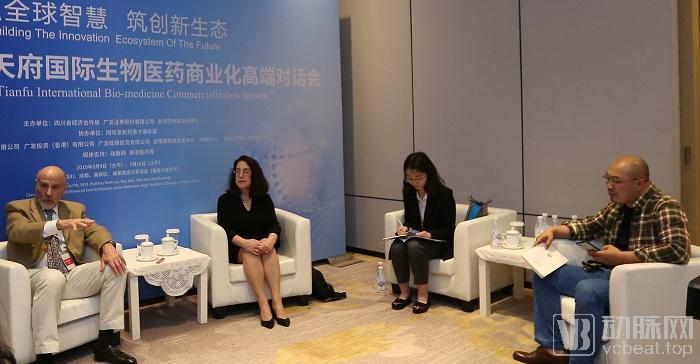
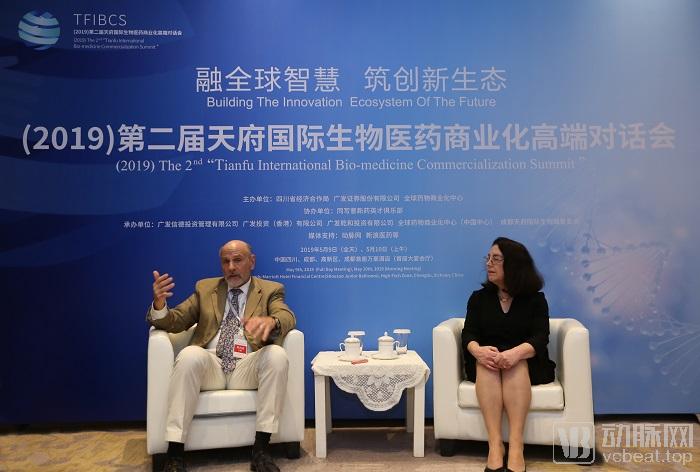
From left: Isaac Kohane, Senior Vice Provost and Chief Technology Development Officer at Harvard University; Arlene Sharpe, Co-Chair of the Department of Microbiology and Immunobiology at Harvard University.
When asked how Harvard University bridges the gap between basic research and industrial translation, Arlene Sharpe, Co-Chair of the Department of Microbiology and Immunobiology at Harvard University, told VCBeat that such a gap is virtually non-existent within Harvard University (particularly Harvard Medical School). She stated, “When conducting research, our first consideration is always what benefits it can bring to humanity. This is the culture at Harvard.”
Clinical needs drive industry to seek technologies with potential for translation, and Harvard University’s research culture provides more opportunities for the commercialization of basic research conducted in its laboratories.
“Harvard University is a unique place. The university’s intellectual property department reaches out to Harvard faculty to inquire about their current research projects and areas of interest. This department bridges pharmaceutical companies with university research, thereby advancing both scientific inquiry and industrial R&D,” said Kolberg.
The intellectual property department serves as a communication hub between the university and industry. When researchers discover that their basic research can be applied in industry, they reach out to both the university and pharmaceutical companies; conversely, industry players can also identify and connect with university researchers through this channel. “This is a two-way connection,” he continued.
By taking “social needs” as the starting point, the market potential for these translational products is secured. Meanwhile, the existence of an intellectual property office addresses the information asymmetry between enterprises and laboratories, creating more opportunities for collaboration. This marks the first step in Harvard University’s construction of a translational innovation model.
The integration of research culture and industry has laid the foundation for technological transformation and innovation, enabling considerations of the final product form to emerge at the initial stage of R&D. Meanwhile, the influx of capital not only supports technological development but also encourages more innovators to participate.
Kolberg highlighted the significant role played by the government in this process. In the early 1990s, Israel established venture capital funds under the auspices of its government. Supported by these funds, Israel has built an innovation ecosystem essential to its tech innovation sector over the past three decades. Government subsidies for early-stage startups and venture capital firms not only help startups navigate the precarious “seedling stage” more securely but also effectively encourage early-stage VC firms to invest and establish operations in specific regions.
Throughout this process, Harvard University itself drives technological innovation through various initiatives, further integrating the outcomes of basic research with commercial development. The Technology Transfer Office matches and connects research teams with the needs of existing commercial companies, thereby facilitating the commercial exploration of technological research. In addition to mechanisms for translating research findings, they also raise public or private funding through collaborations to support the implementation of product commercialization projects. For example, Harvard Medical School partnered with Quark Capital, which invested $45 million to support laboratory research on tumor immunology, a project involving two world-class scientists.
“Collaboration with private equity funds is merely a means to secure funding for research projects at their early stages,” explained Kolberg. “Additionally, the university has established several acceleration funds, most of which are co-invested by the university and pharmaceutical companies.” These funds have consistently adhered to the principle of prioritizing faculty members. For Harvard University, faculty members represent the institution’s research potential.
It is understood that the Accelerator Fund and its collaborative projects with private equity firms primarily target startups. Kolberg revealed that the school will consider integrating institutional research with private equity in the future.
Nevertheless, the number of internal university funds remains small compared to external sources. In fact, a larger share of the financing secured by these startups comes from off-campus venture capital firms. Centered around Harvard University and the Massachusetts Institute of Technology on the East Coast, and Stanford University and the University of California, Los Angeles on the West Coast, the United States has developed a dual-hub innovation landscape spanning its eastern and western regions. As a crown jewel in the field of biotechnology innovation, Boston has attracted a host of top-tier venture capital firms, including Flagship Pioneering, Third Rock Ventures, F-Prime Capital Partners, Atlas Venture, and Polaris Partners. These firms have established their headquarters in the city, providing crucial support for the commercialization of laboratory technologies.
“They will seek out some early-stage technologies,” introduced Kolberg. In addition, a large number of biopharmaceutical companies have also established their headquarters or offices around Harvard University.
These funds have fostered a diversified investment ecosystem around Harvard University, with substantial capital allocated to supporting the commercialization of technologies, thereby enabling more innovations to transcend the confines of academia. Indeed, the establishment of this capital environment has become the second pillar of Harvard’s translational innovation ecosystem.
The entry of venture capital firms and biotechnology companies has infused Harvard University’s innovation ecosystem with genuine commercial elements, providing channels and direction for the commercialization of technology. However, innovators and entrepreneurs must deepen their understanding of the respective cultures of various stakeholders in the industry chain to engage effectively with them.
The work of translating innovations into commercial applications demands a business-oriented mindset and environment. To foster such an ecosystem, Harvard University has launched numerous initiatives to attract more industry professionals, including the renowned “Entrepreneurs-in-Residence” program. Held quarterly, this initiative primarily aims to bridge the gap between laboratories and enterprises, thereby catalyzing mutual understanding and integration between entrepreneurs and research institutions. “These participants are mainly venture capital partners and corporate executives, whom we invite to engage in our research projects. This approach better facilitates communication between the university and industry, clarifying the specific needs of the industrial sector in research,” he stated.
“In the process of innovation translation, entrepreneurs need to seek not only research sponsorship and corporate partnerships; research teams may also need to receive training in business management and intellectual property, secure funding for their research projects, and leverage these funds to further advance the commercial translation of their research. ‘These are the cornerstones of our innovation translation,’ said Kolberg.”
He believes there is a fundamental distinction between encouraging innovation and participating in innovation. In translational innovation, the integration of research culture with business culture is key to success. “University culture focuses on how to conduct research, how to publish papers, and how to make those publications more accessible. In contrast, business culture centers on leveraging capabilities to conduct stronger research, thereby increasing corporate profitability and investor returns,” he explained.
In addition to the “Entrepreneurs-in-Residence Program” mentioned earlier, Harvard University held an event called “Launch Camp” in May 2019. Over the course of two days, entrepreneurs, Harvard graduates, and postdoctoral researchers underwent intensive, focused training in business development. Kolberg revealed that the purpose of the event was to cultivate the commercialization capabilities of innovators and entrepreneurs and to teach them how to engage effectively with corporations. It is understood that they hold monthly analytical meetings to discuss gaps among projects and explore, through seminars, the potential avenues and mechanisms for venture capital investment. “This is a forum for joint analysis of the impact of funding and technology on industry,” he continued.
If the cultivation of a research culture and the construction of a capital environment represent the encouragement provided by universities and the financial sector to innovators, respectively, then the integration of research culture with business culture signifies innovators’ proactive alignment with industry. “Innovators, universities, and capital” are the three key actors in Harvard University’s translational innovation ecosystem. The active participation of innovators enables these three elements to form a self-reinforcing triangle, thereby facilitating a virtuous cycle in innovation translation.
Of course, the role of the patent system in this process cannot be overlooked. The Israeli Knesset developed and designed the patent system more than 50 years ago, and since then, the patent system has played a pivotal role in the field of innovation.
Kolberg noted that prior to 1989, virtually no universities in the United States were actively promoting technology transfer, a situation dictated by the policy environment and patent system at the time. “At that point, the U.S. held little advantage over other parts of the world,” he recalled. After 1989, many countries initiated reforms to their patent systems, shifting patent ownership for innovations from individual creators to universities, which led to a robust surge in patent applications filed by higher education institutions.
Owning patent rights does not guarantee the successful transfer of technology, nor does obtaining a patent automatically create an environment conducive to innovation commercialization. Innovators require strong incentives to drive the commercialization or productization of their technologies. The transfer of patent ownership motivates university administrators to take more proactive roles in encouraging and facilitating the translation of technologies into industrial applications, thereby fostering a more supportive ecosystem for innovation commercialization.
“Advanced technologies are integrated through collaborations between universities and enterprises, with innovators and companies partnering on technological research to drive greater translation of results into industry applications,” said Kohlberg.
From the innovation environment to the patent system, Harvard University’s innovation ecosystem has created a vibrant atmosphere for researchers. In addition to advantages such as venture capital firms and industrial resources, the university’s encouragement and guidance of innovation commercialization have set it apart in academia. However, does building an innovation ecosystem determine the success or failure of technology transfer? Certainly not. If we look beyond surface appearances to the essence, we find that the ultimate driving forces lie in science and in people.
“We often discuss many topics related to technology, but we may overlook one point: innovation comes from people.” Kohlberg agreed with this view, describing them as “a group of people who are unafraid of failure and have big dreams.” It is precisely such a group that has attracted technology companies and venture capital firms, laying the foundation for Harvard University’s distinctive innovation ecosystem.

1998 Nobel Laureate in Physiology or Medicine, Ferid Murad
“When I asked students about their future plans, they told me they hoped to conduct numerous experiments, followed by practical training, with the ultimate goal of winning a Nobel Prize.” Nobel laureate Ferid Murad remarked, “But they may end up working on the same experiment for the next five years.”
Whether in scientific research or technological translation, the core is science. Science is an exploration of the unknown, and everyone faces the risk of failure. These world-class scientists maintain a balanced mindset toward this. “Do not be afraid or ashamed of failure,” Murad added. “Many great discoveries involve coincidence, and we will fail repeatedly in the process.”
What surprised us was that, in our conversations with multiple scholars, they all spontaneously mentioned the “China opportunity.” These top-tier scientists are highly eager to pursue industrial commercialization in China. “I myself have collaborations in China,” Kolberg revealed.
“China is a vast market with abundant patient resources.” When asked about his reasons for pursuing technology transfer in China, Murad stated.
China’s aging population is deepening, and the vast medical demand has created unprecedented development opportunities for the healthcare industry. Furthermore, China boasts a far richer pool of patients and a greater diversity of disease types than Europe and the United States. These characteristics provide a solid foundation for research into disease treatment protocols. For life sciences, clinical validation is an essential step in the commercialization of technology. In Europe and the United States, patient enrollment requires a significant budget. By comparison, the costs of conducting clinical trials and R&D in China are lower.
“China is currently experiencing a period of rapid development in the biopharmaceutical industry, and multi-center clinical data sharing provides opportunities for the localization of overseas technologies in China,” said Jiang Chenguang, Chief Operating Officer of the Global Drug Commercialization Center (GDCC). GDCC, where he works, is a biopharmaceutical translation and commercialization center under Quark Capital, dedicated to helping scientists translate their technologies into practical applications and achieve commercialization. In 2017, GDCC established its first overseas center in Chengdu. Leveraging the collaboration between Quark Capital and Harvard University, GDCC China will utilize its industrial experience and resources to assist these overseas scientists in localizing their technologies in China. “Many products are absent from the international market, and the introduction of these technologies will enrich technological innovation in China’s biopharmaceutical industry,” Jiang added.
Undoubtedly, the implementation of these technologies will further accelerate China’s biopharmaceutical industry. However, VCBeat believes that what is more crucial in the process of introducing overseas technologies is mutual cultural influence. The deployment of such technologies will foster interaction between foreign technologies and domestic enterprises. The exchange and collision between local and overseas cultures will inspire both sides, facilitating the introduction of more overseas technologies tailored to China’s unique characteristics. It will also enable local enterprises and research institutions to learn from and enhance their capabilities through the research and translation experiences of overseas institutions, thereby promoting the formation of an innovative ecosystem for local technology translation.