

From Top U.S. Stroke Center to Full-Cycle Cerebrovascular Solutions: ArteryFlow's Founder Leverages a Decade of Clinical-Engineering Experience for Second Venture

ArteryFlow Technology
Personalized Diagnosis and Treatment Service Provider for Cardiovascular and Cerebrovascular Diseases
In the diagnosis and treatment workflow for cardiovascular and cerebrovascular diseases, each step presents significant technical challenges. Each technology, considered individually, holds sufficient value to warrant development as an independent project or company. In this field, ArteryFlow Technology, founded in 2017, secured tens of millions in angel-round funding shortly after its establishment.
Having been established for only two years,The company leverages technologies such as computational fluid dynamics (CFD) simulation, image processing, and deep learning to provide a comprehensive solution for the precise diagnosis and treatment of cardiovascular and cerebrovascular diseases. Coupled with its independently developed consumables, this approach significantly enhances personalized diagnostic and therapeutic capabilities for these conditions.。
Its product line already covers the entire diagnostic and therapeutic workflow for cardiovascular and cerebrovascular diseases, including screening, diagnosis, surgical planning, and high-value consumables.. To gain a deeper understanding of the company, VCBeat conducted an exclusive interview with Dr. Xiang Jianping, founder of ArteryFlow Technology.
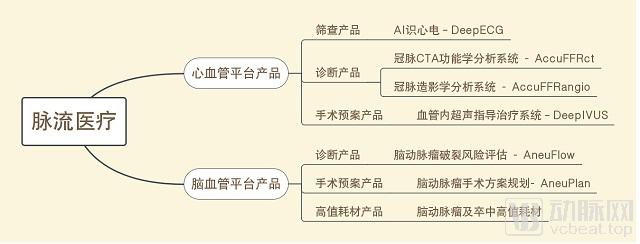
ArteryFlow Medical's Product Line


ArteryFlow Technology’s product line is designed with such boldness, primarily due to the capabilities and experience of its founding team.。
Its founder, Xiang Jianping, completed his undergraduate and master’s degrees in Mechanics at Tianjin University. Fluid mechanics is not only fundamental to the aerospace industry but also widely applied in the medical field.
In 2007, Xiang Jianping received full doctoral scholarships from several U.S. universities and ultimately chose the University at Buffalo, State University of New York, not only because of its distinguished School of Engineering and Applied Sciences, but primarily due to the presence of the renowned Center for Stroke and Vascular Diseases—the Toshiba Stroke and Vascular Research Center (TSVRC).
Approximately one-third of interventional neurosurgeons in the United States received their neurointerventional surgical training at this center. In 2017, the panel discussion at OCIN, China’s largest international cerebrovascular conference, featured five top global experts, three of whom were closely affiliated with this center.
This center, jointly established by the School of Engineering and the School of Medicine, enjoys global renown for its research and treatment of cardiovascular and cerebrovascular diseases. The founding director, Dr. Hopkins, is known as the “Father of World Neurointervention,” and the current director is Professor Adnan Siddiqui, who served as the clinical mentor to Xiang Jianping in the United States.
Professor Siddiqui is invited to China two to three times a year to deliver lectures on the latest therapeutic concepts and techniques, ranging from novel approaches for aneurysm treatment to contemporary strategies in mechanical thrombectomy. As the principal investigator (PI) of the renowned COMPASS Trial, he published its latest results in The Lancet in 2019, providing a detailed account of the rationale and clinical experience with direct aspiration using large-bore catheters.
During his doctoral studies in the United States, Xiang Jianping had two supervisors: one in engineering and one in clinical medicine. Throughout his five-year PhD program, he would study clinical knowledge with his clinical supervisor every Wednesday, gaining insights into the procedures of interventional stroke surgery, as well as patient and clinical needs.。
To better understand clinical issues, Xiang Jianping took elective courses in anatomy, pathophysiology, and cell biology, laying a solid interdisciplinary foundation.

Buffalo World Interventional Center
The Toshiba Stroke and Vascular Disease Research Center is located on the eighth floor of the World Center for Interventional Medicine in Buffalo. This eight-story building consists of two parts: the lower four floors house the Gates Vascular Institute (GVI), a vascular disease treatment center established by Kaleida Health, the largest private healthcare provider in the region; the upper four floors accommodate the Clinical and Translational Research Center (CTRC), established by the University at Buffalo.
Connected to this building is Buffalo General Hospital, which, together with nearby medical institutions such as the Cancer Research Center and the Women & Children’s Hospital of Buffalo, forms Buffalo’s medical center.
Xiang Jianping has worked here for 10 years, gradually evolving from a mechanical engineering graduate with only basic knowledge of medicine and biology into a multidisciplinary expert proficient in mechanical design, fluid dynamics, biology, and medicine. Although he is not a clinician, these ten years have enabled him to develop a profound understanding of the diagnosis and treatment of cerebrovascular and cardiovascular diseases.
During his time in the United States, Xiang Jianping published more than 100 academic papers.Before returning to China, Xiang Jianping held a faculty position in the Department of Neurosurgery at the University at Buffalo, securing multiple research grants as Principal Investigator (PI) or Co-Principal Investigator (Co-PI), including the highly competitive grants from the U.S. National Institutes of Health (NIH).
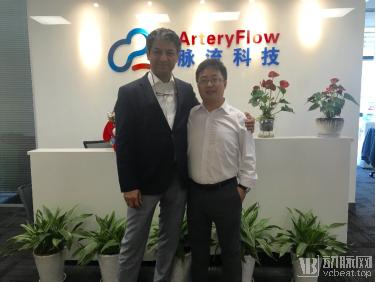
Photo of Xiang Jianping with his mentor, Professor Siddiqui
In the application of hemodynamics to predicting the risk of aneurysm rupture, Xiang Jianping has established a complete standardized workflow for computational simulation of aneurysm hemodynamics.Furthermore, by conducting hemodynamic simulations on a large volume of real-world clinical imaging data from aneurysm cases, we established the RRS scoring system for predicting the risk of aneurysm rupture.。
During the later stages of his doctoral studies, Xiang Jianping led the development of AView, a comprehensive analytical system for predicting aneurysm rupture risk.. The system provides a series of automated processing workflows, including image segmentation from initial imaging input, aneurysm morphological calculation, hemodynamic simulation and visualization, and finally surgical planning. It has been clinically studied and applied in eight centers worldwide.
Beyond hemodynamics, Xiang Jianping has also conducted in-depth research in the field of interventional consumables.The formation, progression, risk prediction, and treatment of vascular diseases are closely related to hemodynamics. For a given aneurysm, various treatment options are available. Preoperative computational simulations can be performed to evaluate the hemodynamic changes associated with different treatment strategies, thereby facilitating the selection of the optimal surgical approach.
Many medical device manufacturers in the United States, Europe, and Israel have collaborated with the Buffalo Center for Intervention. Working alongside clinical mentors, Xiang Jianping has established close partnerships with more than a dozen medical device companies. These collaborations include determining optimal device designs through computational simulation, as well as demonstrating optimal usage strategies via preclinical computational simulations, all of which are closely related to hemodynamics.。
Prior to returning to China, Xiang Jianping collaborated with Professor Siddiqui to co-found a company specializing in high-value consumables for neurointerventional procedures, where he was responsible for product design and participated in the company’s financing rounds. This experience laid the foundation for Xiang Jianping’s entrepreneurial ventures upon his return to China; notably, many patent applications for innovative products were developed based on iterative discussions with his clinical mentor.
Having returned to China for over three years, Xiang Jianping has founded two companies. The first was dedicated to the development and manufacturing of intracranial coil products, while ArteryFlow Technology is his second venture. Establishing the first company provided Xiang with extensive experience, covering every stage from initial site selection and facility planning, construction of a Class 10,000 cleanroom, product development and type testing, to animal studies, clinical trials, and ultimately obtaining clinical approval.
As a serial entrepreneur, Xiang Jianping positioned ArteryFlow Technology in his second venture to provide comprehensive solutions for cardiovascular and cerebrovascular diseases, encompassing screening, detection, diagnosis, surgical planning, as well as the research, development, and manufacturing of high-value medical consumables.
In this entrepreneurial venture, Xiang Jianping placed greater emphasis on team building.More than a dozen core R&D team members have backgrounds similar to Xiang Jianping’s. They pursued study and research in related fields overseas, accumulating extensive experience in computational fluid dynamics, finite element analysis, image processing, and deep learning.。
Leng Xiaochang, a partner at ArteryFlow Technology, holds a Ph.D. in Mechanical Engineering from the University of South Carolina and met Xiang Jianping in the United States. An expert in finite element analysis of vascular walls and medical devices, Leng oversees multiple divisions within the ArteryFlow team, including precision medicine for cardiovascular and cerebrovascular surgeries, simulation-based optimization of medical device design, and medical equipment manufacturing.
Another partner, Zhao Xing, holds a Ph.D. in Computer Science from the Massachusetts Institute of Technology (MIT). He co-founded an ad-rating company based on computer vision, which achieved a valuation of tens of millions of U.S. dollars. He has also worked at Facebook Research and NVIDIA, demonstrating profound expertise in computer vision and image analysis using deep neural networks. At ArteryFlow Technology, he is primarily responsible for deep learning-based segmentation and recognition of various medical images, as well as developing core deep learning algorithms for the AI-powered ECG interpretation system.
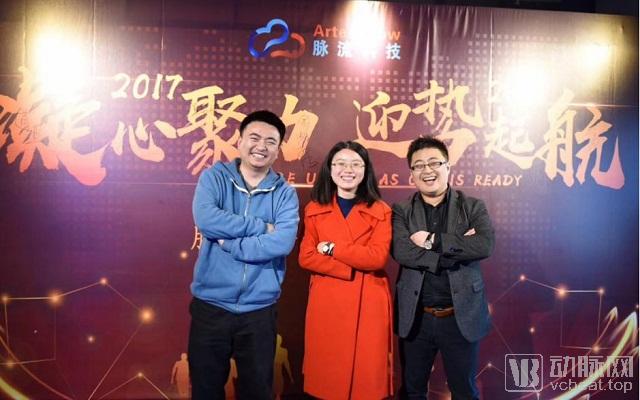
ArteryFlow Technology Founding Team
Xiang Jianping told VCBeat,Leveraging its accumulated expertise in hemodynamics and intracranial vascular interventional consumables, ArteryFlow Technology initially focused on cerebrovascular diagnostic products, surgical planning, and interventional devices at its inception.
As intracranial vascular products matured, and considering the similarities between cerebrovascular and cardiovascular diagnosis and treatment, ArteryFlow Technology decided to develop products for the cardiovascular field. With the expansion of its team, the product line has gradually expanded to its current level.。
Stroke encompasses both hemorrhagic and ischemic types, with the rupture of intracranial aneurysms being the primary cause of hemorrhagic stroke. Risk stratification for the rupture of unruptured aneurysms remains a significant challenge in the field of stroke research.
In the past, clinicians often believed that larger aneurysms were more prone to rupture. However, they have observed that a significant number of ruptured aneurysms are small, indicating that aneurysm size alone cannot be used to stratify the risk of aneurysm rupture.
Building on the research foundation established by Xiang Jianping, the team at ArteryFlow Technology has developed AneuFlow, an aneurysm rupture risk analysis system. By performing hemodynamic analysis based on patients' medical images, the system enables effective assessment of cerebral aneurysm rupture risk.The AneuFlow product is currently in the process of obtaining registration certification, with domestic registration expected to be granted by the end of 2019.。
Treatment of cerebral aneurysms includes surgical clipping via craniotomy and endovascular embolization. Due to its minimally invasive nature, the latter is currently more frequently chosen. However, endovascular embolization carries a risk of recurrence, and some aneurysms may require multiple embolization procedures. Therefore, the selection of appropriate embolization materials and techniques is often key to successful treatment.
ArteryFlow Technology, in collaboration with experts from Huashan Hospital, developed an algorithm for rapid virtual treatment of aneurysms.Rapid 3D reconstruction of aneurysms based on 3D medical images not only facilitates the selection of coil models and the sizing of stents or flow diverters, but also enables planning based on the morphology of the reconstructed aneurysm and parent artery., and preoperatively apply rapid finite element methods to simulate various virtual treatments for aneurysms and perform hemodynamic analysis using computational fluid dynamics.
Develop personalized surgical plans based on the specific aneurysm characteristics of each patient, and select the optimal treatment strategy from various options to reduce surgical risks, enable precision therapy, and improve prognostic outcomes in aneurysm management.
ArteryFlow Technology’s founding team accumulated extensive R&D experience in stroke-related products while in the United States. Xiang Jianping, together with his U.S.-based mentorship team, developed a series of consumable medical devices for interventional treatment of cerebral aneurysms and mechanical thrombectomy. To date, ArteryFlow Technology has secured protection for 14 patents and completed prototype production, with multiple patents already granted.
Its novel intracranial stent addresses the limitations of existing products, such as insufficient flexibility, susceptibility to kinking, and difficulty in navigating small vessels. The new-generation flow diverter resolves the issues of significant shortening associated with braided stents and challenges in precise deployment. The large-bore aspiration catheter enables more effective thrombus aspiration. Furthermore, the novel mechanical thrombectomy device not only features full-body radiopacity but also simultaneously captures stable, hard, and fragile thrombi, thereby improving the success rate of mechanical thrombectomy.。
ArteryFlow Technology not only maintains close collaborations with multiple stroke centers in the United States, but also works closely with numerous stroke centers in China, including top-tier hospitals such as Huashan Hospital in Shanghai, Changhai Hospital in Shanghai, and Beijing Tiantan Hospital. Together with experts from these institutions, ArteryFlow Technology has jointly applied for multiple national research grants and has co-authored and published more than ten academic papers.
Hemodynamics plays a decisive role not only in the diagnosis and treatment of cerebrovascular diseases but also in cardiovascular care. Compared with the diverse spectrum of cerebrovascular conditions—including cerebral aneurysms, cerebrovascular stenosis, and acute ischemic stroke—cardiovascular diseases are relatively homogeneous, primarily consisting of coronary heart disease, which is caused by stenosis of the coronary arteries supplying blood to the heart, leading to myocardial ischemia.
Diagnosis of coronary artery disease (CAD) caused by vascular stenosis typically involves coronary computed tomography angiography (CTA) to assess the degree of narrowing. However, the imaging-based stenosis index does not correlate well with the vessel's actual blood supply capacity.
Over the past two decades, it has become well established in cardiology that the diagnosis of coronary artery disease (CAD) is assessed using hemodynamic Fractional Flow Reserve (FFR). FFR is defined as the ratio of maximal blood flow distal to a coronary stenosis to the theoretical maximal blood flow in the absence of that stenosis. As an indicator of myocardial oxygen supply and demand balance, FFR can be measured invasively in clinical practice using a pressure wire. Currently, FFR is regarded as the “gold standard” for the detection of coronary artery disease.
Current invasive FFR measurements require a catheterization lab setting, involving the insertion of pressure guidewires, which causes significant patient discomfort and is time-consuming. In contrast, ArteryFlow Technology, leveraging its existing technical expertise, has developed...Medical Imaging and Computational Fluid Dynamics, developed non-invasive technology to enable non-invasive FFR assessment of coronary arteries。
ArteryFlow Technology offers two non-invasive FFR detection products:The non-invasive functional analysis system AccuFFRct, based on coronary CTA, and the wire-free functional analysis system AccuFFRangio, based on coronary angiography, both eliminate the need for invasive FFR testing.
The clinical pathway for patients with coronary heart disease (CHD) begins with an outpatient visit to the cardiology department. If a cardiologist preliminarily diagnoses CHD, they will typically recommend a coronary computed tomography angiography (CCTA) scan. The degree of stenosis observed on CCTA helps determine whether further invasive evaluation in the catheterization laboratory is warranted. However, CCTA provides only anatomical information regarding stenosis and does not allow for functional assessment.
AccuFFRct is primarily used in this scenario: following coronary CTA, it provides further functional assessment based on anatomical information. Non-invasive FFR technology based on coronary CTA can reduce unnecessary coronary angiography by 61%.
However, in urgent cases where there is insufficient time to perform coronary CTA, patients are directly taken to the catheterization laboratory for invasive coronary angiography. Nevertheless, to determine whether stent placement or other interventions are necessary, physicians still need to assess the coronary fractional flow reserve (FFR). The wire-free functional analysis system based on coronary angiography, AccuFFRangio, is designed for such scenarios. It enables non-invasive FFR measurement within five minutes, assisting physicians in better planning percutaneous coronary interventions.
ArteryFlow Technology’s non-invasive AccuFFRct product and wire-free AccuFFRangio device are expected to obtain CE certification this year and China NMPA registration approval next year.。
CurrentlyArteryFlow Technology has completed over 100 clinical validations at 15 hospitals in China, including the Second Affiliated Hospital of Zhejiang University School of Medicine, Beijing Anzhen Hospital, Zhongshan Hospital, and Xijing Hospital, achieving an accuracy rate of 92% and a hemodynamic calculation speed of 5 minutes.In close collaboration with the Department of Cardiology on non-invasive FFR, ArteryFlow Technology, together with cardiology experts, conducted extensive research and developed products for cardiovascular screening and surgical planning, including the AI-based ECG interpretation system DeepECG and the intravascular ultrasound AI system DeepIVUS.
During hospital visits, Xiang Jianping discovered that many medical staff struggled to interpret electrocardiograms (ECGs) and had to seek guidance from cardiology experts via WeChat groups. In cases of nighttime emergencies or when experts were unavailable, doctors often faced lengthy delays in obtaining results.
AI-Powered ECG Interpretation – The DeepECG product is designed to assist physicians in accurately interpreting electrocardiograms, with future applications in ECG screening for health check-ups and primary care institutions.
Intravascular ultrasound (IVUS) is increasingly utilized in interventional cardiology procedures; however, few interventional cardiologists are proficient in interpreting IVUS images. The DeepIVUS product was developed to address this clinical need. ArteryFlow Technology’s IVUS-guided therapy system, DeepIVUS, enables automatic calculation of parameters such as the intima, external elastic membrane, and plaque characteristics, and formulates personalized treatment plans, thereby resolving challenges physicians face in interpreting and understanding intravascular ultrasound images.
When discussing the advantages of ArteryFlow Technology, in addition to its talent pool, Xiang Jianping also highlighted the following points:
First,ArteryFlow Technology’s products focus on cardiovascular and cerebrovascular diseases, developing a comprehensive diagnostic and therapeutic workflow that covers screening, diagnosis, precision treatment, and consumables, thereby providing complete solutions for cardiovascular and cerebrovascular diseases.However, the core strategy was for the ArteryFlow team to leverage its own strengths, gradually expanding its product scope to cover comprehensive solutions, rather than launching multiple product lines from the outset.
Second,The founding team of ArteryFlow Technology primarily has engineering backgrounds, and through close collaboration with clinicians during the research process, they have developed a profound understanding of clinical practice.The team designs product features and applications from the perspective of clinicians, ensuring that the products not only address physicians’ challenges but also enhance their efficiency.
Third,ArteryFlow Technology has established deep collaborative partnerships with numerous hospitals.. Many experts in neurointervention and related fields from hospitals such as Tiantan Hospital and Changhai Hospital have pursued advanced training at the institutions where Xiang Jianping worked and studied. These parties established research collaborations early on, laying a solid foundation for cooperation. Furthermore, the ArteryFlow team has built a strong reputation in the academic community through the publication of numerous scholarly papers, providing a natural basis for collaboration between ArteryFlow and cardiovascular and cerebrovascular disease departments across China.
Fourth,ArteryFlow Technology’s coronary CTA functional analysis system employs computational fluid dynamics, rather than artificial intelligence, as its core technology.. There are certain limitations to using artificial intelligence for hemodynamic calculations. It requires large amounts of real-world data for training, but acquiring such data is challenging. Furthermore, given the variations across different hospitals, further refinement is needed during practical implementation.
Non-invasive functional assessment of coronary arteries is currently a key focus for ArteryFlow Technology. The non-invasive detection capability of FFRct has gained recognition among physicians both domestically and internationally, and the established market foundation in China provides a solid basis for ArteryFlow Medical to promote its non-invasive FFR technology.
Currently, FFRct has begun to be promoted and applied in the United States, Japan, and Europe. HeartFlow, a company engaged in personalized precision diagnosis of cardiovascular diseases, has developed similar products. Data released by HeartFlow last year showed that 75% of insured U.S. residents are eligible for reimbursement under this program.
In Japan, FFRct testing has been included in the national health insurance coverage. In Europe, non-invasive FFRct testing has also been incorporated into clinical guidelines. Compared with HeartFlow’s products, ArteryFlow Technology’s non-invasive FFR technology not only significantly reduces computation time but also delivers more accurate clinical results.
Last but not least, ArteryFlow Technology has completed tens of millions in financing and is currently undergoing a new round of funding.。