

Building the New Ecosystem of Future Hospitals: Highlights and Innovations from CHIMA Conference
During the 2009 new healthcare reform, healthcare informatization became a key pillar of the “four beams and eight columns” framework, sparking a wave of information platform construction centered on electronic medical records. Over the past five years, relevant government departments have successively introduced policies and measures to promote the development of hospital informatization.The informatization development of hospitals in China has entered an unprecedentedly vibrant and rapidly growing period.。
According to IDC forecasts, the market size of healthcare IT spending will reach RMB 33.653 billion by 2017, with a compound annual growth rate (CAGR) of 14.53% from 2012 to 2017. Hospital informatization is showing a trend of rapid development overall. In its report “2018 Report on Hospital Informatization Construction: The Leap from Integration Platforms to Big Data Applications,” VCBeat’s Eggshell Research Institute pointed out that existing medical informatization can be roughly divided into four stages. Most healthcare institutions have now passed through the first stage and are in the second stage. Approximately 75% of hospitals are at the second stage, while those still remaining at the first stage account for about 10% of the total. This will beA Massive Growth Opportunity。
In addition, VCBeat Research Institute has observed that, represented by Alibaba Cloud,Infrastructure Technology CompanyIt is gradually penetrating public hospitals beyond top-tier tertiary (Grade A) hospitals, establishing new digital strongholds within these institutions, and reshaping their digital infrastructure.
Meanwhile, the most significant change across the entire industry is that,Hospitals Are Shifting from Passive to Proactive, becoming the initiator of digital innovation in hospitals, which presents both opportunities and challenges for startups, requiring a deeper understanding of hospital language and needs.
We believe that healthcare informatics will evolve toward intelligence, mobility, integration, and regionalization. The outline of future hospitals is gradually becoming clear.
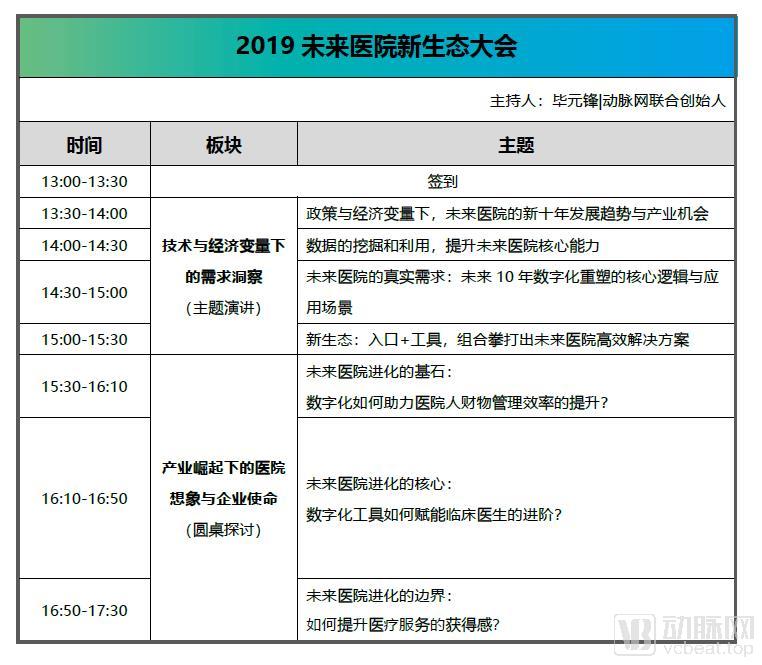
From July 4 to 7, 2019, at the CHIMA 2019 Hospital Conference, DingTalk and VCBeat jointly created the world’s first“Digital Hospital Scenario Laboratory”, four themed scenarios—Smart Service Avenue, Dean’s Cockpit, Diagnosis and Treatment Hub, and Big Data Command Center—deliver an immersive exhibition experience for attendees. Concurrently, there will also be held“2019 Future Hospital New Ecosystem Forum”, inviting 20 industry experts, innovative hospital leaders, department heads, forward-looking investors, and innovative enterprises as guests. The event will center on two major themes: “Insights into Demand Amid Technological and Economic Variables” and “Hospital Visions and Corporate Missions in the Context of Industry Rise.” Through keynote speeches and roundtable discussions, it will showcase future hospital needs and business opportunities.

Grand Scale:Concurrent and co-located events at CHIMA 2019,6,000Hospital administrators and IT professionals attended the conference, with over 10,000 visitors touring the exhibition.
Insight into Trends:We will invite experts to share insights from the perspectives of policy orientation, market trends, and innovative practices.20 peopleDialogue, Exchange, and Discussion Among Hospital Presidents, Department Heads, Forward-Looking Investors, and Innovative Enterprises.
Platform Empowerment:DingTalk and VCBeat will empower innovative enterprises in brand communication, resource linkage, and industrial ecosystem development.
DingTalk Healthcare and VCBeat will join forces with hospitals, innovative enterprises, and other industry stakeholders to host a dialogue on the “Future Hospital,” aiming to build a new ecosystem for future healthcare. This event is dedicated to serving as a communication platform for medical institutions and innovative enterprises, a release platform for innovative technologies and trends in hospital informatization in China, and a showcase platform for outstanding solutions in hospital informatization in China.
Meeting Time: July 5, 13:30-17:30
Venue: Multi-function Hall 2, 5th Floor, Xiamen International Conference & Exhibition Center
Conference Scale: 300 Attendees
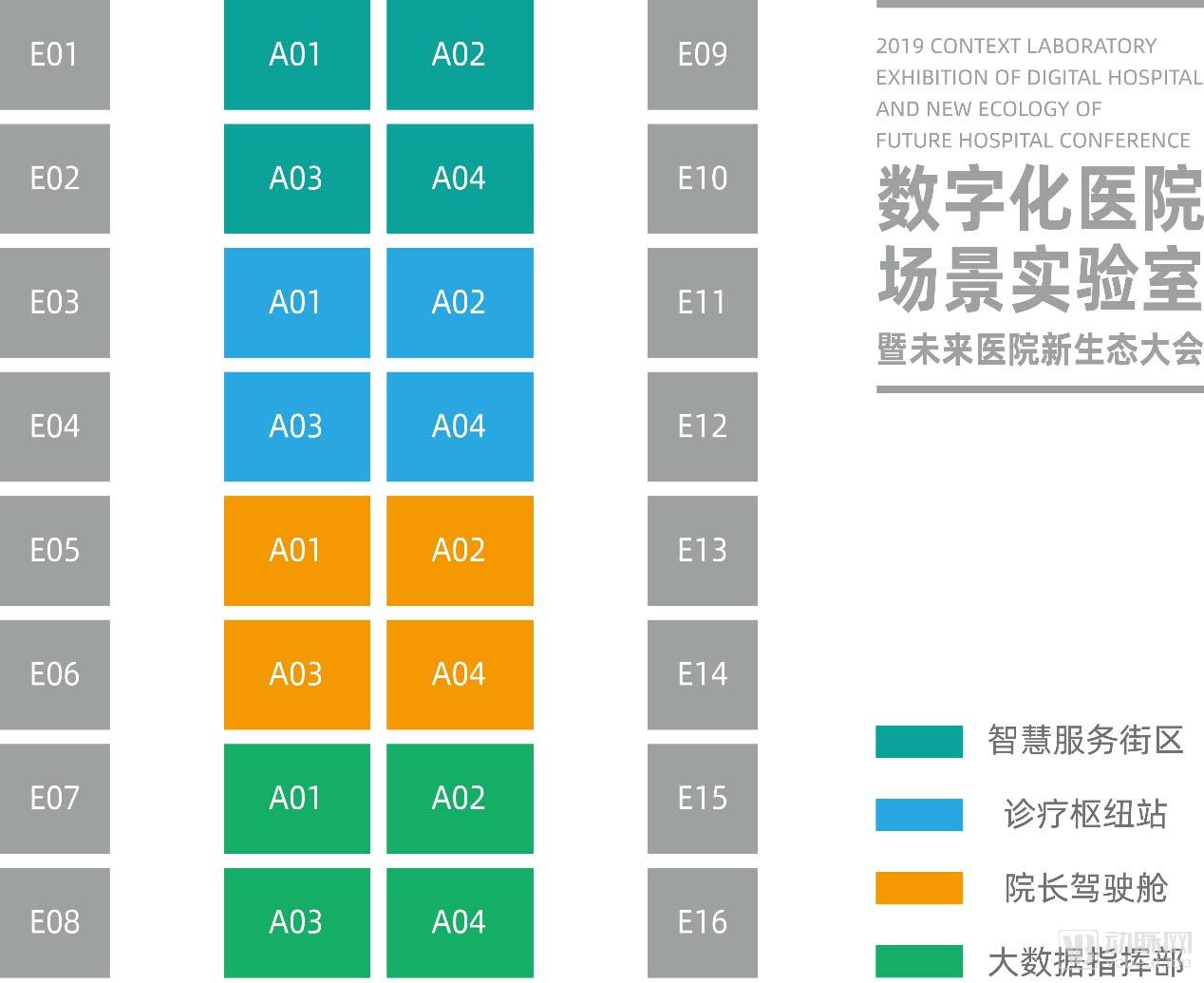
The “Digital Hospital Scenario Lab” is a featured exhibition showcasing distinctive digital hospital scenarios and is held concurrently with CHIMA 2019. It comprises four thematic sections: the Dean’s Cockpit, Smart Service Block, Diagnosis and Treatment Hub, and Big Data Command Center, providing a multi-dimensional presentation of digital innovations in future hospitals. The event is expected to attract 6,000 hospital administrators and health IT professionals, along with over 10,000 visitors to the exhibition.
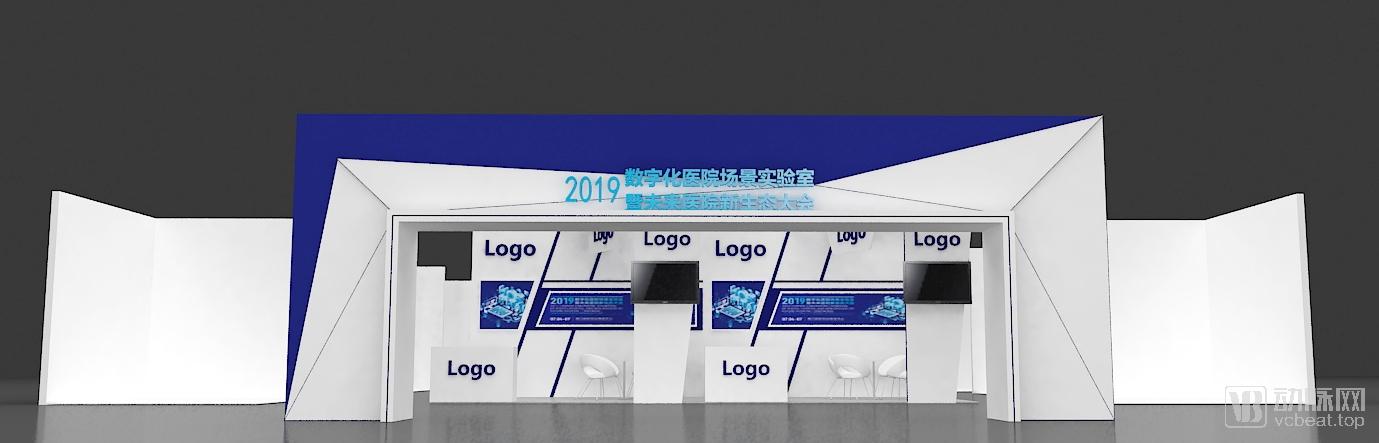
Exhibition Area Address: 3F, Xiamen International Conference & Exhibition Center
Exhibition Dates: July 4–7
Dean's Cockpit:Performance management, cost accounting and control, budgeting and operational management, material procurement and distribution management, and other aspects of refined hospital management, as well as teaching and training;
Smart Service Block:Leveraging emerging information technologies such as “Internet+” to optimize patient care pathways, clinical medical services, and nursing workflows; improve management models; enhance public-benefit services; and empower hospitals through innovation in medical service delivery and health management models.
Diagnostic and Treatment Hub:Regional Sharing of Medical Information and Support for Tiered Diagnosis and Treatment: Applications in Scenarios Such as Remote Consultations and Internet Hospitals;
Big Data Command Center:Clinical information systems centered on electronic medical records, construction of medical quality management and safety systems, clinical knowledge bases and decision support systems, and related solutions.
Register now to join the “2019 Future Hospital New Ecosystem Conference” and the “Digital Hospital Scenario Laboratory”—limited-time early-bird tickets for only¥9.9. After registration, you may also visit the CHIMA 2019 exhibition and other satellite meetings free of charge.

*For booth collaboration at the Scenario Lab, please contact Ms. Jia at 15696306944 (WeChat ID is the same).
Special booth rates for small and micro enterprises—now accepting inquiries.