

iHEC Intelligent Hypertension Excellence Center: Pioneering a New Model for Hypertension Management
Recently, Omron Healthcare (Beijing) Co., Ltd. (hereinafter referred to as “Omron”) held the “Summit Forum on Smart Hypertension Diagnosis and Treatment & China-Japan Academic Exchange on Cardiovascular Chronic Diseases” in Chengdu. Renowned experts from China and Japan gathered at the Sichuan Minshan Hotel to jointly discuss topics related to smart hypertension management and the prevention and control of cardiovascular chronic diseases.
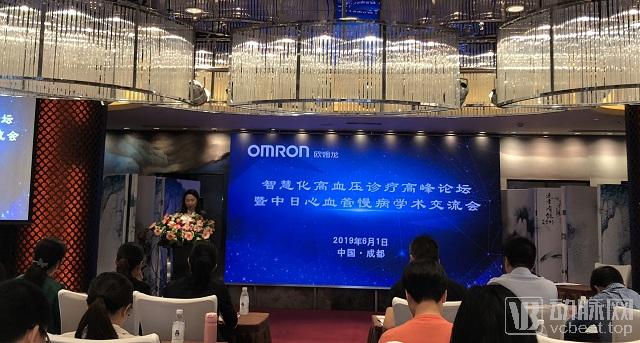
In his opening remarks, Director Fang Xiaoming of the Primary Health Care Division of Sichuan Provincial Health Commission stated that their current focus in primary care is to effectively integrate “Internet Plus” with the management of chronic diseases such as hypertension, aiming to explore an interconnected chronic disease management model suitable for widespread adoption across primary hospitals in the province. Regarding the “iHEC Smart Hypertension Diagnosis and Treatment Center,” Director Fang also expressed hope to gain a deeper understanding of the platform’s operations and its specific implementation plan.
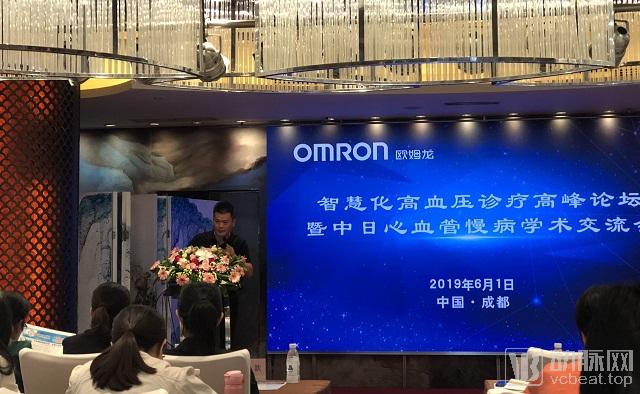
Address by Director Chu Xiaoming, Sichuan Provincial Department of Primary Health Care
During the first half of the salon, themed “Smart Diagnosis and Treatment of Hypertension,” Professor Chen Xin from Shanghai Ruijin Hospital and Professor Chen Yanming from Beijing 301 Hospital delivered presentations on the platform system and clinical applications of the “iHEC Smart Hypertension Diagnosis and Treatment Center,” respectively.
In recent years, the Chinese government has continuously promoted the "Healthy China" initiative. Since 2016, three major policy documents related to health, "Internet Plus," and healthcare have been issued, explicitly highlighting the importance of technological innovation and the development of "Internet Plus." In the context of hypertension management in China, the awareness rate is currently nearly 50%, while the control rate remains below 17%. Therefore, the path toward effective hypertension prevention and control in China remains long and arduous. Three primary challenges persist: 1. Difficulty in decentralizing technical resources; 2. Insufficient promotion and adoption of new hypertension management technologies at the primary care level; 3. A weak foundation for precision medicine.
With the rapid development of mobile internet, smartphones have become widely popularized and applied in daily life, signaling the arrival of the digital era. Meanwhile, China is facing the significant challenge of a declining population. Under these circumstances, innovation and efficiency enhancement represent the primary direction for current social development. Hypertension management also requires innovation and efficiency; therefore, leveraging “Internet Plus” to achieve intelligent hypertension management will become the future trend in hypertension control.
“iHEC Smart Hypertension Diagnosis and Treatment Center” is a project initiated by the Shanghai Institute of Hypertension under the leadership of the Chinese Hypertension League. It aims to create a standardized technical operation platform by connecting the internet, the Internet of Things (IoT), and various diagnostic devices, thereby standardizing and digitalizing the diagnosis and treatment of hypertension to achieve smart management of the condition.
iHEC covers secondary and tertiary hospitals as well as regional hospitals across China. It primarily consists of four components: 1. standardized office blood pressure measurement; 2. standardized out-of-office blood pressure measurement (ambulatory and home blood pressure); 3. standardized detection and assessment of vascular structure and function; 4. standardized classification-based diagnosis and treatment. Through these four components, iHEC aims to comprehensively improve the management of hypertension.
iHEC connects patients, physicians, and hospitals through an information technology platform, facilitating efficient information flow and achieving seamless connectivity and integration of data. By implementing standardized blood pressure monitoring, vascular function assessment, and classified diagnosis and treatment, iHEC establishes a standardized technical operational platform to normalize hypertension management. Building on this digital foundation, it ultimately realizes intelligent blood pressure management. As an enabling entity, iHEC enhances the hypertension management skills of primary care physicians, contributing to the ambitious goal of raising the hypertension control rate to 50% by 2030.
Both the 2010 and 2018 Chinese Guidelines for the Management of Hypertension explicitly emphasize the importance of vascular function testing and assessment, as these are critical indicators for evaluating target organ damage, cardiovascular risk, and the efficacy of antihypertensive therapy. Therefore, the iHEC platform incorporates vascular function assessment modules, including the ankle-brachial index (ABI) obtained via simultaneous four-limb blood pressure measurement, pulse wave velocity (PWV), and flow-mediated dilation (FMD) to assess endothelial function. These measures aim to facilitate early detection and intervention for target organ damage through the iHEC platform, thereby reducing the incidence of hypertensive complications and delivering long-term benefits to patients.
For patients with hypertension, etiological screening is crucial, particularly for those with secondary and resistant hypertension. For instance, primary aldosteronism, the most common cause of secondary hypertension, can be cured in some patients through targeted therapy once definitively diagnosed, thereby eliminating the need for continued antihypertensive medication. Therefore, iHEC has implemented standardized testing for renin and aldosterone, and plans to introduce additional tests for conditions such as renovascular hypertension and sleep apnea-related hypertension. These measures will provide a more robust scientific basis for the classification, diagnosis, and treatment of hypertension.
In fact, the application of iHEC has pioneered a new model for hypertension management. Clinically, it encourages primary care physicians to prioritize hypertension screening, promotes two-way referrals, deepens the implementation of tiered diagnosis and treatment, improves referral quality, and enhances the overall competency of primary care providers in managing hypertension, thereby enabling early detection and intervention for hypertension and its complications. In terms of scientific research, the iHEC project establishes a specialized clinical research platform that facilitates collaborative grant applications and academic publications, thereby elevating the academic standing and influence of individual physicians, departments, and hospitals alike. From an economic perspective, the iHEC project enables early identification of hypertension and its complications, reduces healthcare costs, and conserves medical resources, delivering significant social and economic value.
The center is currently being effectively utilized at Shanghai Ruijin Hospital, Beijing 301 Hospital, and other institutions. Following its implementation, patients managed through this approach have demonstrated significant improvements in blood pressure control rates.
Professor She Qiang from the Second Affiliated Hospital of Chongqing Medical University also shared practical applications of information-based management for hypertension. From November 2017 to April 2018, Professor She conducted a six-month follow-up study involving 240 patients with primary hypertension across 38 hospitals in Chongqing, utilizing a mobile app for out-of-hospital blood pressure monitoring and management. The study concluded that it is crucial to establish a new concept of scientific, effective, and information-based blood pressure management.
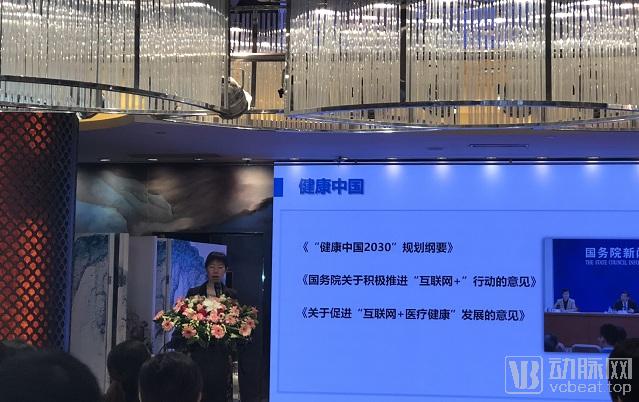
Professor Chen Xin from Shanghai Ruijin Hospital Speaks
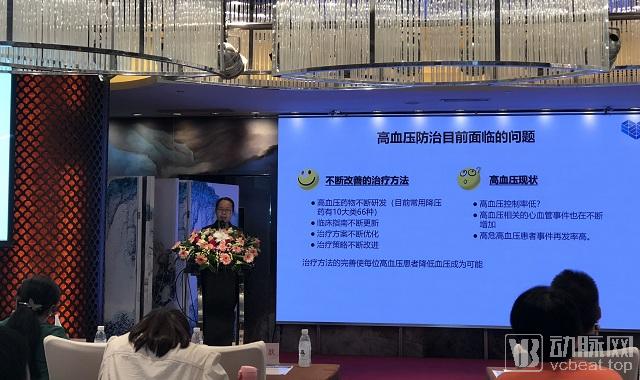
Speech by Professor Chen Yanming of Beijing 301 Hospital
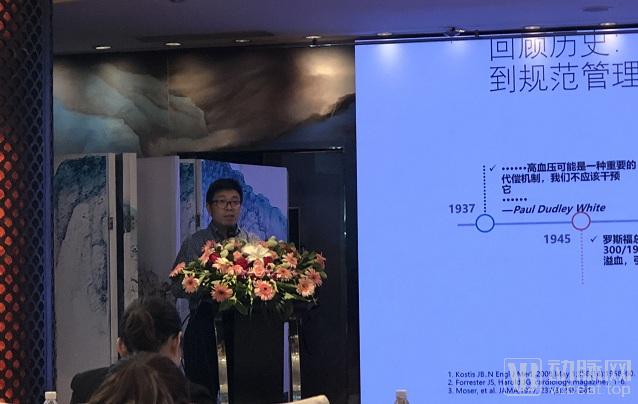
Professor Qiang She's Speech
The second half of the session, themed “China-Japan Exchange on Cardiovascular Chronic Diseases,” was chaired by Professor Liu Xingbin from West China Hospital of Sichuan University. It specially invited internationally renowned cardiovascular expert Professor Akira Yamashina to share the latest academic advancements in Japan’s cardiovascular field.
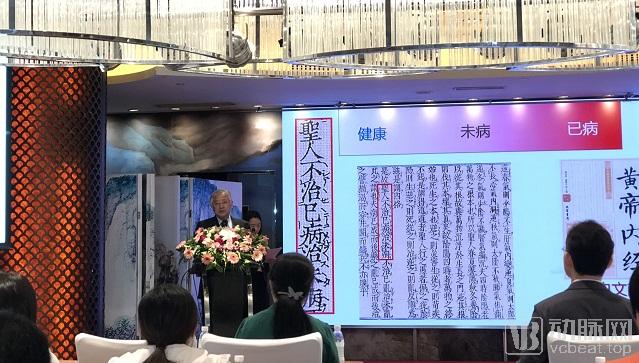
Professor Zhang Shanke's Speech
Professor Akira Yamashina’s remarks emphasized that the assessment of vascular endothelial function represents an early manifestation throughout the progression of cardiovascular disease. The flow-mediated dilation (FMD) parameter can be used to evaluate vascular endothelial function, and regular monitoring of the FMD index enables primary and secondary prevention and control of cardiovascular disease.
Professor Zhong Ping from Sichuan Provincial People's Hospital followed up on Professor Yamashina’s presentation, providing a detailed discussion on two additional early influencing factors for cardiovascular disease: pulse wave velocity (PWV) and ankle-brachial index (ABI). She pointed out that the current status of cardiovascular disease in China is very severe. Brachial-ankle pulse wave velocity (baPWV) and ABI serve as reliable indicators for assessing the degree of arteriosclerosis and peripheral arterial stenosis, and they are also independent predictors of cardiovascular ischemic events in high-risk populations.
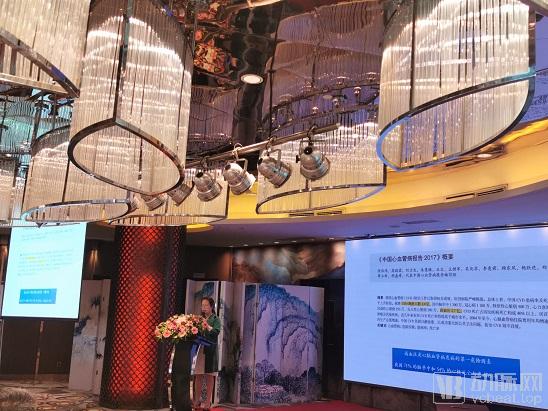
Remarks by Professor Zhong Ping
Moreover, the control and prevention of cardiovascular diseases rely on early screening for various risk factors. By employing diverse effective assessment methods to achieve early screening and diagnosis, additional reference information can also be provided for clinical practice.
During the salon event, Omron also showcased its iHEC Smart Hypertension Diagnosis and Treatment All-in-One Machine, the Blood Pressure Map, and a series of cardiovascular diagnostic devices, including the Japanese UNEX Endothelial Function Tester, Omron Arterial Stiffness Detector, and Omron Visceral Fat Measurement Device, which attracted keen interest from the attending experts.
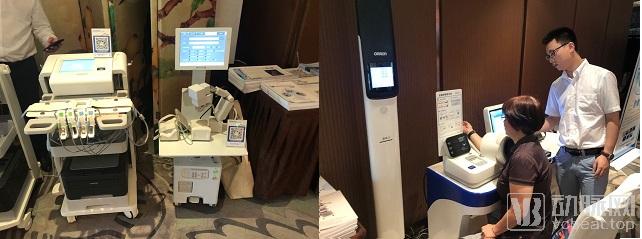
Relevant Equipment Display
Finally, the salon concluded with closing remarks delivered by Mr. Ando, Deputy General Manager of Omron Healthcare (Beijing) Co., Ltd.
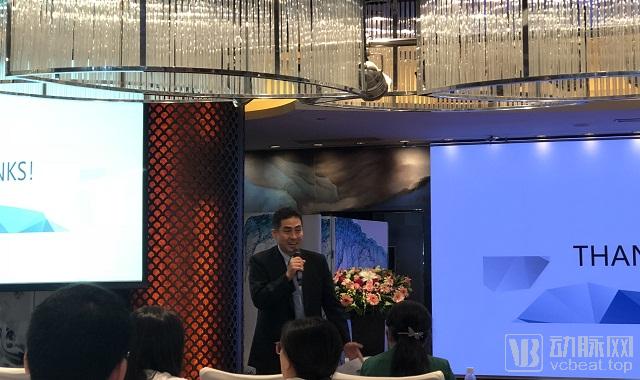
Address by Deputy General Manager Ando
Edited from: Omron Healthcare, Outpatient Magazine