

Sinogene Releases '2019 China Double Eyelid Consumption Report': Guangzhou Emerges as Top City for Male Double Eyelid Surgeries, Shanghai Leads in Consultation Activity
Xiao Xing is currently attending university in Beijing, and she has been wanting to undergo double eyelid surgery for more than just a year or two.
When Xiaoxing returned home for the winter break in January, she summoned up the courage to tell her mother about her desire to undergo double eyelid surgery. To her surprise, her mother was fully supportive: “College is exactly when a young woman should transform herself into the most beautiful version of who she wants to be. You’ve finally come to your senses. Why not get your ears pierced too? And would you like to augment your nasal bridge as well?”
Big data from So-Young indicates that women aged 20 to 25 are the primary consumers of double eyelid surgery in China. Over the past year, more than 50,000 users placed orders for double eyelid surgery on the So-Young platform, with 40.62 out of every 100 patients being women in this age group. It is estimated that hundreds of thousands of double eyelid surgeries are performed annually across China.
In contrast to Mom’s attitude, Dad was opposed. To persuade him, Xiaoxing applied double-eyelid tape and showed it to Dad. After taking two looks, Dad said, “There’s no noticeable difference.”
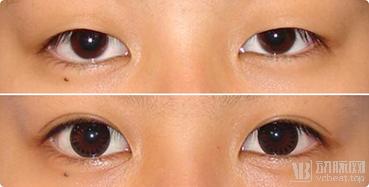
After futile attempts at communication, Xiaoxing gave up trying to persuade her father. Before the start of the school term in March, she firmly resolved to make the change, regardless of whether her father supported her or not.In March, interest is sparked; in June, appointments are made; July sees the peak volume of surgeries; and by September, the incremental demand from June has been fully absorbed. This represents the typical consumer journey for double eyelid surgery patients over the past year, as revealed by So-Young’s big data.
Accompanying the surge in consumer spending is a shortage of high-quality medical resources. Data shows that appointments with top-tier doctors are booked out for two months following the college entrance examination. Zhang Han, formerly an attending physician in plastic and aesthetic surgery at the Beijing Armed Police General Hospital and currently a specialist in oculoplastic and rhinoplasty procedures at Beijing United Liger Medical Group, has performed nearly 10,000 eye and nose surgeries. She stated, “Since May, parents have been booking double eyelid surgeries for their children one after another. Today’s post-2000s generation is highly driven, moving straight from the examination hall to the operating room. Another notable trend is that when mothers see satisfactory results from their daughters’ double eyelid surgeries, they often decide to undergo the procedure themselves.”
Xiaoxing underwent surgery in July under local anesthesia, which lasted for over an hour. During the days when swelling was at its worst, she avoided her father, afraid to let him see her condition. Although the doctor prohibited the use of mobile phones, she couldn’t resist browsing other people’s cosmetic surgery diaries and posting photos of her own current state online. This sharing, along with encouragement and comfort from strangers, significantly alleviated her panic.
It has been one year since Xiaoxing underwent double eyelid surgery. During this period, she also had several minor cosmetic procedures, primarily consisting of skin booster injections and mole removal. These periodic, subtle enhancements have given her a sense of control over her own body, allowing her to view the world with greater brightness and confidence—a feeling that signifies growing up.
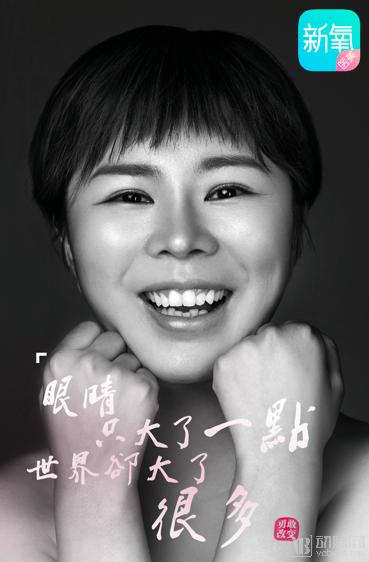
She said, “My eyes only got a little bigger, but the world became much larger.”
Since the Republic of China era, double eyelid surgery has been practiced in China for nearly a century. Over this period, the evolving preferences for double eyelids have not only reflected shifts in aesthetic standards but also demonstrated the influence of dominant cultural forces.
For over a thousand years in Chinese history, paintings of court ladies consistently depicted them with phoenix eyes, reflecting the aesthetic ideal of beauty as perceived by traditional Chinese artisans.
The first wave of cosmetic surgery to create double eyelids in Chinese history began during the Republic of China era. Famous film star Zhou Xuan traveled to Japan for double eyelid surgery, and Lin Huiyin, revered as the “Goddess of the Republic of China,” was also rumored to have undergone the same procedure in Japan. Artificial Cosmetic Surgery was a must-read book for women at the time. As China opened its doors to the outside world, aesthetic preferences increasingly leaned toward European and American standards.
The History of Double Eyelid Surgery in China Has Also Undergone Several Stages of Evolution.The first stage is simply to create double eyelids., regardless of morphology. In 1984, the average monthly salary for an ordinary person was around 30 yuan, while double eyelid surgery cost 15 yuan. A doctor could schedule three months’ worth of surgeries from just one day of outpatient consultations.
The second stage is when the European-style wide parallel double eyelid became an ultra-popular style.. China's medical aesthetics industry began its gradual marketization in 1999. Subsequently, alongside the development of media, celebrities and internet influencers started to emerge. In particular, the widespread popularity of internet influencers, coupled with their continuous cosmetic enhancements, has allowed the younger generation to witness the capabilities of medical aesthetic technologies.
The third stage is characterized by diverse forms, with people beginning to pursue the natural look of “mother-given double eyelids.”. Doctors have also been speaking out, advocating for the selection of double eyelid styles that suit individual characteristics—for instance, the parallel-tapered style conveys gentleness, the crescent style appears cute, and the open-tapered style looks alluring. Consumers have shifted from following internet celebrities to looking toward public figures, with their demands evolving from being photogenic to achieving overall aesthetic enhancement.
Based on this year’s So-Young big data, we have also identified several emerging trends. For instance, in Shanghai, the epicenter of fashion, people’s willingness to transition from single eyelids to double eyelids is declining. Additionally, the proportion of male consumers in China undergoing double-eyelid procedures has decreased rather than increased. This suggests that, with growing national confidence, the monolid—prevalent in East Asia for thousands of years—is making a comeback. In the future, the demographic for double-eyelid procedures will expand from younger women to older women, with demand shifting from aesthetic enhancement to anti-aging solutions.
In June 2019, So-Young launched the “6.6 Double Eyelid Festival” and concurrently released the *2019 China Double Eyelid Consumption Report*. The data in this report were sourced from the period between May 2018 and April 2019.Double eyelid surgery had long ranked as the number one cosmetic surgical procedure in China, only surpassing by autologous fat grafting in the past two years.Meanwhile, this is also a project with distinct Oriental characteristics. While East Asians flock to double eyelid surgery, many Westerners are unfamiliar with the very concept of “double eyelids.” By focusing on double eyelid surgery as a representative case, this project reflects the evolving pursuit of beauty.
The following is the specific text and image content:
I. Over the past year, 1,999 doctors on the So-Young platform performed double eyelid surgeries with a combined incision length equivalent to 11.24 soccer fields.
According to SoYoung’s big data, over 50,000 people underwent double eyelid surgery via the SoYoung platform in the past year, representing a year-on-year increase of 99.59%. The combined length of these newly created double eyelid folds measures approximately 3,889 meters, enough to circle a FIFA-standard soccer field 11.24 times.
II. Everyone Can Find a Reason to Undergo Double Eyelid Surgery
Besides the well-known desire to convert single eyelids into double eyelids, people opt for double eyelid surgery due to reasons such as asymmetry between the two eyes, unsatisfactory results from previous procedures, trichiasis, puffy eyelids, and triple eyelids.
Another potential and more pressing reason is dermatochalasis, an age-related phenomenon. Data from Japan indicate that human eye size decreases by an average of 20% every 15 years between the ages of 25 and approximately 60.
III. Women aged 20–25 are the absolute core demographic, while men’s willingness to transition from double singlehood to a relationship has declined
Data from SoYoung indicates that women have a stronger desire to undergo double eyelid surgery; in 2019, 92.32% of consumers of this procedure in China were female.
Notably, the proportion of males decreased from 9.51% in 2018 to 7.68% in 2019, indicating a lower willingness among men to undergo double eyelid surgery. An increasing number of men are actively choosing to retain their single eyelids, reflecting an aesthetic shift away from Western features and back toward Asian characteristics.
Furthermore, individuals born in the 1990s constitute the primary demographic seeking double eyelid surgery, with those aged 20–25 accounting for 44.05% of this group. Although the overall proportion of individuals born in the 1970s is relatively low, the share of those aged 46–50 has increased by over 100% year-on-year. Beyond correcting epicanthal folds through double eyelid surgery, this middle-aged cohort also exhibits anti-aging demands such as lower blepharoplasty (eye bag removal). Characterized by inelastic demand and high average transaction values, this segment holds promising growth potential.
4. Zhejiang and Guangdong Show the Strongest Desire to Change Their Single Status, While Shanghai Has the Lowest
As aesthetic medicine consumption begins to rise in a city, it is often characterized by an increase in total order volume, with double eyelid surgery accounting for a relatively high proportion. Therefore, the top 10 Chinese cities with the strongest willingness to change from single eyelids to double eyelids are also the top 10 emerging cities for aesthetic medicine consumption in China. Jinhua (Zhejiang), Foshan (Guangdong), and Urumqi (Xinjiang) rank in the top three.
In cities with more mature medical aesthetics consumption, the proportion of double eyelid surgery tends to stabilize around the average line, as spending on other procedures remains robust.
Interestingly, the willingness to find a partner in Shanghai is far below the national average. In this fashion capital, where aesthetic sensibilities are considered to lead contemporary trends, we can infer that with growing national confidence, East Asian single-eyelid culture is making a comeback. The single-eyelid women depicted in classical paintings of court ladies and the single-eyelid soldiers represented by the Terracotta Warriors are returning to the center of fashion.
5. Guangzhou Men’s Favorite: “Peach Blossom Eyes”; Urumqi Women with Monolids Face High Pressure
Guangzhou is a major consumer of double eyelid surgery. A significant number of men undergo this procedure, with order volume exceeding that of the second-ranked city by 34%. The most preferred aesthetic among men in Guangzhou is the "Peach Blossom Eye," which typically features an open-fan double eyelid characterized by a narrow inner corner and a wider outer corner, resembling an unfolded folding fan.
Shanghai residents are keen on consultations, with an average of 64 inquiries per consumer, ranking first in China. Additionally, Shanghai has the highest proportion of women with natural monolids, and the lowest proportion of women purchasing double-eyelid surgery there.
Furthermore, residents of Beijing are keen on posting cosmetic surgery diaries, with the volume exceeding that of Guangzhou—the top consumer market for double eyelid surgery—by 110%. In Foshan, people undergo procedures without discussing them; both the per capita consultation rate and diary volume for double eyelid surgery are less than one-fifth of those in Beijing. Nanjing has the highest proportion of men with natural, unaltered eyelids, where only 1.47% of men place orders for double eyelid surgery. In Urumqi, women with single eyelids face significant pressure, as females constitute the entire clientele for double eyelid surgery there.
VI. After the college entrance examination, appointments with top-tier double eyelid surgery specialists are scheduled two months out
From a temporal trend perspective, March sees the highest volume of inquiries about double eyelid surgery each year, appointment bookings peak in June, the actual number of procedures peaks in July, and the accumulated increase is fully absorbed by September.
VII. Incisional Double Eyelid Surgery Becomes More Prevalent, While Fixed-Point Double Eyelid Surgery Is Fading from the Market
For double eyelid surgery, the incisional method is commonly chosen. Incisional double eyelid surgery involves making an incision in the upper eyelid skin to remove excess skin, muscle, connective tissue, and fat, thereby creating a double eyelid. This approach yields stable and long-lasting results and can address various complex eyelid issues.
Data indicates that the market share of partial-incision double eyelid surgery is on a downward trend. With the highest average price among the three surgical techniques, it is gradually fading from the market. This procedure involves making small incisions at the medial, central, and lateral aspects of the intended double eyelid crease, followed by suturing and fixation to form the double eyelid.
Sutured Double Eyelid: This procedure involves directly embedding sutures between the skin and the tarsal plate via stitching, creating adhesion between the upper eyelid skin and the tarsal plate to form a double eyelid. The procedure is simple and minimally invasive, but the results are not long-lasting.
VIII. The top 10% of service providers account for approximately 60% of surgical volume; how can patients find reliable doctors?
Over the past year, 1,999 licensed physicians from 1,259 accredited institutions on the SoYoung platform provided double eyelid surgery services. Notably, the top 10% of institutions accounted for 65.60% of the surgical volume, while the top 10% of physicians performed 58.31% of the procedures.
For consumers, how can one find the right surgeon among thousands of doctors to achieve perfect double eyelids? The "So-Young 2019 China Double Eyelid Consumption Report" offers a four-step approach. In summary, this involves choosing accredited institutions and board-certified surgeons who specialize in this procedure with extensive experience, and whose aesthetic sensibility is widely recognized by patients. For detailed methods, please refer to the accompanying text and images.
9. Four Common Procedures Combined with Double Eyelid Surgery: Rhinoplasty, Facial Filler, Liposuction, and Chin Augmentation
For patients undergoing double eyelid surgery, the average repurchase frequency of medical aesthetic procedures was once every 2–3 months prior to the procedure, decreasing to once every 5 months afterward. The data indicate that a segment of consumers has long desired double eyelids; once this goal is achieved, their demand for medical aesthetic services tends to decline. Rational consumption should be particularly advocated and emphasized in the consumer healthcare industry.
Double eyelid surgery is rarely performed in isolation. Data shows that the most common accompanying procedure is epicanthoplasty (inner corner opening), followed by rhinoplasty, and then facial fillers, liposuction, and chin augmentation. Since epicanthoplasty is frequently bundled with double eyelid surgery, its data is included within the figures for double eyelid procedures.
Zhang Han stated, “The eyes and nose form a golden combination. As the king of facial features, the nose, when modified in conjunction with the eyes, can significantly transform an individual’s demeanor and aura.”
