China's Brain-Computer Interface Pioneer BrainCo Files for Hong Kong IPO

BrainCo
Non-invasive brain-computer interface technology solution provider
Brain-Computer Interface, Another Major Breakthrough!
According to Bloomberg,Brain-Computer Interface Startup BrainCo to Submit Confidential Filing for Hong Kong IPO Application.
BrainCo, founded in 2015, is the first unicorn in the brain-computer interface field in China, andDeepSeek, Unitree Robotics, CloudDeep Tech, Kujiale, and Game Science are collectively known as the "Hangzhou Six Dragons."。
Prior to this, BrainCo had just completed approximately 2 billion yuan in financing, becoming the second-largest funding round in the global brain-computer interface field, only behind Elon Musk's Neuralink.
BrainCo Aims for "First Mover in Brain-Computer Interface", marking another landmark milestone in China's brain-computer interface field.

BrainCo, which originated on the Harvard campus and started in a basement, has now grown into an industry star enterprise valued at tens of billions of yuan. Its investors include IDG, Lens Technology, Will Semiconductor, Runze Technology, Huazhu, and TAL Education Group.
Founder Han BichengBorn in Mudanjiang, Heilongjiang, he won the first prize in the China National Biotechnology Competition during high school. He graduated with a bachelor’s degree from the Department of Mechanical Engineering at the Korea Advanced Institute of Science and Technology (KAIST) and was pursuing a Ph.D. in neuroscience at Harvard University's Center for Brain Science when he founded BrainCo.
In terms of technology, BrainCo has chosen a different route from Musk's invasive brain-computer interface — adopting a non-invasive approach and focusing on the development of "super sensors."
This sensor can detect neural information from the brain and body, allowing users to control smart arms or legs with their "thoughts" and modulate brain waves to improve conditions such as insomnia and autism.
Since its establishment, BrainCo has created multiple firsts.In 2018, the BrainRobotics intelligent bionic hand developed by the company helped upper-arm amputees achieve "left-right brain separation" control for the first time. In 2020, its intelligent bionic hand achieved mass production, becoming the world's first smart prosthetic limb to support intuitive neural control.
BrainCo's goal is to help 1 million people with physical disabilities restore their daily lives and reintegrate into society by wearing neuro-controlled prosthetics within the next five to ten years, and to improve the conditions of 10 million patients suffering from autism, Alzheimer's disease, insomnia, and other disorders.
In 2025, brain-computer interfaces were included in the "15th Five-Year Plan" for future industries. The recent "Special Action Implementation Opinions on 'Artificial Intelligence + Manufacturing'" jointly issued by the Ministry of Industry and Information Technology and seven other departments explicitly proposed to accelerate the industrialization and commercialization process of new terminals such as brain-computer interfaces.
Against this background,Companies like Stepped Healthcare, BrainCo, and BCI pioneers have recently achieved significant breakthroughs. The vast potential of China's brain-computer interface industry is unfolding before our eyes.
Harvard PhD, Building China's Version of Neuralink
The story of BrainCo begins with the persistence of a Harvard top student.Founder Han BichengAfter graduating from the Department of Mechanical Engineering at KAIST, he pursued a Ph.D. in neuroscience at the Harvard Center for Brain Science.
During his Ph.D. studies, he observed a brain-computer interface surgery involving craniotomy, with the electric saw making a loud noise as it drilled into the patient's skull.
After witnessing the difficulty and risks of surgery, Han Jian chose non-invasive technology, which involves collecting signals emitted by the human body through wearable devices or electrodes attached to the skin.
In 2015, 28-year-old Han Bicheng founded BrainCo in a basement on the Harvard campus, together with several classmates and researchers studying at Harvard and MIT.
In the early stages of entrepreneurship, the project nearly "died." At that time, the team's multiple attempts to tackle the core product had all failed, and the members left until only two people remained. Han Bicheng had no choice but to grit his teeth and invest another sum of money himself, recruit new members, and start over.
It was not until the debut of Focus 1, the first product, that the company truly took off. This mechanical bionic hand made its initial appearance at the 2016 CES exhibition, where wearers could perform actions such as turning off lights and picking up water cups through "mind control," drawing significant attention.
The success of Focuse 1 made Han Bicheng realize that the most core task is to miniaturize the high-precision circuits required for brain-controlled devices, ensure stable quality control, and achieve specific functions.
In 2016, BrainCo completed its angel round and Pre-A round of financing, with only one disclosed investor, Hantang Investment.
Thanks to the efforts of the investment promotion team of Yuhang District Government in Hangzhou, BrainCo has settled in Hangzhou. Han Bicheng expressed: "They have obviously done a lot of research, which deeply moved me. I feel like a thousand-mile horse has finally met its Bo Le (a metaphor for a good judge of talent)."
In 2019, BrainCo successfully completed its $400 million Series A financing round, with participation from Everbright Holdings, CDH Investments, China Electronics Huada Technology, China Electronics Corporation, and K2 Investment.
In 2025, the company completed a $30 million Pre-B round and a $20 million B round of financing from Dowell Technology and Sanqi Interactive Entertainment Venture Capital Fund, respectively.
Not long ago,BrainCo has just completed a new round of financing worth 2 billion yuan, with investors including IDG, Walden International, Lens Technology, Lingyi Tecnologic, Will Semiconductor, Huazhu Group, and TAL Education Group.
CompeteMusk: China's Brain-Computer Interface Enters Breakthrough Year
The core of brain-computer interface lies in establishing direct communication between the brain and external devices. According to the signal acquisition methods, the current mainstream approaches are roughly divided into three categories: invasive, semi-invasive (or interventional), and non-invasive.
Among them,Invasive technology is represented by Musk's Neuralink., involves craniotomy to directly implant electrodes into the cerebral cortex, capable of obtaining the highest quality neural signals and is the closest to the ultimate form of "human-machine integration." However, the risks associated with craniotomy, long-term biocompatibility challenges, and high costs make its path to widespread adoption long and arduous.

BrainCo has chosen the non-invasive brain-computer interface route. This approach does not involve craniotomy surgery; its core is collecting EEG signals through scalp sensors, offering significant advantages in safety and accessibility. Therefore, BrainCo has focused on super sensors and algorithm decoding capabilities from the very beginning.
The difficulty with non-invasive methods lies in whether they can stably and accurately decode a person's true intentions from extremely weak and noisy EEG signals. Due to its non-invasive, safe, and low-cost characteristics, it has broader application potential and a shorter user acceptance cycle, making it key to achieving widespread technological accessibility.
Currently,In the non-invasive field, China and the United States are basically in a "neck-and-neck" state.BrainCo has been able to take the lead in creating a commercialized model.
In the past few years, Musk's Neuralink has continuously pushed the boundaries of invasive technology with its signature aggressive style.In flexible electrodes, surgical robots, and chip integration, Neuralink has continued to make breakthroughs, completing multiple human implantation experiments, and pointing its application scenarios towards high-difficulty medical needs such as paralysis and blindness.
Musk announced that Neuralink plans to launch in 2026Start the DeviceLarge-scale production and a shift towards more automated surgical procedures. The technological iteration rulesAmbitious planning,The goal is to increase the number of electrodes in a single implant to over 25,000 by 2028. As of September 2025, 12 patients have been implanted with its device.
At the same time, China is accelerating its progress in invasive and semi-invasive technologies. By 2025, China has achieved several breakthroughs in clinical developments. The feasibility of this approach at the research level is being gradually validated, but overall, it is still in its early stages, with some distance to go before reaching standardized products and large-scale applications.
In 2025,Step HealthcareCompleted the first long-term human implantation trial of an invasive brain-computer interface in China; BrainCo achieved the clinical trial of the world's second "fully implanted, fully wireless" system and successfully completed real-time Chinese mind decoding.BrainCoThe system has also achieved significant results in global multicenter trials.
By"Beijing Brain" PlanThe semi-invasive system "Beijing Brain No. 1" has also completed multiple human implants. These advances mark China as the second country in the world, after the United States, to enter the mature clinical trial stage in the field of invasive brain-computer interfaces.
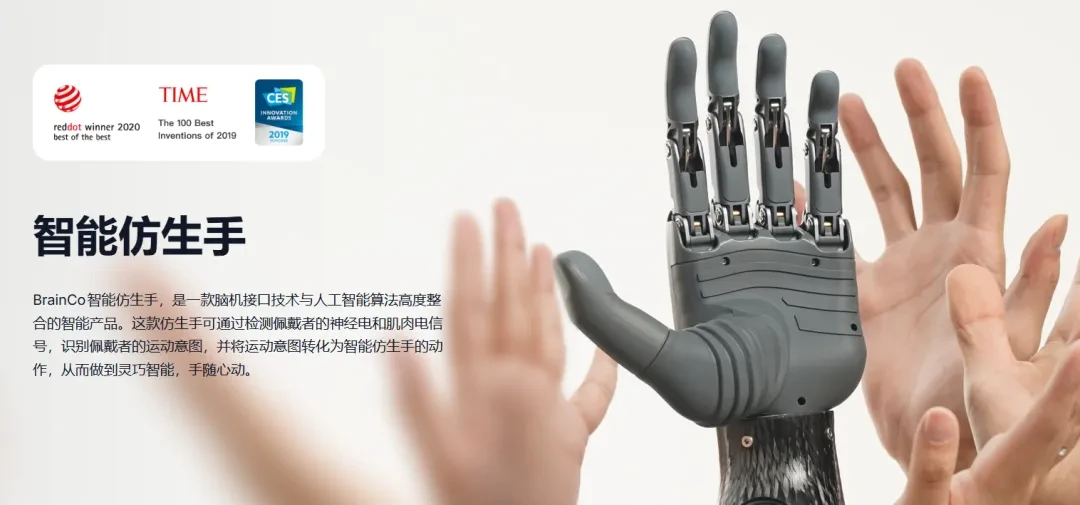
Since its establishment nearly ten years ago,BrainCoCore ProductBrainCo's Intelligent Bionic Hand, Bionic LegIt has been implemented in hundreds of hospitals and rehabilitation institutions across China, helping thousands of people with limb disabilities regain the ability to grasp, write, play musical instruments, and even rock climb. Its price has dropped to about one-tenth of similar products overseas, and it has successfully promoted the inclusion of related fitting costs in local medical insurance pilots, achieving "plug-and-play" functionality.
Consumer-grade products such as the Sleep Master and Brain Loop, introducing brain-computer interfaces into everyday scenarios like sleep and focus. However, user reviews are polarized, with some regarding it as a "technology product that indeed improves perception," while others question its effectiveness and limitations. This controversy itself is an inevitable phase as brain-computer interfaces move from the lab to the mass market.
In 2022, the company achieved mass production of 100,000 units of the world's first high-precision brain-computer interface product, and by 2024, single-quarter sales had reached several times that of the entire year of 2023.
At present, the brain-computer interface industry is ushering in an unprecedented strategic opportunity period.In July 2025, the Ministry of Industry and Information Technology and six other departments jointly issued the "Implementation Opinions on Promoting the Innovative Development of the Brain-Computer Interface Industry",明确提出到2027年建立先进的技术与产业体系,到2030年培育2至3家有全球影响力的领军企业。该政策已被纳入“十五五”规划对未来产业的前瞻布局。
Look forward,BrainCo's vision has gone beyond prosthetics, as the company is expanding its technology into multiple brain health fields, including autism intervention, attention enhancement, Alzheimer's assistance, and sleep health.The ultimate goal is to make brain-computer interfaces a universal technology like electricity, becoming the new foundational platform for human-computer interaction.
In this technological competition concerning human self-evolution, Chinese enterprises are rising with differentiated engineering advantages.
Belongs to China's Brain-Computer Interface TimeGeneration, In ProgressComing Soon!

Recommended Reading