

Qitan Technology Secures RMB 40 Million in Series C Funding to Advance Nanopore Gene Sequencing Technology

QitanTech
Gene Sequencing Technology R&D Provider
VCBeat (WeChat ID: vcbeat) has learned that QitanTech, a company specializing in innovative nanopore single-molecule gene sequencing technology, recently announced the completion of its third round of financing, amounting to RMB 40 million. The investors in this round include the Zhongguancun Collaborative Innovation Fund and the Yahui Precision Medicine Fund. It is understood that the funds will be primarily used for the research and development of next-generation nanopore gene sequencers, equipment procurement, and talent recruitment.
QitanTech, established in September 2016, leverages nanopore gene sequencing technology to independently develop rapid, low-cost, and miniaturized fourth-generation gene sequencers along with supporting reagents. Prior to this round of financing, QitanTech had cumulatively secured RMB 23 million in funding from investors including angel investment firms such as Heli Investment and Huakong Jishi Fund, as well as venture capital firms such as Baidu Venture Capital.
Since its initial emergence in scientific research CRO services in 2006, gene sequencing has rapidly scaled into the clinical sector, providing rich bioinformatics interpretation data while facilitating leapfrog advances in medical laboratory testing. According to forecasts by GeneWisdom, the global market size of the gene sequencing industry reached $14.5 billion in 2019, with a compound annual growth rate (CAGR) of 25%. The domestic market size is estimated at $3 billion, primarily influenced by product approval, pricing, and market education.
During this period, mainstream gene sequencing technologies underwent four iterations, and researchers accumulated extensive experience in pursuing higher throughput, longer read lengths, and lower costs for gene sequencing.

Comparison of Fourth-Generation Sequencing Technologies (Compiled by VCBeat from Public Sources)
Among these, first-generation sequencing has gradually faded from the spotlight due to its low throughput and high costs, which make it difficult to meet the data volume requirements of modern bioinformatics analysis models. Second-generation sequencing, also known as Next-Generation Sequencing (NGS), has become the mainstream gene sequencing technology over the past decade. Currently, the market for second-generation gene sequencers is largely dominated by overseas giants such as Illumina and Thermo Fisher. Domestic gene sequencing companies are mostly positioned in the mid-to-lower segments of the industry, either purchasing sequencers to provide gene sequencing services or offering data analysis services for sequencing results. Their relatively weak bargaining power in the market undoubtedly constrains industry development.
However, due to the short read lengths and operational complexity of next-generation sequencing (NGS), it fails to meet the sequencing demands for complex samples in a broader range of clinical scenarios. In recent years, third- and fourth-generation sequencing technologies, based on single-molecule fluorescence sequencing and single-molecule nanopore sequencing principles, have rapidly advanced. Their ultra-long read lengths and flexible, convenient features have reignited industry enthusiasm for new applications of gene sequencing.
Following Oxford Nanopore Technologies’ release of the first portable gene sequencer, MinION, in 2012, an increasing number of biotechnology companies and large corporations have entered the single-molecule sequencing sector. In 2015, Roche acquired Life Sciences, the company behind the 454 sequencing platform. In 2016, Illumina acquired Solexa after it launched the Genome Analyzer single-molecule sequencer. Also in the same year, Applied Biosystems acquired Agencourt, which owned the SOLiD single-molecule sequencing system.
Currently, Pacific Biosciences and Oxford Nanopore are the leading international manufacturers of single-molecule sequencers, offering gene sequencing instruments with diverse functionalities based on single-molecule real-time fluorescence sequencing technology and nanopore sequencing technology, respectively.

Mainstream Single-Molecule Sequencers (Compiled by VCBeat Based on Public Information)
Among these, fourth-generation sequencing technology, based on the principle of nanopore sequencing, enables more cost-effective and convenient sequencing by eliminating the complex optical equipment and pipetting mechanical structures required in third-generation sequencing. Nanopore analysis technology originated from the invention of the Coulter counter and single-channel current recording techniques. In 1996, with the proposal of a novel concept for DNA sequencing using α-hemolysin, biological nanopore-based single-molecule sequencing entered a phase of rapid development. After more than two decades of iterative advancements, nanopore sequencing technology has begun to mature.
The fundamental working principle of nanopore sequencing involves embedding a protein nanopore into a phospholipid membrane within an electrolyte-filled chamber, where the nanopore permits only single-stranded nucleic acid molecules to pass through. When a voltage is applied across the electrolyte, the distinct structural characteristics of the four nucleotide bases (A, T, C, and G) generate differentiated electrical signal intensities as they traverse the nanopore, resulting in current fluctuations. These electrical signals are measured and recorded, and subsequent data analysis enables the identification of the base sequence passing through the nanopore.
Nanopore sequencing, which is label-free and amplification-free, outperforms traditional next-generation sequencing in read length and speed while enabling single-molecule detection. It holds promise for widespread application in the detection of various critical disease biomarkers, including DNA, RNA, and proteins.
When Dr. Bai Jingwei, a core founder of QitanTech, first encountered nanopore sequencing technology, it was not yet capable of single-base resolution, and the capture of sequencing signals was highly unstable. “But I personally liked it and was optimistic about its potential,” he said. He was among the earliest in the world to attempt controlling nucleic acid movement and detecting nucleic acid sequences by applying voltage to solid-state nanopores equipped with multi-layer metal electrodes, navigating numerous challenges along the way.
The failed experience enabled Bai Jingwei to clearly see the proper development path for nanopore sequencing technology. He analyzed that nanopore sequencing needed to overcome two key challenges: first, identifying a suitable nanopore to achieve single-base resolution; and second, employing appropriate methods to ensure DNA translocates through the nanopore at a uniform speed. The subsequent development of nanopore technology has validated his earlier judgment.
In mid-2016, Bai Jingwei returned to China and co-founded QitanTech with three PhDs: Hu Geng, Xie Dan, and Chen Chengyao. Bypassing the saturated market of second-generation gene sequencing, they developed gene sequencing equipment based on nanopore technology, featuring an entirely new technical principle. Nanopore sequencing is characterized by significant interdisciplinary integration, spanning protein engineering, fluidic chips, and electrical signal acquisition and processing, thereby demanding exceptional cross-disciplinary comprehensive capabilities from the R&D team. The four-member founding team perfectly matched these interdisciplinary requirements, which became their unique advantage.
Bai Jingwei earned his bachelor’s degree from the Department of Chemistry at Peking University and holds a Ph.D. in Materials Science from the University of California, Los Angeles (UCLA). After completing his postdoctoral fellowship at IBM Watson Laboratory, he worked at Illumina on the development of gene sequencing technologies, accumulating over 10 years of experience in the research and development of micro- and nanodevices.Dr. Hu Geng earned his Ph.D. from the Department of Automation at Tsinghua University. An expert in electronic instrumentation, he led the R&D project for Siemens China’s first process instrument product line to achieve SIL-3 functional safety standards, and was selected as one of Siemens China’s Young Talents in 2015.Dr. Dan Xie is a bioinformatics expert who earned his Ph.D. in Biomedical Engineering from the University of Illinois at Urbana-Champaign and completed his postdoctoral training at Stanford University School of Medicine. With extensive expertise in sequencing technologies and bioinformatics, he is primarily responsible for backend signal analysis of sequencers. Dr. Chengyao Chen is a protein engineering expert who previously served as a Senior Scientist at Life Technologies and Illumina. In recognition of his outstanding contributions to enhancing the performance of Illumina’s sequencing reagents, he received the 2013 Illumina Innovation Award. At QitanTech, he oversees research and development in protein biochemistry.
In February 2017, QitanTech secured angel-round funding from investors including Heli Investment, and subsequently completed the design of its proof-of-concept prototype. While validating the technical feasibility, QitanTech began to attract attention from the capital market. The following February, the company closed a second round of financing amounting to RMB 20 million, led by Huakong Jishi Fund and Baidu Ventures, rapidly expanding its team to over 20 members.
In 2018, QitanTech filed domestic patents for its proprietary speed-control proteins to establish technical barriers, while simultaneously iterating on its prototype instrument, expanding the channel count from 16 to 64 and improving the accuracy of its sequencing data analysis algorithms from 80% to 90%. According to Hu Geng, QitanTech has completed the development of the engineering prototype for QNOME-6410, its first nanopore sequencer with independent intellectual property rights, and plans to launch a minimum viable product in early 2020.
The QNOME-6410 is lightweight and portable, enabling one-touch operation to achieve ultra-long reads exceeding 10 kbp. It supports point-of-care diagnostics and features low per-run costs, delivering gene sequencing with over 90% accuracy at medium-to-high throughput. This system provides data services for research institutions engaged in pathogen studies.
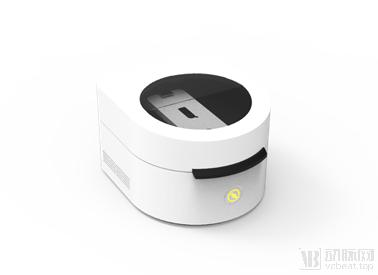
QNOME-6410 Conceptual Diagram (Image provided by the interviewee)
Under current technological conditions, the cost of nanopore high-throughput sequencing remains prohibitively high. QitanTech’s solution enables the construction of stable bilayer membrane fluidic chips, incorporates stable speed-control proteins and nanopore proteins with adjustable precision, and decouples the fluidic chip from complex and expensive backend detection circuitry. This architecture delivers consistent sequencing performance while significantly reducing consumable costs. Furthermore, QitanTech’s self-developed ASIC chip for electrochemical sensing can accurately detect weak currents at the picoampere (pA) level. When combined with its proprietary multi-layer deep learning algorithms, this system provides richer molecular-level information.
Bai Jingwei pointed out that nanopore sequencing technology, with its greater flexibility, portability, lower cost, and shorter turnaround time, can expand the application of gene sequencing to more new scenarios.
On the one hand, nanopore sequencers are poised to liberate scientific research from the laboratory, breaking away from the traditional paradigm of transporting samples back to the lab for analysis. Instead, sequencers can be deployed directly to frontline research sites, enabling rapid and convenient sequencing. On the other hand, this technology makes home-use sequencers feasible, allowing for broader application in scenarios that demand visualization and rapid results.
More importantly, nanopore sequencing technology can address the limitations of next-generation sequencing (NGS). For instance, by leveraging ultra-long reads, it enables accurate sequencing of pathogens and other organisms, thereby avoiding errors introduced by fragment assembly. In pathogenic microorganism sequencing, where viruses and bacteria often exist as mixtures with highly similar base fragments, NGS typically detects only shared sequences among multiple bacterial species, making it difficult to accurately identify specific bacterial types. In contrast, long-read nanopore sequencing allows for more precise classification and identification of pathogens.
However, Bai Jingwei emphasized that nanopore sequencing still has room for improvement across the entire value chain in terms of accuracy, stability, and sample types. Consequently, building sequencing platforms and conducting market training are currently critical tasks for QitanTech. Hu Geng told VCBeat that QitanTech has engaged with several renowned hospitals in China, which have expressed strong expectations for nanopore sequencing technology. “While clinically validating our technological achievements, the company will make preliminary strategic moves based on its understanding and R&D experience in nanopore sequencing, aiming to address clinical challenges.”
As Bai Jingwei noted, the underlying technology of nanopore sequencing is beginning to mature, while its clinical applications have not yet fully taken shape, making this an opportune time to enter the field.