

Sci-Tech Innovation Board Launches with Chipscreen Bio as First Pharma Listing; 27 Firms Under Review
On the morning of June 13, 2019, the 11th Lujiazui Forum opened in Shanghai, and the long-awaited STAR Market was officially launched.
Since its announcement in November 2018, every piece of news regarding the establishment of the STAR Market has sparked intense public attention. As it primarily targets strategic emerging industries, its listing criteria are better aligned with the characteristics of innovative sectors and companies, earning the STAR Market the moniker “China’s Nasdaq.”
The STAR Market features numerous highlights, including mandatory co-investment by sponsoring securities firms, price fluctuation limits, issuance pricing mechanisms, delisting rules, and information disclosure requirements, which have attracted many domestic strategic emerging enterprises to apply for registration. Since the publication of the first batch of accepted applications on March 22, 2019, the Shanghai Stock Exchange has accepted listing applications from 122 companies for the STAR Market, with more than 100 companies having entered the inquiry and response phase.
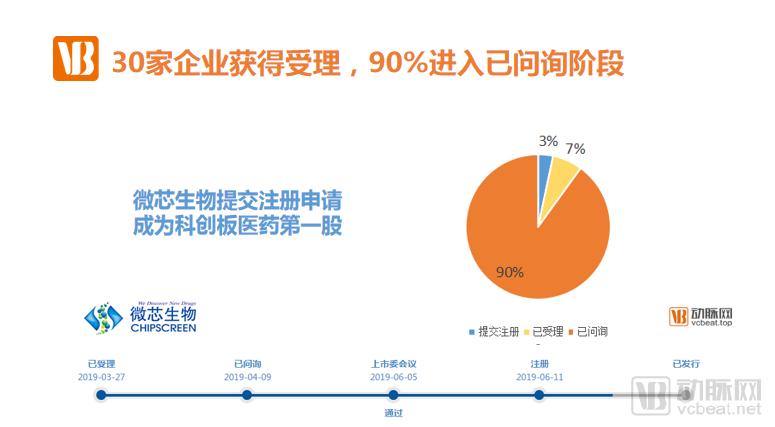
In the medical sector, after undergoing three rounds of in-depth inquiries, Shenzhen Chipscreen Biosciences Co., Ltd. (“Chipscreen Biosciences”), as one of the first three companies to have its initial public offering approved, marked the debut of the first pharmaceutical stock on the STAR Market.
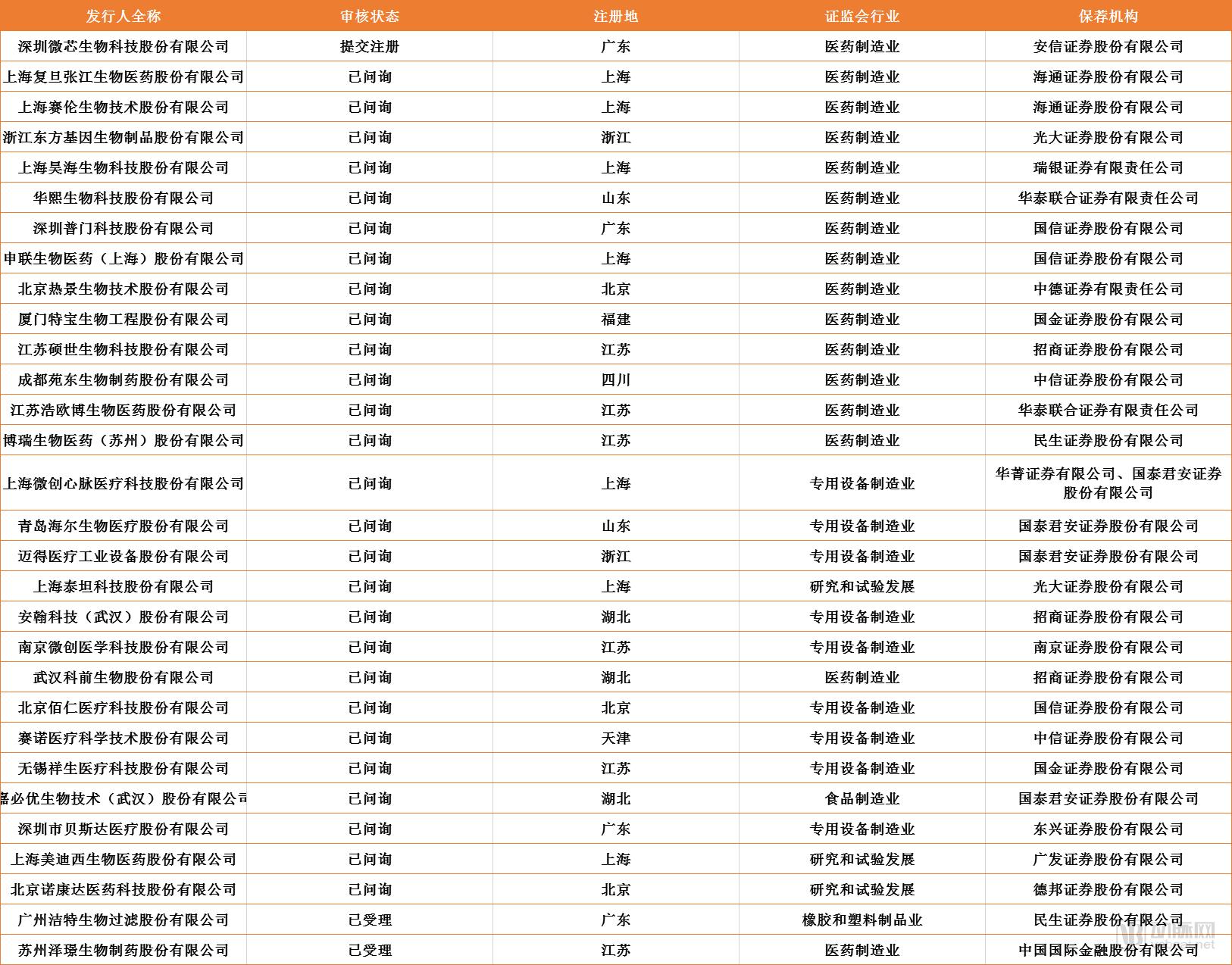
As of June 13, when the STAR Market launched, 30 healthcare companies had entered the acceptance process. Among them, Chipscreen Biosciences was at the registration application stage, Jet Biofil and Zelgen Biopharmaceuticals were at the acceptance stage, and the remaining 27 companies had entered the inquiry phase.
Chipscreen Biosciences, the first pharmaceutical company to list on the STAR Market, was founded in 2001 and specializes in the original research and development of small-molecule drugs. Prior to submitting its IPO application for the STAR Market, the company completed seven rounds of financing, with investors including Lilly Asia Ventures, CCB Capital, Shenzhen Capital Group, and CMB International, among other renowned investment institutions.
MicroTech Biopharma is primarily engaged in the research and development of innovative small-molecule drugs, with its core technology being an integrated drug innovation and early-stage evaluation system based on chemical genomics.
Chemical genomics technology leverages large-scale known gene expression data and their functional significance to analyze the correlations between the effects of various known and novel compounds on global gene expression. This approach enables the evaluation and prediction of potential molecular pharmacological and toxicological profiles of compounds, facilitates the continuous optimization of candidate compound structures, and ensures that lead compounds with the most favorable comprehensive evaluation metrics advance to the next stage of development, thereby reducing the risks associated with new drug development.
MicroCore Bio has accumulated 121 domestic and international invention patents over the years and has obtained three software copyright registration certificates.
It is understood that Chipscreen Biosciences, leveraging its core technologies, has successfully discovered and developed three original new drugs as well as a series of new molecular entity (NME) candidate drugs.
Among them, Chidamide (brand name: Epidaza), a Class I innovative drug developed in China, has been launched and is marketed for the treatment of peripheral T-cell lymphoma. It is the world’s first subtype-selective histone deacetylase (HDAC) inhibitor.
Chiglitazar sodium, another Class I innovative drug in China, has completed its Phase III clinical trials, becoming the first PPAR pan-agonist worldwide to reach this milestone.
The third drug, Theonine, is also a National Class I new drug. It is a novel multi-target, multi-pathway (Aurora/VEGFRs/CSF1R) selective kinase inhibitor, with multiple Phase II clinical trials currently underway.
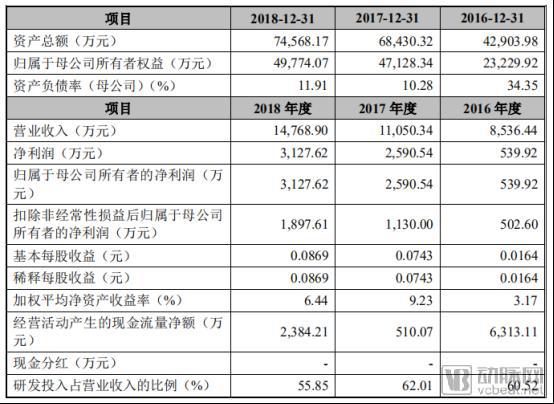
The prospectus shows that Chipscreen Biosciences’ compound annual growth rate (CAGR) of operating revenue over the past three years was 34.53%. Its operating revenue in 2017 and 2018 amounted to RMB 111 million and RMB 148 million, representing year-on-year increases of 28.45% and 33.65%, respectively. In 2017 and 2018, the company reported net profits of RMB 25.9054 million and RMB 31.2762 million, with year-on-year growth rates of 379.80% and 20.73%, respectively.
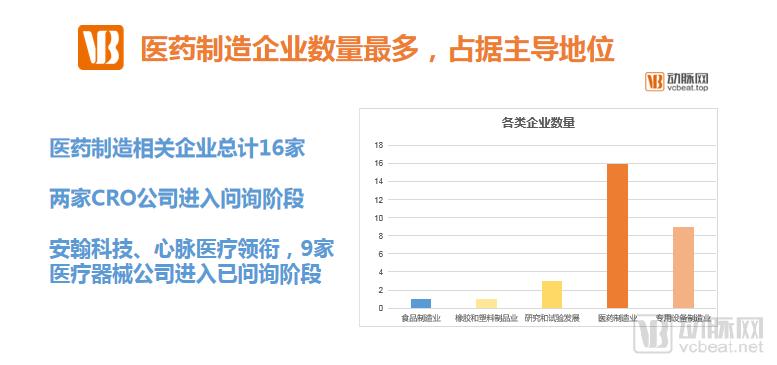
Among the accepted enterprises, the vast majority are from the pharmaceutical manufacturing sector, totaling 16 companies. In addition, two CRO companies, Medicilon and Nuokangda Pharmaceutical, entered the inquiry phase on April 14 and April 19, respectively.
Medicilon is a preclinical integrated R&D service CRO company in the biopharmaceutical sector, primarily providing comprehensive services—including drug exploration and discovery, pharmaceutical research, and preclinical studies—to pharmaceutical companies and other new drug R&D institutions. Since 2015, more than 50 new drug and generic drug projects in which Medicilon participated have been approved by the NMPA to enter Phase I clinical trials.
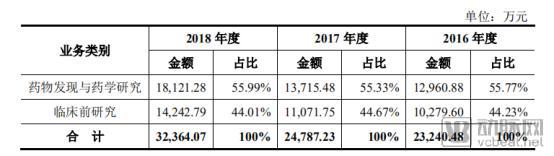
According to its prospectus, Medicilon’s operating revenues in 2016, 2017, and 2018 were RMB 232.4048 million, RMB 247.8723 million, and RMB 323.6407 million, respectively, representing a compound annual growth rate (CAGR) of 18.01% from 2016 to 2018. The net profits attributable to owners of the parent company for the last two years were RMB 40.1768 million and RMB 58.9751 million, respectively.
Nokangda Pharmaceutical, established in 2013, specializes in R&D services in areas such as contract research organization (CRO) services, consistency evaluation, innovative formulations, and medical devices and consumables. To date, Nokangda has established strategic partnerships with more than 50 large- and medium-sized pharmaceutical manufacturers and marketing authorization holders (MAHs). Over the five years since its inception, the company has achieved leapfrog growth in economic performance, with an average annual growth rate exceeding 100%.
The prospectus shows that Nuokangda Pharmaceutical achieved revenues of RMB 22.0302 million, RMB 74.8949 million, and RMB 185 million in 2016, 2017, and 2018, respectively, representing a compound annual growth rate (CAGR) of 190%. The corresponding net profits attributable to shareholders of the parent company were RMB 6.0169 million, RMB 35.0428 million, and RMB 77.5777 million, with a CAGR of 259%.
In addition to the pharmaceutical sector, the nine medical device companies currently in the inquiry phase are also worthy of attention.
Anhan Technology was among the first batch of applicants accepted for listing on the STAR Market, with a primary focus on diseases of the digestive system. Leveraging its next-generation capsule technology platform—which integrates multiple technical fields including precise magnetic control, specialized chips, artificial intelligence, intelligent manufacturing, micro-optical imaging, image processing, and wireless transmission—Anhan Technology became the world’s first company to obtain a Class III medical device registration certificate for the “Magnetic Controlled Capsule Gastroscopy System” issued by the China Food and Drug Administration (CFDA).
The company has currently obtained a total of 51 authorized patents, covering fields such as magnetic control algorithms, magnetic control devices, controllable endoscopic capsules (e.g., capsule activation technology), magnetic-controlled capsule image processing and AI recognition, magnetic localization technology, and wireless receiving equipment for magnetic-controlled capsules, thereby ensuring comprehensive protection for both the devices and the capsules.
The “Magnetic Controlled Capsule Gastroscopy System” robot developed by the company is currently the world’s first magnetic controlled capsule gastroscopy product to have obtained a Class III medical device registration certificate approved by the CFDA and achieved mass production and market launch, representing technological innovation and breakthroughs.
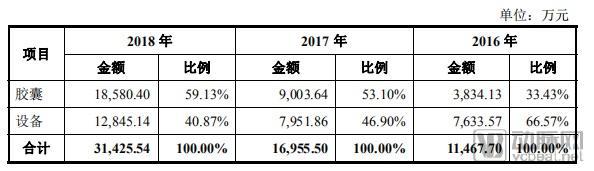
The prospectus shows that Anhan Technology's operating revenue in 2018 increased by 87% year-on-year to RMB 322 million, its operating profit increased by 3823.99% year-on-year to RMB 93.6 million, and its total profit increased by 4899.85% year-on-year to RMB 92.12 million. It is understood that the post-money valuation of Anhan Technology at its last financing round at the end of 2017 was RMB 5.96 billion.
MicroPort Endovastec is a subsidiary of Shanghai MicroPort Medical (Group) Co., Ltd. (HK: 853) (hereinafter referred to as “MicroPort Endovastec”). Its main products include thoracic and abdominal aortic stent graft systems, intraoperative stent systems, large-diameter balloons, and peripheral vascular stents. The company’s products are widely used in Grade A tertiary hospitals across China and exported to countries and regions in South America, Southeast Asia, and beyond.
MicroPort® Endovascular currently has six products marketed through the Special Approval Procedure for Innovative Medical Devices, namely the Fontus™ Branched Intraoperative Stent System, Minos™ Stent Graft System, Castor™ Branched Aortic Stent Graft and Delivery System, Altura™ Abdominal Aortic Stent Graft System, Reewarm® PTX Drug-Coated Balloon Dilatation Catheter, and Talos™ Straight Thoracic Aortic Stent Graft System.
According to the prospectus, Mindray Medical’s net profit attributable to shareholders of the parent company amounted to RMB 62.2191 million and RMB 83.7186 million in 2017 and 2018, respectively; its operating revenue for 2018 was RMB 231 million.
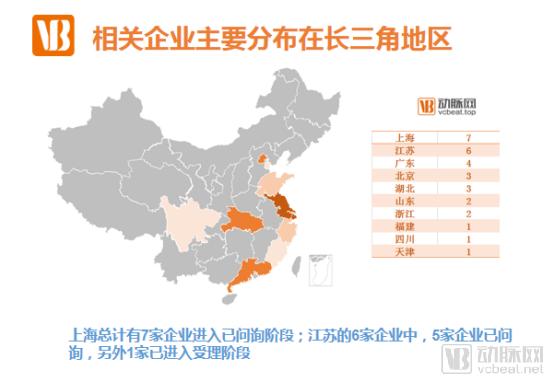
Among these companies listed on the STAR Market, half are from the Yangtze River Delta region. Most of them are based in Shanghai and Jiangsu Province, primarily driven by the pharmaceutical ecosystems in Shanghai and Suzhou. Notable representatives include star enterprises such as Zhangjiang Biotech, MicroPort Endovascular, and Pharmaron.
In contrast, the response in the Pearl River Delta region has been relatively lukewarm. Apart from Chipscreen Biosciences, only three companies in Guangdong Province have entered the acceptance or inquiry stage, namely Pumen Technology, Besta Medical, and Jet Biofil.
The establishment of the STAR Market will have a significant impact on technological innovation by providing equity financing for early-stage technology enterprises. Meanwhile, it will also accelerate the growth of China’s high-tech companies.
At today’s opening ceremony of the STAR Market, Yi Huiman, Chairman of the China Securities Regulatory Commission (CSRC), stated that the establishment of the STAR Market and the pilot implementation of the registration-based IPO system represent a foundational institutional arrangement for deepening reform and opening-up in the capital market.
Since the concept was proposed in November 2018, market expectations for the launch of the STAR Market have remained high. The introduction of the STAR Market will provide better financing support for innovative enterprises with significant growth potential and rapid development, which are often constrained by profitability and other financial metrics. Together with existing trading venues such as the Main Board, ChiNext, SME Board, and the New Third Board, it will form a more diverse and multi-tiered financing system, thereby enhancing the capital market’s ability to support the real economy, particularly the innovation-driven sector.
Unlike the A-share market’s focus on net profit, the presence of significant innovation and corporate valuation may serve as key criteria for listing on the STAR Market. This provides an alternative pathway to the capital markets for high-tech enterprises that struggle to achieve profitability in their early stages, particularly biopharmaceutical companies that are not yet profitable.
The official launch of “China’s Nasdaq” may inject new momentum into pharmaceutical innovation in China, ushering in a new era for domestically produced innovations.