

Decoding Mingji Hospital's Rapid Performance Growth: Six Strategies to Address Pain Points in Private Healthcare
Recently, the 2019 China Hospital Development Conference, hosted by DXY, was held in Hangzhou. The conference invited numerous hospital presidents to share their experiences. Among them, Suzhou BenQ Hospital (hereinafter referred to as “BenQ Hospital”) witnessed a rapid increase in its business volume over the past three years: In 2018, the number of outpatient visits increased by 10.3% year-on-year, emergency department visits rose by 16.6% year-on-year, the cumulative number of surgical procedures grew by 35.4% year-on-year, and the cumulative number of Level III and IV surgeries increased by 50.6% year-on-year.
In addition to its business achievements, BenQ Medical Center, as a private hospital, has attracted significant talent and established a well-developed talent pipeline. Among its staff, 133 are mid- to senior-level physicians, accounting for 46%, and 103 hold master’s or doctoral degrees, representing 36%.
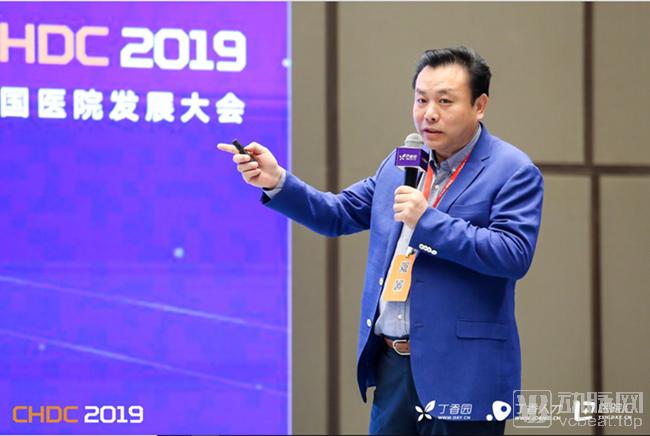
Photo of Zhou Xiaoqing, President of Suzhou BenQ Hospital, Delivering a Speech
In light of BenQ Medical Center’s achievements, VCBeat has compiled the content of President Zhou Xiaoqing’s speech on “Discipline Construction and Talent Planning in Private Hospitals.”
What Is the Future of Private Hospitals?
First, let us examine the current status and future of private hospitals from a data perspective, across four dimensions:
In terms of scale, private hospitals have experienced rapid growth, with an average annual increase of 13.7%, while the number of public hospitals has decreased at a rate of 1.4%. The proportion of private healthcare institutions rose from 39.6% to 57.1%, and since July 2015, the number of private hospitals has exceeded that of public hospitals.
In terms of bed capacity, the number of beds in private hospitals increased at an average annual growth rate of 21.1%, compared with 6.3% for public hospitals. The proportion of beds in private hospitals rose from 14% to 19%, with an increase of 450,000 beds, while public hospitals added 720,000 beds.
In terms of patient visits, private hospitals saw an average annual growth rate of 14.2%, while public hospitals grew at a rate of 5.6%. The number of patient visits at public hospitals was 6.6 times that of private hospitals.
In terms of staffing, public hospitals have 4.2 times the number of hospital beds, six times the number of licensed physicians, and 5.8 times the number of registered nurses compared to private hospitals.
Judging solely from the data, there is still a long road ahead. To envision the future landscape, we can look to the private hospital sector in Taiwan, China; BenQ Hospital, for instance, is also a Taiwanese-invested hospital on the mainland. Thirty years ago, Taiwan had a predominance of public hospitals, similar to the current situation in mainland China. However, today’s Taiwan has seen a significant shift, with the number of private hospitals far exceeding that of public ones, and its overall operational system is quite robust.
“A single spark can start a prairie fire.” Zhou Xiaoqing emphasized that future digital landscapes will be in constant flux. The current lackluster development stems from broader challenges, including issues within the medical investment climate, strategic business objectives, physicians’ professional environment, and the societal policy and humanistic landscape.
In Zhou Xiaoqing’s vision for the future development of private hospitals in China, these institutions will explore growth under the “Four Modernizations” principle: diversification of investment entities, liberalization of physician practice, chain operation of medical groups, and brand-oriented hospital management.
Six Approaches to Addressing the Pain Points of Private Hospitals
Compared with public hospitals, private hospitals currently exhibit a stronger profit-oriented tendency, demanding low investment and quick returns; their discipline development is characterized by short-term, streamlined, and rapid approaches; and they lack cultural accumulation and talent reserves.
The challenges are not limited to this. Currently, large public hospitals monopolize talent and dominate in academic standing; private hospitals suffer from poor reputation and weak public trust; it is difficult to balance investment and returns in the development of key disciplines; there is a lack of career platforms capable of attracting and retaining talent; and an environment conducive to the liberalization of physician practice has yet to take shape. These realities have, to some extent, hindered the sustainable and healthy development of the private healthcare sector.
To address these issues, Zhou Xiaoqing proposed six recommendations:
First, strike a balance between financial interests and reputation. Zhou Xiaoqing cited an example in which the hospital meal participation rate was adopted as a performance metric for hospitals. He implemented a low-price strategy—charging RMB 5 per day, with meals provided free of charge on the first day of admission and the last day before discharge. Through this approach, the hospital’s meal participation rate rose to over 90%.
Second, jointly promote the implementation of policies liberalizing physician practice and foster a supportive environment. Zhou Xiaoqing believes that the Suzhou Famous Physician Studios, established under the leadership of the Suzhou Municipal Health Commission, are an excellent initiative. This approach not only facilitates policy implementation but also helps cultivate an atmosphere conducive to the liberalization of physician practice among public hospitals and prominent physicians.
Third, more benchmark private hospitals need to be established and emerge, continuously changing the public’s perception when choosing medical providers. It is essential to help the public recognize that private hospitals are not exploitative. Zhou Xiaoqing believes that creating benchmark hospitals is crucial, as it allows people to see that private hospitals have evolved beyond their previous state.
Fourth, it is essential to emphasize that hospital investment must be guided by a long-term perspective. Short-sighted, profit-driven business models should be abandoned, and evaluation metrics should be translated into tangible details of service delivery for the general public. The key emphasis is that these metrics should not focus on how much money is earned, but rather on what kind of service model the hospital can establish and the operational state it can achieve.
Fifth, strike a balance between interests and disciplinary development. In Zhou Xiaoqing’s plan, BenQ Hospital is to be developed into a specialized hospital with considerable national influence within five years. Currently, Taiwan leads mainland China in certain specialties; therefore, BenQ Hospital has directly selected and fully introduced outstanding specialties from Taiwan. This approach facilitates the rapid advancement of talent in these fields and accelerates the establishment of the corresponding disciplines.
Zhou Xiaoqing cited an example: in the development of hospital specialties, Taiwan has adopted the approach of focusing on interdisciplinary fields. What are these interdisciplinary fields? For instance, urinary incontinence in middle-aged and older women is a private matter, but where should patients seek treatment? Hospital surgical departments cannot address it adequately, as women do not have a prostate gland; the cause of urinary incontinence lies in pelvic floor dysfunction. Therefore, managing these conditions requires collaboration between urology and gynecology. Female urinary incontinence represents such an interdisciplinary specialty, which BenQ Medical Center plans to develop in the future. Meanwhile, building up such a discipline cannot be accomplished in just one year; it demands long-term investment and development.
Sixth, the simultaneous advancement of clinical practice, teaching, and research serves as the cornerstone for disciplinary development in private hospitals. Some argue that private hospitals need not engage in teaching or research; however, just as productivity forms the foundation of economic construction, the integrated progress of clinical care, education, and scientific research is equally vital for the comprehensive development of a general hospital.
"BenQ System": Achieving the "Most Satisfactory" Therapeutic Outcomes with the "Least" Medical Resources
Zhou Xiaoqing stated that, as a former surgeon, his professional background ensures that he does not limit his perspective to microscopic details, even though he is now retired. On a macroscopic level, how should China’s healthcare reform proceed? Zhou Xiaoqing indicated that the ultimate goal is to achieve the most satisfactory therapeutic outcomes with the minimal consumption of medical resources.
In Zhou Xiaoqing’s view, private hospitals should serve as pioneers on this path. Over decades of exploring healthcare reform, Zhou Xiaoqing has developed and summarized a set of practices known as the BenQ System:
BenQ Medical Center’s mission is to pursue the truth, goodness, and beauty of human healthcare. This mission requires the hospital to integrate multidisciplinary approaches and structure diagnostic and treatment plans from a “whole-person” perspective, thereby providing higher-quality, comprehensive medical services that ensure holistic and well-integrated diagnosis, treatment, and care for patients’ physical, mental, and spiritual well-being.
Specifically, Suzhou BenQ Medical Center has introduced Taiwan’s humanistic and compassionate model of refined medical services, which includes the attending physician responsibility system, the primary nurse care system, the Taiwanese volunteer model, an empathetic clinical care process, warm and welcoming facilities, the hospital director’s representative rounding system, the hospital director’s mailbox, a medical risk assessment and review system, the medical chief-of-staff on-duty system, and the implementation of JCI international accreditation.
In managing the hospital, Zhou Xiaoqing adopts a problem-oriented approach. In practice, he assigns staff to engage with patients in clinical settings to gather their feedback and suggestions, thereby assisting the hospital president in addressing issues raised by patients. Furthermore, each department at BenQ Hospital has designated safety supervision personnel. Their mandate is to identify at least two potential safety hazards per month, and they receive allowances for meeting this target.
Zhou Xiaoqing emphasized that integrity is also crucial for hospitals. BenQ Medical Center has an audit team responsible for reviewing the reasonableness of medical charges, with each department designating one person to conduct audits. If any examination item remains incomplete, the corresponding fees will be refunded in full.
In terms of KPIs, BenQ Medical Center has strengthened the attending physician responsibility system under the leadership of department directors. The KPI framework strictly adheres to a two-tier responsibility system at both the hospital and departmental levels, with clearly defined work objectives and responsibilities for department directors and attending physicians alike. Each attending physician is required to conduct at least one Multidisciplinary Team (MDT) case discussion per month, collaborating with other departments and specialties. This is a mandatory performance metric at BenQ Medical Center.
MDT is of great importance to medical institutions. During diagnosis and treatment, the attending physician may be aware that there is no risk at a specific site but may not know whether other risks exist elsewhere in the entire system. Therefore, MDT has become an inevitable model for clinical practice in hospitals.
Standardize talent pipelines, foster a positive hospital environment, and build the reputation of private hospitals
With the mechanisms in place, the next consideration is how to retain talent, which hinges on leveraging academic value. Private hospitals must establish robust academic platforms to provide more avenues for communication and greater opportunities for academic exchange.
Furthermore, it is crucial to proactively embrace healthcare reform and ensure the effective implementation of policies, thereby enabling physicians to feel at the forefront of these changes. For instance, private hospitals must also adopt the zero-markup policy for pharmaceuticals. Otherwise, if public hospitals offer drugs at zero markup while private hospitals charge higher prices, it creates a disparity. Although this may appear unrelated to talent management, such differences in operational practices significantly influence physicians’ perception of the institution’s management style compared to other settings.
In addition, to enhance its core competitiveness, BenQ Hospital has developed international medical programs to provide high-end healthcare services. Zhou Xiaoqing noted that there are 50,000 Taiwanese businesspeople in Suzhou who seek medical care at Suzhou BenQ Hospital and require access to superior medical resources.
Therefore, hospitals must foster a positive atmosphere and a favorable overall environment, so that physicians feel honored to work there. To address this issue, Zhou Xiaoqing conducted numerous focus group discussions. During one such session, a physician remarked that impression and reputation are crucial, whether from the perspective of the government or the general public. Private hospitals need to change the public’s perception of the term “private”; without this shift, private hospitals will never achieve sustainable development.
Talent acquisition requires not only internal retention but also external recruitment. BenQ Medical Center adopts a hospital-university partnership model to build a reserve of entry-level talent. Mid-level talent is developed through direct recruitment, while national key experts are hired via online recruitment channels, and leading talents are introduced through executive search firms.
Finally, regarding the strategies and pathways for discipline development in private hospitals, Zhou Xiaoqing summarized five key points:
First, the mechanism of survival of the fittest for disciplinary talent constitutes a competitive advantage in the discipline construction of private hospitals;
Second, integrating resources and forging strong alliances is an effective pathway for the development of private medical specialties;
Third, a flexible compensation mechanism is the primary means for private hospitals to attract talent in specialized disciplines;
Fourth, rigorous and standardized training for young physicians is an inevitable choice for building a talent pipeline within the discipline;
Fifth, inheriting and innovating the business culture of a good hospital is the core of disciplinary development.