

Chengdu Tianfu Life Science Park: A Decade-Long Ascent as Southwest China’s Biopharmaceutical Innovation Hub
After exiting Gaopeng Avenue Station on Chengdu Metro Line 7, a roughly 15-minute bike ride along the railway leads to the entrance of the Chengdu Tianfu Life Science Park (hereinafter referred to as “Tianfu Life Science Park”).
The first thing that catches the eye is the layered stacks of various shared bicycles. Fan Xiaodong, an information specialist at the park management company, told VCBeat New Medicine that the industrial park has nearly 6,000 employees. Every day at quitting time, staff members have to scramble to secure a bike. An investor once joked that the level of activity in the sharing economy can serve as an indicator of an industrial park’s prosperity.
Tianfu Life Science Park mainly consists of two office buildings, one incubator building, and seven R&D buildings. The corporate logo of ChemPartner is prominently displayed on the B3 R&D Building. As the earliest tenant in the park, ChemPartner has grown into one of China’s top four new drug CROs and was acquired by the listed company Quantum Hi-Tech in April 2018. In addition, more than 170 biopharmaceutical companies, including West China Hospital, Baiyu Pharmaceutical, Keymed Biosciences, Salubris (China), and Sinopep, are scattered throughout the park.
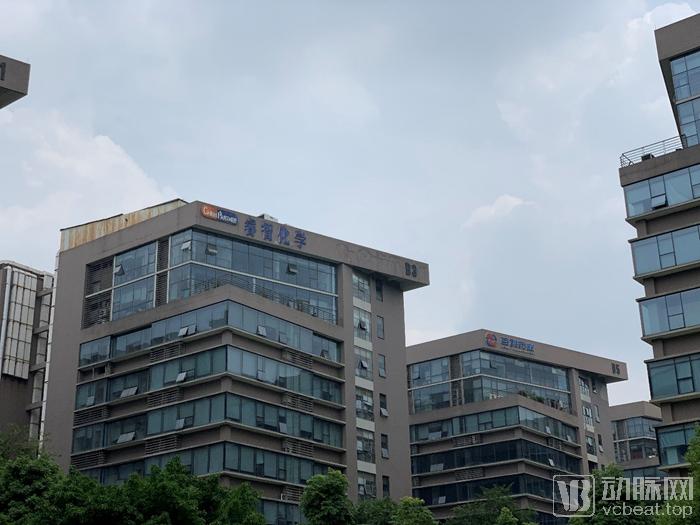
The Building Where WuXi AppTec Is Located – On-Site Photo by Reporter
Unlike the R&D building, which offers only bare-shell office spaces, the Incubation Building is fully fitted out by the park and equipped with basic office and R&D facilities, enabling entrepreneurs to start their ventures with just a backpack. The Incubation Building houses approximately 50 companies, with individual premises ranging from 100 to 300 square meters in area.
Construction broke ground in 2008, and the park officially commenced operations in 2010. As a Sichuan Provincial Enterprise Incubator for Science and Technology Enterprises, Chengdu Tianfu Life Science Park has long served as a benchmark biomedical industrial park in western China, earning a spot among the Top 10 Most Attractive Biomedical Industrial Parks in China in 2017. Wan Xiang, Deputy General Manager of the park’s management company, candidly told VBInsight that Tianfu Life Science Park benchmarks itself against leading domestic parks such as Shanghai Zhangjiang High-Tech Park and Suzhou Industrial Park.
How can an inland industrial park, tucked away in the southwest, attract a large number of high-quality projects and incubate a host of star ventures, thereby boasting competitiveness on par with parks in China’s developed coastal regions? With this question in mind, VCBeat New Medicine conducted a three-hour interview with Wanxiang.
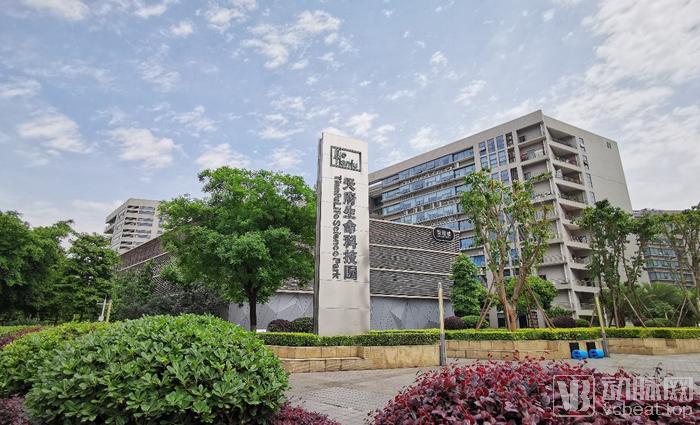
Tianfu Life Science Park (Photo provided by the park)
Wan Xiang began working at the Tianfu Life Science Park in 2012. He told VCBeat’s New Medicine channel that, unlike most parks located in suburbs far from urban centers, the Tianfu Life Science Park faces an upscale residential area in Chengdu, with the Chengdu–Kunming Railway running through the middle and dividing the park and the residential community into two separate parts.
In 1988, Chengdu took the lead in China by initiating preparations for a high-tech development zone, designating a large area in Wuhou District for development. In 1991, the Chengdu High-Tech Zone received national approval and subsequently established industrial parks such as Tianfu Software Park. As the High-Tech Zone expanded southward, the area along Chengdu’s southern third ring road, once entirely farmland, gradually prospered amid the wave of urbanization. However, for a narrow plot of land separated from upscale residential communities by only a railway track, the High-Tech Zone remained undecided on its intended use for a period, leading to its gradual neglect.
Over the past decade or so, traditional pharmaceutical companies such as Di’ao and Enwei have emerged in the surrounding area, while supporting industrial facilities, including GMP-compliant workshops and drug safety evaluation centers, have also been established.
In 2008, Chengdu Hi-Tech Investment Group Co., Ltd. decided to establish the Tianfu Life Science Park at this location, with Chengdu Gaotou Real Estate Co., Ltd. undertaking the project’s construction. By the end of 2010, the Tianfu Life Science Park was completed and officially commenced operations. Since then, an increasing number of biopharmaceutical companies have clustered in the area, transforming this site in the southeastern corner of Chengdu into the city’s hub for biomedical innovation.
In 2010, when the Tianfu Life Science Park first opened, ChemPartner, which was transitioning out of other incubators, established its presence here. With ChemPartner’s entry, the newly established platform immediately offered R&D outsourcing services to enterprises within the park, leveraging its technological and business capabilities to support and nurture park-based companies.
From 2010 to 2019, Tianfu Life Science Park embarked on a trajectory of continuous growth. Wan Xiang attributes the park’s achievements, in part, to the advantages of late-mover status: “We started by learning from the model of Shanghai’s Zhangjiang Hi-Tech Park, optimizing as we emulated, and ultimately honing our core competitiveness based on robust service capabilities and a strong commitment to service.”
According to Wan Xiang, capital interest in the industrial park has risen year by year since late 2015. “In the past two years, the focus of investment institutions has expanded from specific star enterprises to the entire park.”
Founded in the park’s incubator building in late 2016, Keymed Biosciences secured angel-round financing from Legend Star at its inception and attracted interest from multiple institutional and individual investors, raising over RMB 100 million and achieving a valuation exceeding RMB 1 billion. Chen Bo, founder of Keymed Biosciences, is one of the three co-founders of Junshi Biosciences.
In September 2016, Chen Bo, who was about to embark on his third entrepreneurial venture, visited the Tianfu Life Science Park for the second time and was immediately attracted by the park, deciding to locate his new company there. Subsequently, Chen Bo was recruited as a key talent by Chengdu City. Within less than three years of its establishment, Keymed Biosciences entered a fast lane of development, with more than 20 antibody drugs under research and development. The company has identified three independently innovated antibody drug candidates, two of which have received support from the National Major New Drug Creation Program during the 13th Five-Year Plan period.
According to statistics, the park has introduced more than 400 projects at leading international and domestic levels, including over 50 Class I new drug projects currently under research and development. In addition to ChemPartner and Keymed Biosciences, the park has attracted 174 well-known domestic and foreign enterprises represented by West China Hospital of Sichuan University and Hengrui Medicine, as well as innovative startups such as Huamian, Antigen, and MicuRx Pharmaceuticals. It has also incubated and nurtured numerous outstanding companies, including HitGen and HaiChuang Pharmaceutical.
After more than a decade of market-oriented operations and the strategic application of market mechanisms, leveraging the High-Tech Investment Group’s sci-tech financial service platform, the industrial park has achieved the aggregation of diverse capital sources, including bank financing, angel investment, venture capital, private equity (PE) fund investment, and financing guarantees. To date, the cumulative financing volume (including mergers and acquisitions) has reached RMB 5 billion.
Investment attraction is the foundation of industrial park development, but not the entirety. Since its inception, Tianfu Life Science Park has maintained strict control over project quality. The review committee system, implemented from the start, has continued to this day, with evaluation criteria undergoing multiple iterations and becoming increasingly stringent.
According to Wan Xiang, the project review committee of Tianfu Life Science Park comprises experts from multiple fields, including technology, venture capital, government relations, and safety and environmental protection. The committee conducts irregular comprehensive assessments of the qualifications of projects applying for admission to the park. Evaluation criteria include whether the project’s technology is at a leading level domestically and internationally, whether there are significant defects in the equity structure, and whether the team composition is reasonable.
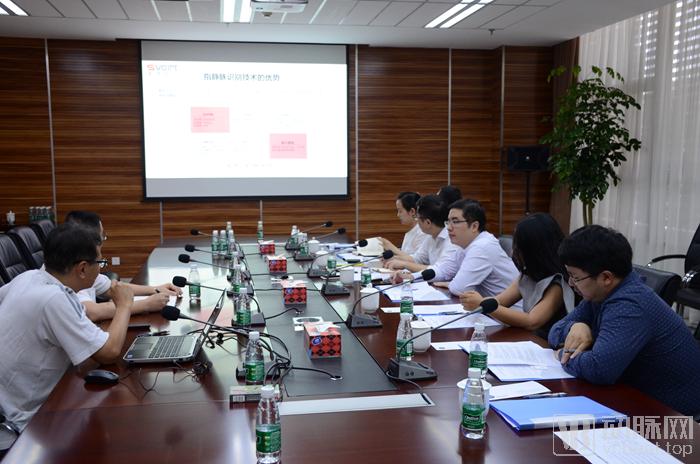
Project Park Entry Review Meeting | Photo provided by the industrial park
Wan Xiang told VCBeat New Medicine that, since experts evaluate projects from their respective professional perspectives, differing opinions sometimes arise. Projects that fail to secure unanimous approval from the experts, even after being optimized and adjusted in accordance with their feedback, will be eliminated. “Practice has shown that most of the projects we rejected subsequently performed poorly.”
Over the past decade, more than 200 enterprises have settled in the industrial park. Each year, some companies leave the park for various reasons, leaving a current stock of nearly 180 enterprises.
Last year, Lead Drug, having just graduated from the park’s incubator, leased over 18,000 square meters of office space in Tianfu International Bio-city, located at the other end of the High-Tech Zone. Wan Xiang likes to refer to the departure of companies like Lead Drug from the incubator as “graduation.” Founded in 2012 at Tianfu Life Science Park, Lead Drug was established by Li Jin, a Chongqing native who graduated from Sichuan University.
Li Jin studied in the United Kingdom and worked at the multinational pharmaceutical company AstraZeneca, where he rose to the position of Global Director of Compounds. In 2012, Li returned to China to launch his own venture, providing CRO services for new drug development while simultaneously developing innovative drugs with independent intellectual property rights. Over the past six years, the Tianfu Life Science Park has witnessed Lead Drug grow from a team of just over ten people into a sizable pharmaceutical company with more than 300 employees.
Entrepreneurship is not always a smooth journey. Over the past two years, four companies within the industrial park have gone bankrupt, including those in hot sectors such as intermediates and cell therapy. These companies failed to sustain their development due to either inherent business challenges or internal conflicts, prompting the industrial park to strengthen and refine its entry review system.
Before arriving at the park, Arterial New Medicine’s biggest question was how Tianfu Life Science Park, located in the remote southwest, could compare with China’s top-tier benchmark parks such as Shanghai Zhangjiang High-Tech Park, Suzhou BioBAY, and Beijing Zhongguancun, which boast superior geographical locations. Wan Xiang’s answer surprised me: “Between us, cooperation outweighs competition.”
From 2016 to 2018, the collaboration gradually took shape. Tianfu Life Science Park, together with renowned parks in the Yangtze River Basin—including Shanghai Zhangjiang High-Tech Park and Suzhou BioBay—launched the Yangtze River Basin Biopharmaceutical Innovation Service Alliance, aiming to promote coordinated development among parks in different locations. Currently, the park alliance has signed an agreement in Shanghai to jointly establish a fund for investing in enterprises within the member parks.
Wan Xiang told VCBeat New Medicine that, at its inception, Tianfu Life Science Park indeed looked to star parks in the Yangtze River Basin as benchmarks for learning and surpassing. As park operations evolved, the service team realized that high-quality enterprises tend to establish a nationwide presence, setting up locations in both eastern and western regions rather than choosing one over the other. Competition among parks essentially occurs within the eastern and western regions separately. For instance, competition in the east involves parks in Shanghai, Suzhou, Nanjing, Taizhou, and other cities, while competition in the west centers on parks in Chengdu, Chongqing, Xi’an, Wuhan, and elsewhere.
“Tianfu Life Science Park has always been the most attractive biotech industrial park in the western region.” Wan Xiang expressed this with confidence.
When discussing why the park has become attractive to projects and funding, Wan Xiang identified four key reasons: the business environment, resource support, technical platforms, and service capabilities.
First, Chengdu’s open and pragmatic business environment has fostered a vibrant entrepreneurial ecosystem, naturally attracting numerous entrepreneurs. Furthermore, the industrial park is located within Chengdu city proper, offering a relatively convenient and superior geographical location with quick access to commuting and aviation infrastructure.
Second, the industrial park has access to abundant surrounding resources. As a talent hub in western China, Chengdu is backed by West China Hospital of Sichuan University—the nation’s top hospital in medical strength and second in R&D capability—thereby supporting enterprise development.
Moreover, Chengdu offers a relaxed living environment and a low cost of living. The optimistic lifestyle in the city has encouraged many people to stay, with most staff members in the park being graduates from local universities.
Third, a rich array of technical platforms. The park’s comprehensive technical platform system efficiently covers diverse R&D needs across biology, chemistry, medicine, and information retrieval.
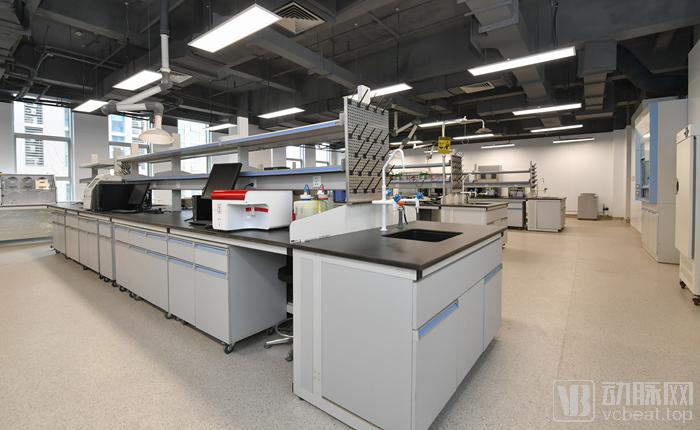
Public Technical Service Platform for Innovative Drug R&D. Photo provided by the industrial park.
Fourth, and what Wan Xiang considers the most critical point, is the strong professional competence of the park’s service team. Currently, the team comprises 27 members, all of whom possess relevant professional backgrounds and work experience that enable a deep understanding of industry characteristics and enterprise needs; “six of them have experience in biopharmaceutical R&D.”
Wan Xiang told VCBeat New Medicine that he believes the park’s core competitiveness lies not so much in its technical prowess, but rather in the operational capabilities continuously enhanced by a proactive service team, and in its ever-improving, full-lifecycle incubation system tailored to the unique characteristics of the biopharmaceutical industry.
As the overall head of park operations, Wan Xiang is extremely busy. During our three-hour interview, he answered four phone calls, left his office three times to coordinate work, and provided on-the-spot guidance to staff on revising document wording twice. Throughout these interactions, he already filled his schedule for the following week to capacity.
By the end of 2018, construction of Phase II of the Tianfu Life Science Park, covering an area of 167 mu with a planned total gross floor area of 294,000 square meters, was completed and officially handed over to the park management company in early 2019. “Adding the 220,000 square meters of Phase I, our service team of 27 people is essentially responsible for nearly 20,000 square meters per person,” Wan Xiang joked.
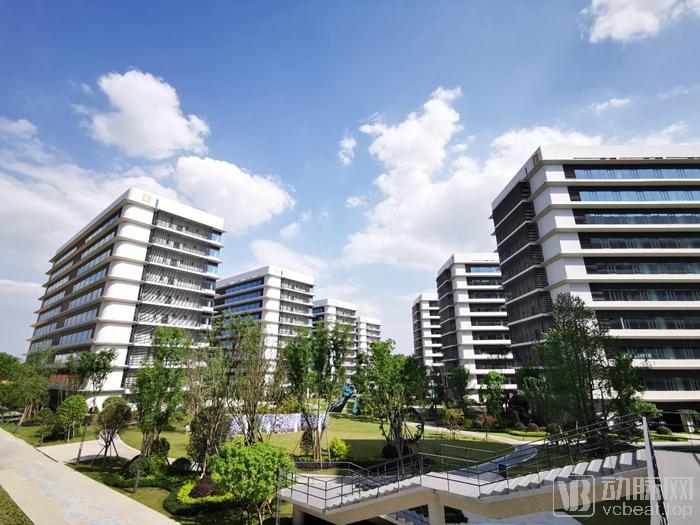
Tianfu Life Science Park Phase II (Photo provided by the park)
The Phase II project of Tianfu Life Science Park, named the Biopharmaceutical Innovation Incubator, is positioned to establish a new core and source for the innovative development of frontier medicine in Chengdu. It focuses on emerging cross-sector business models integrating smart health, precision medicine, and medical aesthetics. The facility became operational at the end of 2018, with seven domestic and international projects confirmed for occupancy and over 20 projects under negotiation.
Phase II of the park features a higher degree of modernization and will introduce high-quality global projects in the fields of frontier medicine, smart health, precision medicine, and medical aesthetics. As a collaborative initiative between Chengdu Municipality and Sichuan University, part of Phase II’s infrastructure is dedicated to jointly establishing the Chengdu Center for Frontier Medicine, which will accommodate the translation and commercialization needs of all medical and pharmaceutical projects from Sichuan University. Aiming to become an internationally leading hub for “Medicine+” innovative research, project incubation, and industry integration, the center will integrate into the biopharmaceutical ecosystem of the High-Tech Zone, thereby boosting Chengdu’s development of a pharmaceutical and healthcare industrial system with international competitiveness and regional influence.
Matching China’s top-tier peers of the same kind and continuously expanding its business scope is undoubtedly a milestone success for Tianfu Life Science Park. Looking to the future, Wan Xiang told VCBeat New Medicine that the team will build the park itself into a platform by integrating multiple specialized functional platforms.
Wan Xiang pointed out that when resources such as industrial parks, large enterprises, hospitals, government bodies, and public platforms converge within an industrial park, it is possible to provide more supportive services for corporate development by strengthening interactions among enterprises. “Given the extensive value chain of the biopharmaceutical industry, integrating resources across the industrial chain effectively consolidates all available resources, thereby creating an ecosystem.” Once the entire industrial park operates as an open platform, enterprises will be able to conveniently access various resources along the industrial chain through the park.
Tianfu Life Science Park has designated its park platformization initiative as “Park+,” which has become a key focus of the park’s operations in recent years. The park has attempted to integrate industry chain resources by establishing a financial service platform, hosting entrepreneurship competitions, and organizing roadshow events.
Furthermore, the industrial park adheres to an internationalization strategy. By adopting a global perspective to attract the world’s most outstanding projects, it aims to build global competitiveness. The first step is “bringing in”: each year, the park analyzes development trends in every niche segment of the global biopharmaceutical industry, conducts targeted research on leading enterprises, talent, and projects, and carries out precision investment promotion. The second step is “going global”: through professional forums and other promotional channels, the park gradually expands its international influence.
Meanwhile, Phase I of the industrial park is phasing out enterprises characterized by low-end industries, poor performance, and severe pollution, while gradually introducing companies with greater growth potential.
The market-oriented initiatives undertaken by the park over the past two years also warrant attention. Centered on full-lifecycle services, Tianfu Life Science Park has ventured into resource-based operations for its tenant companies, such as waste liquid disposal and the sale of consumables and reagents. These efforts aim to enhance service quality and efficiency while strengthening the park’s self-sustaining revenue-generating capacity.
Before departing, Wan Xiang told VCBeat New Medicine that by the end of 2019, the pedestrian passageway connecting Chengdu Metro Line 7 to the industrial park would be completed. At that time, the park’s location would be more seamlessly integrated into Chengdu’s urban transportation network, bringing greater convenience to the companies within the park.