

How Cleveland Clinic Forged a World-Class Healthcare Brand: Insights from Chief Marketing Officer Paul Matsen

Cleveland Clinic
Cleveland Clinic is one of the world’s most renowned medical institutions. It is a non-profit organization that integrates patient care, research, and education, providing specialized medical services and cutting-edge treatment options. Founded on February 28, 1921, Cleveland Clinic is owned and operated by the Cleveland Clinic Foundation, a non-profit corporation based in Ohio. Its main campus is located in Cleveland, with additional branches in Florida, Nevada, Canada, and Abu Dhabi.
Recently, the “2019 China Hospital Development Conference,” hosted by DXY, was held at the Hangzhou International Expo Center. Themed “Supporting Development, Leading the Future,” the conference invited numerous industry experts to jointly discuss topics related to healthcare talent and branding. At the event, Li Tiantian, Founder and Chairman of DXY, and Mr. Paul Matsen, Chief Marketing Executive of Cleveland Clinic (hereinafter referred to as “Paul”), engaged in discussions on issues such as hospital institutional brand management and talent development.
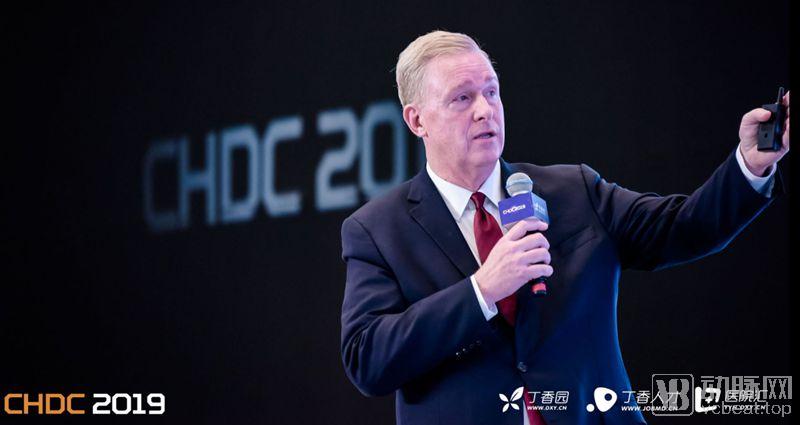
Mr. Paul Matsen, Chief Marketing Executive of Cleveland Clinic
Paul joined Cleveland Clinic in 2006, overseeing all marketing and communications initiatives. Prior to becoming Chief Marketing Officer of Cleveland Clinic, Paul served as Executive Vice President and Chief Marketing Officer at Delta Air Lines. He innovatively transferred many digital networking capabilities from the airline service industry to Cleveland Clinic, making Clevelandclinic.org the most-visited hospital website in the United States. The site also garnered strong endorsement from former U.S. President Barack Obama for its role in meeting the healthcare needs of employees nationwide.
Li Tiantian believes that, “Against the backdrop of incessant healthcare reform policies and the rapid evolution of public medical institutions, the development of talent and brand must be highly synergistic and focused to achieve a synergistic effect where 1+1>2.” He noted that an increasing number of domestic hospitals are now prioritizing the improvement of healthcare quality, as exemplified by patient care experience, and that there remains a need to gain greater insight into external perspectives and recommendations during this process.
Paul shared the operational experience of Cleveland Clinic, emphasizing that hospital development should be people-centered. In addition to providing successful surgeries and treatments in clinical practice, it is essential to ensure that “patients are emotionally and spiritually fulfilled.” This embodies Cleveland Clinic’s core motto of “Patients First,” which has been central to its growth.
“Communication between doctors, nurses, and patients is extremely important. Patients need to know what they can expect from the medical services provided each day during their hospital stay, what their treatment plan entails, how long they will be hospitalized, and what tests will be performed. Test results should be explained in a way that patients can understand, or, if the patient does not fully comprehend, ensure that a family member is present.” Paul stated that Cleveland Clinic has improved the communication skills of its healthcare staff by establishing the role of “Chief Patient Experience Officer,” making empathy and doctor-patient rapport the core components of such training. This training program helps better implement the “Patients First” motto and further strengthens alignment with the values embedded in the corporate brand.
In addition to management strategies for overall hospital brand building, Li Tiantian and Paul also discussed solutions to drive talent development. Paul emphasized that alignment with culture and values forms the foundation for talent growth within the entire team. Current management practices in healthcare institutions require appropriate approaches to encourage and motivate physicians to engage in patient-centered communication and demonstrate empathy toward patients. The principle of operational transparency ensures that the mechanisms driving talent development are fair and open, while the collection and organization of large-scale patient data provide more effective directions for improvement in talent development.
Paul cited the example of Cleveland Clinic, where reference models are developed by evaluating data across multiple dimensions—including individual, departmental, and institutional levels—to provide more actionable recommendations during annual performance reviews. Grounded in a shared commitment to core values and guided by the principle of transparency, even negative evaluation data can be leveraged as a driving force for the development of both individual talent and teams.
In the United States, there are over one billion healthcare-related searches every day. How can you ensure patients find you amidst this vast ocean of information?
Paul offered his perspective. He argued that, unlike other industries, marketing communications in the healthcare market cannot manufacture demand for medical services; therefore, branding is critically important. U.S. surveys indicate that the reputation of healthcare institutions is paramount. Over the past two decades, consumerism has played a significant role in American healthcare, empowering consumers with substantial influence and the autonomy to choose their healthcare providers. In this context, a brand signifies an institution’s standing. Research further demonstrates that among factors influencing patients’ choices of healthcare providers, institutional reputation ranks first. Healthcare brands serve as the primary source of patient trust.
In terms of brand communication, Cleveland Clinic has established an integrated mechanism combining owned media, earned media, and paid media. By creating professional and trustworthy medical content on its owned media platforms, Cleveland Clinic has won the hearts of a large user base. Furthermore, through strategies such as coverage and dissemination via earned media and precisely targeted paid media placements, the institution continues to enhance its brand reputation among users.
Due to the differences in healthcare systems between China and the United States, China’s current medical resources fall far short of meeting the needs of its 1.3 billion people. The shortages in infrastructure and qualified medical professionals are objective realities. Therefore, Paul stated bluntly that for many hospital directors in China, “brand building may not yet be a particularly high priority on their agenda.”
However, while it is “not yet considered a particularly critical issue” at this stage, it is garnering increasing attention from healthcare administrators. This is because high-quality medical care, patient safety, and positive patient experiences significantly enhance a hospital’s brand image.
Paul offered recommendations for brand building in Chinese healthcare institutions, emphasizing the importance of fully listening to patient feedback, cultivating forward-thinking capabilities within hospital brand-building teams, and enhancing employees’ team awareness and collaborative skills.
“Every life deserves world-class care.” This is the vision of Cleveland Clinic and the key to success for top global healthcare brands.
During this conversation, Paul and Li Tiantian also discussed the progress of projects in China involving overseas resources, represented by Cleveland Clinic. In July 2018, Cleveland Clinic and Luye Medical Group announced an international strategic partnership to establish the world’s first “Cleveland Clinic Collaborative” hospital at the Shanghai New Hongqiao International Medical Center. Through their collaboration, Cleveland Clinic will assist Luye Medical in hospital design and the development of clinical practice guidelines, transplanting Cleveland Clinic’s patient-centered care philosophy into the Chinese market to jointly promote the growth of the collaborative brand.
But how can we ensure that the rules, processes, and standards of Cleveland Clinic are replicated in China with 100% fidelity?
Paul believes that this marks the beginning of a collaborative partnership, with both teams engaging in discussions throughout the entire design process and business planning cycle. “Our teams will share information across all domains—from architecture and clinical aspects to communication—fostering mutual trust and inter-team collaboration. In the future, we will implement cross-training and data sharing between teams. We also have numerous collaborators in the United States working on various projects; our primary focus is on the quality of these collaborations and how to continually enhance them.”
“Having a partner like Luye in the Chinese market is an excellent choice. We can integrate their areas of expertise with ours, which is the very significance of this collaborative project.” Paul expressed strong confidence in this partnership.
Paul stated that Cleveland Clinic’s collaborative experience in other countries and regions has provided valuable references for its China project, while the insights gained from operating in China’s vast, complex, and rapidly growing market will serve as a benchmark for Cleveland Clinic internally and for the entire healthcare industry.
Cleveland Clinic is a globally recognized healthcare leader, pioneering the future model of medical care. Physicians work in collaborative teams to address the most complex medical cases, always prioritizing patient needs. Cleveland Clinic is dedicated to both healthcare professionals and patients, upholding a philosophy centered on the patient experience. This culture fosters excellence across quality, clinical outcomes, integrated research and medical education, innovation, and patient experience. In short, Cleveland Clinic is an institution that cares for its healthcare professionals, patients, community, and organizational integrity.