

The Golden Decade of China's Medical Device Industry: Physicians as the Catalyst for Innovation?
Nearly every industry that has endured a long period of dormancy will eventually experience a significant surge—a testament to the market’s reward for corporate focus, pragmatism, innovation, and dedication. Today, the medical device sector is witnessing precisely such a breakout, fueled by years of accumulated strength.
Many people have dubbed the next decade the “Golden Decade” for medical device development. With frequent policy releases and increased capital investment, this statement has long become a consensus among professionals in China’s medical device industry. At the Shaoxing International Summit on Innovation in the Medical Device Industry, several leading figures from the investment community opened up about topics related to medical device innovation.
Physicians Are the Source of Medical Device Innovation
In 2016, a delegation led by the founder of Trendline, an Israeli incubator, visited China. They approached Peking University Medical Innovation Valley in hopes of exploring collaboration opportunities in the incubation of medical device innovations. Li Baowei, Deputy General Manager of Peking University Medical Innovation Valley, accompanied and hosted these international guests.
Slightly taken aback by the unexpected visit, Li Baowei expressed some reservations and inquired about their motivations for collaboration. The founder promptly responded, “We aim to understand the needs of Chinese physicians; once we identify these needs, we can translate them into products.”
After listening, Li Baowei asked in puzzlement, “Why don’t you seek insights from hospitals in your own country?” The Israeli friends looked at each other and replied, “There are only a handful of hospitals in our country, so the clinical needs encountered by physicians are relatively limited. In contrast, Peking University boasts top-tier affiliated hospitals and physicians in China. If we can identify clinical needs validated by these physicians and translate them into medical device products to serve China’s vast patient population, the market potential would be enormous.”
Coincidentally, the Suzhou Institute of Biomedical Engineering and Technology (SIBET) under the Chinese Academy of Sciences also sought collaboration with Peking University Medical Innovation Valley, aiming to establish a long-term strategic partnership. This includes holding annual meetings with physicians to gather their clinical needs, thereby initiating projects for sustained research and development.
Since then, Li Baowei has truly come to appreciate the critical importance of physicians in driving medical device innovation.
In China, physicians typically limit their role to using medical devices and rarely provide feedback to or engage in discussions with engineers regarding issues encountered during use. Domestic medical device companies often focus exclusively on product development, paying scant attention to genuine clinical needs. Although some local governments encourage universities and research institutions to translate scientific achievements into practical applications, they do not explicitly incentivize physicians to participate in medical device research and development.
On this point, Tang Haofu, Chairman of Shanghai Chuangrui Investment Management Co., Ltd., holds a similar view: “The chain of medical innovation in China is fragmented. The domestic medical device innovation chain differs entirely from that abroad. Hospitals generate new ideas but fail to implement them, leaving enterprises as the primary drivers of innovation. However, changes must be made to better integrate physicians with the upstream and downstream segments of the industry chain, thereby globalizing innovation.”
In his view, innovation in medical devices originates from hospitals and physicians, and such devices should be validated and promoted by hospitals and physicians. If a healthcare project fails to assemble a strong team of physicians as a resource foundation, it cannot be considered a high-quality project.
High-end medical product innovation inevitably stems from collaboration between top-tier hospitals and physicians alongside technologically advanced enterprises. However, this chain is currently broken in China. To truly advance the development of medical devices, it is imperative to reconnect this chain.
“Doctors are not adept at writing business plans or negotiating. Accustomed to a position of authority in the operating room, they often struggle to adjust their mindset when engaging with investors. Therefore, they need a platform.” Tang Haofu spoke from deep personal experience.
He proposed that China should strengthen the value of rapid incubation platforms and technology transfer institutions. National technology transfer centers and various incubation parks possess such capabilities, and collaboration among physicians, enterprises, and these parks may evolve into a prevailing trend in the medical device industry.
How Should Doctors’ Scientific Research Achievements Be Priced? This Is an Inevitable Hurdle in the Integration of Industry, Academia, and Research.
Following an investigation, Li Baowei discovered that the state has successively introduced a series of policies to encourage the commercialization of scientific and technological achievements. The value of doctors’ scientific and technological innovations can be determined through market-based mechanisms, such as negotiated pricing, listed trading on technology exchanges, and auctions. “In addition to encouraging physicians to pursue commercialization, hospitals need to provide financial support. Hospitals can establish specialized funds for the commercialization of scientific and technological achievements to promote the translation of such innovations within the institution.”
In March 2018, Nature Publishing Group released the 2018 Nature Index rankings. This index comprehensively measures the output of high-quality research papers from countries/regions, research institutions, universities, and corporate entities worldwide. Among the top 100 medical institutions in China, West China Hospital ranked first.
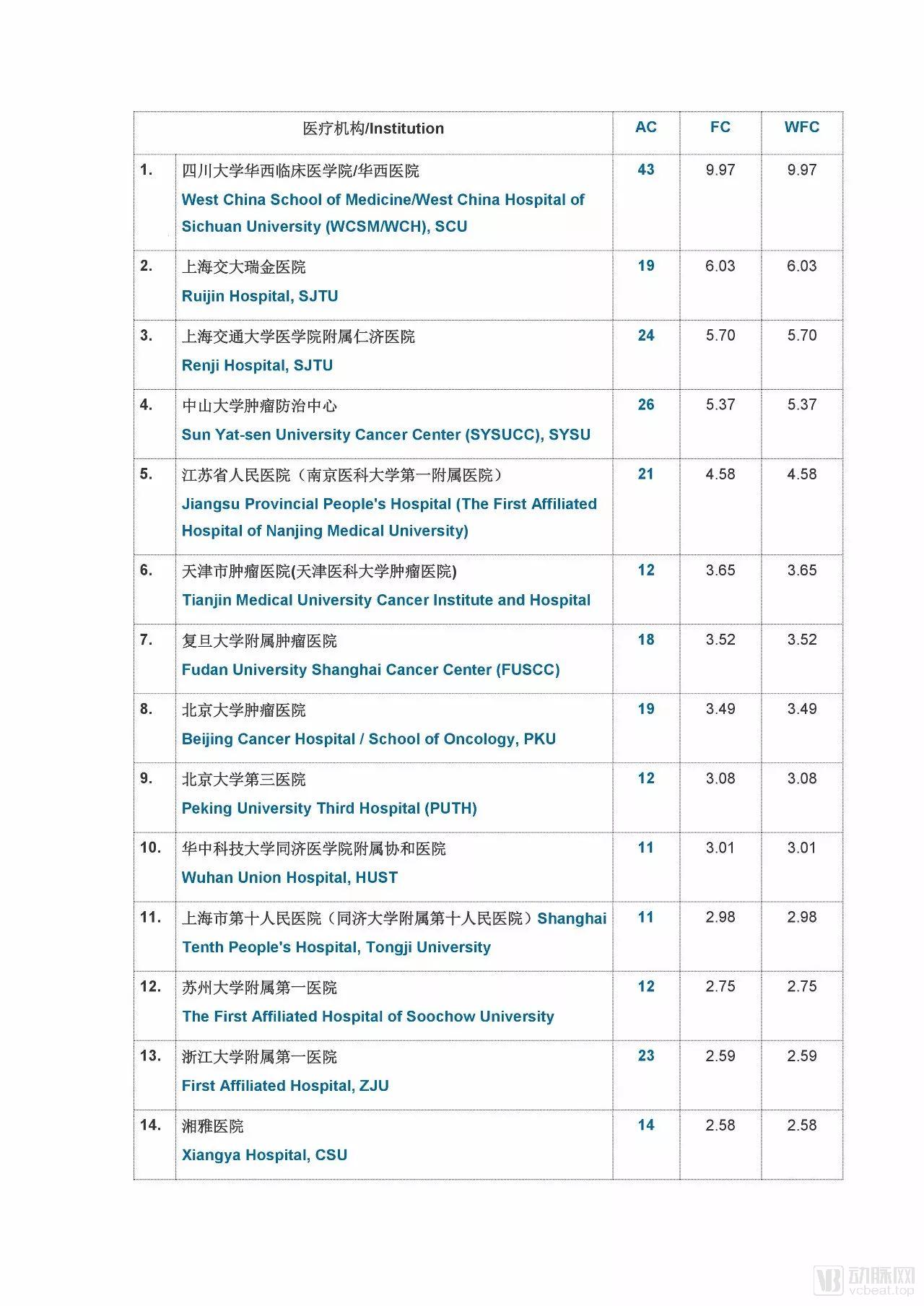
In terms of research translation, West China Hospital is undoubtedly one of the best-performing hospitals in China. It is reported that doctors at West China Hospital who apply for patents are exempt from all associated fees by the hospital and receive year-end rewards. Additionally, the hospital does not charge any administrative fees.
While physicians’ enthusiasm for innovation is undoubtedly important, enterprises remain the primary driving force behind it. In Li Baowei’s view, companies invest real capital from investors and compete in the marketplace; therefore, their intrinsic motivation for innovation is stronger than that of hospital-based physicians. Moreover, bringing a medical device to market typically involves a series of complex processes, including project initiation and development, prototype verification, type testing, and clinical trials, making it difficult for physicians to manage all aspects independently. Hence, enterprises should proactively collaborate with hospital physicians to facilitate the translation of scientific and technological achievements into practical applications.
Li Baowei believes that there are currently two models of medical device innovation: one is enterprise-driven innovation, which primarily considers technological and market factors; the other is physician clinical need-driven innovation, which carries relatively lower investment risk.
The Peking University Medical Innovation Valley team analyzed all registered medical device approval numbers and companies in China’s national medical device registry, ultimately identifying a notable trend: regions with the most abundant hospital resources tend to also be where the medical device industry thrives. “The essence of driving innovation in medical devices remains unmet clinical needs,” said Li Baowei.
Master One Niche, and a Small Market Can Produce a Champion
Since graduating from Xiamen University in 1999, Tang Haofu has accumulated 11 years of investment experience, earning him the reputation of a veteran in the investment community. Among the companies he has invested in, eight have gone public, one has filed for an IPO on the STAR Market, one plans to list on the Hong Kong Stock Exchange, and another is preparing for a Nasdaq listing. In the field of medical imaging equipment, Chuangrui Capital, founded by Tang Haofu, has invested in nearly 10 projects, with a focus primarily on cardiovascular and neurosurgical applications.
In Tang Haofu’s view, there are currently two types of innovative medical devices: one type serves as a direct replacement for existing products, while the other creates new markets. These two forms of innovation also correspond to two types of medical device companies: one is technology-driven, and the other is relatively traditional.
“Some companies in this industry have been operating for 20 to 30 years. Although they are traditional medical device manufacturers, their distribution networks are highly mature, and thus we hold them in high regard. After all, no matter how advanced the technology or sophisticated the manufacturing processes behind a product may be, it will be of little use if one cannot even find a way to bring it to market,” said Tang Haofu.
What is meant by "market-creating innovation"?
According to Tang Haofu, Chuangrui Capital invested in a project called Huadesen CTC. Conventional needle biopsy is quite effective for diagnosing mid-to-late stage tumors, but it is prone to missed diagnoses in the early stages of cancer. In contrast, the new CTC technology can confirm cancer by capturing tumor cells that have shed into the bloodstream, completely disrupting the conventional biopsy process of the past.
Using CTC for rapid and early detection can serve as a supplement to physicians’ definitive diagnosis of mid-to-late stage cancers, and can also be used to evaluate therapeutic efficacy during treatment. This approach creates a new market. Compared with innovations that merely “replace existing solutions in place,” it represents a fundamentally different type of innovation.
Tang Haofu believes that the medical device industry is one that requires long-term accumulation. In relatively traditional sectors, new companies have little chance of survival, as most fail before gaining physicians’ endorsement.
For entrepreneurs, it is best to avoid venturing into the medical device industry, which has already become traditional, terminal-focused, and scaled. “Although professionals in these fields may have lower academic credentials and a more rustic appearance than you, they possess extensive expert resources and sales teams covering the entire country, capable of gaining access to hospitals at any time. In this context, your academic qualifications are virtually useless. Therefore, only by pursuing genuine technological innovation and thoroughly mastering your technology will you stand a chance.”
N Factors Influencing Medical Device Innovation
In 2018, China’s medical device industry saw a flurry of policy developments. In addition to advancing the pilot program for the Medical Device Registrant System, the National Medical Products Administration vigorously promoted the approval process for innovative medical devices. Many industry insiders have dubbed the coming decade the “Golden Decade” for medical devices. Major investment institutions are likewise gearing up, aiming to seize the right investment opportunities in the medical device sector during this Golden Decade.
As a prominent medical investment institution in China, Legend Capital Medical Fund has consistently focused on investment opportunities arising from the convergence of medical devices and innovative elements, a strategy it internally refers to as “Device+.” According to Liu Haitao, Vice President of Investment, the “+” component encompasses a diverse range of elements. No matter how trendy or cutting-edge a technology may be, it must remain grounded in the essence of healthcare. Therefore, Liu Haitao believes that the investment value of an innovative medical device hinges on whether it can address previously unmet clinical needs with the aid of new technologies. Only innovations that truly resolve critical clinical pain points hold promise as sound investment opportunities.
Second, after achieving technological breakthroughs, it is essential to assess whether the business model is viable. For example, some companies have addressed clinical challenges through software solutions; however, if hospitals lack corresponding reimbursement codes or billing items for these services, the technology cannot function as an independent business model, thereby making monetization difficult.
Another investment institution, Peking University Healthcare Group, manages an initial RMB 300 million venture capital fund and an innovation incubation fund, and is currently launching an offshore fund to invest in Israeli medical device companies.
Zhang Jing, General Manager of the Project Innovation and Investment Department, told reporters that “Innovation and Venture Capital,” the Group’s third major business segment upgraded from the Peking University Medical Industrial Park, aims to leverage the robust hospital and expert resources of Peking University Healthcare and the Peking University Health Science Center system. Various measures are being implemented to motivate physicians to participate in medical device innovation. Leveraging its “base + fund + platform” advantages, Innovation and Venture Capital will prioritize investing in innovative projects initiated by physicians within the system. Meanwhile, through a portfolio of high-quality overseas medical device investments, the initiative will introduce advanced technologies into the Peking University Medical Industrial Park, thereby enhancing hospitals’ diagnostic and therapeutic capabilities.
Undergraduate students in the United States or Israel often complete extensive coursework in biology, chemistry, engineering, and other disciplines before entering medical school. Some even engage in one to two years of research in medicine or related fields prior to applying. In contrast, Chinese students enter medical school directly after high school. Consequently, physicians abroad tend to possess stronger hands-on capabilities in medical device innovation.
In China, it is essential to create an environment and atmosphere that facilitate regular communication between physicians and engineers. This would enable physicians to immediately connect with suitable engineers when inspiration strikes, thereby translating clinical insights into prototypes or sample devices. In this regard, the integration of medicine and engineering between Peking University Health Science Center and the College of Engineering has been a key area of exploration supported by the foundation.
Zhang Jing once estimated that the total market size of China's medical device industry is RMB 500 billion. Excluding approximately RMB 300 billion for equipment and RMB 65 billion for low-value consumables, high-value consumables account for about RMB 100 billion. Within the high-value consumables segment, aside from vascular intervention (RMB 40 billion) and orthopedics (RMB 25 billion), all other categories are below RMB 10 billion; for instance, ophthalmology, dentistry, and electrophysiology each have a market size of around RMB 7 billion.
Low market concentration remains the predominant status quo for domestic medical device companies. Among 16,000 manufacturers, only 80 are publicly listed, accounting for merely 18.5% of total revenue, which indicates substantial opportunities. Compared with the global pharmaceutical industry’s growth rate of 5% or the global medical device industry’s growth rate of approximately 5%, China’s medical device sector has achieved a 15% growth rate, making it a rare high-growth segment across all industries.
He believes that any enterprise capable of becoming a leader in its niche sector has the potential to go public. The key lies in identifying unique technologies within that niche and relying on a competent team to persistently develop them.
Market size is a primary consideration for medical device entrepreneurs. According to Zhang Jing, he has reviewed numerous business plans featuring cutting-edge technologies and founders who are overseas returnees or even top academic achievers in China. However, these projects targeted markets with a size of approximately RMB 1 billion, which were already saturated with multiple competitors. For such ventures, unless there is potential for product line extension, achieving a successful exit would be challenging regardless of how advanced the technology may be.
“Regarding medical devices, we favor three types of projects: first, companies capable of establishing new therapies that significantly improve patient prognosis and clinical outcomes; second, companies that enhance existing treatment technologies with substantial improvements in cost, efficiency, and clinical efficacy; and third, companies with high technical barriers that can fill domestic gaps and achieve import substitution,” said Zhang Jing.
In addition to teams and markets, Liang Jingfeng, a partner at Lanfeng Capital, believes that macro policies are also crucial, including policies issued by the State Council as well as documents released by the National Healthcare Security Administration and the National Health Commission. Currently, there is a trend for the “4+7” pilot program in the pharmaceutical industry to extend to medical devices and consumables. “We will be more cautious when evaluating product projects related to consumables, as future competition faced by enterprises may be more intense than anticipated.”
Entrepreneurship carries risks, especially in capital-intensive sectors such as medical devices and consumables.
“The establishment of the STAR Market by the state is truly intended to enable technology-driven enterprises to achieve rapid growth. The state does not encourage pure business model innovation, but rather emphasizes scientific research and technological innovation.” Regarding the macro trends in medical device innovation, Wang Shuguang, Executive Partner at GTJA Capital, offers a different perspective.
Many hospitals across China are already using equipment and consumables from companies such as United Imaging and Mindray. Coupled with the Sino-U.S. trade dispute, import substitution has become a major trend in the development of the medical device industry from a national perspective.
“The trend is irreversible; you just need to go with the flow and take it step by step.”