

Puyi (Shanghai) Biotech Secures Tens of Millions RMB in Series B Funding, Files IPO Prospectus Targeting Biodegradable Sinus Stents for Chronic Rhinosinusitis Postoperative Care
VCBeat has exclusively learned that Pu Yi (Shanghai) Biotechnology Co., Ltd. (hereinafter referred to as “Pu Yi Bio”) has completed a Series B financing round amounting to tens of millions of RMB, with Beijing Zhenghe Huitong Fund Management Co., Ltd. (hereinafter referred to as “Zhenghe Huitong”) serving as the lead investor. Xie Jian, General Manager of Pu Yi Bio, stated that the proceeds from this round will be utilized for product research and development, as well as the upgrading and iteration of services, further strengthening Pu Yi Bio’s market operational capabilities.
Pu Yi (Shanghai) Biotechnology Co., Ltd. was established in October 2012 and is located in the Shanghai Biomedical Innovation Incubator Park within the Zhangjiang Hi-Tech Park in Pudong, Shanghai. The company currently has a registered capital of RMB 10.516632 million and was jointly founded by overseas returnees and medical device manufacturers. It is primarily engaged in the research and development, manufacturing, and sales of high-end minimally invasive implantable medical devices for otorhinolaryngology. The company possesses core technologies for novel bioresorbable stents, spanning multiple fields including biopharmaceuticals, new materials research, and implantable medical devices.
In early 2015, Pu Yi Biotechnology established a production and R&D base with an annual capacity of 60,000 sets, in compliance with the manufacturing requirements for Class III medical devices. The facility includes a Class 10,000 cleanroom workshop, physicochemical laboratories, and biochemical laboratories, equipped with the world’s most advanced experimental, production, and testing instruments, as well as a team of R&D professionals, thereby enhancing the company’s capabilities in high-end research and development and manufacturing.
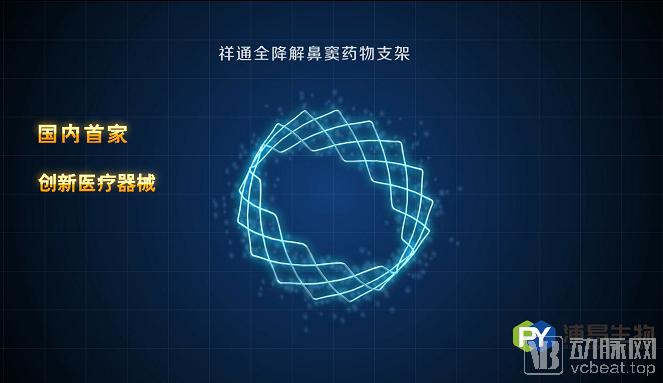
One year later, Pu Yi Biotech’s first product, the “Fully Bioresorbable Sinus Drug-Eluting Stent System” (brand name: Xiangtong™), was included in the National Medical Products Administration’s Green Channel for Special Examination and Approval of Innovative Medical Devices. In April 2017, the product obtained its medical device registration certificate, becoming the first fully bioresorbable sinus stent approved in China.
The Perfect Partner for FESS Surgery
Traditional Treatment Approaches for Chronic RhinosinusitisThe conventional management of chronic rhinosinusitis typically involves a stepwise approach. Upon confirmation of the diagnosis, patients with mild symptoms are primarily treated with pharmacological therapy, without the need for surgical intervention. However, for patients with severe disease who meet the indications for surgery, Functional Endoscopic Sinus Surgery (FESS) is performed as the definitive treatment.
FESS, the Chinese full name of which is Functional Endoscopic Sinus Surgery, has been widely performed in China for many years, with well-established surgical standards and mature techniques. Postoperatively, patients still need to continue pharmacological treatment. According to the latest Chinese guidelines for the diagnosis and treatment of chronic rhinosinusitis, topical pharmacotherapy plays a crucial role in perioperative management following surgery. To some extent, the purpose of surgery is to remove diseased tissue, thereby providing better access and space for postoperative medical therapy to achieve enhanced anti-inflammatory effects.
Due to the high incidence of chronic rhinosinusitis, its complex etiology, and frequent association with allergic and other atopic factors, the recurrence rate is exceedingly high. Many patients require secondary, tertiary, or even multiple revision surgeries shortly after their initial procedure. In many cases, the issue does not lie in the surgical technique itself, but rather in the perioperative pharmacological management during the postoperative period.
Pu Yi Biotechnology recognized the urgent clinical need and therefore developed a new product, the bioresorbable sinus stent, to provide physicians with a novel therapeutic tool. This innovation aims to achieve better treatment outcomes, reduce patient recurrence rates, improve postoperative quality of life, and help patients save on additional costs associated with disease relapse.
In terms of market size, according to estimates by the investor Zhenghe Huitong, the prevalence of chronic rhinosinusitis in China is approximately 8%, with around 500,000 patients undergoing surgical treatment annually nationwide. On average, each patient may require the implantation of two stents postoperatively, indicating substantial market demand.
According to He Chuan, Sales and Marketing Director at Pu Yi Biotechnology, the application of fully bioresorbable drug-eluting stent technology in rhinology is actually quite extensive. It includes, but is not limited to, chronic rhinosinusitis; patients with allergic rhinitis accompanied by nasal polyps, those with choanal atresia, nasopharyngeal cancer patients, and individuals undergoing septal surgery can all utilize this technology postoperatively for anti-inflammatory and anti-adhesion purposes. Because drug-eluting stents can minimize the side effects of corticosteroids while ensuring therapeutic efficacy, they hold significant value for younger patients. In line with Pu Yi Biotechnology’s current market promotion strategy, the initial focus is on capturing the core patient population, namely those with recurrent chronic rhinosinusitis. As market promotion expands in the future and new products are developed and launched, the market capacity for this technology will continue to grow.
More precise, sustained, and safer than traditional therapies
Currently, traditional perioperative postoperative treatments typically include oral corticosteroids, intranasal corticosteroid sprays, and corticosteroid irrigation.
The issues with these treatment modalities are threefold: first, patient compliance may affect therapeutic efficacy; second, whether administered orally or via nasal spray, medications cannot act precisely and sustainably on the lesion site; third, given the inherent side effects of corticosteroids, it is difficult for conventional therapies to achieve the dual goal of maximizing therapeutic benefit while minimizing systemic hormone exposure. For instance, the primary limitation of intranasal corticosteroids is their lack of precision and sustained action, whereas the major drawback of oral corticosteroids is their significant side effect profile.
The advantages of Pu Yi Biotech's fully biodegradable sinus drug-eluting stent are threefold:
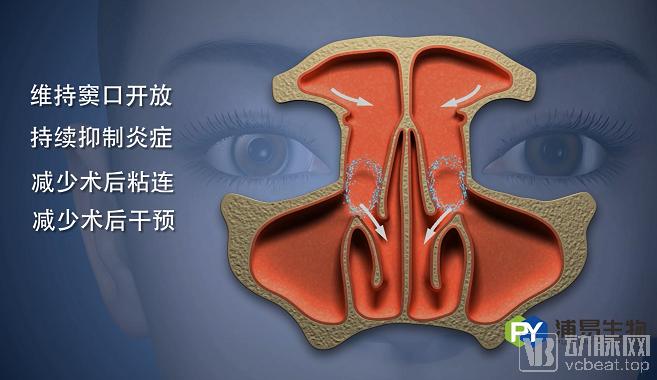
First is precision: stents are placed exactly where the problem exists, akin to the concept of targeted therapy. While providing structural support, they directly and precisely release medication at the lesion site.
Second, sustained release. The degradation period of the fully bioresorbable sinus drug-eluting stent is approximately one month, meaning that during this period, the stent can continuously and quantitatively release medication at the lesion site 24 hours a day without interruption. This constitutes a controlled-release drug delivery process. Over the 30-day degradation period, the total drug dosage delivered by a single stent is 652 micrograms. Specifically, during the first 3 to 4 days after implantation, the daily drug release is approximately 50 micrograms. As the patient recovers, the daily drug release stabilizes at around 20 micrograms.
Third, safety: due to its precision and sustained release, the fully bioresorbable sinus drug-eluting stent significantly reduces hormone dosage while ensuring therapeutic efficacy, thereby minimizing hormonal side effects.
Three Years to Sharpen a Sword
Prior to establishing Pu Yi Biotechnology, Xie Jian, the General Manager of Pu Yi Biotechnology, had previously founded Shandong Hua’an Biotechnology Co., Ltd. and Shanghai Weite Biotechnology Co., Ltd. As a recipient of the second “Zhangjiang Excellence Talent” award, he has focused on the research and development of various fully bioresorbable medical devices. In the field of fully bioresorbable drug-eluting coronary stents, Mr. Xie’s team has accumulated more than a decade of technological expertise.
Pu Yi Biotechnology has a comprehensive and systematic patent protection strategy. Currently, the company has filed multiple patents for its independently developed technologies in China, covering core technologies, derivative technologies, development applications, and other aspects. Among these, five invention patents and five utility model patents have been granted, while two invention patents are under review by national authorities. Meanwhile, two invention patents are being simultaneously filed as international patents in four countries, with grants already obtained in some of these countries, laying the groundwork for entry into the international market.
Pu Yi Biotechnology’s technical expertise primarily encompasses three areas: first, fully biodegradable materials suitable for human use; second, drug-eluting coating technology; and third, advanced polymer weaving techniques.
In 2015, after recognizing the aforementioned issues in perioperative management following chronic rhinosinusitis surgery, Xie Jian decided to seize this opportunity. Leveraging his expertise in otolaryngology and accumulated technical knowledge, he developed an innovative product to provide rhinology specialists with a novel pharmacological solution for postoperative perioperative care.
As there are no benchmark products in China, this represents a completely innovative field. Consequently, many questions remained unknown for Pu Yi Biotechnology, such as which materials to use, what physical structure to weave them into, which drugs to select, how to achieve drug release, what drug concentration to choose, and what drug loading capacity to set for the degradation period. Technically, Pu Yi Biotechnology needed to overcome bottlenecks and barriers one by one.
During this process, Pu Yi Biotech engaged with leading ENT specialists from top-tier hospitals across China, such as the Eye & ENT Hospital of Fudan University in Shanghai and Beijing Tongren Hospital, to gain insights into clinical needs. From project initiation in 2015 to obtaining the final registration certificate, Pu Yi Biotech successfully brought its product to market within three years.
Currently, only two sinus stents have obtained regulatory approval worldwide: one from Pu Yi Biotechnology and the other from Intersect ENT in the United States. In China, only Pu Yi Biotechnology’s product has entered the market.
He Chuan stated that, in comparison across three aspects—degradation time, drug loading capacity, and stent braiding technology—Pu Yi Biotech’s bioresorbable sinus drug-eluting stent outperforms Intersect ENT’s product, offering a longer degradation period, higher drug loading, and a more stable physical structure that provides superior support.
Market Promotion: Challenges and Opportunities
The Chinese healthcare market is characterized by three key features. First, over the past one to two decades, new technologies have typically been introduced into China by foreign companies, which cultivated the market by training physicians and educating patients—a process that required substantial human and material resources. Second, as highly educated professionals bearing the critical responsibility of diagnosing and treating patients, physicians are thoughtful and cautious; they are persuaded only by the mid- to long-term efficacy of new technologies. Third, China’s broader healthcare environment is undergoing significant transformation, marked by high market entry barriers, frequent tendering and bidding processes, and increasingly stringent government regulations on cost containment and the proportion of consumable expenses.
During the product promotion process, Pu Yi Biotechnology’s marketing team has come to deeply realize that while the future is promising, the road ahead is long and arduous. Only by enabling physicians to tangibly experience the therapeutic efficacy of the product—by trying it out to resolve clinical challenges that previously troubled them and by accumulating their own cases of successful treatment—can a solid foundation be laid for this market. Therefore, Pu Yi Biotechnology has invested substantial time, manpower, and resources in cultivating this market, working to gain customer recognition of the product, address market access barriers, resolve pricing and reimbursement issues, and more.
Prior to product launch, Pu Yi Biotechnology invited the Eye & ENT Hospital of Fudan University (Shanghai) to lead a clinical study involving eight major centers. Following the launch, Pu Yi Biotechnology engaged Beijing Tongren Hospital to spearhead a post-marketing multicenter study, thereby providing physicians with evidence-based medical data. Meanwhile, Pu Yi Biotechnology has actively participated in various academic conferences to increase awareness and encourage trial use of sinus stents among rhinology specialists.
Over the past three years, an increasing number of physicians have become aware of and recognized Pu Yi Biotechnology’s bioresorbable sinus drug-eluting stent. Since its market launch, Pu Yi Biotechnology has accumulated more than 1,000 validated cases (defined as implantation in patients with recurrent disease, followed by physician follow-up for over six months, with clear imaging documentation). The product has been adopted by approximately 50 hospitals, with around 130 additional hospitals awaiting tender processes. It is projected that by the end of 2019, approximately 100 hospitals will have introduced this technology.
Regarding national management of hospital consumables, He Chuan believes that in the short term, it may hinder product promotion to some extent. However, in the long run, the impact on Pu Yi Biotechnology will be minimal, as the company is confident in the substantial clinical benefits of its products. A significant clinical advantage of the fully bioresorbable sinus drug-eluting stent is its ability to greatly improve perioperative treatment outcomes and reduce the risk of reoperation. From this perspective, Pu Yi Biotechnology is also helping patients save on treatment costs, which aligns with the broader policy direction. It is believed that in the foreseeable future, fully bioresorbable sinus drug-eluting stents will serve more patients.
Why Are Investors Bullish?
As the lead investor in Pu Yi Biotechnology’s current funding round, Zhenghe Huitong is an investment firm specializing in four key sectors: healthcare, TMT (Technology, Media, and Telecom), education, and mass consumer goods. Since its establishment in 2014, Zhenghe Huitong has participated in launching nearly 20 funds, including the LED Semiconductor Fund, the Huitong Maker Mentor Fund, and the Kelan IPO and M&A Fund. The firm has made significant strategic investments across private equity (PE), M&A funds, “Dark Horse” growth funds, S-funds (secondary funds), and funds of funds (FOFs). In the healthcare sector, it boasts a team distinguished by sharp insight, strong professional expertise, and extensive industry networks.
According to Zhang Zhiling, a partner at Zhenghe Huitong Medical Investment, the firm has long maintained a strong focus on the high-value consumables sector. Compared with imported products, most domestically produced high-value consumables remain at a competitive disadvantage. The few domestic products that have gained market advantage are those featuring incremental innovations; these have largely achieved import substitution in niche segments such as cardiac stents and orthopedic trauma devices. However, imported products continue to dominate most other fields—including endoscopes, orthopedic joints, and pacemakers—accounting for more than 50% of the market share in each.
However, domestically produced high-value medical consumables also possess advantages that imported products lack. Zhang Zhiling pointed out, “First, domestic companies hold a distinct advantage in communication with hospitals and clinicians. R&D personnel at domestic firms can promptly communicate with clinicians regarding product usage and make adjustments and improvements to the devices based on physicians’ needs. Second, domestic manufacturers can design products better suited to Chinese physicians and patients according to clinical needs, something that is difficult for foreign manufacturers to achieve.”
Zhang Zhiling stated that Zhenghe Huitong remains firmly optimistic about the development prospects of domestically produced high-value consumables and focuses its investments on medical device companies in the market that demonstrate disruptive technological innovations. “When conducting due diligence on potential investment targets, we primarily focus on whether innovative products are recognized by clinicians, whether they are accepted by the market, and whether their distribution channels and overall team possess competitive advantages,” she said.
Pu Yi Biotechnology is precisely such a high-growth enterprise that has withstood market tests. Zhang Zhiling pointed out that Pu Yi Biotechnology’s product is the first domestically developed biodegradable sinus stent, primarily addressing issues of patient medication adherence and the difficulty of delivering nasal corticosteroid sprays to the deep regions of the middle meatus. It offers a new therapeutic option for patients with refractory sinusitis and those with nasal polyp-associated sinusitis, thereby improving surgical success rates. Based on market assessment, she believes this product is unique in the Chinese market, represents a disruptive innovation, and holds significant potential for rapid growth in the future.