

JoyHealth IPO Filing: Redefining Community Smart Clinics with a Preventive Healthcare Ecosystem
With the introduction of a series of policies related to clinics, regulatory constraints on physicians establishing clinics have been gradually lifted, starting from top-level design. According to data from the National Bureau of Statistics of China, the number of clinics in China reached 248,000 by the end of 2018, and this figure is expected to continue rising in the future.
In an increasingly competitive environment, the survival of traditional individualized clinics will become more challenging. With the advent of the 5G era, community smart healthcare will undoubtedly establish a moat for the operation of community clinics.
Home Health, dedicated to the future of healthcare, has relied on offline medical services since its inception, continuously exploring new models of smart community healthcare. Today, it has established a closed-loop smart community healthcare system that integrates a health big data center, AI-powered terminals, wearable devices, and an online internet product matrix.
For a long time, public hospitals have occupied a dominant position in China’s healthcare system. Compared with large hospitals, clinics inherently face limitations such as a narrow scope of services, lower quality of physicians, and weaker patient trust.
In recent years, driven by capital infusion and policy support, the operational models of clinics are undergoing significant restructuring.
As mindsets shift from a disease-oriented to a health-oriented perspective, people’s health needs are no longer confined to seeking medical treatment and prescriptions but have expanded into the broader realms of disease prevention and health management. This upgrade in consumer demand has also imposed higher requirements on clinics in terms of patient acquisition strategies, as well as the depth and extensibility of their services.
The traditional business model, confined to the narrow scope of “treating patients,” may no longer make a compelling business case for today’s new-generation clinics.
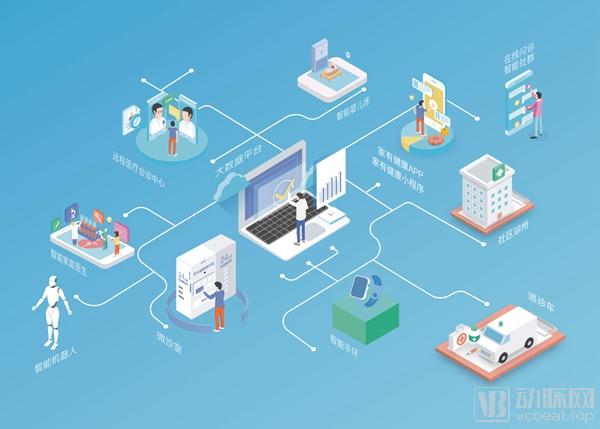
Home Health Smart Service System (Image provided by the interviewee)
“The future development direction of Jiayou Health Community Clinics does not focus primarily on treating illnesses, but rather takes preventive medicine and health management as its entry point. By aligning with users’ high-frequency needs, we aim to develop corresponding service categories to build trust with users, making community clinics their first choice for health services. When our own medical capabilities are insufficient to meet patient needs, we will facilitate referrals to other institutions through channels such as green pathways,” stated Mr. Zhang Peng, founder of Jiayou Health. He emphasized that implementing a smart healthcare strategy is a crucial component in achieving this goal.
He told VCBeat that there are three main reasons for the original intention of Jiayou Health's smart healthcare layout:
I. Leverage intelligent hardware and software along with internet technologies to break through the service boundaries of clinics and expand the physical radius for patient acquisition.
II. As a real estate and healthcare enterprise, the deployment of smart healthcare solutions helps enhance homeowners’ quality of life and sense of belonging.
3. Achieve interoperability of data and services with other business formats in the surrounding community, such as unmanned supermarkets and unmanned cinemas.
Since its launch in May 2016, Jiayou Health has established three outpatient clinics and eight experience stores through on-the-ground projects in Zhongshan, Zunyi, and Wuxi. It has built a full-time medical and nursing team of 86 members and a remote expert team of 200 physicians currently practicing at Grade A tertiary hospitals. The company has provided 3,342 in-home services to property owners, delivered emergency medical care to 126 individuals, identified 430 cases of chronic diseases, and flagged 98 individuals at high risk for major illnesses. Additionally, it has organized 350 public welfare lectures and free clinic activities, with property owners generating 46,500 patient visits to Jiayou Health facilities.
Patient acquisition and refined post-acquisition operations are the two core pillars of clinic management. Among these, patient acquisition is the primary concern for operators.
In April this year, the 2.0 version of the Jiayou Health Smart Micro-Clinic, which integrates remote consultations, online medication purchases, and online testing, was launched, primarily deployed in business districts within a 3–5 kilometer radius of clinics.
“Typically, the service radius of a single clinic is limited to just two to three kilometers in its vicinity. Even if a clinic cultivates a strong reputation through meticulous operations, its customer acquisition range remains highly constrained,” said Mr. Zhang Peng in an interview with VCBeat. He explained that the design philosophy behind Jiayou Health’s Smart Micro-Clinic is to leverage smart products as the medium and the internet as the link, thereby extending the core functions of the clinic in physical form to areas beyond its traditional coverage, thus expanding its customer acquisition radius.
Also launched concurrently with the Smart Micro-Clinic was Jiayou Health’s Smart Family Doctor 1.0 product.
Unlike intelligent micro-clinics, which are tasked with patient acquisition, intelligent family doctors are primarily designed for home settings. They offer features such as one-touch emergency assistance, voice-activated wake-up, remote video consultations, video auscultation, routine urinalysis, indoor formaldehyde detection, food nutrient analysis, and routine medical monitoring (e.g., blood pressure and electrocardiogram).
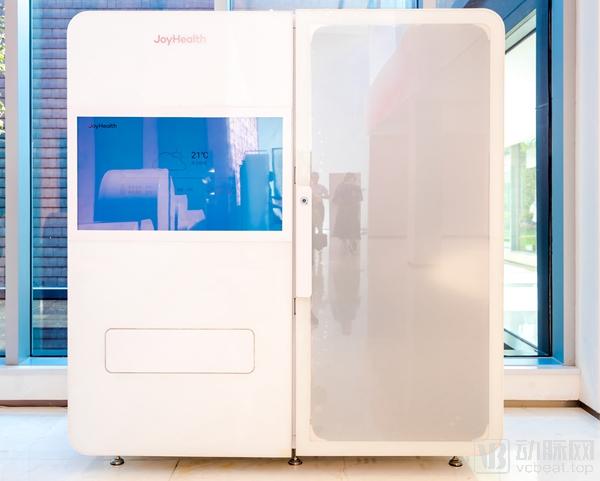
Exterior View of the Jia You Jian Kang Smart Micro-Clinic (Photo provided by the interviewee)
“Clinics generally face high customer acquisition costs, making post-acquisition value conversion and sustained service capability equally important,” stated Mr. Zhang Peng. In past service delivery, they observed that some users harbored certain reservations about in-home visits by medical personnel. By leveraging intelligent family doctors to deliver remote medical services, clinics can not only minimize intrusion into users’ lives but also establish a solid foundation of trust and maintain ongoing communication mechanisms.
The Healthy Family AI-powered family doctor product has officially entered the market, with an annual service fee priced under 3,000 yuan, enabling users to enjoy comprehensive and convenient family doctor services from the comfort of their homes.
Smart Micro-Clinics and Smart Family Doctors are just two of the products in the Jiayou Health smart product series. Within Jiayou Health’s overall strategic layout, a series of service scenarios have been designed, categorized by different application levels such as individuals, families, communities, and business districts.
At the individual level, we have developed SOS smart bracelets and necklaces; at the home level, we have deployed smart family doctors; at the community level, we have established physical clinics under the “Youjia Youjiankang” brand; and at the commercial district level, we have introduced smart micro-clinics and emergency patrol vehicles.
Mr. Zhang Peng told VCBeat, “In the past, relying on a single clinic as a service delivery point limited the reach and scalability of our services. What we aim to do is leverage intelligent hardware and software along with internet technologies to package clinic services into distinct physical products, thereby addressing health needs across varying service radii.”
Although the private clinic market has continued to gain momentum with the successive introduction of policies favoring socially operated medical institutions, it is undeniable that public hospitals still dominate China’s healthcare system, employing more than 80% of the physician workforce.
Under constrained resource conditions, how to improve physician utilization rates and enhance overall healthcare service levels is also a critical issue for the current operation of chain clinics.
To facilitate the interconnectivity of medical resources, the medical and nursing team of Jia You Jian Kang has been divided into two groups: an offline full-time team and an online remote expert team. Currently, the full-time medical and nursing team of Jia You Jian Kang consists of 86 members, while the remote expert team (comprising practicing physicians from Grade III Class A hospitals) totals 200 members.
Jiayou Health stated that, through an intensive approach, the primary functions of remote expert teams are reflected in the following aspects:
1. Through terminal products such as smart micro-clinics and intelligent family doctors, provide users with remote consultations, online inquiries, and other services in scenarios outside of community clinics.
2. Expand the brand awareness of community clinics through remote services, driving patient traffic to offline clinics.
3. Enhance the quality of offline medical services through remote consultations.
To facilitate management for physicians and clinics, Jiayou Health has also developed its own information technology support system. On the clinic side, it features a self-developed cloud-based Hospital Information System (HIS); on the physician side, it offers a dedicated mobile app that supports remote consultations and the creation of health-focused micro-courses; and on the consumer side, it maintains a matrix of mini-programs, WeChat official accounts, and community platforms.
Among these, the core cloud-based Hospital Information System (HIS) not only processes routine outpatient data but also collects residents’ daily life data—including physical activity, emotional status, and behavioral patterns—centered on preventive medicine, and integrates this information into the family physician workstation. Leveraging a big data platform, the system provides preventive recommendations based on residents’ lifestyle patterns, thereby delivering personalized health plans for each community resident.
Mr. Zhang Peng stated that the model implemented by Jia You Jian Kang (Home Health) has virtually no existing classification standards within the industry. However, as people’s living standards continue to rise, there will inevitably be greater demand for health-related services in the future. The scope of services provided by Jia You Jian Kang has long extended beyond conventional medical care. Therefore, classification standards are of secondary importance; what capital investors value most is the ability to generate revenue.