

Battle of the Giants: Varian, Elekta, and Accuray's Rivalry from Global Feuds to the Chinese Market

Accuracy
--
As one of the oldest and most lethal diseases, cancer has been called “the typical plague of our generation” due to the shadow it casts over medicine, science, society, and even politics. In China, cancer has become the leading cause of death from disease, accounting for approximately 22% of new cancer cases worldwide, a proportion that continues to rise.
Humanity’s war against cancer has a similarly long history, but it was not until the discovery of X-rays in the 19th century that treatment methods underwent revolutionary improvements. Since then, the concept of radiotherapy has been introduced into medical history. In the 20th century, radiotherapy has played an increasingly important role in cancer treatment: according to WHO statistics, approximately 45% of tumors are curable; among these cured cases, about 40% are attributed to radiotherapy, and roughly 70% of cancer patients require radiotherapy at various stages of their disease.
Accompanying the concurrent advancement of cancer treatment technologies is the intensifying competition among radiotherapy equipment manufacturers.
The technological breakthroughs that surged in the early 20th century led to the emergence of radiotherapy equipment companies, among which Varian, Elekta, and Accuray rose to prominence. Interestingly, these three major companies, originating from different regions, were brought together by technology and have since focused on the Chinese market due to its dynamics.
Given the prominence and deep historical ties of these three companies in the global radiotherapy community during the 20th century, VCBeat (WeChat ID: vcbeat) has traced their origins and evolution, highlighting in particular the legendary journey of Varian’s founder and the notable story linking the founders of Elekta and Accuray. Furthermore, by analyzing the commercial strategies of these three companies in China, we aim to forecast the future trajectory of the domestic radiotherapy equipment and technology market.
Contrary to conventional wisdom, the three giants that have each made revolutionary contributions to radiation oncology were not born in the same era; indeed, the age gaps among their founders are even wider than one might imagine. Nevertheless, they remain united by a shared spirit of exploration and intellectual pursuit in the field of radiation science.
On May 4, 1901, Sigurd Varian, the second son of Irish-American poet and musician John Varian, was born after his elder brother Russell Varian. As children raised in a family steeped in literature and the arts, they might have been expected to follow in their father’s footsteps—especially given that their father held the title of member of the Dublin Theosophical Society. However, the Varian brothers instead developed a fascination with electrical engineering. Moreover, their inventive genius during childhood was evident in some of their pranks; for instance, their favorite game involved connecting electrical outlets to bed springs and doorknobs, then observing the reactions of passersby who received mild electric shocks.
By the 1930s, driven by personal interest, the Varian brothers began researching a radio-based technology capable of detecting aircraft at night or through clouds using microwaves. They ultimately designed and built the first high-frequency amplifier to generate microwaves—the klystron—which would become a critical component in modern radiotherapy equipment.
Based on this, in 1948, a group of scientists closely affiliated with Stanford University, including Russell Varian, Sigurd Varian, William Hansen, and Edward Ginzton, founded Varian Associates.
At this time, another rising star emerged in Northern Europe. Lars Leksell, born in 1907, earned his medical degree from the Karolinska Institute in Sweden, where he also began his training in neurosurgery. After World War II, Leksell initiated plans for the development of a precise radiosurgical instrument, replacing the radiation source with cobalt-60 gamma units and fully integrating them with existing stereotactic systems.
The period from the 1950s to the 1970s was of great significance to the field of radiation therapy. In 1954, an infant named John R. Adler was born in Yonkers, New York. At that time, neither Lars Leksell nor the Varian brothers could have imagined that this individual would later become closely associated with them.
In 1958, Lars Leksell was officially promoted to professor. In 1959, Varian went public on the New York Stock Exchange and successfully developed a medical linear accelerator for radiation therapy the following year. In 1967, the world’s first Gamma Knife, developed under the leadership of Lars Leksell, was installed. Seizing the opportunity, he co-founded Elekta with his son Laurent Leksell in 1972, formally introducing the Gamma Knife to a broader market.
In 1985, John R. Adler, a graduate of Harvard Medical School, went to the Karolinska Institute in Sweden for a one-year neurosurgical research fellowship, an experience that changed the course of his life.
Perhaps it was fate that John R. Adler studied under Lars Leksell. Lars Leksell taught John R. Adler how to perform non-invasive radiosurgery using the Gamma Knife; however, Adler observed that the Gamma Knife required a stereotactic frame fixed to the patient’s skin, which increased the procedural difficulty for physicians. Consequently, Adler conceived the idea of leveraging existing computer and big data technologies to improve the Gamma Knife.
Returning to Stanford University, John R. Adler was committed to turning his vision into reality. He quickly raised $800,000 from other neurosurgeons, friends, and family, and in 1990 founded a company named Accuray.
Meanwhile, his plans to improve the Gamma Knife also achieved a breakthrough. Through collaboration, John R. Adler jointly invented the CyberKnife with Peter and Russell Schonberg of Schonberg Research, Inc., a device that gained renown in the field of radiation therapy. In 2001, the CyberKnife received further FDA approval, permitting its use for treating tumors anywhere in the body.
After Accuray established its foothold in Silicon Valley with the CyberKnife, Varian, seemingly sensing the boldness of its domestic U.S. competitor, swiftly responded to the challenge.
Given that Accuray, a rising star, has penetrated the market through precision radiotherapy equipment, Varian, a high-tech company with profound heritage and the first to settle in Stanford Research Park, the birthplace of Silicon Valley, has also adopted a “precision” strategy. Meanwhile, to secure a dominant position in the global radiotherapy market, Varian has unveiled a sharp weapon.
The advent of the new millennium ushered in a new wave of technological revolution. Against the backdrop of computers gradually becoming more accessible in the developing world, the internet wave first hit Silicon Valley.
Varian simply went with the flow, embarking on a “radiotherapy + Internet” strategy.
In 2001, Varian released the Eclipse™ treatment planning software, the first high-performance, Windows-based treatment planning system for cancer radiation therapy. In the following years, Varian continued to innovate, launching new products every year.
On the other hand, Elekta, across the Atlantic, has stayed clear of the turbulence and turmoil in the United States, adopting a markedly different yet still aggressive expansion strategy compared to Varian.
The fame of the Gamma Knife no longer seemed to satisfy Elekta’s ambitions. In 1997, Elekta acquired the radiation therapy division of Philips Medical Systems, signaling its ambition to the global radiotherapy market. After entering the 21st century, Elekta accelerated its M&A activities: in 2003, it acquired Neuromag, a Finnish manufacturer of magnetoencephalography (MEG) systems; in 2005, it acquired IMPAC Medical Systems, a cancer management software company; in 2007, it acquired CMS, a provider of radiotherapy planning software; and in 2010, it acquired Resonant Medical, a Canadian developer of visualization products for radiation oncology.
From this perspective, all three companies were steadily advancing toward their respective strategic goals until a personnel change disrupted the status quo.
On February 28, 2010, a resignation letter was posted on an investment website by John R. Adler, the renowned founder of Accuray and inventor of the CyberKnife. In the letter, he stated: “My differences with management regarding the future direction of CyberKnife technology and the company’s business strategy have grown increasingly pronounced. My efforts as Chief Executive Officer have not only gone unrecognized but have also resulted in my receiving threatening letters from lawyers, containing allegations of defamation and other accusations, and demanding that I remain silent.”
This letter caused a stir in the industry. However, before the dust had even settled, Accuray’s long-time rival Varian announced on March 8 that it had appointed John R. Adler as its Vice President and Chief Technology Officer.
Accuracy could no longer remain composed; it filed a lawsuit with the court, but the case ultimately came to nothing. With Steve Jobs as a precedent, John R. Adler was not the first founder to be rejected by his company and to reject it in return.
Not only that, but John R. Adler remains confident in the potential of radiosurgery across various application areas. After assuming his new role, he continued to guide Varian’s strategic layout and address the market challenges posed by surgical robots. In 2012, he also stated that another reason for his departure from Accuray was the company’s exclusive focus on the core radiotherapy market, which ran counter to the developmental direction envisioned by John R. Adler. Facing the threat posed by the rise of the da Vinci Surgical System, he remarked, “If we cannot attract surgeons from other specialties, we will not be able to win this war.”
Following the departure of John R. Adler from its leadership, Accuray appointed Euan Thompson as its new Chief Executive Officer. Under Thompson’s leadership, Accuray has adopted more aggressive measures to address market challenges, aiming to stimulate demand for radiotherapy by providing patients with ongoing clinical trial data that directly compares CyberKnife treatment with other therapeutic options, such as da Vinci surgical robot-assisted interventions.
Elekta, watching from the sidelines, did not feel relieved. Although John R. Adler’s departure seemed to eliminate one competitor, his reemployment made another rival, Varian, even stronger, and Accuray itself would not sit idle. Taking advantage of the confrontation between Varian and Accuray in the United States, Elekta set its sights on one of the world’s largest markets—China.
Round 1: Making the First Move
In 1982, China was in the early stages of its modernization drive. At the beginning of the year, a call emerged domestically regarding foreign economic relations: “We must open up two markets—the domestic market and the international market—and master two sets of skills—the ability to organize domestic development and the ability to develop foreign economic relations.”
Elekta fully understands this.
In the year the market opened its doors, Elekta’s products were the first to cross the oceans and reach the lands of the East. Although Elekta has historically focused on radiotherapy for tumors and brain disorders, its product portfolio offers comprehensive whole-body tumor treatment solutions, covering patients from head to toe. In China, however, radiotherapy—being the most capital-intensive and talent-demanding among the three major cancer treatment modalities—was still in its infancy. This allowed Elekta to seize the first-mover advantage, rapidly penetrate China’s top-tier hospitals, and capture the high-end market segment.
However, even if Elekta sought to quietly capture the market, its maneuvers were seen by its long-standing rival, Varian, as nothing more than self-deception. Merely a year later, in 1983, Varian also entered China.
Round 2: Showdown of the Leading Stars
In theory, Elekta’s one-year head start should have hindered Varian’s expansion to some extent. However, Elekta underestimated Varian’s competitive strength, and both companies underestimated the rapid, untamed growth of the Chinese market. In 1984, leveraging its superior technology and market channels, Varian installed its first linear accelerator at the Railway General Hospital of the Ministry of Railways in Beijing (now Beijing Shijitan Hospital, Capital Medical University).

Classification of Radiotherapy Products (Chart by VCBeat)
Thereafter, the two companies engaged in competition in the Chinese market for more than 30 years.
In terms of market share, Elekta took the lead by leveraging its one-year head start, effectively capturing the high-end market; however, Varian later overtook it by virtue of the broader application range of its linear accelerators.
Elekta’s flagship Gamma Knife achieves optimal outcomes in the treatment of solid tumors or those with relatively fixed positions. Owing to its short treatment duration, low requirements for facility and bunker specifications, ease of maintenance, and lower equipment costs, its practicality is well-suited to China’s current healthcare landscape. However, a notable limitation of the Gamma Knife is that its therapeutic efficacy is significantly compromised for tumors exhibiting substantial motion.
On the other hand, Varian’s core product, the linear accelerator, can to some extent compensate for the shortcomings of the Gamma Knife. Linear accelerators can be used for whole-body treatments, and their systems are simple to operate and easy to master. Although they may not surpass the Gamma Knife in treating fixed tumors, linear accelerators have a broader range of applications by comparison.
Round 3: Chronicles of Localization
However, when it comes to Elekta’s remarkable turnaround, its most impressive achievement lies in its market strategy. Unable to compete head-on with the deep-pocketed and long-established Varian, Elekta deployed its trump card: localizing its subsidiaries.
In April 1992, driven by medical professionals, the “Shanghai Gamma Knife” Hospital was established and rapidly introduced Elekta’s latest system. In April 2000, the Gamma Branch of Huashan Hospital Neurosurgery Group Hospital was founded; in 2004, Elekta (China) was established, marking Elekta’s first step toward market and product localization in China.
This long-term strategy did not initially raise alarms at Varian; it was only in 2013, when Varian hit a sales trough in the Chinese market, that the company truly began to fear the strategic moves Elekta had made more than a decade earlier.
In fact, the reasons for Varian’s sales slump are multifaceted. In addition to the rising number of overseas competitors, China’s domestic radiotherapy technology has also begun to develop: Shinva Medical’s flagship 6MW radiotherapy equipment has seen gradually improving sales, United Imaging Healthcare is exploring its own linear accelerator, and Yibeiya has emerged as the leading domestic proton therapy brand, with its equipment currently installed in Shandong.
Even so, Varian considered localization a foregone conclusion. In 2007, Varian established a factory and its Greater China headquarters in Beijing—the company’s only production base for medical linear accelerators outside North America—in an effort to make China its second-largest global market. However, at that time, Varian did not decentralize management authority to its local branch.
During a downturn, Wei Sitao was appointed as Varian’s global CEO in a time of crisis. In 2014, Zhang Xiao, who had previously overseen the radiotherapy business, became Varian’s Global Vice President and President of Greater China. Upon assuming their roles, Zhang Xiao and Wei Sitao immediately reflected on Varian’s previous arrogant demeanor: “If we are preoccupied with our own sales performance every day, how can we possibly help patients fight cancer?” Realizing that Varian should not focus solely on its competitors, Zhang Xiao and his team began analyzing the Chinese market and adapting Varian’s existing equipment to better suit Chinese patients.
According to Zhang Xiao, Varian’s latest medical linear accelerator has received approval from Chinese authorities. Varian has integrated its AI-driven adaptive technology into the intelligent platform of its China-manufactured linear accelerator, Halcyon. As the world’s first linear accelerator to achieve full-process image-guided rotational intensity-modulated radiation therapy (IMRT), it enables personalized treatment plans for every patient and each treatment session.
In 2018, according to Varian’s financial report, its global market share exceeded 50%, with a 40% share in the Chinese market; Elekta and Siemens ranked second and third, with market shares of 32.8% and 14.3%, respectively.
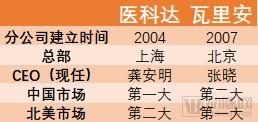
Overview of Varian and Elekta’s Localization in China (Chart by VCBeat)
Round 4: Accuray Enters the Fray
It appears that, so far, Accuray has fallen into silence following the departure of John R. Adler. After all, while competitors have been thriving in the market, the founder’s exit has significantly weakened the company. Although it once entered the Chinese market, it lacked the capacity to focus on market expansion. Will Accuray decline irreversibly as a result? No. As the pioneer behind the CyberKnife—a revolutionary invention in the industry—Accuray is not one to surrender easily.
In 2015, as competition in China’s radiotherapy market reached a fever pitch, Accuray began cautiously selecting partners and initiating related negotiations. On another front, in 2018, Accuray’s new products—the Radixact® fourth-generation tomotherapy system, the Precision® intelligent treatment planning system, and the iDMS® big data smart management system—shone brightly at the 27th China International Medical Equipment Fair & Technical Exchange (CHINA-HOSPEQ), hosted by the International Exchange and Cooperation Center of the National Health Commission of China.
Finally, on January 28, 2019, at the Tianjin Guest House in China, Accuray signed an investment and cooperation agreement with China Isotope & Radiation Corporation (CIRC), the country’s largest enterprise in nuclear technology applications, a dominant player accounting for half of the tumor radiotherapy market, and known as the “leader in radiopharmaceuticals.” Under the terms of the agreement, the two parties will establish a joint venture in Tianjin—CNNC Accuray Medical Technology Co., Ltd.—to pursue collaborations in the healthcare industry.
Previously, Varian and Elekta dominated the majority of China’s radiotherapy equipment market. Accuray, on the other hand, saw limited sales in China due to the high cost of its equipment driven by its technological specifications, as well as the elevated costs associated with after-sales maintenance resulting from U.S. export restrictions. However, Accuray’s alliance with such a powerful partner is poised to reverse the intensely competitive “one mountain cannot hold two tigers” dynamic that has long characterized China’s domestic radiotherapy sector.
Finally, the strategic footprints of the three giants in the radiotherapy industry have all taken shape in China. The future strategies of Elekta and Varian, as they face off against their long-standing rivals, are particularly anticipated.