

Stryker's $1.4B Acquisition of K2M: The Rise of a 3D-Printed Spinal Implant Leader

K2M
Complex Spine and Minimally Invasive Solutions Provider
On August 30, 2018, a major acquisition took place in the field of 3D-printed medical implants: Stryker acquired K2M Group Holdings (hereinafter referred to as “K2M”), a developer of spinal implants, for up to $1.4 billion.
Compared with industry giants such as Johnson & Johnson and Stryker, K2M is smaller in scale but has experienced rapid growth in recent years, launching 10 to 12 new products annually. Currently, the company has 10 products approved by the FDA, which account for approximately 12% of its total annual revenue. Leveraging its strong product R&D capabilities, K2M has emerged as one of the leaders in the field of 3D-printed spinal implants.
K2M’s product portfolio is categorized into four major segments: complex spine products, minimally invasive surgical products, products for degenerative spine conditions, and biologics. The majority of these products are manufactured using layered titanium 3D printing technology. Implants produced with this technology facilitate superior bone ingrowth, offering unparalleled advantages over other implant solutions.
It is precisely this advantage that has made K2M’s products highly favored by the market, driving a corresponding surge in the company’s revenue. An examination of K2M’s financial report for the first half of 2018 provides insight into the company’s operational performance.
As of June 30, 2018, K2M reported total revenue of $141.5 million for the first six months of 2018, representing a year-on-year increase of 9.9%. Of this, revenue from the U.S. market amounted to $104.2 million, up 7.5% year on year, while international market revenue reached $37.2 million, up 17.2% year on year. Previously, the company had projected full-year 2018 total revenue to be between $288 million and $291 million, reflecting a year-on-year growth of 12% to 13%.
Compared with industry peers such as Johnson & Johnson and Zimmer Biomet, K2M is a relatively young company; its acquisition by Stryker underscores recognition of its products and R&D capabilities. We aim to outline K2M’s development history and key product portfolio, and analyze the reasons behind Stryker’s interest in acquiring the company.
In 2004, K2M was founded in New York, USA. The company’s mission at its inception was to provide advanced therapeutic technologies and medical devices for patients with spinal disorders. Following the introduction of 3D printing technology, the company expanded its business scope into the fields of minimally invasive surgery and degenerative spinal diseases, while its market share in the spinal implant sector also grew rapidly.
As a co-founder of K2M, Eric Major graduated from James Madison University in 1991 with a Bachelor of Arts degree in Political Science. After graduation, he worked in sales, marketing, and product development at spinal companies including Johnson & Johnson, Acromed Spine, and Synthes Spine.
Eric Major has over 20 years of experience in the field of spinal implants. Prior to founding K2M, he established OsteoMedix, a company specializing in minimally invasive spinal devices. In 2001, OsteoMedix was acquired by Interpore Cross, and Eric Major subsequently served as President of the Minimally Invasive Devices Division at Interpore Cross. He resigned from Interpore Cross in 2002.
In 2003, Eric Major recognized that there remained a significant unmet need among surgeons in the treatment of complex spinal deformities, creating an urgent demand for differentiated technologies and novel products. Consequently, in 2004, Eric Major co-founded K2M together with his father-in-law and John Kostuik. Eric Major served as the company’s President and Chief Executive Officer, his father-in-law oversaw financial management, and John Kostuik, a surgeon, served as the company’s Chief Scientific Officer.
Eric Major believes that passion and creativity are indispensable factors in founding a company. He named the company “K2M” because “K2” is the world’s most difficult mountain to climb, stating that one of the purposes of establishing the company was to challenge Johnson & Johnson’s dominance in the spinal implant sector; “2M” refers to two family members, as the company was co-founded by him and his father-in-law.
A review of K2M’s history reveals several key milestones in the company’s development:
In terms of products, K2M has been dedicated to the development of complex spinal solutions since 2004, successively launching its first product, Denali, and its flagship product, Mesa, to treat spinal deformities caused by scoliosis, trauma, and tumors. At this juncture, Eric Major recognized that, alongside business growth, the company required a more robust product portfolio to drive corporate development and capture market share.
In 2007, K2M began developing its portfolio of products through in-house R&D, entering the minimally invasive surgery sector with the development of the Serengeti system, which was launched overseas in 2008. Two years later, K2M formally entered the biologics market with the launch of the VIKOS Cervical Allograft System. The biologics line complements the company’s existing product portfolio, enabling it to focus on minimally invasive procedures and complex spinal conditions.
In terms of market presence, K2M first established a firm foothold in the U.S. market before turning its attention to the international arena. On August 27, 2008, K2M entered the global spinal market by leveraging its recently obtained ISO 13485 certification and CE marking for spinal devices. The company’s comprehensive product portfolio, developed to treat complex spinal conditions—including the RANGE Spinal System, MESA Spinal System, and DENALI Spinal System—was successfully launched in Spain and the United Kingdom.
K2M also officially embarked on its expansion into the international market: on November 3, 2009, K2M entered the Japanese spinal market; on November 12, 2009, it entered the German spinal implant market; on September 18, 2013, it entered the French spinal implant market; and on April 6, 2017, it entered the markets in Australia and New Zealand.
In addition to relying on its own R&D, K2M also expands its product portfolio through acquisitions and commercial partnerships.
To expand its cervical spine product portfolio and assist surgeons in addressing highly challenging cervical spine conditions, K2M acquired Palo Alto—the sole static cervical vertebral body replacement device under Cardinal Spine and the first of its kind to receive FDA approval worldwide—along with its related intellectual property on October 23, 2017. The specific terms of the transaction were not disclosed. Palo Alto is indicated for patients with degenerative cervical spine disease, enabling the replacement of diseased or damaged vertebral bodies and facilitating decompression of neural tissues.
Surgeons can use Palo Alto in conjunction with K2M’s allograft implants to enhance integration between the implant and human tissue. Long-term clinical data demonstrate that the fusion rate for patients using Palo Alto exceeds 96%. K2M has integrated this device into its differentiated product portfolio, helping surgeons address the treatment of various spinal disorders and promoting three-dimensional global balance in patients.
In the history of K2M’s development, another partner deserves special mention. To advance the research and development of products for treating spinal disorders and to improve polyether ether ketone (PEEK) implants, K2M had long sought collaborations with leading medical device companies. In 2017, K2M successfully entered into a comprehensive development agreement with 3D Systems, a global leader in 3D printing technology with more than 30 years of extensive experience.
Layered titanium 3D printing technology is K2M’s core competency. Advanced 3D printing technology is ineffective without compatible 3D printers to support it. Fortunately, 3D Systems’ Direct Metal Printing (DMP) machines are ideally suited for fabricating metal components with porous structures and organic geometries, such as K2M’s titanium spinal interbody fusion cages. Furthermore, under the terms of their collaboration agreement, 3D Systems will provide design consulting, 3D printing production, and post-processing services—including heat treatment, surface finishing, cleaning, and laser marking—for K2M’s CASCADIA series of implants.
Gautam Gupta, Vice President of Business Development at 3D Systems, stated, “By partnering with 3D Systems, K2M has gained the capital to compete alongside industry giants.” Leveraging 3D Systems’ 3D printers and K2M’s robust capabilities in developing spinal implants, K2M has been rapidly launching new products to market, leaving most competitors behind and gradually catching up with industry leaders such as Johnson & Johnson, Medtronic, and Zimmer.
Under the microscope, human bone exhibits a lamellar structure composed of numerous fine, adjacent, and alternating layers of bone tissue. Traditional spinal implants are made from solid metals (such as aluminum, silver, and tantalum), which are unfavorable for bone growth, prone to infection, and can lead to increased bone brittleness after implantation. After years of research, surgeons have begun adopting PEEK implants. Although PEEK implants offer low density, lightweight properties, comfortable usage, and minimal CT or MRI artifacts, they lack osseointegration capability, posing risks of displacement and rejection post-implantation.
To address the pain points associated with solid metal and PEEK implants, K2M has prioritized the development of novel 3D printing technologies as a key focus of its corporate growth strategy.
In 2015, K2M officially unveiled its core 3D printing technology—Lamellar 3D Titanium—at the annual meeting of the North American Spine Society. This advanced technology utilizes titanium powder and high-energy lasers to mimic the lamellar structure of human bone, thereby producing high-quality porous titanium implants from biomaterials. Reportedly, the porous titanium implants feature a surface roughness of 3 to 5 micrometers and an internal porosity of approximately 70%, which can enhance protein expression, improve integration with human tissue, promote bone growth, and simultaneously reduce artifacts in CT and MRI scans.
Implants fabricated using layered titanium 3D printing technology feature a lamellar arrangement that mimics the layered structure of natural human bone—an achievement unattainable with traditional casting techniques. “3D-printed implants produced with this novel technology will be able to replace existing products manufactured through conventional methods,” said Tom Morrison, a neurosurgeon at the Polaris Spine Center in Atlanta. “I am highly optimistic about this technology because it achieves an excellent balance between pore architecture and surface roughness, thereby better promoting bone ingrowth into the implant.”
Leveraging its proprietary layered titanium 3D printing technology, K2M quickly delivered a satisfactory response to the market.
On June 1, 2016, two spinal implants manufactured by K2M using layered titanium 3D printing technology received FDA approval: the CASCADIA Cervical implant and the CASCADIA AN Lordotic Oblique interbody implant.
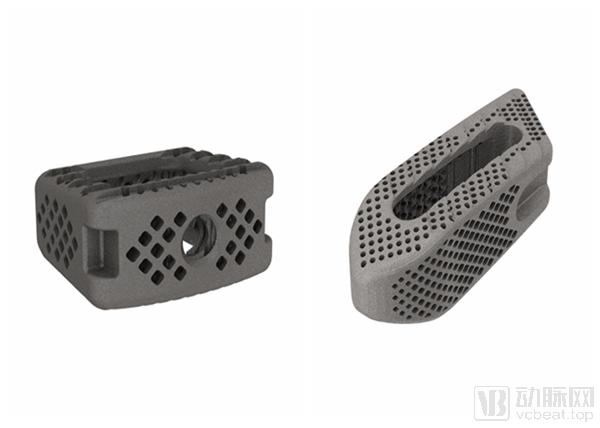
Product Images of CASCADIA Cervical and CASCADIA AN Lordotic Oblique (Images from the K2M Official Website)
CASCADIA Cervical and CASCADIA AN Lordotic Oblique are meticulously designed to accommodate the unique anatomy of vertebral bodies, serving as carriers for autograft or allograft bone tissue in the treatment of degenerative disc disease and degenerative scoliosis. However, the two products serve distinct purposes: CASCADIA Cervical functions as an interbody fusion device to stabilize the cervical spine, while CASCADIA AN Lordotic Oblique provides surgeons with a portfolio of anatomically designed interbody implants for oblique placement via the transforaminal lumbar approach.
Following FDA approval, the two products were rapidly deployed for the first time in neurosurgical procedures performed by Dr. Tom Morrison at the Polaris Spine and Neurosurgery Center in Atlanta. “I am pleased to be able to apply laminar 3D titanium technology to the cervical spine; its roughness and porosity facilitate bone growth onto the implant,” said Dr. Morrison. “Furthermore, the biomechanical stiffness of the CASCADIA implant is comparable to that of PEEK implants and lower than that of more traditional solid titanium designs.”
Just one year later, another K2M implant manufactured using layered titanium 3D printing technology, the MOJAVE PL, received FDA approval. The MOJAVE PL is an expandable interbody system designed for spinal support to help treat patients with spinal deformities. Notably, it is the first FDA-cleared spinal support implant. By design, this product is optimally suited for implantation in the lower spine, specifically the lumbar region.
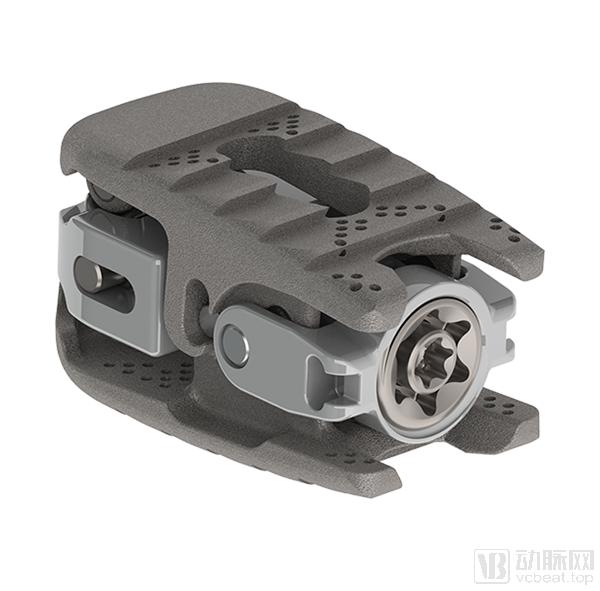
MOJAVE PL Product Images (Images from the K2M Official Website)
During surgery, physicians can adjust the folding position of the MOJAVE PL implant to minimize the risk of damage to ligaments, nerves, and intervertebral discs. A unique feature of the MOJAVE PL is that its components can be extended or retracted according to specific needs, enabling independent adjustment of anterior and posterior height. This makes it an effective tool for adjusting sagittal balance in the human body. Commenting on this, Dr. Steven Ludwig, Professor of Orthopedic Surgery at the University of Maryland Medical Center, stated, “This implant, which allows for separate adjustment of anterior and posterior height, is highly effective in restoring sagittal balance—a capability that existing implants lack.”
It must be acknowledged that, with the aid of laminar titanium 3D printing technology, K2M has entered a golden period of development. Just five months after its previous FDA approval, one of the company’s products received approval again. For a company of its modest size, K2M’s product development speed is remarkable.
In November 2017, the YUKON OCT spinal implant received FDA 510(k) clearance for posterior fixation to facilitate occipitocervicothoracic fusion, thereby achieving three-dimensional spinal balance. The approval of this additional product signifies a further expansion of K2M’s portfolio of spinal implants for the occipitocervicothoracic region.
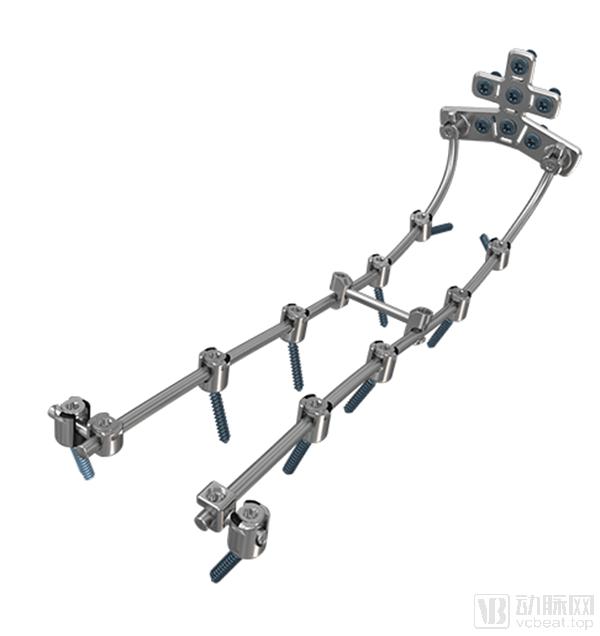
YUKON OCT Product Image (Image from K2M Official Website)
The YUKON OCT features a newly designed top-loading mechanism and high-angle polyaxial screws, offering polyaxial angulation of up to 105°. The polyaxial screws are compatible with rods made of cobalt-chromium or titanium alloys in diameters of 3.5 mm and 4.0 mm, allowing for adaptation of structural rigidity based on degenerative conditions or deformity correction. The square-threaded set screws facilitate screw insertion and minimize the risk of cross-threading, while the updated occipital plate incorporates integrated lateral holes to enhance occipital fixation.
Shortly after receiving approval, surgeons performed the first procedure using the YUKON OCT system. Chambliss Harrod, an orthopedic spine surgeon at the Baton Rouge Orthopedic Clinic in Los Angeles, stated, “The YUKON OCT expands K2M’s current product portfolio and provides a novel solution for posterior cervical surgery. Unlike systems that rely solely on height-supporting angular designs, the YUKON OCT is a comprehensive system that empowers surgeons to treat a wide range of spinal conditions, including common degenerative diseases and complex occipitocervical deformities.”
Currently, K2M offers four major product categories: complex spine products, minimally invasive surgical products, products for degenerative spinal diseases, and biologics, comprising over 100 products in total. The majority of these products are manufactured using layered titanium 3D printing technology. Leveraging this technology, K2M has developed a comprehensive portfolio of spinal implants, providing high-quality implants in various sizes and for diverse applications to treat a wide range of spinal deformities.
K2M’s original business was limited to the development and manufacturing of implants. However, during the product development process, K2M gradually recognized that achieving three-dimensional spinal balance cannot rely solely on individual spinal implants; rather, it requires comprehensive solutions to enhance patient experience throughout the entire treatment and care journey.
As a leader in the field of 3D deformity correction and 3D-printed spinal implants, K2M holds a unique advantage in developing comprehensive platforms. On February 15, 2017, K2M announced the launch of Balance ACS, an integrated platform for product research and services.

Balance ACS Conceptual Diagram (Image from Stryker's official website)
John P. Kostuik, Chief Medical Officer of K2M, stated, “Balancing the relationships among the head, pelvis, and lower extremities is fundamental to spinal surgery. The spine is a complex structure that maintains bodily balance while enabling three-dimensional movement. Each spinal segment functions as an independent vertebral unit, facilitating three-dimensional motion in the axial, coronal, and sagittal planes.”
Balance ACS is designed to assist physicians in applying three-dimensional solutions throughout the care continuum, achieving 3D spinal balance in the axial, coronal, and sagittal planes, thereby improving treatment outcomes and prognosis for patients undergoing spinal surgery. As a next-generation spinal diagnosis and treatment system, Balance ACS enables 360-degree assessment of the spine, facilitates surgical procedures, and provides comprehensive, continuous support for spinal surgery and postoperative care. By integrating Balance ACS with the company’s technological expertise and leadership in 3D-printed spinal implants, K2M has solidified its leading position in the global spinal surgery market.
Additionally, as part of the comprehensive Balance ACS platform, K2M launched the BACS system. The BACS system provides essential services for spinal surgery, such as authorized instruments, preoperative planning, 3D anatomical modeling, and postoperative reporting, thereby ensuring high-quality surgical outcomes. Furthermore, the company utilizes predictive analytics to assist physicians in decision-making and to provide personalized care solutions for patients.
Notably, to enhance the functionality of Balance ACS, K2M acquired the medical software platform e-Fellow. e-Fellow provides automated solutions for surgeons and healthcare systems, effectively collecting real-time medical data and monitoring patients’ postoperative recovery, thereby enabling better postoperative care for patients.
On August 30, 2018, this young talent in the spine field was acquired by Stryker for $1.4 billion to revitalize the latter’s underperforming spine business. Following the acquisition, K2M was integrated into Stryker’s Spine division, and Eric Major was appointed President of Stryker’s Spine business unit.
In recent years, Stryker’s Spine division has experienced sluggish profit growth, creating an urgent need for innovative products to drive development. The acquisition of K2M added several differentiated products to Stryker’s portfolio in the markets for expandable interbody fusion devices and congenital deformities, thereby expanding its business lines and market reach.
Since its acquisition, K2M and Stryker have been continuously integrating their product portfolios and sales operations. The acquisition marked a significant turning point in K2M’s development history. As Stryker’s spine business unit, K2M will continue to develop innovative products in the spinal field, expanding both the breadth and depth of its offerings in spinal implants. Furthermore, with the support of orthopedic giant Stryker, K2M will gain access to greater resources, including funding and expertise, throughout its product research and development as well as sales processes.
The 3D-printed implant market holds immense potential for development. Currently, a select number of domestic enterprises and research centers in China are engaged in the development of 3D-printed implants, including AK Medical, Jianchi Biology, Huatai 3D, and ZS Fab.
AK Medical:In December 2017, Beijing AK Medical Co., Ltd. listed on the Hong Kong Stock Exchange, becoming China’s first medical device company to commercialize 3D printing technology and apply it to implants for joint and spinal replacement. AK Medical currently offers three 3D-printed product lines: hip replacement implants, interbody fusion cages, and artificial vertebral body implants.
Jianchi Biotech:Guangzhou Jianchi Biotechnology Co., Ltd. is a dental implant R&D company dedicated to filling the gap in the clinical application of domestically produced implants. Its main R&D products include: machined universal dental implants that address common issues such as antibacterial properties, and the world’s first personalized dental implants based on imaging technology and 3D printing technology.
HuaTai 3D:Guangzhou Huatai 3D Materials Manufacturing Co., Ltd. is a company dedicated to applying 3D printing technology in the field of orthopedic treatment. At present, Huatai 3D’s primary business involves designing and fabricating preoperative planning models and orthopedic surgical guides using 3D printing technology, while its metal 3D-printed implant business remains in the development and validation phase.
ZS Fab:ZS Fab was co-founded by Dr. Jing Zhang from the University of Southern California, together with colleagues from Tsinghua University, Harvard University, the Massachusetts Institute of Technology, and the University of Southern California. The company’s 3D printing technology has transformed the structure of traditional implants, enabling osseointegration with reduced stress shielding. Currently, the company offers several orthopedic implant products, including interbody fusion cages, femoral stems, acetabular cups, and artificial vertebral bodies.