

12 Israeli Medical Technology and Digital Health Companies Forge Strategic Partnerships in Chengdu
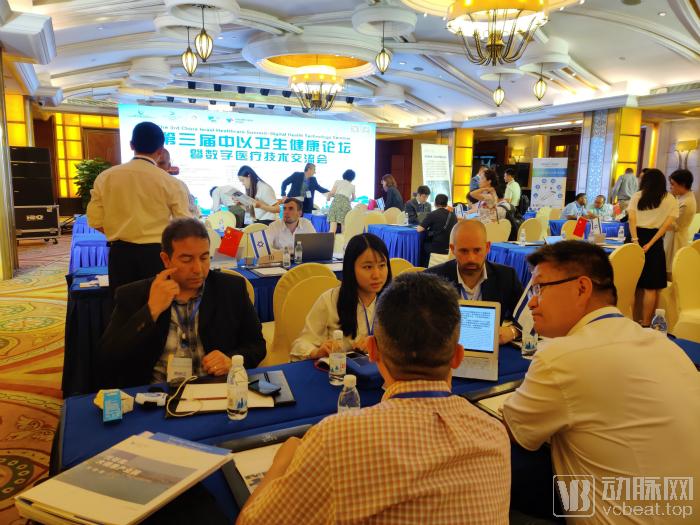
VCBeat (WeChat ID: vcbeat) has learned that the three-day 3rd China-Israel Health Forum concluded yesterday in Chengdu. Co-hosted by the Chinese Hospital Association and the Israeli Ministry of Health, the forum aimed to further promote health exchanges and cooperation between China and Israel.
It is reported that during the forum, the Israeli Ministry of Economy and Industry, the Israeli Ministry of Health, and the Israel Export & International Cooperation Institute jointly organized a delegation of Israeli digital health companies to visit Southwest China for the first time. The delegation engaged in in-depth dialogues with government bodies, enterprises, and medical institutions to explore cooperation opportunities.
Israel and China have a long-standing history of cooperation in the field of health. The first and second China-Israel Health Forums, held in 2016 and 2017 respectively, further promoted the establishment of the China-Israel Hospital Cooperation Alliance and created a platform for exchange and collaboration between medical institutions and health industries in both countries.
Innovation Hub: 12 Israeli Digital Health Companies Enter Chengdu
On the first day of the event, the Digital Health Technology Exchange Conference, held as a sub-forum of the main conference, took place in Chengdu. It was reported at the meeting that 12 Israeli digital health companies, organized by the Israeli Ministry of Economy and Industry, the Israeli Ministry of Health, and the Israel Export & International Cooperation Institute, participated in yesterday’s exchange session. This marked the first time that Israeli digital health companies have visited Southwest China as a delegation.
Israel has long been known as the “Startup Nation.” This country, with a population of only about 9 million, has achieved remarkable feats in technological innovation that have astonished the world.
Israel’s robust startup ecosystem has created opportunities for startups to evolve into advanced, commercially viable, and promising enterprises. As evidence of industry development, the output value of the medical device and digital health sectors has grown steadily since 2010, surpassing $2 billion in 2018, while a large number of seed-stage companies are poised to maintain this growth momentum. Medical devices and digital health account for the largest share, representing more than 65% of these companies.
In the field of medical devices, Israeli scientists and engineers integrate advanced technologies from electronics, communications, and optoelectronics to drive world-class innovations in digital imaging, medical lasers, telemedicine, early diagnosis, and intelligent surgical equipment. More than 600 medical device exporters are engaged in a wide range of medical applications, including cardiovascular and peripheral vascular care, neurodegenerative diseases, preventive and emergency medicine, critical care, women’s health, orthopedic sports medicine, gastrointestinal disorders, infection control, ophthalmology, pain and wound care, oral and dental care, dermatology, and aesthetics.
The digital era presents immense opportunities for healthcare providers. Telemedicine, mobile health, wearable devices, remote monitoring, electronic medical records (EMR), big data analytics, the Internet of Medical Things (IoMT), and medical applications can all be integrated into digital health or health information technology. Israel’s digital health industry has a long history, leveraging innovative communication technologies to enhance healthcare services. With over 25 years of professional expertise in areas such as health IT, electronic medical records, and big data analytics, Israel continues to receive substantial government investment in this sector, elevating its specialized knowledge to international standards.
Regarding the background of this visit by outstanding representatives of digital health companies to Chengdu, Yael Eshel, Commercial Consul at the Consulate General of Israel in Chengdu, told reporters that Israel is a global leader in digital health technology and has a long-standing history of cooperation with China, particularly in the southwestern region.
In July 2018, the Israeli government announced a $243 million investment in the digital health sector and released the “National Digital Health Plan.”
In October 2018, China’s National Health Commission and the Israeli Ministry of Health signed the “China-Israel Action Plan on Digital Health (2018–2021).” Under the Plan, the two countries will engage in deep cooperation in digital health areas such as medical information exchange networks, health big data R&D platforms, telemedicine service platforms, the integration of innovative medical technologies into health systems, and personal electronic health record platforms.
Also in October 2018, the Sichuan Provincial Health Commission and the Israeli Ministry of Health signed a joint statement on cooperation, reaching an agreement to carry out comprehensive and in-depth collaboration in multiple areas of digital health. This year, digital health is set to become the flagship project of China-Israel health cooperation in the southwestern region.
This visit to 12 digital health companies in Southwest China covers multiple sectors, including chronic disease management, emergency medical care, and elderly care. During their stay in Chengdu, they will hold one-on-one discussions with representatives from government bodies, enterprises, and healthcare institutions to explore opportunities for collaboration.
Create a benchmark effect, with the potential to be replicated across China
Southwest China boasts broad market prospects in the healthcare sector, and cooperation between Sichuan and Israel will create a benchmark for mutual benefit and win-win outcomes.
Imano Nabe, Director of the Digital Health Division at Israel’s Ministry of Health’s Health Maintenance Organizations, stated: “A crisis in healthcare resources is inevitable. Since the 1990s, Israel has been a pioneer in integrating information technology into its healthcare system, achieving robust data integration and interoperability across all healthcare institutions. The government, acting as both regulator and enabler, has encouraged vendor participation and implemented incentive measures, thereby fostering an ecosystem underpinned by a spirit of innovation.”
“A robust ecosystem requires the introduction of external resources,” said Pan Liwen, Consul General of the Consulate General of Israel in Chengdu. “We hope that through our joint efforts, the people of Sichuan, particularly those in remote areas, can enjoy the conveniences brought by digital healthcare. Meanwhile, I believe that the successful model of medical cooperation between Sichuan and Israel can be promoted and replicated in other provinces and municipalities in western China, and even across the entire country, thereby benefiting more Chinese citizens.”
According to records, the Consulate General of Israel in Chengdu was established in 2014. Serving as a bridge between Israel and Southwest China, its primary mission is to closely connect Israel with western China, the region experiencing the most rapid development.
Since its inception, healthcare has been a focal point of its work. Israel boasts advanced technology and extensive experience in digital health, while China is at a critical juncture of upgrading its medical reforms and facing numerous challenges. The two countries possess complementary strengths, offering immense potential for cooperation. More importantly, healthcare is closely linked to people’s lives and well-being, and enhancing public welfare is a shared aspiration of both China and Israel.
In July 2018, with the support of the Consulate General of Israel in Chengdu, the Health Commission of Sichuan Province and the Israeli Ministry of Health signed a Joint Statement on Cooperation. The two parties will leverage Israel’s advanced expertise and technology to carry out comprehensive and in-depth collaboration across multiple medical fields, including healthcare team training, commercial cooperation, mutual visits, and scientific research and development. This undoubtedly lays a solid foundation for cooperation between Israel and Sichuan in the field of healthcare.
On the 14th, Chinese and Israeli representatives will sign an agreement to expand the “China-Israel Hospital Cooperation Alliance,” jointly initiated by the Chinese Hospital Association and the Israeli Ministry of Health. In the future, more hospitals from both countries will join the alliance, leveraging this platform as the primary channel for cooperation between hospitals and health organizations, with regular forums and dialogues to facilitate collaborative efforts. Mr. Itamar Grotto, Deputy Director-General of the Israeli Ministry of Health, and Mr. Shen Ji, Secretary of the Sichuan Provincial Health Commission, will jointly read the Joint Statement on Sichuan-Israel Health Cooperation, which includes the launch of a digital health demonstration project.
It is foreseeable that the successful convening of this forum will create a new platform for communication between Chinese and Israeli enterprises in the healthcare sector, thereby opening up broader avenues for cooperation.
The following are representative outstanding Israeli digital health and medical device companies:
Alango - Wear & Hear
To address the vast potential market demand of over 700 million adults with hearing impairment worldwide, Alango, a leading provider of voice and audio enhancement technologies for the communications and entertainment markets since 2002, has recently launched its personalized hearing product line, “Wear & Hear.” Due to high costs, limited functionality, and associated characteristics, fewer than 10% of people globally use hearing aids. The “Wear & Hear” series offers an alternative to traditional hearing aids. Alango’s years of practical experience in developing digital sound processing technologies have been applied to affordable consumer electronic devices, which provide customizable hearing enhancement features.
Wear & Hear enables individuals with mild to moderate hearing loss to enjoy a fully personalized hearing experience. All audio from Bluetooth®-enabled sources, including critical environmental sounds and speech, is amplified, enhanced, and adjusted to suit individual auditory preferences and capabilities. It performs effectively in any scenario—face-to-face conversations, phone calls, music playback, outdoor environments, live music, television, concerts, and theater. Most importantly, wearers can control their own hearing, which is why we call it “on-demand hearing assistance.”
Cnoga Medical
Cnoga was founded in 2004 by Dr. Yosef Segman, former CEO and founder of OPlus Technology (acquired by Intel in 2005). The company’s headquarters and R&D center are located in Israel, with branches in Brazil and Shanghai, and its R&D, support, and sales offices situated in Changzhou, China.
Cnoga Medical provides hardware and software solutions, primarily dedicated to the comprehensive implementation of telemedicine and leading the out-of-hospital monitoring market. Cnoga has developed an innovative, painless, and non-invasive medical device for monitoring diabetes and cardiovascular diseases. Patients simply place their fingers in the finger compartment, and the device automatically measures 16 different biological parameters. The results are automatically transmitted to the Cnoga Cloud for big data analytics and predictive analysis, and the data can be shared with any telemedicine center, nursing home, GP clinic, insurance company, or government health agency.
According to available information, Cnoga developed the first commercial medical-grade non-invasive glucose meter for patients with diabetes. The device has obtained regulatory approvals in Europe, China, Brazil, Israel, and other countries and regions, and an application has been submitted to the U.S. Food and Drug Administration (FDA), where it is currently under review.
In addition, Cnoga’s MTX device has been approved for use in 37 countries, including clearance by the U.S. FDA (for pulse and blood pressure), as well as approvals in Israel, from China’s National Medical Products Administration (NMPA), Brazil’s National Health Surveillance Agency (ANVISA), and CE certification in Europe.
EarlySense
Headquartered in Ramat Gan, Israel, and Woburn, Massachusetts, EarlySense is a leader in continuous, contact-free monitoring healthcare solutions, deployed in hospitals, post-acute care facilities, and homes worldwide to help clinicians detect patient deterioration at an early stage.
Technically, EarlySense’s FDA-cleared system incorporates patented sensors that accurately and continuously monitor heart rate, respiratory rate, and movement. By leveraging artificial intelligence (AI) and big data analytics, the system provides actionable health insights, enabling clinical staff to rapidly detect patient deterioration and prevent potential adverse events, including those caused by cardiac or respiratory arrest. It also helps prevent ICU transfers, patient falls, pressure ulcers, and hospital readmissions.
Furthermore, EarlySense’s technology is available in a compact OEM module, enabling companies and developers to integrate and expand its use within their own products and services. This integrated system supports EarlySense’s core module portfolio, including respiratory rate monitoring, heart rate monitoring, pressure ulcer/wound care, patient fall prevention, and sleep analysis.
EarlySense also provides its proprietary sensors for select home companion devices (remote monitoring) that integrate via API/SDK. The company currently partners with leading global medical technology companies, including Easymed, Philips, Welch Allyn, and Lachesis.
Flight Medical
Flight Medical, established in 1996, is a subsidiary of Ilex Group (TLV: ILX), a publicly listed company. The company integrates medical devices and is dedicated to the research, development, manufacturing, and sales of high-end multifunctional ventilators.
Over the past two decades, Flight has accumulated unique expertise in the field of mechanical ventilation and collaborated with customers worldwide. The renowned portable ventilator HT50, distributed by Newport (Covidien/Medtronic) with strong support, was developed and manufactured using Flight’s medical technology.
Today, Flight’s operations span 50 countries worldwide, earning widespread acclaim in the field of respiratory equipment. In recent years, more than 20,000 Flight ventilators have been extensively deployed across intensive care units (ICUs), post-monitoring wards, emergency departments, ambulance transport services (including ambulances, helicopters, and other Federal Aviation Administration-approved aircraft), home care settings, and major long-term research institutions.
It is worth highlighting the Flight 60, which adopts a turbine-driven mechanical ventilator design aimed at meeting the growing demands in hospitals, long-term care facilities, emergency departments, intra-hospital transport, home care, and subacute medical settings. The Flight 60 ventilator offers significant cost-effectiveness, delivers excellent clinical performance, and features a compact, lightweight design.
Inovytec Medical Solutions
Inovytec is a leading innovative medical device company focused on the development, manufacturing, and sales of novel non-invasive devices, primarily for pre-hospital critical care, particularly in emergency medical services for respiratory, cardiac, central nervous system, and trauma conditions.
Inovytec comprises a team of experienced management professionals and R&D engineers, backed by internationally recognized experts in emergency medicine, critical care, and cardiology. Its core solutions are designed to save lives during the “golden hour” of emergency care, significantly increasing the survival rates of pre-hospital emergency patients.
Core products include: LUBO™, a non-invasive upper airway opening device integrated with a cervical collar. The airway collar provides a comprehensive solution for airway management and immobilization needs. Lubo is the only non-invasive solution that safely opens the airway by simulating prolonged jaw thrust maneuvers. This fixation device enables caregivers to easily manage the airway and frees the neck from the “traditional manual cervical grip” during immobilization.
SALI™ is a novel solution for respiratory and cardiac emergencies. It is a comprehensive and critical first-aid solution that creates a virtual hospital environment on-site, significantly improving medical outcomes.
Ventway Sparrow™ is a unique combination of high-performance ventilation and a lightweight (1 kg) ventilator. Its compact size and ease of use make Ventway an excellent solution for any emergency scenario requiring efficient and rapid ventilation.
INSIGHTEC
INSIGHTEC, founded in 1999, develops and markets the Exablate platform, providing non-invasive treatments for various neurosurgical, oncological, and gynecological indications. The Exablate platform utilizes revolutionary MRgFUS technology, which combines high-intensity focused ultrasound with magnetic resonance imaging (MRI) guidance.
Guided by magnetic resonance imaging, focused ultrasound is used to safely ablate target tissue, ensuring high efficiency and minimal side effects. From functional neurosurgery to oncology and gynecology, INSIGHTEC is continuously investing in and expanding the clinical applications of its current trials.
To date, MRgFUS technology has been used in more than 14,000 Exablate procedures, adopted by world-renowned physicians at over 120 medical institutions. The company has received numerous innovation awards, including the Galien Award. INSIGHTEC is privately held by GE Healthcare, Elbit Imaging, York Capital Management, GEOC Hengtong Investment Limited Partnership, and MediTech Advisors.
Insuline Medical
Insuline Medical is developing technologies and products to improve and manage subcutaneous drug administration. The company has developed the EyePen system, a comprehensive insulin injection therapy management system for patients with diabetes. This system includes the EyePen device, a unique add-on accessory for insulin injection pens that reliably tracks injection doses and transmits the data to a diabetes management application on smartphones.
This application collects insulin data and other essential diabetes management metrics, providing users with information and alerts. The data is also transmitted to the cloud for further analysis and feedback. As a unique diabetes management system, it delivers highly reliable insulin dosage data, which is critical for effective diabetes management in patients undergoing insulin injection therapy.
Furthermore, the company offers the InsuPad® product, designed to enhance the efficacy of insulin injection therapy. InsuPad® enables patients undergoing intensive insulin therapy to achieve better disease control and meet treatment goals. By treating the skin at the injection site, it increases blood flow, facilitating more efficient and rapid insulin absorption by the body. As a result, insulin therapy becomes more predictable, leading to fewer episodes of hypoglycemia and hyperglycemia.
Motorika
Motorika has developed and commercialized state-of-the-art robot-assisted rehabilitation solutions to meet the therapeutic needs of patients with various neurological conditions, including stroke, traumatic brain injury, and spinal cord injury, as well as orthopedic and post-surgical functional impairments.
Leveraging the principles of neuroplasticity, biofeedback, and precisely tailored repetitive movements, Motorika’s solutions enable patients to rewire their neural pathways and synapses, improve upper and lower limb function, accelerate motor and cognitive recovery, and deliver superior clinical outcomes.
ReoGo™ is one of the world’s most advanced upper-limb therapeutic robotic systems. By utilizing advanced fully motorized robotic arms integrated with specialized software for exercises and gaming, ReoGo™ is designed to facilitate repetitive three-dimensional arm movements. The system is suitable for various stages of rehabilitation in patients with neurological and orthopedic conditions.
ReoAmbulator™ is an advanced gait training platform that integrates robotic legs, a body-weight-support treadmill, active neuromuscular facilitation, virtual reality/multitasking capabilities, gait analysis, and coordination training with auditory and visual feedback.
Pipeline—Motorika is developing new products and clinical applications to provide monitoring and personalized, cost-effective rehabilitation insights throughout the continuum of care. Currently, Motorika’s products are available in the United States, Europe, and Asia.
Shekel Scales
Shekel Scales, established in 1976, is a world-leading company in advanced metrology technology (digital weighing). Shekel Scales (Ningbo) Co., Ltd., a wholly-owned subsidiary founded in 2011, is a manufacturing facility for equipment production.
The Healthweight® series features an innovative design, with both development and manufacturing adhering to high professional standards. Advanced motion compensation technology eliminates involuntary movements during weighing, ensuring the accuracy of weight measurements. The scale connects to the EMR system, transmitting weight data directly into the patient’s medical record.
The Healthweight® series comprises a range of digital medical and fitness scales designed for infants, hospitals, home care, rehabilitation centers, and elderly care facilities, offering the optimal balance between price and quality. All products are OIML-certified.
It is worth highlighting that the Healthweight® physician scale provides a reliable weighing system for medical centers, clinics, hospitals, fitness centers, and homes. Additionally, an ultrasonic height and weight measurement device has been developed specifically for the Chinese market to meet the needs of various medical departments.
Additionally, the Healthweight® neonatal scale is an ergonomically designed infant scale specifically for newborns and growing infants. An all-in-one system has also been developed for healthy baby clinics in China to comprehensively record key infant measurements (weight and length) from birth through early childhood.
Vitalerter
VITALERTER is a unique, easy-to-use, cloud-based patient monitoring solution designed specifically for the elderly care market. It leverages artificial intelligence powered by machine learning algorithms, combined with sensitive motion sensors, to detect bed exits, provide 24/7 continuous sleep monitoring, and continuously measure heart rate and respiratory rate, while precisely analyzing body movements without physical contact with the patient. In the event of an adverse incident, the system automatically triggers an audible alert to notify nurses to enter the room immediately for intervention.
In short, VITALERTER is essentially a virtual nursing assistant that provides 24/7 monitoring to alleviate the burden on caregiving and medical professionals. The system requires no complex installation. By continuously monitoring vital signs and body movements, the solution can detect early signs of clinical deterioration, prevent falls and pressure ulcers, and reduce the time staff spend collecting vital signs in general care units. It enables timely intervention for patients with worsening conditions, shortens hospital stays, improves patient flow, enhances the quality of care through early detection of clinical deterioration, and reduces mortality rates.