

Revisiting the Right Path for Healthcare Chatbots: Insights from a Survey of 100 Physicians
A recent study published in JMIR surveyed 100 licensed physicians in the United States regarding their perspectives on healthcare chatbots, covering the value, challenges, and risks associated with their application in doctor-patient interactions. I had previously written a commentary on this field nearly three years ago; revisiting it now, I find that my earlier assessments remain valid and have become even clearer.[See also: Are chatbots making waves in healthcare, and if so, how?]Through an in-depth analysis of this study, further examine the application directions of medical chatbots.
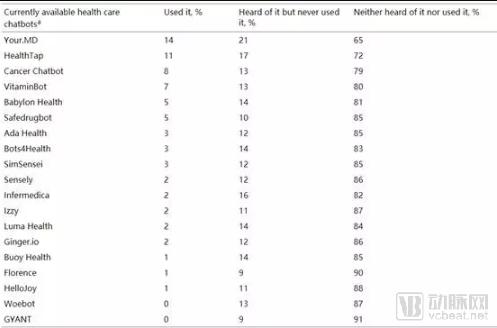
Based on the survey findings of this study, the proportion of physicians who have used medical chatbots remains relatively low. A total of 30% of physicians reported having personally tried out some form of medical chatbot. However, most of these chatbot services are primarily targeted at the general patient population, with only a small fraction directly aimed at healthcare professionals. The study asked physicians to list the chatbot applications they were aware their patients might use, resulting in a total of 19 identified apps. This indirectly highlights the chatbot products with relatively higher user penetration or awareness in the U.S. market, as shown in the table below.
Drawing on the list from this study, I have further compiled information on each chatbot and its publisher, as shown in the table below.
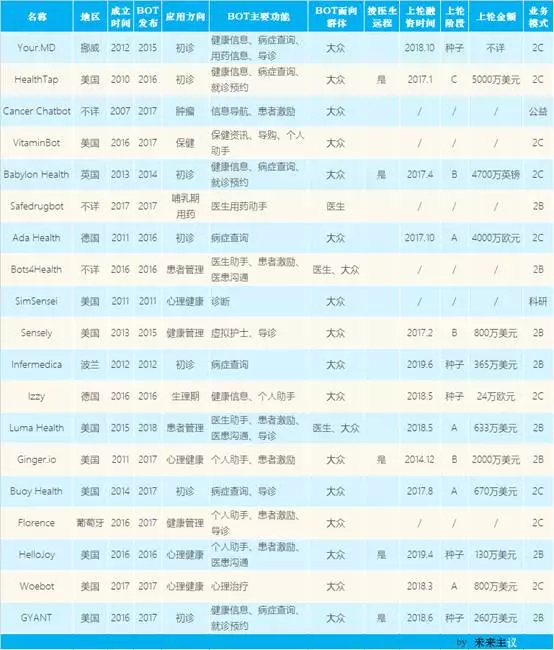
As can be seen, among the 19 chatbots mentioned, three are designed for physician-facing applications, while the rest are targeted at the general patient population. The majority are applied in the field of initial diagnosis, followed by mental health; other areas include physician-led patient management and personal self-health management.
Let us examine the top five products with the highest mention rates. Three of these five—namely Your.MD, HealthTap, and Babylon Health—offer highly similar functionalities, providing symptom self-check tools for initial consultations. It is important to note that the value proposition of general-purpose AI-driven initial diagnosis, particularly when delivered via chatbots, is currently limited to performing pre-triage functions. This will remain the case for the foreseeable future, as replacing physicians remains a distant prospect.
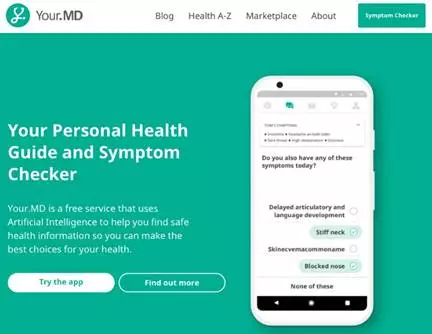
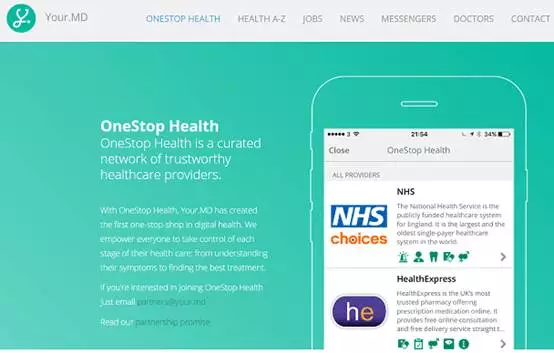
Your.MD is the most widely used platform among physicians, with 14% having used it and 21% having heard of it but not used it. Headquartered in Europe, Your.MD has been deeply integrated into the UK’s National Health Service (NHS) system. The company launched its product in 2015, making it one of the earliest entrants in the field. Initially focused on symptom checking, it later developed the Onestop Health module to serve as a triage gateway connecting users to various healthcare providers. As a European-born application, its high awareness rate among U.S. physicians underscores its significant market presence and influence.
Another example is HealthTap, a telemedicine company well-known to professionals in the internet healthcare sector. Founded in 2010, it has built a substantial user base in the United States. Its online self-assessment chatbot feature was launched in 2016, with its knowledge base reportedly derived from the vast amount of online consultation data accumulated over the preceding years.
Babylon Health, a UK-based AI startup that ranked fifth, debuted with a chatbot interface and is among the earliest known and most prominent AI healthcare companies.
Your.MD, HealthTap, and Babylon Health offer very similar functionalities. However, an examination of their development histories reveals differences in their strategic focus and initial expectations for chatbot technology, although they appear to have ultimately converged on similar outcomes. HealthTap and Babylon Health provide direct access to online remote consultations with physicians, positioning them as healthcare service providers. In contrast, Your.MD does not deliver medical services directly but instead offers triage and referral guidance. As an open marketplace, Your.MD allows various medical clinics to apply for partnership and join its Onestop Health ecosystem, thereby gaining patient traffic. This may be a key reason why Your.MD enjoys greater recognition among physicians.
The other two among the top five, Cancer Chatbot and VitaminBot, have positioning that is markedly different from the other bots.
Cancer Chatbot, ranked third, is actually a public welfare application spontaneously created by a cancer patient. It primarily provides reliable information and supportive assistance from the perspective of cancer patients, especially those who have just been diagnosed. Although the population of cancer patients it serves is much smaller than that of patients with initial diagnostic needs, it was the third most recognized chatbot among physicians in this survey, a finding that warrants reflection on the underlying reasons.
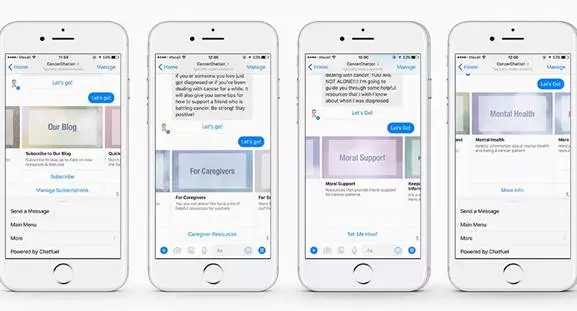
The Cancer Chatbot does not feature advanced AI capabilities for intelligent diagnostic symptom queries. Instead, it provides patients with access to reliable information and connections to trusted organizations, serving even as a navigator for credible health resources. Furthermore, it offers emotional support and reassurance to patients. For those facing a protracted battle against cancer, this application can serve as a long-term companion.
For initial consultations regarding common ailments, symptom inquiries can be conducted via Google or through online medical consultations. While chatbots certainly offer another option, alternative channels appear to be reasonably acceptable in terms of convenience, cost, credibility, and the level of trust required; the differences among these options are not substantial. However, cancer patients have significantly higher demands for information credibility, as well as greater needs for depth and personalization. Existing methods fall far short of ideal in helping them easily locate trustworthy information or organizations. This may explain why a more niche product has achieved higher awareness. Nevertheless, Cancer Chatbot is currently a non-profit initiative; while it may have a user base, the viability of its business model remains open to debate.
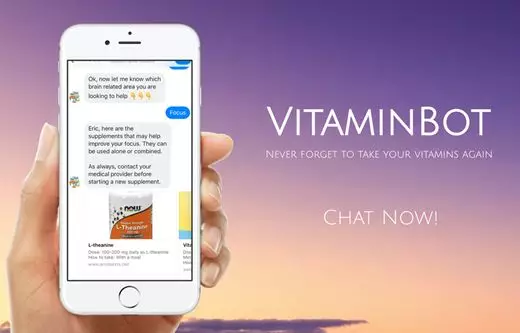
VitaminBot, ranked fourth, is not strictly a pure-play medical application; rather, it can be described as a health supplement shopping assistant chatbot, with additional features serving as a personal guide for supplement usage. Its developer is The Mindful Tech Lab, a company that has created several bots focused on healthy living, including diet, fitness, and parenting. However, there is currently no publicly available information regarding the company’s financing or operational details.
It is evident that the bots with the highest awareness in this survey, which are operating under effective commercial models, primarily adopt a hybrid approach combining online self-assessment with telemedicine. In other words, this sector has become highly competitive, attracting numerous leading players.
Survey results indicate that among physicians who have used chatbots, 13% reported being very satisfied, 33% were relatively satisfied, 27% remained neutral, and 27% expressed dissatisfaction. In other words, overall positive feedback significantly outweighed negative responses. Specifically, the study surveyed participants on logistical processes, clinical care procedures, and medical outcomes. This classification is considered particularly meaningful from a personal perspective.
First, let us examine the logistical processes, which primarily reflect the accessibility of medical services and address tasks arising from information asymmetry in public health knowledge, such as appointment scheduling, payment processing, prescription handling, and medication information dissemination. It can be said that logistical processes are generally considered the factors least central to the core of medical care.
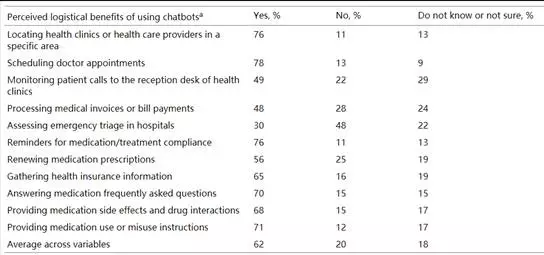
However, surveys reveal a high level of recognition among physicians for the value of chatbots in non-core logistical processes. Most use cases received approval from over 60% of physicians, with the most highly valued applications being scheduling physician appointments (78%), locating suitable clinics (76%), reminding patients to adhere to medication/treatment regimens (76%), providing medication instructions (71%), and answering common medication-related questions (70%). This further confirms that chatbots can effectively handle tasks such as patient triage and appointment scheduling, medication guidance, and improving adherence.
Overall, 62% of physicians expressed positive opinions, 20% held negative views, and 18% remained neutral. This indicates a highly favorable attitude.
The second category pertains to the clinical care process, including helping patients better manage their health, providing more personalized treatment plans, and reducing unnecessary consultations. Although these aspects directly revolve around the core components of healthcare, the proportion of positive feedback they receive is significantly lower than that for non-core logistical processes.
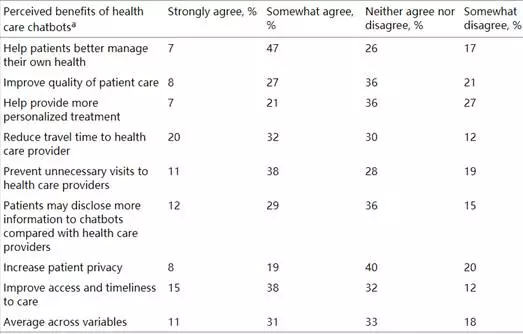
Specifically, three items received positive feedback from more than 50% of respondents: “helping patients with self-management” (54%) was the most highly recognized value; followed by “reducing travel time to access medical services” (52%); and “improving the convenience of accessing medical services” (53%). The latter two are largely similar in meaning, both reflecting the accessibility and convenience value of healthcare services provided by chatbots. In terms of value proposition, they align with the first category related to logistical processes. In contrast, core clinical aspects such as “providing more personalized treatment plans” and “improving healthcare quality” received relatively weaker positive recognition from physicians.
By categorizing both “strongly agree” and “somewhat agree” as positive feedback, the aggregated results show that 42% of respondents held positive views, 18% held negative views, and 33% remained neutral. Overall attitudes were significantly more positive, although a substantial proportion of respondents remained ambivalent.
Does the lack of engagement with core medical functions render healthcare chatbots valueless? This aspect is frequently cited by critics to question the value of internet-based healthcare—namely, that it fails to address the core of medical practice. Consequently, AI healthcare startups have begun to focus intensely on AI-driven diagnosis, aiming to capture and even replace the very core of medical care. While this pursuit is commendable, non-core applications are by no means synonymous with low value.
Let us examine the value of using medical chatbots for one of the ultimate goals we pursue—namely, clinical efficacy (as therapeutic effectiveness and cost efficiency are the ultimate objectives of healthcare innovation). This corresponds to the third category of questions in the survey, which assessed physicians’ level of agreement.
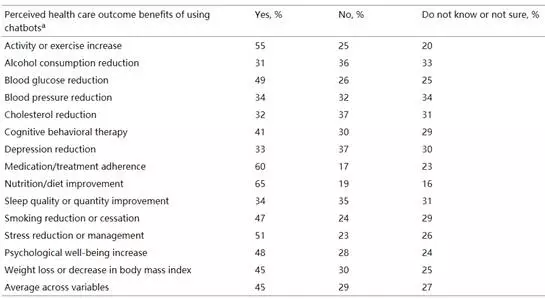
Survey results indicate that physicians hold predominantly positive views on the effectiveness of chatbots in promoting various health behaviors and metrics. More than 50% of physicians acknowledged the positive impact across multiple indicators.
Particular attention should be paid to the items with the highest levels of physician endorsement: the role in nutritional or dietary improvement is most widely recognized, at 65%; this is followed by its role in promoting medication adherence and treatment persistence, endorsed by 60% of physicians; and its role in increasing physical activity and fitness, acknowledged by 55% of physicians. A closer examination of these top-rated areas reveals that they all directly depend on improvements in patients’ self-management of health and are entirely unrelated to diagnosis and treatment.
Incidentally, among the listed medical chatbots, those directly used for treatment are all mental health products. Dialogue itself can serve as a therapy for mental disorders, which aligns well with the characteristics of chatbots and thus appears somewhat unique.[ See also: Nationwide Anxiety, Can AI-Driven Cognitive Behavioral Therapy Come in Handy? ]
Overall, 45% of physicians acknowledge the value of chatbots in terms of medical efficacy, 29% do not, and 27% remain neutral, indicating a clearly positive overall attitude. In other words, healthcare chatbots have garnered relatively favorable evaluations from physicians regarding their clinical value by exerting a strong impact on non-core aspects while having a limited influence on core medical processes.
Although the current capabilities of chatbots remain somewhat distant from the core of medical practice, a growing number of physicians recognize their importance, with some even believing that their future role could surpass that of doctors themselves. Surveys indicate that 42% of physicians consider chatbots important or relatively important in the healthcare sector, while 26% deem them unimportant, and 32% remain neutral. Regarding whether chatbots might assume a more significant role than healthcare professionals (HCPs) in future patient care, a total of 49% of physicians indicated this is very likely (15%) or likely (34%) to occur; conversely, 25% considered it unlikely (15%) or very unlikely (10%). Forty-four percent of physicians expressed willingness or moderate willingness to prescribe chatbot usage to patients within the next five years, whereas 34% were unwilling. Additionally, 40% of physicians stated they would recommend chatbots to their peers, compared to 37% who would not. In other words, despite the currently low adoption rate of medical chatbots, positive attitudes among physicians consistently outweigh negative ones, reflecting strong confidence in the future potential of this technology.
The study also evaluated the existing challenges and risks of medical chatbots.
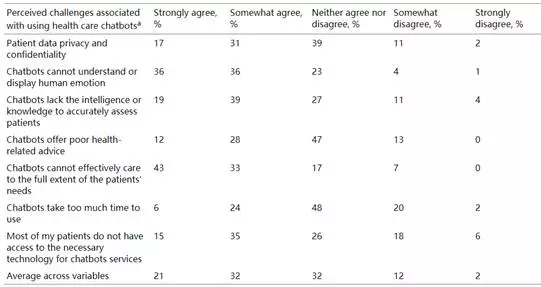
More than half of physicians (53%) agree to some extent with the various challenges associated with the use of healthcare chatbots. Most prominently, 76% of physicians believe that chatbots cannot effectively address patients’ comprehensive needs, 72% believe that chatbots cannot understand or exhibit human emotions, and 58% believe that chatbots lack the intelligence or knowledge to accurately assess patients. However, do we really need chatbots to possess human emotions in order to meet patients’ comprehensive needs?
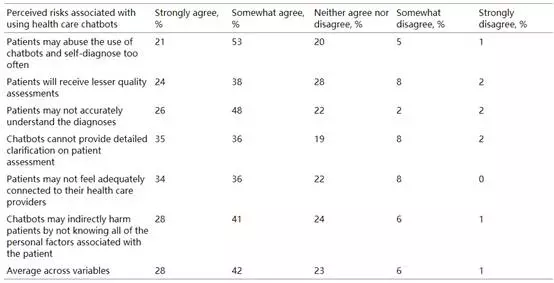
Regarding risks, the most prominent issues include patients overly relying on chatbots for self-diagnosis (71%), the inability of chatbots to provide specific interpretations of diagnoses (71%), and patients’ inaccurate understanding of diagnoses (74%). These factors may constitute significant risks. It is evident that the identified risk hazards are primarily concentrated in the area of diagnosis.
The listed existing shortcomings and risks are less challenges to be addressed than realities to be accepted. Rather than expending considerable effort to overcome these challenges, it is more advisable to adopt a strategy that leverages strengths and mitigates weaknesses, thereby maximizing the value that can be delivered. I have always been skeptical of the “wooden bucket theory.” No one is perfect, and nothing is flawless. In terms of the laws of animal survival, it can be said that most species survive not because they are all-around competent, but because they rely heavily on specialized skills shaped by their innate advantages.
Based on our previous analysis, chatbots demonstrate particularly prominent value in enhancing the accessibility and convenience of healthcare services, facilitating the dissemination and acquisition of pharmaceutical knowledge, and improving patient self-management outcomes. However, they are not strong in diagnosing conditions or providing treatment plans, and significant risks remain. Adhering to the principle of leveraging strengths while avoiding weaknesses, it is essential to further reinforce their advantages. The most viable current path for medical chatbots lies in deepening their capabilities in accessibility and convenience, knowledge dissemination and acquisition, and patient self-management.
In the realm of technological innovation, public sentiment often swings to extremes—either heralding total disruption or dismissing everything outright. A more balanced approach is to keep an eye on the future while remaining grounded in the present.
Author: Gu Beini
Engaged in long-term research on innovative business models and providing strategic consulting for technology startup teams.
Master of Management, with 15 years of experience in the consulting industry and financial media. Co-founded VCBeat in 2014.
A contributing author to renowned media outlets such as China Europe International Business School (CEIBS) Business Review, 36Kr, and TMTPost.
WeChat: gugreaty; WeChat Official Account: Future Main Argument