

BrainCo Secretly Files for Hong Kong IPO, Aiming to Be First Listed Among Hangzhou's 'Six Little Dragons'

BrainCo
Non-invasive brain-computer interface technology solution provider

According to Bloomberg, BrainCo has submitted a confidential application for an IPO on the Hong Kong stock exchange. Sources say that BrainCo is working with CICC and UBS for this share issuance. Due to the confidentiality of the information, the sources requested anonymity. They stated that this offering could raise hundreds of millions of dollars.
BrainCo is expected to become the first company among the "Hangzhou Six Dragons" to go public.
Comprehensive | Bloomberg, The Paper, Company Official Website
Editor | Arti
This article is for information exchange only and does not constitute any trading advice.
Recently, media reports stated that BrainCo, one of the "Six Little Dragons of Hangzhou," has completed approximately 2 billion yuan in financing, setting a record for the second-largest funding in the brain-computer interface field outside of Neuralink (Elon Musk's company). The investor lineup is robust, including renowned investment institutions such as IDG, Walden International founded by Intel CEO Lip-Bu Tan, “Apple Supply Chain” giants Lens Technology and Lingyi Tecnovo, strategic investors like Will Semiconductor, Runze Technology, Huazhu Group, and TAL Education Group, as well as top family offices from Hong Kong, China, and the United States.
On January 8, BrainCo stated: "The financing has indeed been completed. For relevant details, please refer to the official information released by the company. The funds raised will be used to fully accelerate the R&D of core brain-computer interface technologies, breakthroughs in extreme engineering, product scaling, and mass production implementation."
According to reports, BrainCo is listed alongside tech companies like DeepSeek, Unitree Robotics, and Black Myth: Wukong as the "Hangzhou Six Dragons." Focused on the research and development of brain-computer interface products, BrainCo has obtained FDA certification in the United States and CE certification in Europe. It is one of the companies with the largest R&D investment in the global brain-computer interface field. Its products have been named one of the best inventions of the year by TIME Magazine and are among the very few enterprises worldwide to achieve large-scale mass production of brain-computer interface products.
Previously, according to Bloomberg, BrainCo may carry out its Initial Public Offering (IPO) in Hong Kong or mainland China. Insiders stated that this startup has begun preparing its listing documents, but the listing location and other details have yet to be determined. Discussions regarding financing and the IPO remain highly variable, with specific details potentially changing based on market conditions.
BrainCo was founded in 2015 by Harvard alumnus Bicheng Han, competing with Elon Musk's brain-computer interface company Neuralink.
As the first unicorn in the field of brain-computer interface in China, BrainCo has been committed to the breakthrough of the underlying technology of brain-computer interface. By establishing a signal transmission pathway between the brain and external devices to achieve information exchange between the two, it provides solutions for the rehabilitation of people with disabilities, autism, and other brain diseases. Currently, several products have been launched on the market.
Previously, Han Bicheng, founder and CEO of BrainCo, stated that brain-computer interface applications have enormous potential and will benefit the people of China across numerous fields, bringing more possibilities to life.
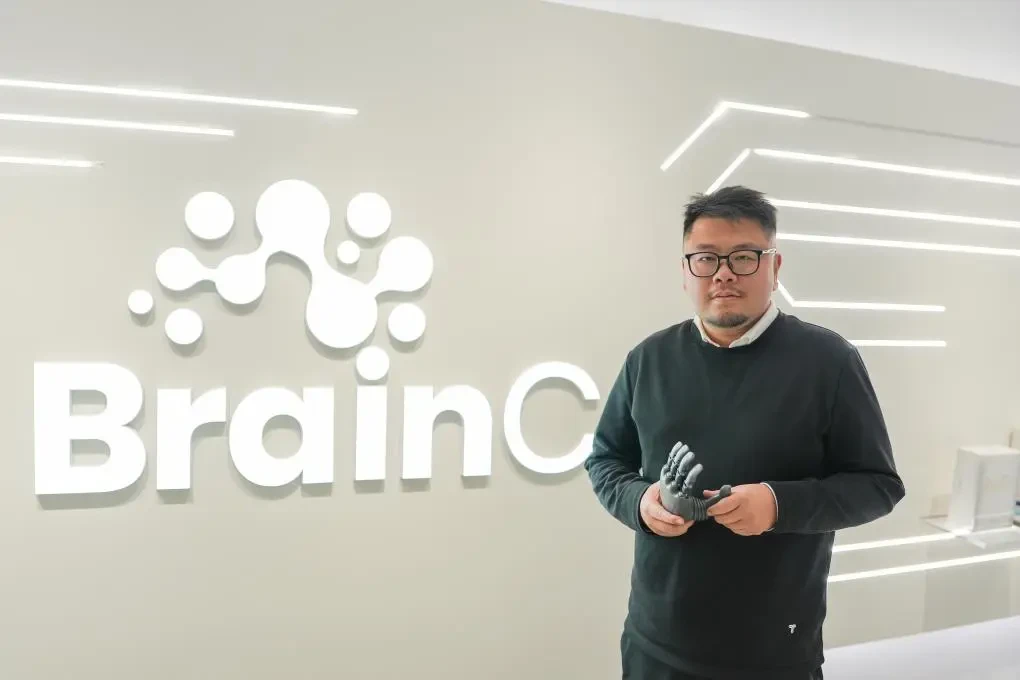
Han Bichen stated that brain-computer interface has gradually transformed from laboratory research into a key technology influencing people's daily lives. In the future, brain-computer interfaces could make the human brain "transparent," revealing what a person is thinking. China has recently been increasing investment in brain science, particularly in the field of brain-computer interfaces, initiating its own "Brain Project."
According to statistics from the China Disabled Persons' Federation, there are over 24 million people with physical disabilities in China, many of whom face mobility challenges. Han Bicheng stated that BrainCo has been established for about 10 years, and the company's core product is a super sensor, which can detect very weak signals in the human brain without invasive surgery. It then converts this information into neural signals that can be used for treatment or external control. In addition to developing these neuro-assistive products, the company also creates neuroscience-based products that improve sleep quality through neural regulation for the general public.
Han Bicheng stated that currently, the products produced by the company can help disabled individuals without limbs install neuro-controlled prosthetics, enabling them to run, walk, and even perform high-difficulty movements like normal people. In the next 5 to 10 years, the company will also help one million people with physical disabilities regain their mobility, start a new life, and assist ten million patients suffering from Alzheimer's disease, autism, and insomnia in achieving rehabilitation.
In the future, BrainCo will continue to deepen its expertise in the non-invasive brain-computer interface field, providing solutions for diseases such as depression and Alzheimer's.
Source: Unicorn Morning News
For academic sharing only. If there is any infringement, please leave a message and we will delete it immediately!
Welcome to the Brain-Computer Interface AI Planet
Access more knowledge and resources in the fields of brain-computer interface + AI.

To join group discussions or for business cooperation, please add WeChat: RoseBCI [Note: Name + Industry/Major].
Welcome to submit articles
1. Welcome to submit articles. For submission inquiries, please contact WeChat: RoseBCI
Click to Submit:Submission Guidelines for Academic News in the Brain-Computer Interface Community
2. To join the community as a part-time creator, please contact WeChat: RoseBCI


One-click triple action: "Share," "Like," and "Read"
Don't Miss Any Frontier Development in Brain-Machine Interface