

Genome-wide Association Study Identifies CHRNA2 as a Key Genetic Risk Factor for Cannabis Use Disorder
Researchers from the Danish iPSYCH project reported that they have identified a specific gene associated with an increased risk of cannabis abuse, which also regulates the levels of nicotine-binding receptors in the brain.
“We found that this disease is associated with genetic variants that affect the extent of nicotinic receptor formation in the brain,” said Dr. Ditte Demontis, Associate Professor at Aarhus University, in the article “Genome-wide association study implicates CHRNA2 in cannabis use disorder” published in Nature Neuroscience.
Cannabis is the most commonly used illicit psychoactive substance worldwide, with approximately one in ten users developing dependence. Frequent cannabis use can lead to cannabis use disorder (CUD), a condition with a strong genetic component; its heritability is estimated at 51–70%.
CUDPatients not only reduce social interactions and participation in enjoyable activities, but also experience cravings and withdrawal symptoms when abstaining from cannabis use. With the legalization of cannabis in some countries making cannabis products more accessible, the incidence of Cannabis Use Disorder (CUD) is expected to continue rising.
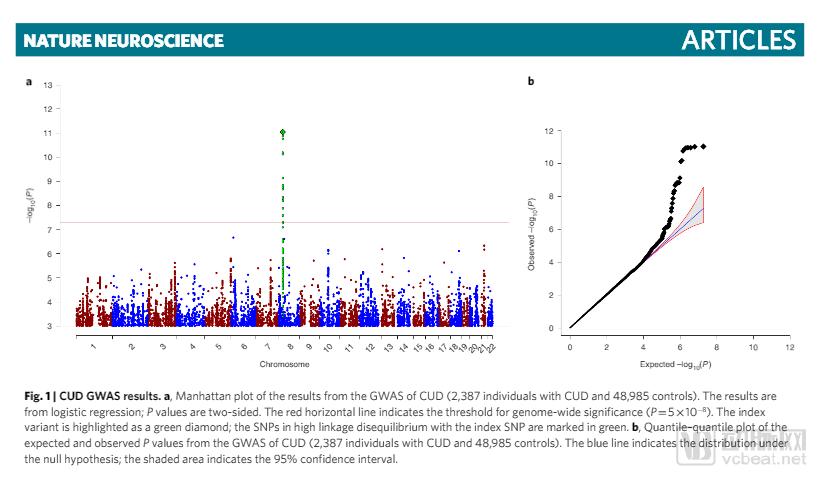
CUDResults of Genome-Wide Association Study
Ditte Demontis and colleagues at Aarhus University in Denmark analyzed the genomes of 2,387 patients with cannabis use disorder (CUD) and 48,985 controls from a Danish nationwide cohort, establishing associations between common genetic variants and CUD. The authors found that the variant rs56372821 increases the expression of the cholinergic receptor nicotinic alpha 2 subunit (CHRNA2), which encodes a brain neurotransmitter acetylcholine receptor capable of binding to nicotine.
The genetic variants identified by researchers influence the extent to which specific nicotinic receptors are formed; individuals with fewer such receptors in the brain face a higher risk of cannabis misuse. The authors subsequently conducted a genetic analysis of 5,500 patients with cannabis use disorder (CUD) and more than 300,000 controls in another Icelandic cohort, replicating the aforementioned findings.
The authors also found that individuals with a higher number of genetic variants associated with cognitive function are at an increased risk of cannabis abuse. “Our results indicate that individuals who abuse cannabis tend to perform worse in learning, which can be partially attributed to genetic factors. In other words, these genetic variants not only increase the risk of cannabis abuse but also negatively affect their educational attainment,” added Demontis.
The authors consider this the first large-scale study to link specific genes with cannabis use disorder (CUD). Further work is needed to understand the biological mechanisms by which these genetic differences promote the development of CUD and how this information can be leveraged to prevent cannabis misuse.