

Ji Cheng Children's Dentistry Secures Tens of Millions in New Funding Led by Qingxin Capital and Maitong Capital
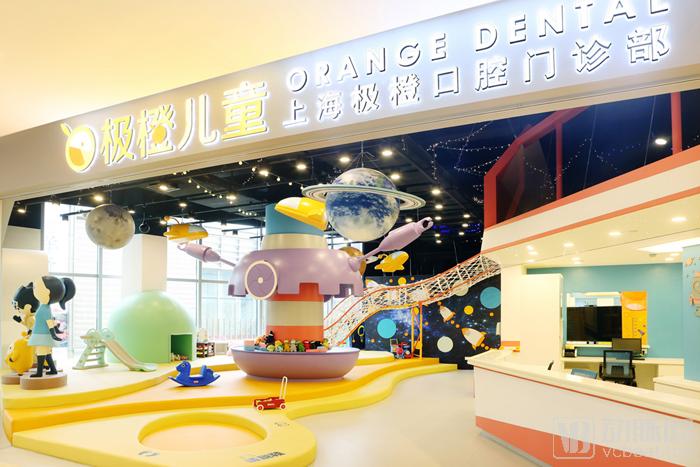
VCBeat (WeChat ID: vcbeat) has learned that Orange Dental, a domestic pediatric dental care provider focused on children’s oral health (hereinafter referred to as “Orange”), announced that it had secured another round of financing amounting to tens of millions of RMB in May this year. The round was led by Qingxin Capital and Maitong Capital, with Daotong Capital participating as a co-investor.
Orangedental secured RMB 5 million in angel funding from ZhenFund in 2015, followed by a Pre-A round investment in the tens of millions from Fenxiang Investment in 2016. In February 2018, IDG Capital led a Series A financing round in the tens of millions, and in July, Qingxin Capital led a Series A+ investment also in the tens of millions. Over four years, the company completed five financing rounds, with cumulative funding exceeding RMB 100 million.
As a multi-round investor in Orangedental, Sun Qi, Founding Managing Partner of DaoTong Investment, expressed strong confidence in the company: “We are delighted to continue our investment in Orangedental Pediatric Dentistry. Maternal and child health is a key focus area for DaoTong Investment. Unlike other dental projects, Orangedental focuses on providing high-quality medical services to children, which has driven its rapid growth due to its professionalism. From just two clinics at the time of our initial investment to more than ten now, Orangedental has become a leading company in the pediatric dentistry segment. The company boasts an excellent team with years of experience in the dental field. Its consistent emphasis on corporate culture and medical quality control has enabled it to manage rapid expansion with ease. With extensive experience and expertise in maternal and child health and healthcare services, DaoTong Investment is well-positioned to support Orangedental’s continued growth and deliver better dental care to more children.”
So, can pediatric dentistry truly become the next explosive growth point in the field of oral health? Without a doubt, Orangedental has seized the first-mover advantage and delivered its answer through action.
Pediatric Dentistry Market Takes a Pole Vault Leap
According to the "Fourth National Oral Health Epidemiological Survey Report," the prevalence of dental caries in the primary teeth of 5-year-old children increased by 5.8 percentage points compared to ten years ago, rising from 66% to over 70%; meanwhile, the treatment rate also increased by 1.3 percentage points, from 2.8% to 4.1%; moreover, 5-year-old children had an average of more than four decayed teeth.
This indicates that the general public, particularly young parents, are paying significantly more attention to children's oral health issues than they did a decade ago. However, among the more than 60,000 dental clinics across China, only a handful are truly dedicated to pediatric dentistry. As demand continues to rise, this market segment urgently needs to be developed and served.
As one of the pioneers in pediatric dentistry in China, Orangedental has demonstrated the importance and promising prospects of oral health management for children. Hu Yuchen, Partner at Fresh Capital, stated, “There is strong demand for pediatric oral care services, yet professional providers remain relatively scarce, making this a high-growth market with immense potential. Orangedental’s competitive advantage also lies in its relentless pursuit of exceptional customer experience, transforming children’s perceptions of oral care and treatment through its ‘Happy Dental Visit’ philosophy. We look forward to Orangedental’s continued promotion of advanced pediatric oral care concepts and its long-term contribution to the healthy growth of children in China.”
Redefining the Core Value of Pediatric Dental Care
No child enjoys the pungent smell of disinfectant, the cold appearance of dental clinics, or the intimidating oral examination instruments. Dentists, especially pediatric dentists, must not only possess a high level of professional expertise in medical treatment but also demonstrate ample patience and effective guidance techniques. This approach ensures that children undergo oral treatment willingly and happily, preventing unpleasant experiences from casting a shadow over their development.
Since intensifying its focus on pediatric dentistry in 2017, Orange Dental has continuously explored and gradually established a comprehensive operational model for pediatric dental care. Committed to addressing the unique dynamics of this special “patient” relationship, the company builds a clear and seamless communication bridge between dentists and young patients, helping children approach dental visits with a positive mindset.
This is the essence of Orangedental as a “connector”—by organically integrating games with dental care, it provides children with a differentiated, “gamified” immersive interactive experience. This approach has yielded significant results and further ingrains its mission of “helping children enjoy happy dental visits” into the public consciousness.
Unwavering in Our Original Mission, We Sail Far on the Trust of Children
To date, Orangedental operates 11 chain clinics across three cities, with seven in Shanghai, three in Tianjin, and one in Nanjing, delivering specialized pediatric dental care experiences to children in these regions. Orangedental revealed that the latest funding will support its next round of nationwide expansion, as the brand prepares to enter new markets to meet the growing dental care needs of more parents and children. Orangedental will also continue to strengthen its service and technological advantages, solidifying its position as a leading brand in the industry.
Over the past two years, Orangedental has helped more than 30,000 children enjoy positive dental experiences, saving approximately 15,000 decayed teeth. Many of these cases had missed the optimal window for treatment due to neglect and a lack of proper awareness, progressing to extensive dental caries.
Many children develop lasting dental anxiety due to painful experiences during their first dental visit, which can even impair their physical and psychological development. orangedental aims to leverage its growing brand influence to raise societal awareness of children’s dental health, encouraging parents to ensure that the very first dental visit is a positive experience. This approach helps children cultivate a proactive attitude toward dental care and establish lifelong oral hygiene habits.
Despite the arduous road ahead, orangedental remains steadfast in its commitment to this noble vision. We are fortunate that in this era, three “older uncles” with type O blood—the founders of orangedental—accompany children’s oral health on its journey of growth, bringing along their dreams and childlike wonder.
In the fiercely competitive pediatric dentistry market, what has enabled OrangeDental to secure repeated capital investments, and what kind of industry benchmark does it aim to establish? In response to hot topics in the pediatric dental market and the secrets behind OrangeDental’s success, founder Taer Gai provided detailed answers in an exclusive interview with VCBeat. We appreciate your support and trust in VCBeat.
VCBeat:Is orangedental currently a company that places significant emphasis on cultivating its corporate culture and values? How is it building this culture, and what is the desired outcome? Is this related to the founders’ previous backgrounds in multinational corporations or their unique management philosophies?
Answer:We place great emphasis on cultivating our corporate culture. As a healthcare service provider, professionalism is the foundation and prerequisite for our long-term development. However, as a private medical institution—particularly one with the mission of “helping children enjoy happy dental visits”—warmth and compassion are equally important.
Building a corporate culture is both a systematic and long-term endeavor. At this stage, we are primarily focused on three key initiatives:
1. Operationalization and Instrumentalization of Culture. Extract the core elements of Orangedental’s culture and “operationalize” them by clearly defining what the culture entails in the daily work of various functions, thereby transforming culture into a practical tool that guides frontline colleagues in their day-to-day operations.
2. Recruitment. Many values-based aspects are difficult to change. Therefore, we place particular emphasis on cultural fit during the interview process. For senior-level positions, we repeatedly communicate the more “grueling” aspects of our culture to ensure candidates fully understand what they will encounter after joining the company. In fact, we have “scared off” some candidates, but I believe this is a positive outcome. It is 100 times better than having employees join the company only to find themselves ill-suited to the environment later on.
3. Performance Evaluation. This is arguably the most challenging aspect. We plan to initiate its implementation this year. Our challenge lies in fostering an effective performance evaluation culture without allowing it to become superficial or devolve into “office politics.” We have already developed some preliminary ideas.
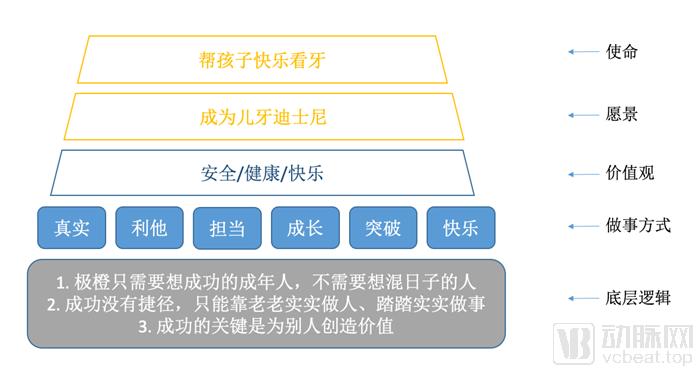
Our culture can be succinctly summarized in the diagram below. Every word has been meticulously refined. Yet this is not a static culture; our cultural framework will continue to evolve and improve as our understanding deepens.
VCBeat:What books have you been reading recently? Do you consider yourself someone who can effectively integrate theory with practice? Are you a very serious person at your company?
Answer:I’ve been reading a diverse range of books recently, including several titles on “Becoming a First-Time Manager,” as I am delivering a course on this topic to my team. Due to our rapid growth, many of our colleagues are stepping into managerial roles for the first time and require our support and development.
I’m still reading a book called The Laws of Human Nature, which explores human nature and is quite interesting. I’ve excerpted many engaging passages from it to share with my team.
I dare not claim to have achieved a thorough integration of theory and practice, but I do enjoy thinking deeply, distilling real-world problems into frameworks, and applying theoretical tools to practical situations.
I enjoy cracking jokes at work because the job is exhausting and I need to unwind. However, I am very serious during meetings, and it is not uncommon for my colleagues to be moved to tears by my remarks.
VCBeat:Why Has Orangedental Established the “Care Officer” Role Internally? What Is the Importance of Nursing Roles in Pediatric Dentistry?
Answer:Nursing plays a pivotal role in our system. As the largest internal team, nursing serves as a critical bridge between medical care and patient services. High-quality nursing not only enhances physicians’ clinical quality and operational efficiency but also improves children’s healthcare experience. Furthermore, it bears the significant responsibility of providing health education to patients and managing their long-term health.
VCBeat:How can the company’s business processes be continuously improved? Have they currently met your personal expectations? What are the challenges in standardization?
Answer:Process improvement is an ongoing journey with no final destination. Continuous improvement means relentless enhancement; in other words, our business processes will never fully meet my expectations, as my expectations are constantly rising.
The challenge of standardization lies in the fact that every client has different needs, each child has unique characteristics, and each of our colleagues possesses distinct strengths. Therefore, we cannot adopt a rigid, mechanized process akin to an assembly line in a factory. However, compared with other medical specialties, the operational management of pediatric dentistry is relatively straightforward. We can achieve at least 70% standardization, leaving 30% for personalization.
VCBeat:In the field of pediatric dentistry, what do you believe is the most pressing issue that needs to be addressed? Patient education, technology promotion, cost reduction, or other factors? Please share some of the challenges you consider particularly thorny.
Answer:The most critical factor in market development is public awareness, known abroad as "Dental IQ." Even in major cities like Shanghai, we frequently encounter parents who pay little attention to their children's oral health or hold misconceptions, such as the belief that "baby teeth will be replaced and therefore do not need fillings," or that "fluoride is toxic and fluoride varnish applications are harmful." These fundamental concepts are crucial for improving the oral health status of the pediatric population.
From a technical perspective, there is still a general scarcity of equipment, instruments, and consumables specifically designed for pediatric characteristics. In this regard, we also need more manufacturers to enter the pediatric dentistry market.
While cost is always a concern, affordability is not the greatest barrier for the broad middle class. Consider the attitude of an average middle-class family toward spending on their children’s education; it becomes clear that the key issue in pediatric dentistry is not price, but rather parents’ level of awareness regarding oral health.
VCBeat:A major challenge in chain expansion is the severe shortage of physicians. How does Orangedental carry out physician training, and are there any notable cases of rapid professional growth that can be shared? Can “openness” and “sharing” summarize the practice environment Orangedental aims to create for its physicians?
Answer:Cultivating physicians is also a systematic, long-term endeavor. I believe we have done far from enough. We are primarily focused on the following three initiatives:
1. Deconstruction, Standardization, and Systematization of Core Medical Competencies—Establishing Training Content;
2. Physician tiering, with pairing between Levels 0–1 and Levels 3–4—establish a mentorship system;
3. Young Doctors’ Learning Club – Fostering a Learning-Oriented Organizational Culture.
VCBeat:You have occasionally used the words “endure” and “persevere” to describe your entrepreneurial journey in public. Could you share some of the most difficult challenges you have faced in recent years? How did you manage to withstand them? Have you now passed through the most arduous phase? If there are still weaknesses in your company, what are they?
Answer:Starting a business is indeed no easy feat; beyond physical exhaustion, it takes an even greater toll mentally and emotionally. The hardest period was probably in 2016, when we had yet to find our business model, core talent was leaving, and fundraising was proving extremely difficult. I sank into a deep low, plagued by self-doubt and anxiety that spiraled into depression. What ultimately helped me endure was my refusal to admit defeat—I didn’t want to give up, retreat, or surrender. I was determined to fight until the last bullet was spent.
We can now say that we have weathered the most difficult period, as we are no longer struggling on the brink of life and death; however, future challenges will undoubtedly be significant. If the path becomes increasingly easy, it most likely indicates that we are on a downward trajectory.
Shortcomings persist for enterprises. First, there is a significant deficit in talent acquisition, development, and retention. Second, regarding systems, current operations rely heavily on intuition and experience; in the future, greater reliance must be placed on data, processes, and systems.
VCBeat:We just discussed the “darkest hour,”Please share the "highlight moments" that have left a lasting impression on you since the inception of your venture.
Answer:There have been many highlights. Here are a few examples:
1. The mother of a young colleague wrote to thank us for providing her child with a platform for learning and growth;
2. Customers posted lengthy reviews on Dianping and WeChat Moments, expressing gratitude for our team’s compassion and patience;
3. Witnessing colleagues’ growth, as they increasingly flourish, mature, and excel within the company;
4. When attending events and introducing myself as the founder of Orange Dental, the other person would often say, “Ah, I’m one of your customers!”
5. After completing due diligence, investment firms will become our clients even if they do not proceed with an investment.
There are so many such moments. It is hard to believe that the brands and companies we have created have impacted and changed the lives of so many people, which fills us with immense pride.
VCBeat:In June, ten government departments jointly issued a document outlining 22 significant measures to promote the sustained, healthy, and standardized development of private healthcare institutions. The document also reiterated the pilot program for clinic registration management. Do you believe it is easier to open a clinic now than at the initial stage of entrepreneurship? What are the specific manifestations of this change? How do we manage the progress of opening clinics? In your opinion, what internal and external factors are associated with Orangedental’s customer acquisition?
A:Our intuitive impression is that the difference is not significant. The pace at which we open clinics primarily depends on our capacity to cultivate talent and the status of our talent reserves.
Our biggest secret to customer acquisition is word-of-mouth. Dentistry is a business built on reputation, and this is especially true for pediatric dentistry. Only when customers have a positive experience and are willing to refer their friends and family can we talk about anything else.
VCBeat:Adult dentistry has become a red ocean, while pediatric dentistry remains in a blue ocean. However, from the perspective of the capital market, it is garnering more attention and gaining increasing recognition from industry insiders. What are the reasons behind the rising popularity of pediatric dental clinics? Where do the challenges to profitability lie?
A:I believe the pediatric dental clinic sector is still far from reaching its peak; this market requires more participants. The primary challenge to profitability is undoubtedly the low average revenue per user (ARPU).
VCBeat:Regarding its profit model, has Orangedental introduced any new innovations? What are the current main components, and what areas can be explored in the future?
Answer:Our current revenue model relies primarily on clinical diagnostic and treatment services provided at our clinics. In the future, we will vigorously promote health management services. Our ultimate vision is to generate revenue by helping clients maintain their health, rather than by treating their illnesses. Another potential opportunity lies in insurance; dental insurance remains largely undeveloped in China, presenting significant market opportunities.
VCBeat:Continuing the discussion on insurance,How can dental insurance promote the pediatric oral prevention market? Do we have partnerships with insurance companies?
Answer:In the United States, 200 million out of a population of 300 million have dental insurance. Dental insurance naturally covers an annual series of free preventive measures. This is arguably the most significant driver behind the development of dentistry in the U.S. Insurance incentivizes people to seek dental care. While we have engaged with insurance companies, there are currently very few dental insurance options available for children in China.
VCBeat:At the beginning of the year, you attended the IDS in Cologne. Did you gain any new insights? What best practices from pediatric dental clinics in countries such as Germany, the United States, and Japan could be introduced to China, or which models do you consider particularly promising? In your opinion, is the current market environment a favorable time for dentists to launch their own practices?
A:Attending the IDS in Cologne not only provided insights into new technologies and equipment but also included visits to several dental clinics. In developed countries, mature markets, well-established insurance systems, and clear legislation mean that challenges such as patient acquisition or license applications are virtually non-existent. The challenges faced by clinics there differ from ours, so there is limited experience that can be directly replicated. However, one strong impression emerged: in the field of pediatric dentistry, China has the potential to become the world leader.
Doctor Entrepreneurship: I Believe There Are Three Major Challenges:
1. Customer Acquisition. Is there a way to relatively quickly acquire high-quality customers in the early stages;
2. Funding. Is there sufficient preparation in terms of capital for renovation, equipment procurement, and subsequent operational expenses?
3. Management. Small in size but complete in every aspect. The operation of a clinic involves numerous details, requiring the capability to manage a team effectively.
If the above three conditions are met and your own medical expertise is sound, then any time is a good time for physicians to embark on entrepreneurial ventures.
VCBeat:From the perspective of the capital market, the trend of capital flowing toward leading enterprises in 2019 remains unchanged. Do you agree with this view? What are the reasons? When did we first engage with capital? For enterprise development, capital is often a matter of life and death; a lack of funding can be fatal. Since last year, we have made significant moves in the capital market. Could you discuss some aspects of achieving win-win cooperation with investors? Are there instances where their demands conflict with the company’s philosophy? How do you strike a balance?
A:Capital is converging toward industry leaders, as these top-tier companies are the most likely to achieve significant growth. The primary challenge for mid-tier enterprises is survival, while those at the bottom will largely be eliminated. Although this reality may seem harsh, survival of the fittest is a fundamental business principle. Moreover, for the industry as a whole, such natural selection under fair competition is both necessary and beneficial.
We have been engaging with capital since the very beginning of our venture, securing angel funding from ZhenFund when we were still just an idea. The principle behind achieving win-win cooperation with investors is not complicated. I believe that investors and I are not fundamentally different: on one hand, we both seek financial returns; on the other, we both aim to contribute to society. The most ideal scenario is one where we create substantial value for society while also reaping significant personal rewards, including financial gains, reputation, and influence.
Once this point is grasped, operational issues become much simpler. First, select investors whose core values align with those of the enterprise and who understand the unique characteristics of the healthcare business. Second, maintain simplicity, transparency, and directness in all interactions with investors. Finally, genuinely consider investors’ interests and create value for them.
At this stage, despite differing opinions, all parties share the same ultimate goal and have deeply aligned interests, making it easier to seek common ground while reserving differences.
VCBeat:Since the company’s inception, what changes have you observed in the other two members of your “uncle” trio, and what do you attribute these changes to?
A:First, all three of us have aged significantly. Some have gained weight, some have receding hairlines, and others have developed more wrinkles.
Second, we have all matured considerably. The three of us are typical scholar-entrepreneurs—idealistic, sometimes impractical, and at times even naive. However, as we have learned from our missteps, we are becoming increasingly mature.
Third, however, the idealistic elements seem unchanged, or even more profound. We increasingly feel that certain beliefs are worth upholding—and must be upheld.
VCBeat:Please share your plans for the second half of 2019.
Answer:We will open four new clinics and a children’s dental hospital in the second half of the year, essentially securing the position of absolute market leader in each city we enter. Our key priority for the full year 2019 is to strengthen our internal capabilities. We will emphasize internal capability building across all functional areas, enhance standardization, and establish robust systems.
VCBeat:If you were to rate your achievements since founding the company on a scale of 1 to 10, what score would you give yourself? What areas need improvement?
Answer:I give myself a score of 5. This is the “unconventional” aspect of our company: we always assign ourselves failing grades. The moment we reach a passing score, we raise the grading criteria. Only those who consider themselves failing are most likely to maintain an “empty-cup” mindset, facilitating learning and progress, and leaving room to embrace new ideas.
Related Reading: