

Akon Health Wins 'Best Innovation Award' at Asia Chronic Disease Medical Conference for Integrating Healthcare Resources to Serve Grassroots Communities
VCBeat (WeChat ID: vcbeat) has learned that the 5th Asian Conference on Chronic Disease Medical Care was held in Shanghai from June 21 to 22, 2019. Hosted by the Chinese Non-Public Medical Institutions Association and organized by its Branch of Chronic Disease Management, this marked the first high-profile conference hosted by China in the nearly ten years since the establishment of the Asian Association for Chronic Disease Medical Care.
The conference invited leaders from the National Health Commission, experts in chronic disease industry management from China, Japan, and South Korea, clinical and preventive healthcare professionals, and representatives from related industries. Centered on the theme of “Improving the Quality of Chronic Disease Medical Care,” participants jointly discussed experiences and emerging trends in chronic disease management, medical care, payment systems, and business models. The event further facilitated in-depth cooperation among all stakeholders and promoted innovative development within the chronic disease industry.
Concurrent with the conference, a roadshow featuring exemplary chronic disease management cases from China, Japan, and South Korea was organized to showcase advanced, mature technologies, methodologies, and concepts across various fields in Asia. Aikang Health Group was selected as an outstanding primary care case study for chronic disease prevention and control in Asia. At the roadshow, Wang Lijue, Chairman of Aikang Health Group, delivered a keynote presentation titled “Forging a Path to Chronic Disease Rehabilitation in Rural China.” He shared how Aikang Health integrates resources, focuses on primary healthcare, and extends the medical service ecosystem, thereby enabling grassroots healthcare professionals to achieve rapid professional growth through practice and deliver efficient services. This case received unanimous acclaim from the judges and guests, earning the Best Innovation Award for Outstanding Chronic Disease Medical Cases in Asia.
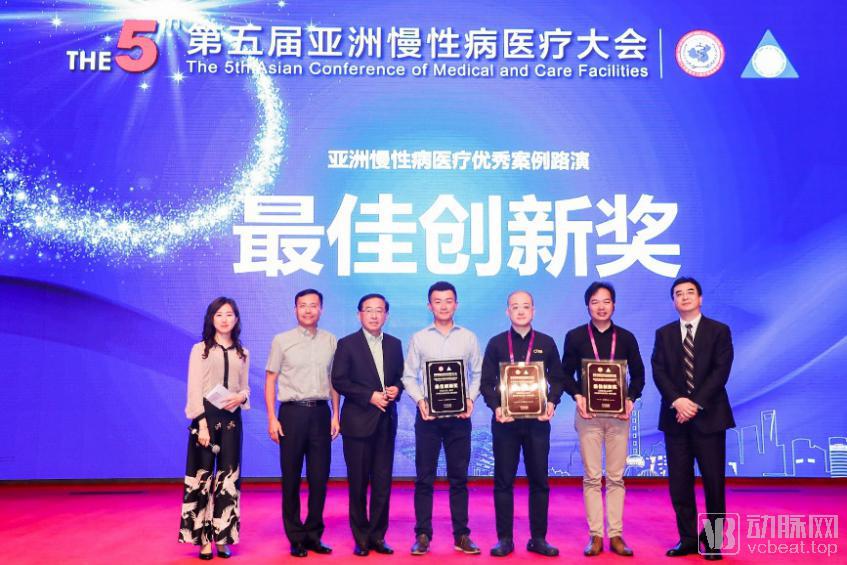
Image source: Provided by the company
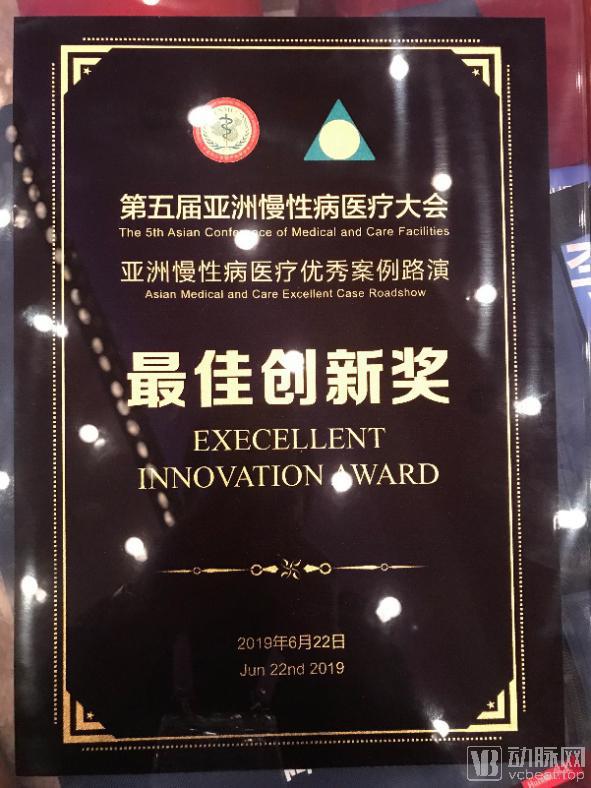
Image source: Provided by the company
The new round of healthcare reform, with its focus on “ensuring basic coverage, strengthening primary care, and establishing robust mechanisms,” has been underway for nine years. A review of the current status of chronic disease health management in urban and rural primary healthcare institutions across China reveals that the problem of inverted resource distribution remains prominent. Issues such as shortages of medical personnel and medications, difficulties in accessing medical care, high costs of treatment, and poor patient adherence to medical advice persist. Leveraging national policies to encourage social enterprises to drive innovative development in the primary care market is therefore highly necessary.
Currently, China has 360 million patients with chronic diseases. Data released in the "Progress of Disease Prevention and Control Work in China (2015)" indicates that deaths caused by chronic diseases in China account for 86.6% of the total national deaths, showing a trend toward affecting younger populations, and the disease burden caused by these conditions accounts for 70% of the total disease burden. Clearly, chronic diseases have become the largest disease burden in China today, with needs being even more prominent in rural and primary healthcare settings. Nearly 700 million farmers live in primary care areas in China, and they should not be deprived of high-quality medical services due to living in remote regions. How to integrate first-line high-quality pharmaceuticals and medical resources and deliver them to primary healthcare, how to improve the diagnostic and treatment capabilities of primary care physicians, and how to promote prevention and control of chronic diseases are core issues explored by Akang Health in its development within primary healthcare.
National rejuvenation must be underpinned by the health of the nation. Strengthening primary care means enhancing the health standards at the grassroots level. In 2016, the Political Bureau of the CPC Central Committee reviewed and approved the “Healthy China 2030” plan. To achieve universal health, key development indicators include not only the upgrading of consumption structures and technological innovation to improve health outcomes, but also a significant rise in the overall professional competence of primary healthcare providers. Priority support should be directed toward the 1.4 million village doctors who serve as the health gatekeepers for vast rural areas.
Wang Lijue, Chairman of Akang Health, revealed during the conference roadshow that many pharmaceutical companies have a shallow understanding of the implementation of major healthcare reform policies, such as the two-invoice system for pharmaceuticals, the drug revenue ratio cap, and the “4+7” volume-based procurement pilot. These companies are not only struggling to survive within their existing interest structures but also failing to adapt to new pharmaceutical marketing models. In terms of market attention, companies rooted in the innovative development of primary healthcare saw a cumulative total of 166 financing events from 2013 to 2017, with raised capital amounting to approximately RMB 8 billion. This remains significantly weak compared to the resources invested in first-tier cities.
As a new-type pharmaceutical distribution enterprise, Akang Health has taken the lead in proposing to build grassroots strength in the pharmaceutical sector through concrete actions, adopting a strategy of “encircling cities from the countryside.” Wang Lijue emphasized that Akang Health’s development philosophy is “to make no medicine hard to find,” with the aspiration to pioneer and chart a path toward healthcare accessibility for China’s grassroots communities.
Currently, Akang Health effectively integrates its “Chronic Disease Rehabilitation Program + Cloud Pharmacy” by establishing rural health stations to create a chronic disease prescription supply platform. This initiative decentralizes the Cloud Pharmacy to the grassroots level, seamlessly connecting over 12,000 domestic and international prescription medications for chronic, critical, and rare diseases with more than 1,500 chronic disease categories and over 5,000 medication regimens. Ultimately, this approach facilitates patient retention at the primary care level, enabling chronic disease rehabilitation, follow-up consultations, and medication dispensing to be conducted locally within grassroots healthcare settings.
In March 2019, Akang Health Group launched a training program for village doctors under the “Concentric Circle Project,” partnering with over one hundred pharmaceutical manufacturers to steadily and thoroughly implement the “Chronic Disease Rehabilitation Project.” With Guangdong Province as the initial pilot site, the project has conducted 39 training sessions to date, averaging more than 300 participants per day, cumulatively reaching over 10,000 village doctors and receiving enthusiastic response from grassroots healthcare providers.
Next, Ark Health Plan will collaborate with organizations such as the Concentric Circle Project, the Chinese Medical Association, the China Welfare Foundation, and the Red Cross Society to extend the “Chronic Disease Rehabilitation Project” across ten provinces nationwide, with completion targeted by the end of 2021, thereby forging a “Long March” for health in the new era. The launch of the Chronic Disease Rehabilitation Project facilitates the downward flow and effective utilization of pharmaceutical industry resources to the grassroots level, fully integrates the service capabilities of pharmaceutical enterprises, systematically connects grassroots physicians, and ensures comprehensive health management for patients. The integration of multi-sectoral resources has established a service system for the prevention and control of chronic diseases at the grassroots level.
In China, one in every five people suffers from a chronic disease, characterized by high incidence rates and low consultation rates. Taking hypertension as an example, the prevalence of hypertension among adults in China is as high as 25.2%, affecting 270 million patients. Each year, there are 2 million deaths associated with hypertension; approximately 70% of stroke-related deaths and 50% of myocardial infarction-related deaths are closely linked to hypertension. Preventing and controlling hypertension is a core strategy for curbing the epidemic of cardiovascular and cerebrovascular diseases. However, in China, the awareness rate of hypertension is only 46.5%, the treatment rate is 41.1%, and the control rate is merely 13.8%.
Wang Li Jue believes that to achieve effective prevention and control, the first step is to address the issue of ensuring the supply of pharmaceutical resources. In China’s primary healthcare system, the coverage rate for laboratory testing is less than 1%, and only about 3%–5% of medications are accessible to village doctors; when narrowed down to prescription drugs for chronic diseases, this figure drops to approximately 1%. Taking a village with a population of 1,000 as an example, its annual medication demand ranges from RMB 1.2 million to RMB 1.5 million, yet there is only a 3% probability that such expenditures will occur at the village clinic.
Guided by the principle of “tiered diagnosis and treatment,” medication for chronic disease rehabilitation should be administered at the primary care level, which not only optimizes the allocation of medical resources but also alleviates the financial burden on patients. In rural primary care settings, approximately 70% of medications for chronic diseases should be dispensed through the village doctor system. However, due to insufficient drug supply and guarantee capabilities at the township and village levels, chronic disease patients are forced to travel long distances to first-tier cities for consultation and post-diagnosis rehabilitation. This results in significant travel burdens, poor treatment adherence, and suboptimal therapeutic outcomes. It is therefore urgent to improve the quality of medical services and strengthen drug supply guarantees at the township and village levels, which will also create opportunities for the integration of pharmaceutical supply chains.
Akang Health has launched the “Healthy China: Chronic Disease Rehabilitation Project” with the aim of enhancing primary care physicians’ capabilities in chronic disease prevention and management. Through the “Jicengtong” platform, village doctors can access over 14,000 medications, covering 21 medical specialties, 1,500 disease types, and more than 5,000 medication regimens, thereby establishing rural “cloud pharmacies.” This initiative empowers chronic disease management with “Internet+” technology, upgrading from a previous state of medication unavailability to one where appropriate and high-quality medications are accessible and properly utilized.
Furthermore, to strengthen the development of primary-level chronic disease rehabilitation departments, "Jicengtong" provides primary care physicians with services such as the "Cloud Pharmacy Academy" learning platform, laboratory testing, and internet-based healthcare. This facilitates the integration of pharmaceutical manufacturing, hospital resources, and medical services into primary care settings. The "Healthy China · Chronic Disease Rehabilitation Project" represents an empowerment initiative spanning the entire industry chain, aiming to ensure that villagers requiring chronic disease rehabilitation can receive care within or near their villages, thereby promoting a more rational and equitable utilization of medical resources.
At the conference roadshow, Wang Lijue stated that primary healthcare is the most fundamental and critical component in building a multi-tiered and diversified healthcare system. Its industrial upgrading and transformation follow the dynamics of oceanic movement: biodiversity increases with depth. Only those with perseverance can withstand the ebb and flow of tides and endure the mounting pressure and risks associated with deeper dives. It is only the true “deep divers” who have the opportunity to plunge into the depths of the ocean and capture the vast market potential in these “deep-water zones.” In 2019, the weakest segment of the healthcare sector—primary healthcare—was undergoing subtle yet significant changes. Akang Health aims to join hands with more industry peers to jointly build a path to health leading to beautiful rural communities.