

Chengdu Tianfu Software Park: A Full-Process, Multi-Dimensional Enabler for Digital Healthcare Innovation
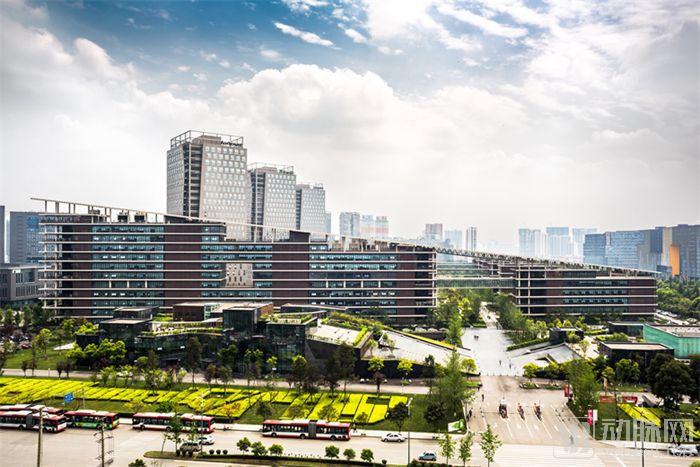
“Building platforms, forging connections,” strengthening resource integration, and evolving from a park service provider to a resource integrator and industry catalyst—this has always been the core objective of Chengdu Tianfu Software Park.
As a benchmark industrial park in western China and across the country, Tianfu Software Park is located in the Chengdu High-Tech Zone. Since its official launch in 2005, it has attracted numerous renowned domestic and international enterprises and Fortune Global 500 companies, including IBM, SAP, EMC, Philips, Maersk, Siemens, Ericsson, Dell, Wipro, DHL, PwC, NCS, Garmin, Alibaba, Tencent, and Manulife Financial.
Currently, the park has formed several major industrial clusters, including software product R&D, communication technology, IC design, mobile internet, digital entertainment, fintech, and shared service centers. It covers hot sectors such as cloud computing, big data, artificial intelligence, the Internet of Things (IoT), blockchain, and VR/AR, and has become a key destination for the strategic layout in China of well-known domestic and international software and information service enterprises, as well as a renowned innovation landmark in China.
In summary, what enables Tianfu Software Park to generate industrial agglomeration effects and continuously attract and incubate unicorn-level enterprises in fields such as digital technology and healthcare?
Technology-Driven Digital Industry Upgrading
Tracing back to the source, we return to 1988, when Chengdu took the lead in China by initiating the planning and construction of a high-tech industrial development zone. Following state approval in 1991, the Chengdu High-Tech Industrial Development Zone saw the successive establishment of industrial parks, exemplified by Tianfu Software Park. The area has gradually evolved into a vibrant hub for Chengdu’s new economy, becoming a gathering place for rapidly growing outstanding enterprises and unicorns.
Driven by technologies such as the Internet of Things (IoT), 5G communications, and big data, industrial upgrading is imminent. Both domestic and international giants and startups are increasingly investing in technology-driven opportunities to identify new blue-ocean markets for entrepreneurship. In some niche sectors, industrial cluster effects have even emerged, with industrial parks serving as effective platforms for resource aggregation.
From the perspective of top-level policy, the latest "Key Points for the Construction of Industrial Functional Zones in Chengdu in 2019" proposed building technological innovation platforms to cultivate new drivers for the development of industrial functional zones, while also clearly advancing the comprehensive construction of smart industrial parks. In addition, at the beginning of 2019, the Chengdu High-Tech Zone issued the "Three-Year Action Plan for High-Quality Development of Chengdu's New Economy Vitality Zone (2018–2020)," which also proposed focusing on the construction of six major industrial communities as a key initiative. The plan targets key industries such as 5G communications (base station systems and equipment, Internet of Vehicles applications, etc.), digital cultural creativity (e-sports, digital animation, etc.), and artificial intelligence (smart chips, smart healthcare, etc.). It aims to integrate the gradient cultivation system with industrial communities to establish a spatial pattern for the tiered cultivation of enterprises.
Tianfu Software Park has become a vital carrier for the innovative development of the new-generation information technology industry in Western China and a core hub for innovation and entrepreneurship in the region.
From the perspective of industrial park development, promoting high-quality economic growth is a key priority for the government. A long-term mission involves identifying and incubating high-potential projects, while exporting professional management expertise to the High-Tech Zone and even Chengdu’s broader industrial clusters. This includes providing one-stop solutions for enterprise investment promotion, human resources, startup incubation, and brand marketing. The ultimate goal is to implement effective project incubation, management, and investment, and to extend the park’s industrial services, industry promotion initiatives, operational management models, and best practices to more functional industrial zones, thereby facilitating the deep integration of Chengdu’s new economy with its traditional industries.
Therefore, in the long term, Tianfu Software Park will continue to focus on frontier technologies, the integration of the new economy with traditional industries, and the national “Belt and Road” Initiative, so as to build an industrial ecosystem and drive industrial innovation.
The healthcare and wellness industry has long been a key focus of Tianfu Software Park. Particularly over the past decade of new healthcare reforms, the medical sector has undergone significant transformation, with internet-based healthcare, innovative medical devices, and digital technologies emerging as new hotspots. Chengdu has actively responded to and explored new layouts for the medical industry, establishing a new medical service system represented by internet healthcare, smart healthcare, and digital healthcare. Currently, the industrial park has attracted a series of outstanding internet healthcare enterprises, including Yilian, Ruoshui Doctor, Maimai Elderly Care, Borns Medical Robot, Yunweikang, Langrui Medical, Quanshiyun Information, Yingda, and Fanmi.
End-to-End, Multi-Dimensional Support and Incubation
As one of the first national software industry bases, a national-level technology business incubator, a national-level makerspace, and a national demonstration base for cultivating innovative talent, why has Chengdu Tianfu Software Park been able to attract well-known enterprises to settle in? What resources does it offer to match enterprise needs and support their growth?
Data shows that Tianfu Software Park provides full-process and multi-dimensional services, including infrastructure services, human resources services, corporate services, startup incubation, and public technology platforms.
For instance, the public technology platform provides comprehensive technical support services—including R&D, testing, demonstration and validation, technical support, and information sharing—to IT high-tech enterprises in fields such as software development, digital entertainment, e-commerce, mobile internet, and information security. Entrepreneurship services encompass free office space, supporting facilities, shared platforms, investment and financing services, training programs, networking platforms, and talent services. Notably, it houses the Tianfu Angel Investor Club, which guides over USD 100 million in annual investments for startup teams at the entrepreneurship hub.
Taking human resources services as a specific example, this is an urgent challenge currently faced by enterprises. In alignment with Chengdu’s “Talent-First Development” strategy and the talent work deployments of the High-Tech Zone, Tianfu Software Park provides comprehensive talent services to enterprises, including talent recruitment, training, and human resources consulting. Through the Tianfu Talent Initiative’s series of activities such as “City Tours,” “Campus Tours,” and “Overseas Tours,” the park has long conducted recruitment campaigns in major cities across China and carried out overseas talent recruitment in regions including North America, Europe, and Asia. Additionally, it has established offshore talent innovation and entrepreneurship bases in Silicon Valley (USA), Seoul (South Korea), Frankfurt (Germany), Stockholm (Sweden), and Toronto (Canada).
A set of data shows that the industrial park hosts over 100 talent-related activities annually, attracting more than 40,000 professionals and assisting enterprises in recruiting over 5,000 talents. By integrating multi-party resources, the park has established an online education platform offering a variety of courses in management, technology, languages, law, and other fields.
In terms of human resources consulting, the park has also established a Human Resources Research Institute and an HR Elite Club, providing talent advisory services to enterprises more than 1,000 times annually, hosting over 20 HR exchange events, and releasing more than 10 professional reports.
Today, the park hosts a wide variety of enterprises, with particularly rapid growth in niche sectors such as IT, gaming, and healthcare. In the future, the park will gradually build a higher-level industrial ecosystem, focusing on developing an industrial development platform to ensure that key resources—including talent, capital, technology, and market access—cover all tenant companies and are shared among them, ultimately fostering their collective growth.
Over RMB 1.3 Billion in Financing Secured; Outstanding and Unicorn-Level Healthcare Companies Establish Operations
Returning to the most prominent sector in healthcare, Tianfu Software Park has successfully incubated dozens of internet healthcare companies across various fields, such as Medlinker, Ruoshui Doctor, Maimai Elderly Care, Borns Medical Robotics, Yunweikang, Langrui Medical, Quanshi Cloud Information, Yingda, and Fanmi. Among them, Medlinker completed its Series D financing last year, becoming one of the first medical unicorns. As of press time, these healthcare companies within the park have secured total funding exceeding RMB 1.3 billion.
To support the growth of enterprises within the park, Tianfu Software Park not only provides funding and talent but also actively engages with current industry trends by organizing events to promote sector development. For instance, in November 2018, it hosted a forum themed “New Healthcare Ecosystem in the Digital Age,” which explored various perspectives including policy, investment, hospitals, and enterprises, thereby empowering businesses to upgrade and transform.
The inaugural “2019 International Forum on Leadership in Medical Science and Technology Innovation” recently concluded successfully in Chengdu. The event was hosted by the Chinese Academy of Medical Sciences, Peking Union Medical College, JAMA (Journal of the American Medical Association), Sichuan Medical Association, West China Hospital of Sichuan University, Sichuan Academy of Medical Sciences, and Sichuan Provincial People’s Hospital; organized by Medlinker; and supported by the Chengdu Hi-Tech Industrial Development Zone.
At the forum, Wang Chen, Academician of the Chinese Academy of Engineering, Vice President of the Chinese Academy of Engineering, and President of the Chinese Academy of Medical Sciences & Peking Union Medical College; Howard Bauchner, Senior Vice President of the American Medical Association (AMA) and Editor-in-Chief of the Journal of the American Medical Association (JAMA); Song Shigui, Deputy Director of the Sichuan Provincial Health Commission; Yu Hui, Deputy Secretary of the Party Working Committee and Director of the Administrative Committee of Chengdu High-Tech Zone; and distinguished guests from the global medical and scientific community convened around the theme “Intelligence · Connectivity · Development.” They engaged in high-level, internationally oriented exchanges and interactions focused on further promoting innovation and creation in China’s healthcare sector and showcasing to the world the remarkable achievements made through reform and innovation in China’s healthcare system.
Some Outstanding Healthcare and Medical Enterprises in the Park (Listed in No Particular Order):
MedLink
The continuous emergence and growth of unicorns like Medlinker in Chengdu is not only a microcosm of the city’s rapid new-economy development, but also a testament to the vibrant progress of its healthcare sector.
Founder Wang Shirui recalls that since its establishment, Chengdu Yiyun Technology Co., Ltd. (hereinafter referred to as Medlinker) has experienced three major milestones in its development: first, Medlinker transformed from a pure physician social platform into a multi-site practice platform; second, Medlinker launched its Cloud Open Platform, extending its business from a physician-focused platform to both upstream and downstream segments of the industry chain; third, aligning with national policies, Medlinker built an internet hospital platform, actively collaborated with pharmaceutical companies, pioneered a new “Internet + Pharmaceuticals” promotion model, and improved the accessibility of innovative drugs.
As internet healthcare policies become increasingly clear, Medlinker has chosen to expand its internet healthcare business by establishing single-disease-specific internet hospitals. For instance, Medlinker started with hepatitis C within the field of liver diseases to build a specialized internet hospital. Patients with liver conditions can undergo follow-up consultations on Medlinker’s internet hospital platform, where physicians issue electronic prescriptions, enabling patients to benefit from services such as home delivery of medications. Currently, Medlinker has successfully validated this model and plans to gradually extend it to other chronic conditions, including orthopedics, oncology, and HIV/AIDS, thereby continuing to integrate the upstream and downstream segments of the medical industry chain.
“The dividends of internet hospital development are foreseeable. Their advantage lies in breaking the constraints of time and space, facilitating appointment scheduling, follow-up visits, online medication purchases, and home delivery services for patients. Furthermore, internet hospitals provide a broader platform for multi-site practice, enabling doctors to earn additional legitimate income by offering online medical services during their spare time.” Wang Shirui holds a clear and definitive view on this policy.
Wang Shirui stated that the healthcare industry has a very low “tolerance for error,” and any innovation within the sector must closely align with policy developments. Companies must remain sufficiently sensitive to national policy changes and adjust their business strategies in a timely manner. Wang Shirui believes this is a key principle governing the development of VCBeat and the entire internet healthcare industry today.
The growth of a unicorn is not only tied to opportunities brought by policies but also closely linked to local policy support and a favorable development environment. Wang Shirui stated that Medlinker, based in Chengdu, has received continuous support from the local government and the Tianfu Software Park in the High-Tech Zone since its inception, including talent supply, rental subsidies, and corporate brand promotion. This inclusive, open, and strongly supportive attitude toward entrepreneurship has been a key factor in Medlinker’s relatively smooth subsequent development.
Shenquan Technology
Chengdu Shenquan Technology Co., Ltd. (hereinafter referred to as “Shenquan Technology”) was established in 2014. With AI intelligence technology at its core, the company has deeply cultivated the medical industry, committed to leveraging technological means to provide society with more high-quality medical resources, enhance the service management and control capabilities of primary healthcare institutions, and facilitate the implementation and realization of tiered diagnosis and treatment.
Currently, the company’s structure comprises Shenquan Technology (Medical Intelligence), Jingcheng Zhishan (Healthcare Management and Operations), and Ruoshui Healthcare Industry Fund (Investment and M&A).
In December 2015 and October 2017, the company secured hundreds of millions of yuan in venture capital financing from renowned Chinese VC firms Morningside Venture Capital and BlueRun Ventures, respectively, providing ample financial support for its technological research and development.
Over the past four years, the company has continuously upgraded its core AI technologies and operational systems, establishing comprehensive healthcare management capabilities that span from large and medium-sized hospitals to community clinics. By productizing its technologies, the company enhances the diagnostic and treatment services of Grade A tertiary hospitals, rapidly empowering the decentralization of high-quality medical resources. Meanwhile, it accelerates the sharing of diagnostic and treatment information through platform technologies, enabling high-quality and efficient operations of medical consortia.
After four years of operation, the company has established a stable team comprising high-level professionals in technology, healthcare, operations, and management. Currently, the company employs a total of 52 full-time staff members, all holding bachelor’s degrees or higher. Among them, 35 employees are engaged in product research and development, accounting for 67% of the total workforce. Through continuous learning and R&D efforts by the technical team, the company has obtained 14 software copyrights, one design patent, and has two invention patents pending approval.
In terms of product architecture, Ruoshui’s Hammurabi Intelligent Diagnostic System, as its core platform, delivers key functionalities including intelligent diagnosis, clinical decision support, rational drug use, disease verification, and centralized management.
By leveraging data technologies such as ETL, Ruoshui enables lossless, seamless integration with existing hospital and clinic systems, including HIS and EMR, thereby minimizing disruption to current business processes during deployment.
Compared with the replacement of traditional hospital and clinic business systems, the Ruoshui Hammurabi Intelligent Diagnostic System can be implemented in an embedded manner, greatly shortening the training and implementation cycle and enabling rapid deployment of services.
Currently, drawing on its experience serving over 100 medical institutions, Ruoshui has extensively synthesized best practices from partners in operational management. It standardizes operational workflows in medical institutions through systematic Standard Operating Procedures (SOPs) and provides comprehensive turnkey solutions for healthcare business operations via a management system that covers all aspects of institutional services.
The Hammurabi Intelligent Diagnostic System is grounded in medical knowledge. By leveraging artificial intelligence to deconstruct the logic and descriptions within medical knowledge, it has developed the system’s capacity to understand and articulate symptoms, signs, auxiliary examinations, diseases, and pharmaceuticals. Meanwhile, through big data analytics applied to vast volumes of literature, the system continuously evolves its own medical knowledge framework.
After more than four years of refinement, Ruoshui’s Hammurabi AI diagnostic engine has been widely deployed. Validation studies demonstrate that it achieves over 85% coverage in pediatrics and internal medicine, with an accuracy exceeding 95% within its covered scope. As the first and only commercially viable intelligent diagnostic system on the market, it continues to deliver high-quality diagnostic and therapeutic services to healthcare institutions.
Furthermore, the company has continuously enhanced its R&D capabilities based on the “Ruoshui Doctor” project. In early 2016, it initiated the development of an AI-based chronic disease management system for diabetes, a smart clinic system, and an upgrade system for pharmacy-clinics. Currently, the AI-based chronic disease management system for diabetes has been deployed and is in use at several large hospitals.
In July 2018, the Company entered into a technical research and development contract with West China Hospital of Sichuan University for the “AI-Based Diagnosis and Treatment Management System for Type 2 Diabetes,” aiming to apply technological solutions for the scientific management of diabetes in the elderly. On July 15, the Company signed a project cooperation agreement with Beijing Penguin Hospital Management Co., Ltd. on “Physician Training/System Services/Operational Management,” under which it would provide physician training using its self-developed intelligent system.
In August 2018, a cooperation agreement was signed with the Ministry of Health and Sanitation of Sierra Leone, a West African country, to train high-quality physicians for the nation and alleviate its severe shortage of medical doctors (with only 120 physicians nationwide).
In March 2019, a cooperation agreement was signed with Beijing Jianyifang Technology Co., Ltd. to research and develop an internet platform system based on prescription sharing for the Jinan Maternal and Child Health Care Hospital in Shandong Province. In April, a strategic partnership was established with Penguin Clinic to manage its 13 satellite clinics in Chengdu, thereby enhancing the service capabilities and brand value of its chain clinics.
Yunweikang
Chengdu Yunweikang Medical Technology Co., Ltd. (hereinafter referred to as “Yunweikang”) was established in 2014. It has independently developed globally leading wearable technologies for monitoring and applying vital signs (such as blood oxygen saturation and heart rate). After thousands of clinical trials and application studies, it became the first among all wearable devices worldwide to obtain medical device certification.
Data indicates that there are approximately 70 to 80 million patients with Obstructive Sleep Apnea (OSA) in China. Due to limited disease awareness and diagnostic capabilities, only 2‰ of these patients receive diagnosis and treatment. Yunweikang’s novel OSA screening system, featuring intelligent and user-friendly equipment and clinical workflows, effectively addresses practical challenges in mobile healthcare and facilitates the implementation of tiered diagnosis and treatment.
Driven by technological innovation, Yunweikang adheres to a dual strategy of product and service innovation. It has obtained multiple patent authorizations, secured Class II medical device certification from the National Medical Products Administration (NMPA), and established a comprehensive brand-building system. Its independently developed reflective vital signs monitoring technology has been consistently recognized as "globally leading" by international industry giants such as Texas Instruments, Huawei, and Samsung. The company has received numerous honors, including National High-Tech Enterprise, Innovative E-commerce Demonstration Enterprise, "Future Unicorn" Enterprise, and one of the Key 100 Enterprises Cultivated in Chengdu’s New Economy in 2018. Furthermore, it was selected for the Promotion Catalogue of Smart Health and Elderly Care Products and Services, jointly organized by the Ministry of Industry and Information Technology, the Ministry of Civil Affairs, and the National Health and Family Planning Commission.
Furthermore, the novel screening protocol for sleep apnea syndrome has completed clinical validation in the sleep medicine departments of more than 50 renowned Grade A tertiary hospitals across China, including Peking University People’s Hospital, Beijing Chaoyang Hospital (Capital Medical University), West China Hospital, Sichuan Provincial People’s Hospital, Chongqing Xinqiao Hospital, Shanghai Zhongshan Hospital, and Guangdong Provincial People’s Hospital. It has gained recognition and recommendation from the majority of sleep medicine experts, including Professor Han Fang, Chairman of the Sleep Medicine Branch of the Chinese Medical Association.
Looking back on the development journey of Yunweikang, the company has steadily advanced its technology and gradually gained market favor. From 2014 to 2015, Yunweikang completed technological R&D and accumulation, finalizing the development of its first-generation wearable pulse oximeter. In 2015, it completed Series A financing, securing funding for R&D and market expansion. In 2016, during the clinical research phase, it completed clinical trials at West China Hospital, Sichuan Provincial Hospital of Traditional Chinese Medicine, and other institutions, obtaining the National Class II Medical Device Registration Certificate (Sichuan Medical Device Registration No. 20162210019).
Since 2017, the development of a novel sleep apnea screening system has been completed, comprehensively optimizing screening efficiency. The sleep breathing monitoring analysis and licensed software system has obtained the Class II Medical Device Registration Certificate (Sichuan Medical Device Registration No. 20192210022). Patents for a new business model tailored to this service have been filed, and the implementation and expansion of the product’s new business model are being rapidly advanced.
Over the past five years, Tianfu Software Park has provided substantial support to Yunweikang in areas including talent supply, rental subsidies, and corporate branding. Meanwhile, Yunweikang also seeks assistance from Tianfu Software Park in meeting its financing needs.
In 2019, Yunweikang planned to establish 20–50 model hospitals across China, with the next step being to replicate this business model to achieve market expansion. During implementation, data such as revenue streams, hospital tiers, and departmental classifications for each hospital will be visible. The integration of this big data will further sharpen the company’s technological and medical capabilities.
Furthermore, with the emergence of new products and business models, the healthcare industry is undergoing a transformation from trade-oriented operations to management-focused practices, and from equipment sales to service delivery. AI-powered solutions tailored for medical scenarios, leveraging core technologies such as image recognition and automatic speech recognition, are becoming increasingly mature and will serve as critical tools for assisted diagnosis by physicians. Trends such as the development of medical consortia, government support for coding and reimbursement applications for “Internet + Healthcare” projects, and the vigorous growth of private hospitals are all broadening the pathways for corporate development.
Quanshiyun
Chengdu Quanshi Cloud Information Technology Co., Ltd. (hereinafter referred to as “Quanshi Cloud”) was established in July 2014. The company is dedicated to exploring comprehensive operational solutions for the “Internet + Elderly Care/Disability Assistance/Integrated Medical and Elderly Care” model.
According to available information, Quanshi Cloud is dedicated to the research and development, application, service provision, and operation of smart elderly care informatization. By leveraging the “Internet Plus” mindset, it promotes the integration of emerging technologies—such as the Internet, the Internet of Things (IoT), and artificial intelligence—into elderly care services. The company integrates online and offline elderly care projects to enable resource sharing, builds an interconnected smart elderly care market ecosystem, fosters positive interactions within elderly care services, and delivers high-quality, comprehensive, and diversified elderly care solutions to society, striving to become China’s leading internet operator in the elderly care service industry.
Through extensive investigation and analysis of real-world business operations, Fulltime Cloud has developed a multi-terminal interconnected smart cloud platform (FSAP—Fulltime Senior Assist Platform) that integrates features such as “dynamic information,” “visualized services,” “multi-dimensional statistics,” and “streamlined settlement.”
The Smart Cloud Platform addresses supply-demand matching, unified data systems, fund disbursement and settlement, service supervision, as well as alerts for individuals living alone and positioning for those with dementia. Functionally, it integrates internal management, external services, and intelligent supervision into a single, cohesive system.
The company has innovatively adopted multiple advanced technologies to implement internet-based improvements in processes such as “application review and implementation oversight for funds (e.g., elderly care, disability assistance, and advanced age support)” and “assessment and management of seniors, persons with disabilities, and service institutions.” This approach not only resolves management challenges that service institutions could not address under traditional operational models, but also helps the government overcome numerous difficulties inherent in conventional regulatory frameworks. Through the comprehensive application of this system, a complete suite of informatization solutions can be provided to local governments and other stakeholders.
In July 2016, the company secured tens of millions of yuan in Pre-A financing and was honored with the Top 10 Startups Award at Tianfu Software Park in the same year. In 2017, it successively expanded its operations to first-tier cities across China, including Beijing, Shanghai, Guangzhou, and Tianjin. In July 2018, it was included in the “Catalogue for Promotion of Smart Health and Elderly Care Products and Services,” jointly formulated by the Ministry of Industry and Information Technology, the Ministry of Civil Affairs, and the National Health Commission.
Yingda Technology
In the field of internet-based medical imaging, Chengdu Yingda Technology Co., Ltd. (hereinafter referred to as “Yingda Tech”), established in May 2015 within the industrial park, is an innovative technology company dedicated to the medical imaging sector. It offers industry-leading technical solutions in cross-platform web visualization, high-efficiency front-end image algorithms, private hybrid cloud storage, and tamper-proof imaging data.
The company independently develops and provides a range of high-quality medical imaging software products and services, including all-in-one imaging cloud appliances, hospital-wide PACS systems, electronic film, and the iPACS imaging cloud platform. It has obtained the “Double Soft” certification (for both software products and software enterprises) from the Sichuan Software Industry Association. The company’s current comprehensive solutions include imaging cloud products, regional PACS, and cloud-based electronic film.
Since its inception, Yingda’s products have consistently upheld the corporate vision of “earning dignity for physicians and delivering low-cost, high-efficiency diagnostic services to patients.” The company has implemented and deployed its solutions in over 100 institutions and hospitals, including the Bozhou Regional PACS, the regional imaging centers in Chengdu’s Wuhou District, Meishan, and Dujiangyan City, as well as Mianyang 404 Hospital and Leshan Traditional Chinese Medicine Hospital.
Taking the Medical Consortium Imaging Cloud as an example, Yingda’s product is a comprehensive medical imaging solution tailored to various forms of medical consortia. It significantly reduces the construction costs and deployment cycles associated with expensive traditional imaging cloud platforms. Furthermore, it enables the flexible deployment of SaaS platforms by integrating private and public cloud infrastructures. Particularly for the loosely coupled medical consortium architectures widely prevalent in China, Yingda’s Medical Consortium Imaging Cloud Platform offers a superior return on investment.
In terms of specific application scenarios, the system primarily facilitates upward referrals from primary care hospitals to higher-level hospitals and downward referrals from higher-level hospitals to primary care institutions. Generally, physicians upload patients’ diagnostic and treatment data from primary care hospitals to a tiered diagnosis and treatment platform, which shares clinical information, imaging data, laboratory test results, and other medical records with higher-level hospitals. This enables specialists at these institutions to access the data efficiently and make accurate diagnoses for patients.
Physicians upload diagnostic and treatment data of rehabilitation patients from tertiary hospitals to the tiered diagnosis and treatment platform, sharing clinical information, imaging data, and laboratory test results with secondary or primary care hospitals. This facilitates data access by lower-tier hospitals, enabling them to follow up on and provide consolidative rehabilitation therapy for patients.
Currently, this product has been deployed and is in smooth operation at Mianyang 404 Hospital (a loose medical consortium centered on a Grade 3A hospital), Dujiangyan Medical Center, and Chengdu Wuhou District (a tight-knit medical consortium led by the Health Commission). The Medical Consortium Imaging Cloud product has made outstanding contributions to the integration and sharing of regional resources and the decentralization of high-quality medical resources.
Data from the official website shows that Yingda Technology processes over 30,000 diagnostic reports daily, has more than 2,000 doctors online each day, connects with over 600 medical institutions, and its products cover more than 20 regions across China.
In addition to the aforementioned two companies, supported by the “Healthy Chengdu” strategy and the resource integration capabilities of benchmark industrial parks such as Tianfu Software Park, more enterprises will be incubated and emerge within these parks in the future. When digital technologies—such as cloud computing, big data, mobile internet, and virtual reality—are truly integrated into the medical and healthcare industry, enterprises that genuinely empower the traditional healthcare sector and expand the boundaries of new applications will usher in a period of explosive growth.
Fanmi Technology
In the field of IoT chips, Chengdu Fanmi Technology Co., Ltd. (hereinafter referred to as “Fanmi Technology”), established in December 2015, is a high-tech company dedicated to IoT chips for fast-moving consumer goods (FMCG). It is China’s first comprehensive technology company to achieve washable IoT chips based on non-woven fabrics, as well as to provide mobile internet data analysis and collection, and consumer demographic profiling.
Founder Li Zhuodong summarized that Fanmi’s development has gone through three stages in total. The initial stage focused on micro-innovation in maternal and infant products, deeply cultivating and accumulating core industry technologies, disrupting conventional industry perceptions, and driving significant changes within the sector. Fanmi has consistently pursued innovation, particularly through cross-disciplinary approaches. Since its inception, the company leveraged its core patented “ion-sensing detection” technology to develop products and systems for monitoring infant excretion via diapers. Later, recognizing the constraints imposed by semiconductor chips in the industry, and drawing on the fact that more than half of its team had backgrounds in semiconductors, Fanmi began researching semiconductor chips tailored for maternal and infant products, especially those involving non-woven fabric processes. In December 2018, it successfully developed such chips, becoming the first company in China to achieve semiconductor manufacturing processes compatible with non-woven fabric technology.
Since 2019, more than ten multinational corporations from the United States, Japan, and China have successively approached us to seek collaboration. The core technologies that Fanmi Technology has diligently developed for over three years have brought disruptive changes to the industry and are gradually being applied in fast-moving consumer goods (FMCG) accessible to the general public.
Founder Li Zhuodong stated, “If electronic products achieve Internet of Things (IoT) connectivity, people may simply perceive them as smart. However, imagine if everyday hygiene products and the clothes we wear were also IoT-enabled; that would be truly astonishing. True intelligence is not necessarily visible or tangible; it seamlessly integrates into our lives without our conscious awareness.”
During Fanmi’s early, unheralded R&D phase, the team encountered numerous difficulties. From the very beginning, when a small team of just a few people was cramped into a tiny room of several dozen square meters in western Chengdu, the Chengdu Tianfu Software Park provided venue support and assisted in applying for housing subsidies. Moreover, located in the High-Tech Zone—a hub for talent—the Tianfu Software Park also facilitated recruitment. Regular corporate visits enabled the Fanmi team to learn from grassroots entrepreneurship and transition toward standardized operations. Finally, during several periods of financial strain, government subsidies recommended by the park provided timely financial relief to Fanmi.
In the Chinese market, it is difficult for Fanmi Technology to remain steadfast in its deep research into core technologies without being swayed by fleeting trends. However, once bottlenecks are overcome and market recognition is achieved, this perseverance will become a formidable barrier to competition. It is precisely the quiet support from the industrial park that enables teams like Fanmi to survive resiliently and create innovative products with substantial technological accumulation, thereby driving progress in the industry.