

Tasly Biopharmaceuticals Files for Hong Kong IPO with 2018 Revenue of RMB 240 Million Driven by Its Flagship Drug Pro-UK
On June 21, 2016, Shanghai Tasly Pharmaceutical Co., Ltd. submitted its application for the issuance and listing to The Stock Exchange of Hong Kong Limited, and published the application materials for such issuance and listing on the website of The Stock Exchange of Hong Kong Limited on June 24, 2019.
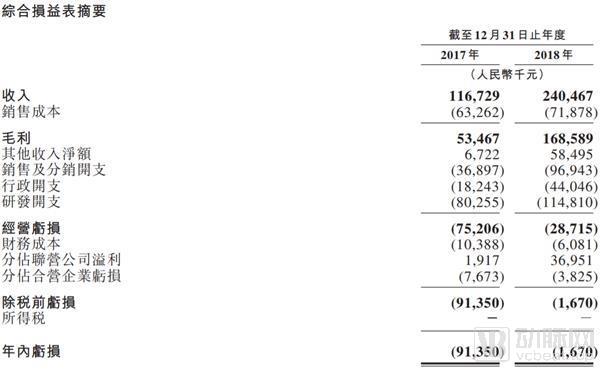
Financial data show that in 2017 and 2018, the operating revenue of Tasly Biopharmaceutical was RMB 116 million and RMB 240 million, respectively, with corresponding annual net losses of RMB 91.35 million and RMB 1.67 million, respectively.
Tasly Biopharmaceuticals Co., Ltd., formerly known as Shanghai Tasly Pharmaceutical Co., Ltd., was established in 2001. Primarily engaged in the research and development of biopharmaceuticals, it serves as a commercialization platform for biologics spanning multiple therapeutic areas. Tasly Biopharmaceuticals’ flagship product is Pro-Urokinase for Injection (brand name: Puyouke), China’s first Class 1.1 innovative biologic with independent intellectual property rights, which underwent a decade of development. Among biopharmaceutical companies listing in Hong Kong, Tasly Biopharmaceuticals is one of the few that already has mature products on the market. The company is also advancing its R&D layout in three major fields—cardiovascular and cerebrovascular diseases, digestion and metabolism, and oncology and immunology—rapidly progressing its pipeline of candidates with international competitive advantages.
Prior to its public listing, Tasly Biopharmaceuticals carried out a capital increase and share expansion in July 2018. By introducing internationally renowned pharmaceutical companies and healthcare industry funds as strategic investors, the company achieved a separate valuation for Tasly’s innovative biological drugs. This capital increase involved five institutional investors, including four overseas investment institutions and one international pharmaceutical enterprise, with a total investment of USD 132.5 million. These investors subscribed to 75.71 million newly issued shares of Tasly Biopharmaceuticals, representing approximately 6.99% of the company’s total share capital after the completion of the capital increase and share expansion.
Among them, four overseas investment institutions, including Huiqiao Capital, Puking Cayman, BOCOM International, and Jiaheng Investment, contributed $84.5 million in cash, accounting for 4.46%; Transgene SA contributed $48 million in non-monetary assets (50% equity interest in Tasly GenesisJie and the “T101 patent”), accounting for 2.53%. Transgene SA is a joint venture partner of GenesisJie (Tianjin) Pharmaceutical Co., Ltd., a subsidiary of Tasly Biopharmaceuticals. Under this agreement, the pre-money valuation of Tasly Biopharmaceuticals was $1.762 billion, and the post-money valuation after the capital increase and share expansion was $1.895 billion. This valuation is significantly higher than the typical $1–1.5 billion valuations seen among other companies listing in Hong Kong.
The Tasly Biopharma platform is a typical example of Tasly leveraging minority equity investments to strategically support its innovative drug portfolio. Tasly Biopharma has established this platform through multiple initiatives, including the joint venture establishing Tasly Genecris (Tianjin) Biopharmaceutical Co., Ltd., the acquisition of Shanghai Saiyuan Technology Co., Ltd., and investments in R&D-focused platforms such as Tianjing Biotechnology (Shanghai) Co., Ltd., PegBio, and Jianya Bio. It also encompasses collaborations with partners like South Korea’s Genexine and Ascletis Pharma. Its pipeline primarily covers three major therapeutic areas: cardiovascular and cerebrovascular diseases, digestive and metabolic disorders, and oncology and immunology.
Puyouke's sales volume exceeded 220 million yuan in 2018.
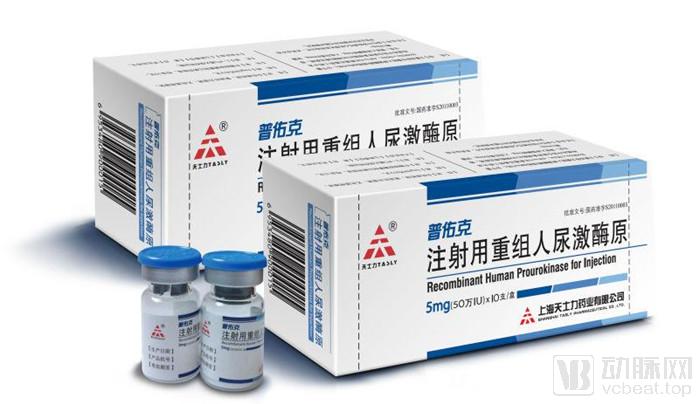
Puyouke is the world’s only marketed pro-urokinase product expressed in Chinese hamster ovary (CHO) cells. It is produced through genetic engineering of CHO cells and is indicated for thrombolytic therapy in acute ST-segment elevation myocardial infarction (STEMI), belonging to the third generation of thrombolytic agents. It exerts selective thrombolytic effects primarily by activating plasminogen on the fibrin surface and has been included in multiple clinical practice guidelines for cardiovascular diseases.
In 2017, Puyouke underwent price negotiations with the Ministry of Human Resources and Social Security, resulting in an 11.5% price reduction and its inclusion in the National Reimbursement Drug List, with a reimbursement price of RMB 1,020 per vial. Puyouke’s sales revenue was RMB 38 million in 2016 and surged to RMB 99 million in 2017. After being included in the national medical insurance scheme, Puyouke became the leading thrombolytic product, driving continued substantial sales growth in 2018. In 2018, Puyouke’s sales exceeded RMB 220 million, representing a year-on-year increase of 129.58% compared to 2017.
Myocardial infarction is typically treated with percutaneous coronary intervention (PCI) or thrombolytic therapy, with PCI being the preferred first-line treatment. However, emergency PCI is technically challenging, and district- and county-level hospitals accounted for only 7.68% of PCI cases in China (based on 2016 data on coronary interventions in mainland China). In hospitals lacking PCI capabilities, intravenous thrombolysis may be employed. First-generation thrombolytic agents, such as urokinase, are rarely used in current international clinical practice due to their low recanalization rates and high bleeding risks. Second-generation agents, such as alteplase, have limited potential for widespread adoption at primary care levels because of their short half-life and inconvenient administration. Puyouke is a third-generation thrombolytic agent.
Currently, the mainstream drugs in the market are alteplase and urokinase, with alteplase accounting for 54.56% of sales. As a representative third-generation thrombolytic agent, Puyouke (Mannose-binding lectin-associated serine protease-2) features fibrin specificity and lacks antigenicity and allergic reactions. Data from 2,088 cases in its Phase IV clinical trials demonstrated that the drug achieved a vessel recanalization rate of 85.2% in patients with acute myocardial infarction, with a drug-related intracranial hemorrhage incidence of only 0.19%. Furthermore, it has a half-life of 114 minutes, offering high overall cost-effectiveness.
In 2018, Tasly Biological’s Puyouke project for secondary capacity expansion and process optimization at the 20L reactor scale completed production process validation and related data testing. The process was successfully put into production in the first half of 2018, with Puyouke’s maximum annual production capacity reaching approximately 640,000 units. The Puyouke 300L reactor project completed the Factory Acceptance Testing (FAT) of major equipment and initiated the renovation of the production workshop. Upon completion, the annual production capacity is expected to reach 2 million units, providing a capacity guarantee to meet the rapidly growing market demand for Puyouke products.
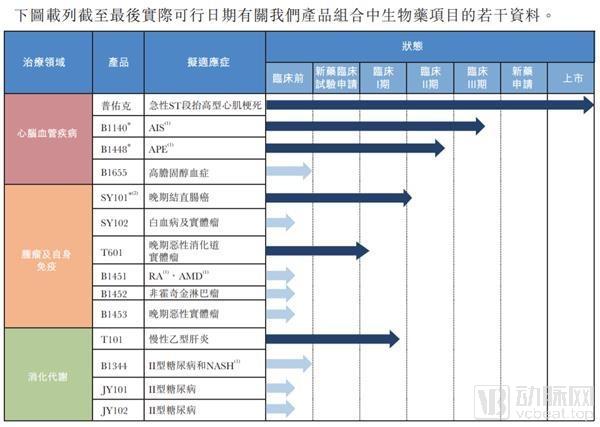
R&D Pipeline Disclosed in the Prospectus of Tasly Biopharmaceuticals
In addition to Puyouke, Tasly’s key products under development include 14 Class I novel biologics targeting cardiovascular and cerebrovascular diseases, oncology, and diabetes. These candidates cover common tumor targets, third-generation insulins, and diabetes-related therapeutic targets. In 2016, Puyouke received clinical trial approvals for two new indications: ischemic stroke and acute pulmonary embolism (pulmonary infarction). The ischemic stroke indication has entered Phase III clinical trials for both the 0–4.5-hour and 4.5–6-hour treatment windows, with patient enrollment proceeding smoothly. The acute pulmonary embolism indication has entered Phase II clinical trials. As the stroke indication is included in the priority review pathway, approval is expected in 2019. Currently, the number of ischemic stroke cases in China far exceeds that of myocardial infarction, indicating substantial market potential. Upon approval of the two new indications, Puyouke’s three indications are projected to generate annual revenues exceeding RMB 3 billion.
Anmeimu monoclonal antibody, fully named “recombinant fully human anti-EGFR monoclonal antibody,” is a Class 1 biologic drug developed by Shanghai Sailun Biopharmaceuticals, a subsidiary of Tasly Group, for the treatment of colorectal cancer. Tasly’s R&D capabilities rank among the top tier in China. The drug is currently undergoing Phase I clinical trials, with preliminary results demonstrating definitive efficacy and a safety profile superior to that of internationally marketed comparable products.
T101 is the world’s first therapeutic hepatitis B vaccine using an adenovirus vector, jointly developed by Tasly Chuangshijie, a subsidiary of Tasly Biopharmaceuticals, and Transgene, a company under the French Mérieux Group. It was included in the Center for Drug Evaluation (CDE) Priority Review List in 2016 and is currently undergoing Phase I clinical trials. Unlike antiviral therapies that suppress HBV replication through pharmacological agents, T101 works by inducing patient-specific cytotoxic T lymphocytes (CTLs) against HBV antigens, thereby inhibiting or even clearing HBV, or inducing apoptosis of HBV-infected hepatocytes, leading to sustained disease control. T601 (recombinant oncolytic vaccinia virus injection) has obtained clinical trial approval. Additionally, two other products—Lipoglucin (an FGF21 analog injection) and a fully human anti-PCSK9 monoclonal antibody injection for targeted treatment of hyperlipidemia—are poised to submit applications for clinical studies.
Tasly Bio invested in PegBio, securing marketing priority for PegBio’s long-acting GLP-1 analog and GLP-1/glucagon dual receptor agonist. The long-acting GLP-1 analog is a Class 1.1 innovative drug for the treatment of type 2 diabetes. It has currently completed four Phase I clinical trials simultaneously in China and the United States, demonstrating superior glucose-lowering efficacy compared to GLP-1 drugs currently marketed in China. Tasly Bio made a strategic investment of USD 50 million in Jianya Biotech, obtaining sales priority in mainland China for Jianya Biotech’s insulin glargine and insulin lispro. Jianya Biotech currently holds a leading position in the research and development of third-generation insulins in China.